
How to Compare In Home Elder Care Services Costs
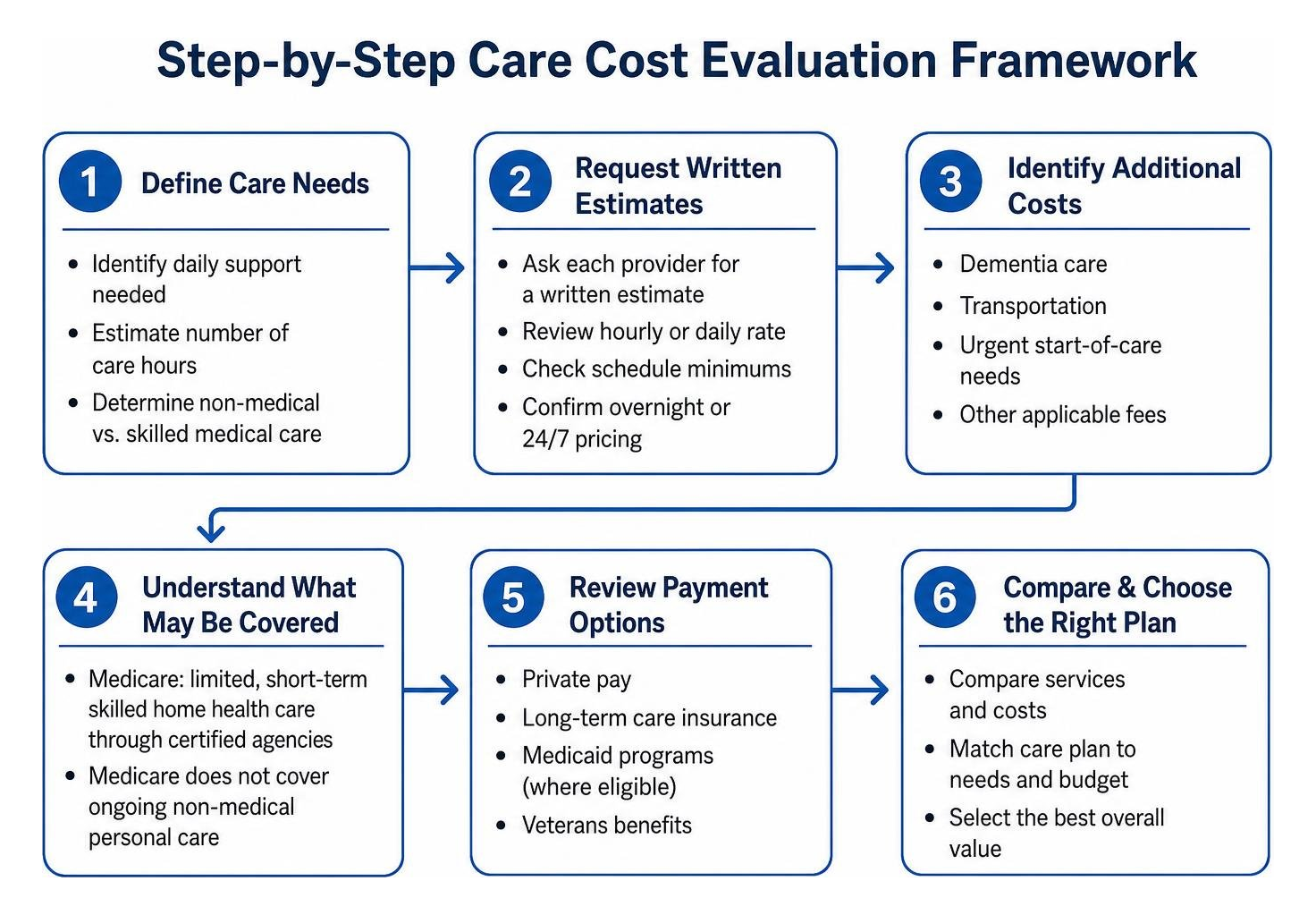
To compare in home elder care services, start with the help your loved one needs, the number of care hours, and whether care is non-medical or skilled medical support. Ask each provider for a written estimate that shows the hourly or daily rate, schedule minimums, overnight or 24/7 pricing, and any added costs for dementia care, transportation, or urgent start-of-care needs.
The right plan may include a few weekly hours for meals, companionship, and personal care, or it may require daily support for mobility, memory loss, or recovery after a hospital stay. Medicare may cover limited, short-term skilled home health care through certified agencies, but it generally does not pay for ongoing non-medical personal care. Families often use private pay, long-term care insurance, Medicaid programs where eligible, or veterans benefits to help cover costs.
I’m Lily Harrison, General Manager at Best In-Home Services Inc., where I help Chicago and Illinois families arrange personalized in home elder care services for dementia, daily support, and around-the-clock care. This guide will help you compare care options and build a budget that fits your loved one’s needs.
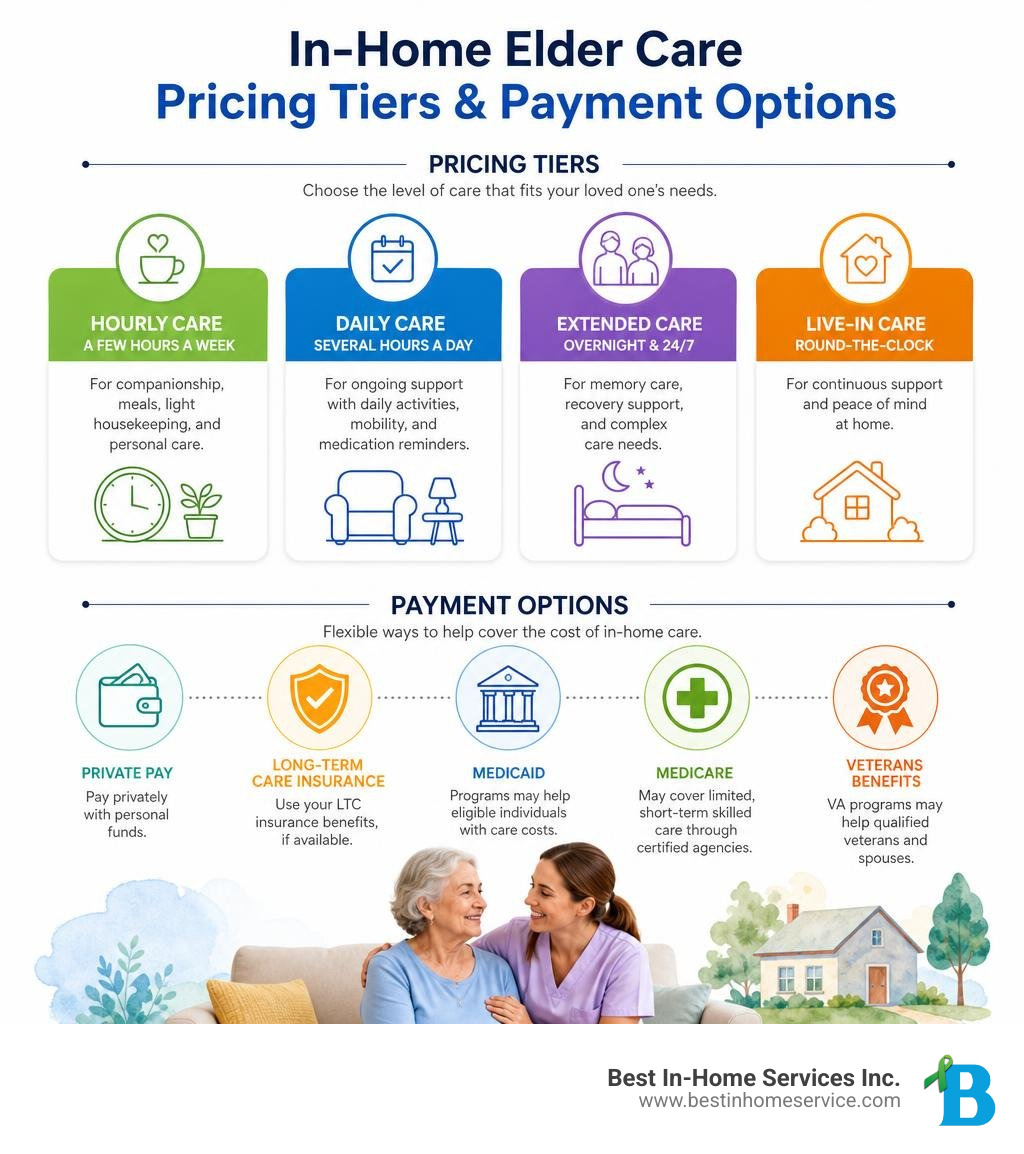
Easy in home elder care services word list:
6 Types of In-Home Elder Care Services and Their Cost Breakdown
When evaluating long-term care, understanding the exact category of support your loved one requires is the primary step in forecasting expenses. In-home care is not a one-size-fits-all model; pricing varies depending on the intensity of assistance, shift minimums, the caregiver’s skill level, and whether support is non-medical or skilled clinical care.
Below is a breakdown of the most common care structures, typical shift requirements, and cost dynamics to help you budget accurately.
Personal Care and Companion In Home Elder Care Services
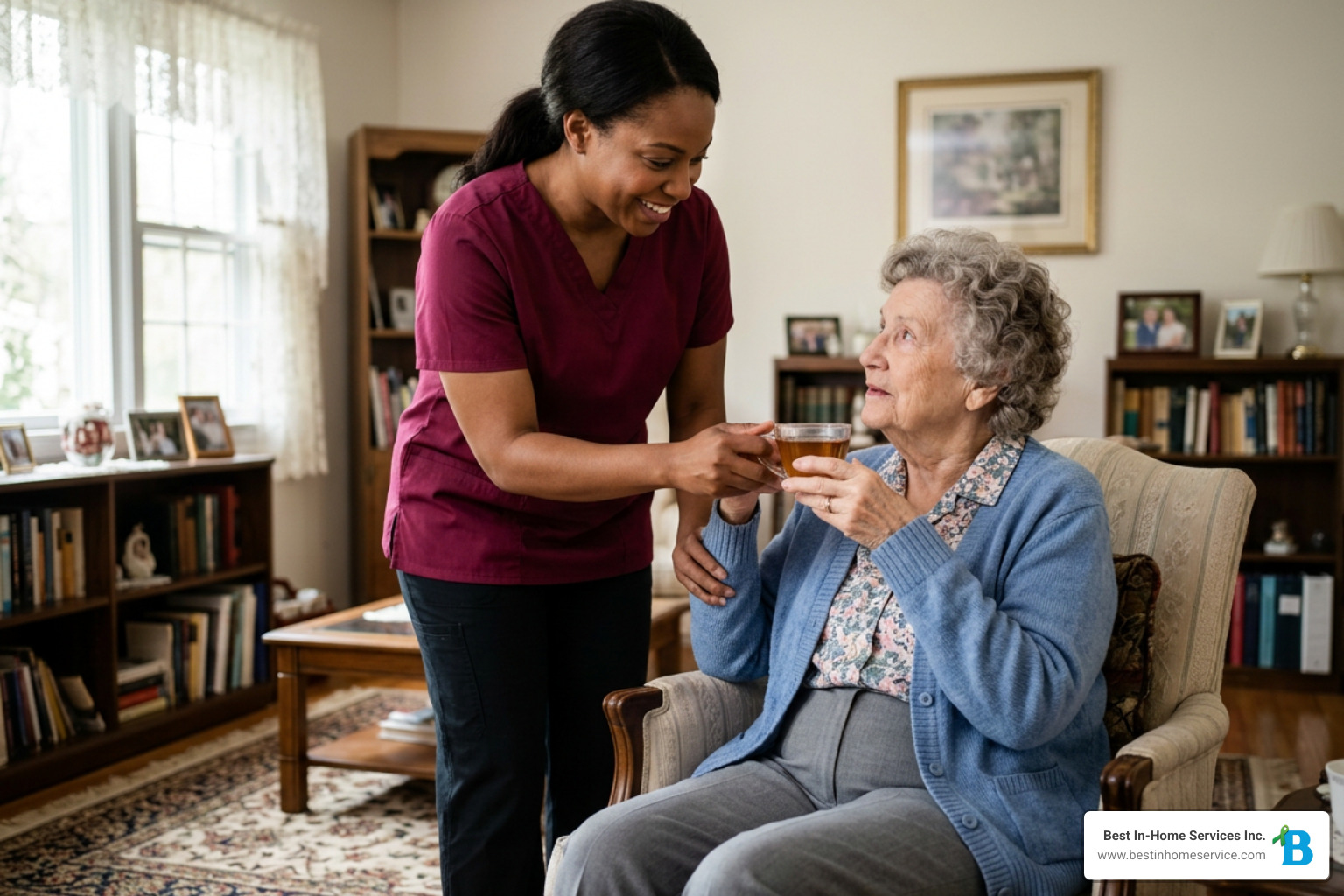
Companion care and personal care form the foundation of non-medical elder care. These services focus on supporting independence while ensuring safety inside the home.
- Companion Services: Ideal for seniors who need social engagement, light housekeeping, meal planning, grocery shopping, and help with errands. Companion visits reduce social isolation, which is a major contributor to cognitive and physical decline in aging adults.
- Personal Care: Involves hands-on assistance with essential Activities of Daily Living (ADLs). This includes bathing, grooming, dressing, toileting, incontinence care, and transfer or mobility assistance.
When comparing rates, companion care typically sits at the lower end of hourly billing, whereas hands-on Personal Care commands a slightly higher rate due to the physical skill and certified training involved. Most licensed agencies require a shift minimum (often 3 to 4 consecutive hours per visit) to ensure consistent staffing and quality care. For families looking for general domestic assistance, integrating homemaker and Home Services alongside personal care provides a balanced, cost-effective schedule.
Specialized Memory and 24/7 In Home Elder Care Services
Cognitive impairments such as Alzheimer’s disease and other forms of dementia require specialized behavioral techniques, structured routines, and proactive safety management.
- Memory Care Protocols: Professional memory caregivers are trained in redirection techniques, managing sundowning symptoms, sensory engagement, and fall prevention. Specialized memory care helps reduce anxiety, prevent wandering, and preserve dignity.
- Around-the-Clock Monitoring: For seniors with advanced cognitive decline or severe physical frailty, continuous care prevents nighttime accidents and wandering. This is typically structured as 24-hour shift care (where multiple caregivers rotate in 8- or 12-hour shifts to remain awake and alert at all times) or live-in care.
Explore our dedicated Alzheimer’s Care solutions and consult our guide on Dementia Care in Your Own Home: All You Need to Know to understand how customized memory care plans are built around your family’s routine.
Post-Hospital and Transitional In-Home Care Support
The transition from a hospital or rehabilitation center back home is a critical window where the risk of readmission is highest. Transitional care plans are designed for short-term, intensive recovery to help seniors regain physical strength and manage daily tasks safely.
Key elements of post-hospital assistance include:
- Safe transfer and mobility support to prevent immediate fall injuries.
- Medication reminders and reconciliation to prevent dosing errors.
- Accompaniment to follow-up physician and physical therapy appointments.
- Meal preparation aligned with post-discharge dietary guidelines.
Read our complete breakdown in Post-Hospital Care: Your Guide to After Hospital Care at Home to see how transitional plans prevent hospital readmissions. For families coordinating both medical and personal assistance, understanding Private Home Health Care: Finding the Best Help for Your Home ensures seamless collaboration between visiting nurses and everyday caregivers.
Comparing In-Home Senior Care vs. Assisted Living and Nursing Homes
Deciding between aging in place and moving into a residential senior facility involves evaluating both financial costs and lifestyle preferences. While institutional facilities charge a bundled monthly fee covering room, board, and basic oversight, costs escalate quickly as an individual’s care tier increases.
In-home care offers full financial flexibility: you only pay for the exact hours of care your loved one actually needs.
| Care Model | Typical Monthly Cost Dynamic | Level of Personalized Attention | Living Environment | Flexibility of Schedule |
|---|---|---|---|---|
| In-Home Care (Part-Time: 15–20 hrs/wk) | Low to Moderate (Hourly billing based strictly on scheduled hours) | 1-on-1 dedicated attention from a matched caregiver | Familiar personal home, maintaining routines and community ties | Completely customized; scale hours up or down as needs change |
| In-Home Care (24/7 or Live-In) | Moderate to High (Reflects continuous around-the-clock staffing) | 1-on-1 dedicated attention with zero shared staff | Familiar personal home with personalized safety adjustments | Immediate adjustments without room transfers |
| Assisted Living Facility (ALF) | High base rate + tiered surcharge fees for every added ADL assistance | Shared staff (typically 1 aide per 8–15 residents) | Private or semi-private apartment in an institutional facility | Fixed facility schedules for meals, bathing, and group activities |
| Skilled Nursing Facility (Nursing Home) | Very High (Reflects intensive clinical staffing and 24/7 institutional overhead) | Shared clinical staff (1 nurse/aide to multiple patients) | Hospital-like room setting with structured clinical oversight | Highly regimented clinical protocols and institutional schedule |
Choosing in-home assistance eliminates disruptive facility relocations. Learn more about Why Senior Care at Home is the Best Choice for Aging in Place to see how one-on-one attention supports long-term emotional well-being and independence.
Key Payment and Financing Options for In-Home Care
Funding elder care requires blending private resources with available public benefits. Navigating these avenues early ensures your family avoids unexpected out-of-pocket strain.
- Private Pay & Family Contributions: The most direct way to fund non-medical home care. Families use retirement savings, pension income, home equity lines of credit, or pooled family contributions to pay for tailored hourly visits.
- Long-Term Care Insurance (LTCI): Unlike standard medical insurance, comprehensive LTCI policies are designed specifically to cover non-medical personal care, companion services, and memory support once an individual requires assistance with two or more ADLs.
- Veterans Affairs (VA) Aid and Attendance: Eligible veterans and surviving spouses who require help with daily living activities can qualify for monthly VA pension enhancements to cover home care providers.
- State Medicaid Waiver Programs: For seniors meeting state financial and medical necessity thresholds, programs like the In-Home Care – Illinois Department on Aging Community Care Program provide supportive home services to help seniors avoid nursing home placement.
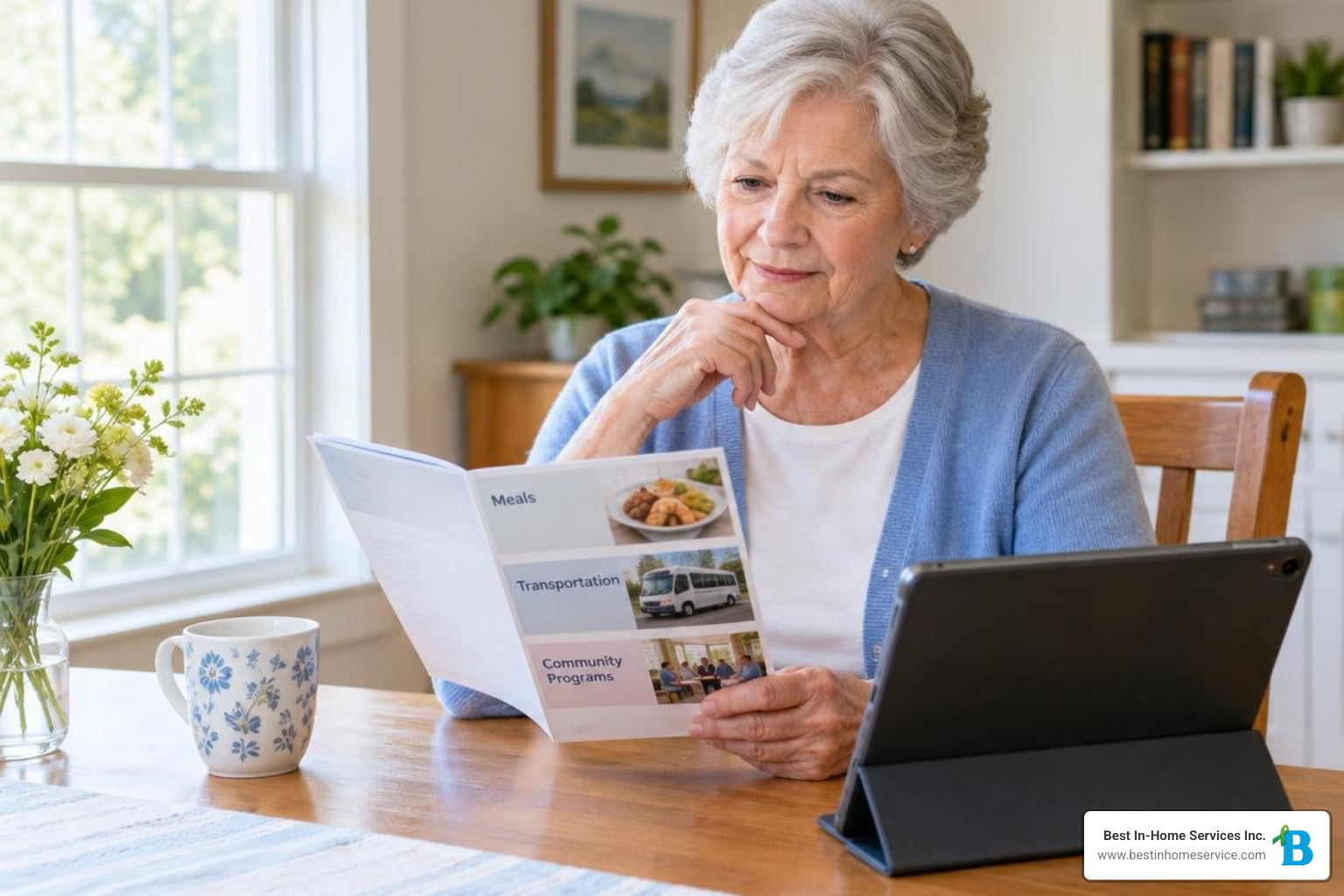
- County-Level Supportive Programs: Many counties provide grant-funded senior wellness, nutrition, and chore supports. For example, explore local resources like Community Services Programs | DuPage Co, IL to identify local community-based elder programs.
Review our detailed guidance on Affordable Home Care for Seniors in Chicago to discover smart ways to optimize care hours and utilize benefit programs effectively.
How to Choose, Vet, and Budget for Home Care Providers

Finding the right care partner requires balancing cost transparency with rigorous caregiver vetting. While hiring an independent, direct-hire caregiver from an online classified may seem cheaper initially, it places full legal, tax, worker’s compensation, and background-checking responsibilities on your family.
Partnering with a state-licensed, bonded home care agency eliminates these liabilities and ensures continuous caregiver coverage if your primary aide falls ill.
For a stress-free vetting roadmap, check out How to Pick the Best In-Home Care Providers Without Losing Your Mind and read How to Navigate Home Care Help for Your Aging Parents.
Essential Questions to Ask When Interviewing Home Care Agencies:
- Licensing and Background Screening: Are your caregivers W-2 employees who have passed state and federal background checks, reference verifications, physical exams, and drug tests?
- Specialized Dementia Training: How are caregivers trained to manage wandering, memory loss, agitation, and communication challenges?
- Billing Transparency and Minimums: What is your exact hourly rate, are there weekend or holiday differentials, and what is your minimum shift requirement?
- Care Plan Flexibility: How quickly can care hours be increased, decreased, or put on temporary hold if our family’s needs change?
- Emergency and After-Hours Support: How does the agency handle backup staffing when a caregiver has an emergency or calls in sick?
Frequently Asked Questions About In-Home Care Costs
Does Medicare pay for non-medical in-home elder care?
No. Standard Medicare coverage is strictly limited to short-term, intermittent skilled medical care (such as physical therapy, wound care, or occupational therapy) ordered by a physician and provided by a Medicare-certified home health agency. Medicare does not pay for ongoing, non-medical personal care, companion services, meal preparation, or housekeeping.
What is the difference between hourly care and 24/7 live-in care costs?
Hourly care is billed for the exact number of hours worked, which is ideal for part-time assistance or split shifts during mornings and evenings. When care is required 24 hours a day, it can be staffed as continuous 24-hour shift care (two to three rotating awake caregivers) or live-in care (where a designated caregiver stays in the home, provided they receive uninterrupted sleep and private accommodations).
How do families arrange temporary respite care to lower ongoing expenses?
Respite care provides scheduled, short-term relief for primary family caregivers, allowing them to rest, travel, or attend to personal responsibilities while ensuring their aging loved one receives professional care. Structuring 10 to 15 hours of weekly respite care is an affordable way to prevent family burnout while keeping overall care costs low.
Explore our comprehensive guide on The Ultimate Guide to Respite Care Options in Chicago Area to see how respite plans are customized for family caregivers.
Conclusion
Planning for long-term elder care does not have to be overwhelming. By understanding the specific care types, comparing home-based independence against institutional facility costs, and tapping into available insurance and public benefits, you can create a safe, sustainable care plan that fits your family budget.
At Best In-Home Services Inc., our certified caregivers provide compassionate 24/7 support, dedicated Alzheimer’s and memory care, and personalized daily living assistance across Chicago and the surrounding suburbs.
Schedule your Free Assessment today or explore our full range of in-home Services to give your loved one the attentive, dignified care they deserve.





 1-224-636-5200

 1-224-636-5210
 425 Huehl Rd 13B Northbrook IL 60062