
What Is a Home Health Care Aide — and Do You Need One?
A home health care aide is a trained professional who helps elderly, disabled, or chronically ill individuals with personal care and basic health-related tasks — right in the comfort of their own home.
Here’s a quick summary of what you need to know:
| Question | Quick Answer |
|---|---|
| What do they do? | Help with bathing, dressing, grooming, mobility, meals, and basic health monitoring |
| Who do they help? | Seniors, people with disabilities, those recovering from illness or surgery |
| Who supervises them? | A registered nurse (offsite or intermittent onsite) |
| Where do they work? | Private homes, assisted living, group homes |
| Are they the same as a personal care aide? | No — home health aides have more training and can perform basic health tasks |
| How much do they cost? | Agency rates typically $30–45/hour |
| Does Medicare cover them? | Only when combined with skilled nursing or therapy services |
For families in Chicago caring for a loved one with dementia, memory issues, or declining independence, this question often comes up at a stressful moment. Maybe your parent has started struggling to bathe safely. Maybe you’re exhausted from being the only caregiver. Maybe you’re not sure whether what your loved one needs is medical care or personal care — or both.
You’re not alone. Home health and personal care aides held about 4.3 million jobs in 2024, and demand is growing fast — projected to increase 17% by 2034. That growth reflects a simple truth: more families are choosing to keep their loved ones at home, and they need qualified help to do it safely.
This guide will walk you through exactly what a home health care aide does, what they can and can’t provide, how much it costs, and how to find the right fit for your family.
Defining the Role of a Home Health Care Aide
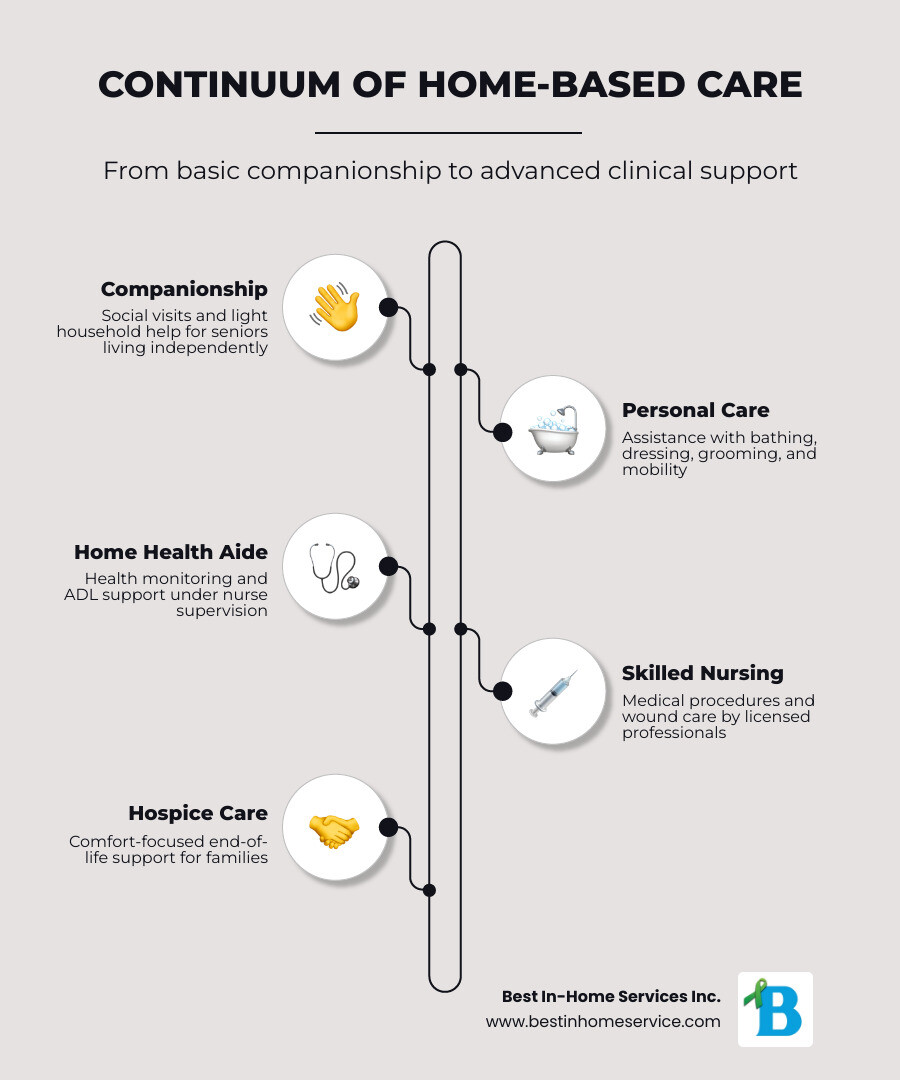
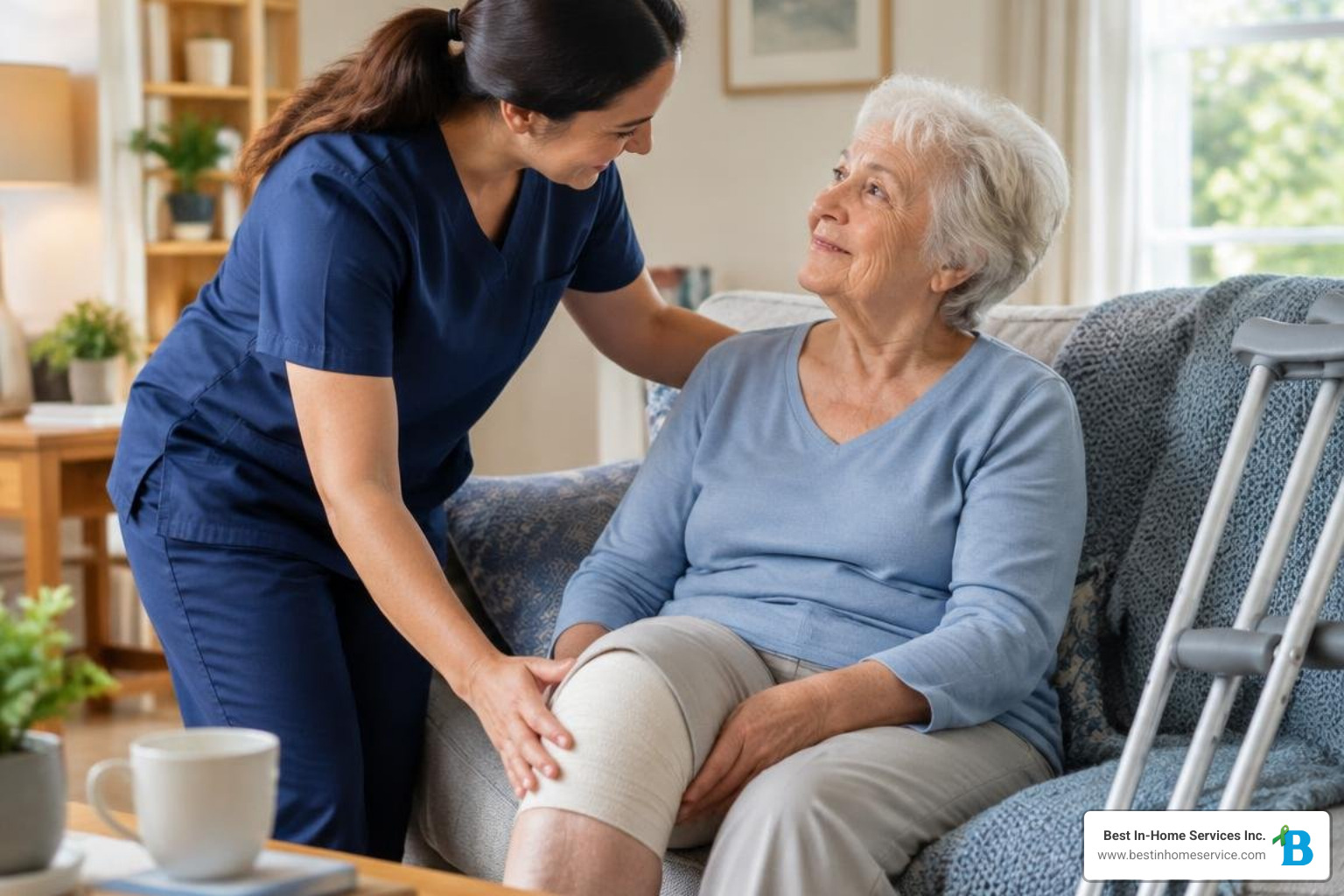
When we talk about a home health care aide, we are talking about a vital link in the healthcare chain. These professionals are often referred to as “health care paraprofessionals.” While they aren’t nurses, they are trained to handle more than just “checking in” on someone. They are on the front lines, observing changes in a client’s condition and assisting with the most intimate personal care needs.
The primary focus of a home health care aide is helping with Activities of Daily Living (ADLs). These are the essential tasks we often take for granted until they become difficult, such as getting out of bed, using the restroom, or maintaining hygiene. Because they are trained in medical monitoring, they can also track vital signs and report any red flags to a supervising Registered Nurse (RN). To learn more about the formal trajectory of this profession, you can explore this Home Health Aide Career guide.
Home Health Care Aide vs. Personal Care Aide
It is very common to hear these terms used interchangeably, but there are distinct differences, especially regarding certification and the level of care provided.
- Home Health Care Aide (HHA): These aides must meet federal training standards (usually 75 hours) and can perform basic health-related tasks like checking a pulse or assisting with prescribed exercises. They are supervised by medical professionals.
- Personal Care Aide (PCA): PCAs focus primarily on companionship and non-medical tasks. While they are incredibly valuable, they usually don’t have the same clinical training as an HHA.
- Homemaker: A homemaker focuses almost entirely on the environment—cleaning, laundry, and meal prep—rather than direct physical “hands-on” care of the person.
| Feature | Home Health Aide (HHA) | Personal Care Aide (PCA) | Homemaker |
|---|---|---|---|
| Medical Tasks | Yes (Basic) | No | No |
| Personal Hygiene | Yes | Yes | No |
| Housekeeping | Light | Yes | Primary Focus |
| Supervision | Registered Nurse | Varies | Agency/Family |
| Training | 75+ Hours | Varies by State | Minimal |
Specialized Support for Veterans
For our veterans in the Chicago and North Chicagoland areas, the VA offers a specific program called Homemaker and Home Health Aide Care. This is part of the VA’s Standard Medical Benefits Package. If a veteran needs help with ADLs or if their primary family caregiver is feeling the weight of caregiver burden, these services can be a lifesaver.
These services are designed to help veterans remain in their own homes rather than moving into institutional care. Whether it’s respite care to give a spouse a break or daily assistance with grooming and mobility, the VA program is a crucial resource for those who have served.
Essential Services and Daily Responsibilities

The day-to-day life of a home health care aide is varied and deeply personal. We often say that no two days are the same because no two clients are the same. However, the core of home services usually revolves around three pillars: physical care, clinical monitoring, and emotional support.
Clinical Tasks of a Home Health Care Aide
While they aren’t performing surgery, HHAs do handle several clinical responsibilities that require specific training. According to the Occupation Profile for this role, these tasks include:
- Vital Sign Monitoring: Checking pulse, temperature, and respiration rates.
- Medication Assistance: Giving prescribed oral medications under the written direction of a physician or nurse.
- Wound Care: Changing simple, non-sterile bandages.
- Specialized Equipment: With additional training, some aides assist with medical equipment like ventilators or braces.
- Physical Therapy Support: Helping clients perform range-of-motion exercises prescribed by a therapist.
Emotional and Social Support
Beyond the physical, the “heart” of the job is companionship. Many seniors in areas like Winnetka or Hinsdale may experience isolation as their mobility decreases. A home health care aide provides social perceptiveness and active listening that can significantly improve a client’s mental health.
They aren’t just there to “do chores”; they are there to be a friendly face, to engage in conversation, and to act as the eyes and ears for the family. They document changes in mood or behavior, which is especially critical for our clients receiving specialized memory services.
Career Requirements and Industry Outlook through 2034
If you are looking to hire an aide, or perhaps considering a career in the field, it’s important to understand the rigorous standards involved. This isn’t just a “job”—it’s a regulated profession.
The Occupational Outlook Handbook highlights that HHAs working for agencies that receive Medicare or Medicaid funding must complete at least 75 hours of formal training and pass a competency evaluation. In Illinois, these requirements ensure that every aide entering a home in Lake County or Cook County has a baseline of essential knowledge.
The Growing Demand
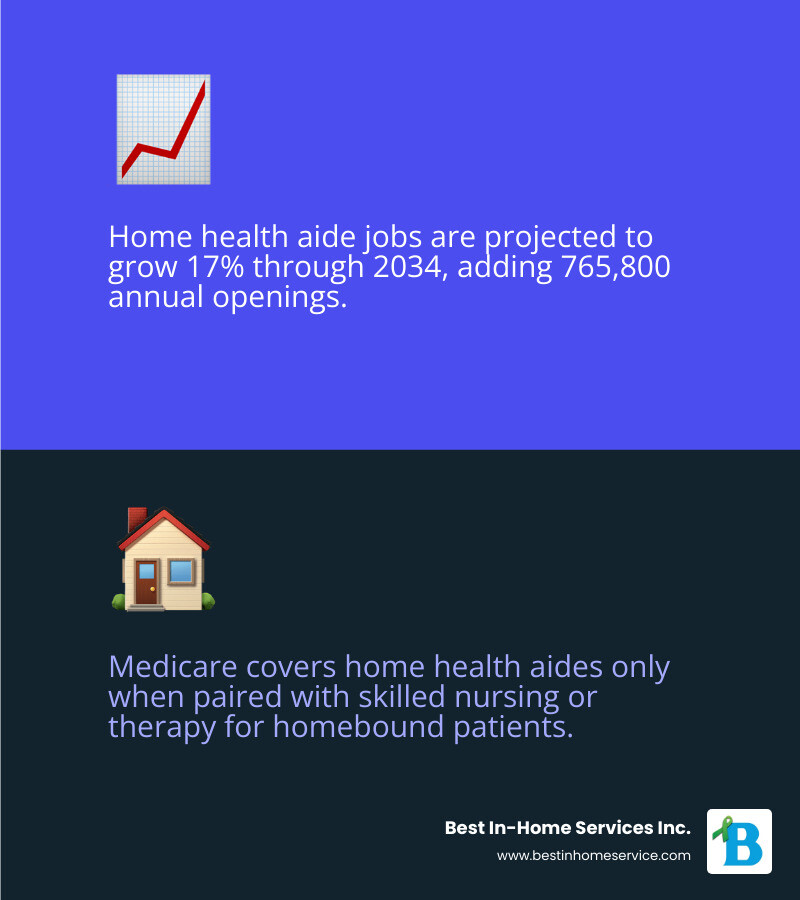
The numbers are staggering. Employment in this field is projected to grow 17% from 2024 to 2034, which is much faster than the average for all occupations. This translates to roughly 765,800 job openings every year over the decade. As the population ages—with the 65-and-older group expected to hit 78.3 million by 2040—the need for skilled home care will only intensify.
Skills and Physical Demands
Being a home health care aide is physically and emotionally demanding. Successful aides possess:
- Physical Stamina: The ability to lift, turn, and transfer clients safely using proper body mechanics.
- Infection Control Knowledge: Strict adherence to hygiene protocols to prevent the spread of illness.
- Integrity: Working in a private home requires a high level of trust and ethical behavior.
- Time Management: Balancing clinical tasks, personal care, and reporting within a set schedule.
- Certifications: Most professional aides maintain up-to-date CPR and First Aid certifications.
Navigating Costs and Hiring Options
One of the most common questions we hear at Best In-Home Services Inc. is: “How do we pay for this?” Understanding the financial landscape is key to making a sustainable plan for your loved one.
Agency rates for in-home care in the Chicago area generally fall between $30 and $45 per hour, depending on the level of assistance, the schedule, and whether care falls on a weekend or holiday.
Best In-Home Service, Inc. provides non-medical home care. Our rates are $35 per hour for companion and homemaker care, $37 per hour for personal care assistance and respite care, $40 per hour for overnight and weekend care, and $42 per hour for dementia and Alzheimer’s care. Holiday care is $45 per hour. A 3-hour minimum applies per visit, and continuous 24-hour care is quoted at a customized rate.
Skilled medical services — wound care, injections, IV therapy, and other clinical tasks requiring a licensed nurse — are arranged separately through a licensed home health agency and are priced differently.
Insurance and Coverage Eligibility
Navigating insurance can feel like a maze. Here is the breakdown of how most families cover the cost:
- Medicare: Original Medicare (Part A and B) does not pay for a home health care aide if that is the only service you need. It only covers an aide if you are also receiving skilled nursing or therapy services and are considered “homebound.”
- Medicaid: This is a major funder of home care for those who meet income and asset requirements. Programs vary, but Medicaid often covers long-term “custodial” care that Medicare skips.
- Long-Term Care Insurance: If your loved one has a private policy, it usually covers home health aides once certain “benefit triggers” (like needing help with two or more ADLs) are met.
- Veterans Benefits: As mentioned, the VA can provide significant support for eligible veterans.
Agency vs. Independent Hiring
When it comes time to hire, you have two main paths: using a professional agency or hiring an independent “registry” worker.
- The Agency Path: Agencies like ours handle the “heavy lifting.” We conduct background checks, manage tax withholding, provide liability insurance, and—crucially—provide backup care if an aide gets sick.
- The Independent Path: You might save a few dollars per hour, but you become the legal employer. This means you are responsible for verifying credentials, handling payroll taxes, and finding a replacement if the worker doesn’t show up.
For many families, the peace of mind that comes with an agency is worth the investment. It allows you to be the “son” or “daughter” again, rather than the “human resources manager.” For a deeper dive, check out our guide on Home Care vs Assisted Living.
Frequently Asked Questions about Home Care
Does Medicare pay for a home health care aide?
Only under very specific conditions. It must be part of a doctor-authorized plan of care that includes skilled nursing or physical/occupational therapy. Medicare will not pay for an aide to come in solely for “custodial care” (like help with bathing or meal prep) if that is all the patient needs.
What is the difference between a CNA and an HHA?
A Certified Nursing Assistant (CNA) often works in hospitals or nursing homes and has a slightly broader clinical scope. A home health care aide (HHA) is specifically trained for the home environment. While their tasks overlap significantly, HHAs focus more on the nuances of “aging in place” and home safety.
How do I know when it is time to hire help?
Look for the “red flags”:
- Hygiene Decline: Is their hair unwashed? Are they wearing the same clothes for days?
- Weight Loss: Is the fridge empty, or is food rotting?
- Mobility Issues: Have they had “near misses” or actual falls?
- Isolation: Are they withdrawing from social activities or failing to answer the phone?
- Safety: Are they leaving the stove on or forgetting to take vital medications?
Conclusion
Deciding to bring a home health care aide into your home is a big step, but it is often the step that preserves a senior’s independence and dignity. Whether you are in Naperville, Evanston, or the heart of Chicago, the goal remains the same: providing a safe, compassionate environment where your loved one can thrive.
At Best In-Home Services Inc., we specialize in this exact journey. We provide 24/7 support with a team of certified staff who are experts in dementia, memory, and elder care. We don’t believe in “one size fits all” care; we create custom care plans tailored to the specific needs of your family.
If you are ready to explore how professional support can change your family’s daily life, we are here to help. From 24-hour recovery support to daily personal care assistance, let us provide the expertise and heart your loved one deserves.
Contact Best In-Home Services Inc. today to learn more about our personalized care options across Illinois.


 1-224-636-5200
 1-224-636-5210
  425 Huehl Rd 13B Northbrook IL 60062