
What Is Live-In Care — and Is It Right for Your Family?
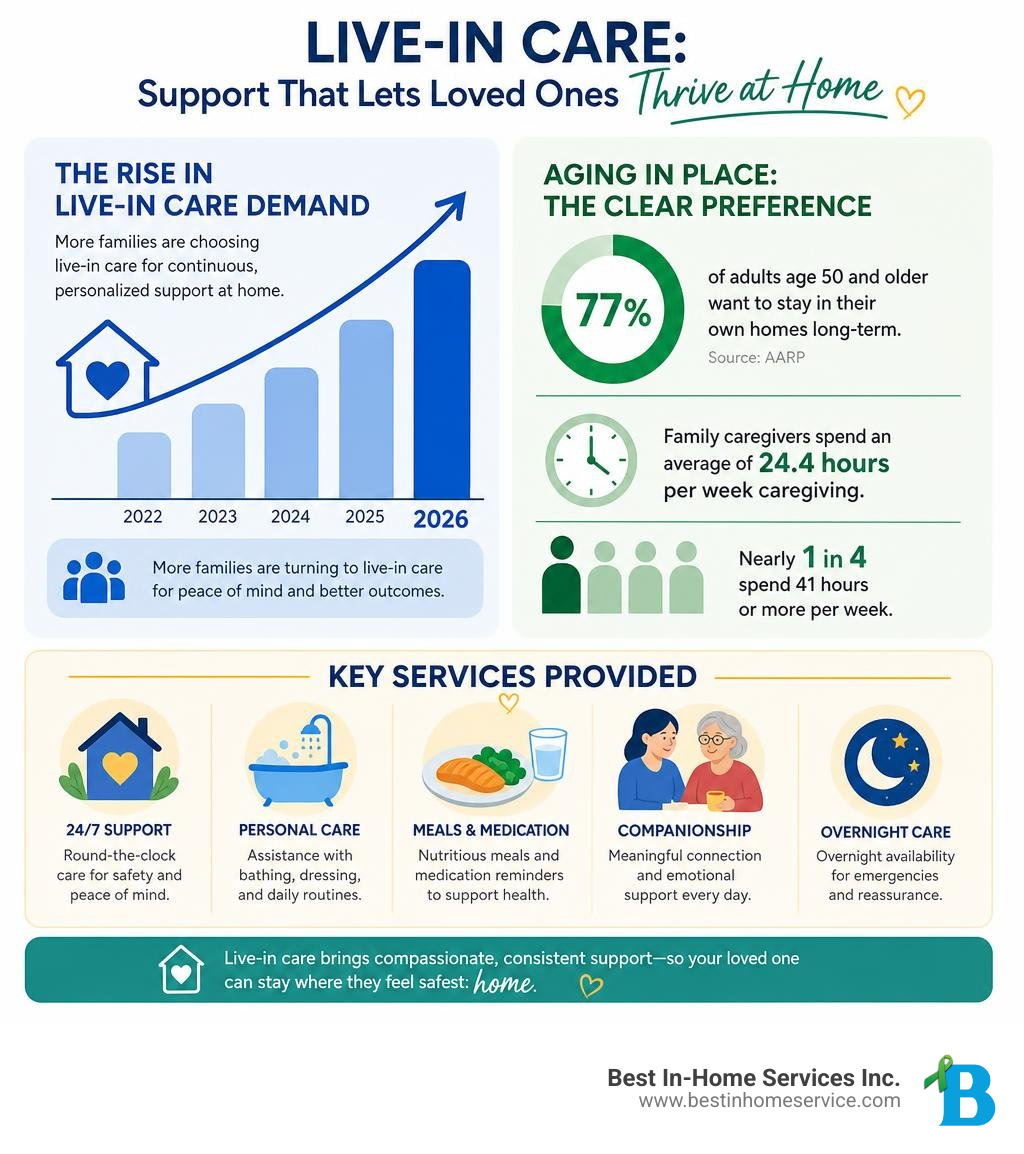
Live-in care is a type of home care where a professional caregiver moves into your loved one’s home to provide round-the-clock support — helping with daily tasks, personal care, companionship, and safety, without requiring a move to a facility.
Quick answer: What does live-in care include?
- A trained caregiver lives in the home full-time
- Support with bathing, dressing, meals, and medication reminders
- Companionship and emotional support throughout the day
- Overnight availability for safety and emergencies
- Personalized care tailored to the individual’s needs and routine
The desire to age at home is almost universal. According to AARP, 77% of adults age 50 and older want to stay in their own homes long-term. Yet the reality of providing that care often falls on family members — who spend an average of 24.4 hours per week caregiving, with nearly 1 in 4 spending 41 hours or more.
That’s a heavy load. And for many Chicago-area families caring for a loved one with dementia, mobility challenges, or other complex needs, part-time help simply isn’t enough.
Live-in care fills that gap — offering a dedicated, consistent presence at home without the upheaval of moving to a nursing home or assisted living facility.
I’m Lily Harrison, General Manager at Best In-Home Services Inc., where I’ve spent years helping Chicago families navigate live-in care decisions for seniors needing dementia support, daily assistance, and 24/7 care at home. In this guide, I’ll walk you through everything you need to know — from how live-in care works to what it costs and how to choose the right caregiver.
Understanding Live In Care: How It Works and Who It Helps
When we talk about live in care, we are referring to a highly personalized arrangement designed to keep your loved one safe, healthy, and happy in their own home. Instead of packing up decades of memories to move into an institutional facility, the senior remains in their familiar environment. A professional caregiver moves in, utilizing a spare bedroom, and integrates seamlessly into the daily routine.
At Best In-Home Services Inc., we see how this model transforms lives. It is not just about having a pair of hands to help; it is about building a deep, trusting relationship. The caregiver becomes a reassuring, consistent presence who understands exactly how your loved one likes their morning coffee, which neighborhood paths they prefer to walk, and when they need quiet time.
A professional caregiver assists with a wide range of essential daily activities, including:
- Personal Care: Respectful assistance with bathing, grooming, dressing, and toileting.
- Activities of Daily Living (ADLs): Help with mobility, transferring from bed to wheelchair, and fall prevention.
- Companionship: Engaging in conversation, playing games, reading, and accompanying the senior on light outings.
- Nutrition and Meals: Planning and preparing healthy, home-cooked meals. Proper nutrition is vital for seniors, which is why we emphasize The Importance of Nutrition and Meal Planning in Senior Care to keep our clients vibrant and energized.
- Household Help: Light housekeeping, laundry, running errands, and organizing the home to eliminate trip hazards.
This level of support is ideal for seniors who are experiencing declining mobility, recovering from a medical event, or living with progressive neurological conditions. If you are wondering how to find a caregiver who fits your family’s unique lifestyle, interests, and medical needs, check out our guide on Finding the perfect match among professional caregivers.
24-Hour Care vs. Live In Care
A common source of confusion for families is the difference between “live-in care” and “24-hour care.” While they both provide round-the-clock safety, their operational structures, shift patterns, and costs differ significantly.
- Live-In Care: In this setup, typically one primary caregiver lives in the home for 4 to 5 days a week, and a second caregiver covers the remaining days. The caregiver is provided with a private bedroom and must be allowed an 8-hour sleep period (usually with at least 5 hours of uninterrupted sleep) and a few hours of personal break time during the day. Because the caregiver is sleeping at night, this option is best suited for seniors who sleep through the night but need a reassuring presence nearby in case of an occasional emergency.
- 24-Hour Care: This model is designed for seniors who require continuous, active monitoring throughout the day and night. It does not rely on a single caregiver living in the home. Instead, we schedule multiple caregivers (usually two or three) to work rotating 8-hour or 12-hour shifts. Because these caregivers do not sleep during their shifts, they remain fully awake and active to assist with nighttime wandering, frequent toileting, or medical monitoring.
For families in the Chicago suburbs, including those seeking care in Schaumburg, IL, choosing the right structure is crucial. If your loved one is recovering from a major surgery or stroke, you can learn more about how we structure this specialized support by reading about 24-hour in-home care in Illinois.
Specialized Live In Care for Dementia and Chronic Illness
Caring for a loved one with progressive cognitive decline, such as Alzheimer’s disease or other forms of dementia, presents unique challenges. Behavioral changes, confusion, sun-downing, and wandering require a caregiver who is not just present, but specialized.
We train our professional staff to use gentle behavior modification techniques, redirection, and memory-anchoring activities. Having a consistent caregiver in a familiar environment is often the single best way to reduce the anxiety and confusion that dementia patients experience. When a senior with memory loss is forced to relocate to a new facility, the sudden change in surroundings can accelerate cognitive decline.
Through our specialized services, we support families in Cook and DuPage counties with dedicated local resources. To understand how we tailor daily routines, safety protocols, and mental stimulation to memory loss, explore our detailed resource on Live-in care for dementia.
Respite and Post-Hospital Recovery Care
Live-in care does not always have to be a permanent, long-term commitment. It is incredibly effective for temporary situations, such as:
- Post-Hospital Recovery: Returning home after a major surgery, illness, or hospital stay can be overwhelming. The risk of readmission is high during the first 30 days. Our caregivers provide dedicated support with mobility, medication tracking, and physical therapy exercises. Learn how to prepare your home and coordinate this transition with our Post-hospital care guide.
- Respite Care for Family Caregivers: Providing unpaid care to an aging parent is a beautiful act of love, but it takes a physical and mental toll. In 2026, over 60% of family caregivers report having to cut back on work hours or take leaves of absence. To prevent caregiver burnout, families use our respite services to step away for a week, go on vacation, or simply rest, knowing their loved one is in expert hands. For families in Cook County and the surrounding suburbs, we have compiled The ultimate guide to respite care options in Chicago area to help you find temporary relief.
The Advantages of Live-In Care Over Facility Care
When families realize that independent living is no longer safe, the default choice is often a nursing home or an assisted living facility. However, professional live in care offers a compelling alternative that keeps seniors where they want to be most: home.
To help you compare your choices, let’s look at how personalized, one-on-one home care measures up against facility-based care:
| Feature | Professional Live-In Care | Assisted Living / Nursing Homes |
|---|---|---|
| Caregiver-to-Resident Ratio | 1:1 Dedicated Attention | 1:10 to 1:20 (Staff must split time among many residents) |
| Living Environment | Comfort of their own home; surrounded by personal memories and pets | Institutional setting; requires downsizing and stressful relocation |
| Daily Routine | Completely personalized; eat, sleep, and bathe on the senior’s schedule | Fixed schedule; meals and activities are set by the facility |
| Health & Safety | Minimized exposure to community-spread viruses; immediate fall response | Higher risk of infectious disease transmission; delayed response times |
| Cost for Couples | Highly cost-effective; one caregiver can often care for both spouses | Double the cost; facilities charge per bed or apartment |
For many families, the decision comes down to quality of life. In a facility, a senior must adapt to the institution’s rules, meal times, and rotating staff. With a live-in caregiver, the care adapts entirely to the senior. This is particularly beneficial for couples who want to stay together but have different care needs.
If you are weighing these two paths for your family, we recommend reading our deep-dive comparison, Home care vs assisted living comparison.
The Cost of Live-In Care and Funding Options
Understanding the financial side of long-term care is essential for making an informed decision. The cost of hiring a live-in caregiver is influenced by several key factors:
- Geographic Location: Rates vary by region. In the Chicago metropolitan area, including affluent communities like Winnetka, Oak Brook, and Hinsdale, rates reflect the local cost of living and the high demand for certified care professionals.
- Level of Care Required: A senior who only needs companionship and light housekeeping will have different pricing than a senior with advanced Parkinson’s who requires complex physical transfers and constant monitoring.
- Agency vs. Private Hire: While hiring an independent caregiver off a job board might seem cheaper upfront, working with an agency like Best In-Home Services Inc. ensures that all caregivers are fully vetted, background-checked, bonded, insured, and backed by a team of supervisors who manage scheduling and emergency backups.

When it comes to paying for live in care, families often piece together a combination of funding sources:
- Private Pay: Using personal savings, retirement funds, or the proceeds from selling a home. Some families also utilize reverse mortgages to unlock home equity while keeping the senior in the home.
- Long-Term Care Insurance (LTCI): Many private LTCI policies cover non-medical in-home care, including live-in services. We recommend reviewing your policy early to understand the elimination period and daily benefit limits.
- Veterans Aid and Attendance Benefits: Eligible wartime veterans and their surviving spouses may qualify for a pension upgrade that helps cover the cost of daily in-home caregiving.
- State and Local Programs: In Illinois, there are resources designed to help seniors age in place. The Illinois Department on Aging offers support programs to prevent premature nursing home placement. You can learn more about these state-backed resources through the In-Home Care – Illinois Department on Aging portal.
- County-Specific Assistance: If you live in DuPage County, local programs may offer financial guidance or caregiver support. Check out the Community Services Programs | DuPage Co, IL page for localized aid options.
- Local Care Resources: Families looking for local caregiver support can also explore regional resources in Downers Grove or Lake County to understand what is available in their specific neighborhoods.
Frequently Asked Questions About Live-In Care
Navigating the logistics of home care can bring up many questions. Here are the answers to the most common questions families ask us.
Does Medicare pay for live-in care?
Unfortunately, no. This is one of the most common misconceptions. Medicare is designed to pay for acute, short-term medical care, such as hospital stays, doctor visits, and physical therapy. It does not cover “custodial care” — which includes non-medical assistance with activities of daily living like bathing, dressing, meal preparation, and round-the-clock supervision.
While Medicare may pay for intermittent visits from a home health nurse or physical therapist following a hospital discharge, the cost of a full-time live-in caregiver must be covered through private pay, long-term care insurance, VA benefits, or state-administered Medicaid waiver programs for those who qualify financially.
What are the space requirements for a live-in caregiver?
Because a live-in caregiver resides in the home for several days at a time, you must provide them with a private bedroom equipped with a comfortable bed, a place to store their clothing, and adequate lighting. The caregiver must also have access to a bathroom (it does not have to be strictly private, but they must be able to use it comfortably).
Additionally, the home environment must allow for a designated sleep break. The caregiver is entitled to 8 hours of sleep per night, and we build these expectations directly into our customized care agreements to ensure our staff remains rested, alert, and capable of providing the highest quality of care.
How is a live-in care plan established?
At Best In-Home Services Inc., we believe that successful care starts with a personalized roadmap. Establishing a care plan involves three simple steps:
- In-Home Assessment: We meet with the senior and their family at their home (whether in Chicago, Schaumburg, Naperville, or Lake County) to evaluate physical mobility, cognitive health, dietary needs, and personal preferences.
- Caregiver Matching: We match your loved one with a caregiver whose skills, personality, and experience align with their needs. If you want to see what the local job market looks like for these professionals, you can browse Live in Caregiver Jobs, Employment in Chicago, IL | Indeed.
- Drafting the Care Plan: We create a detailed daily schedule outlining meal times, medication reminders, exercise routines, and safety protocols. This plan is continuously monitored and adjusted by our management team as your loved one’s needs evolve.
Conclusion
Deciding how to care for an aging parent or spouse is one of the most emotional journeys a family can take. You want them to be safe, but you also want them to maintain their dignity, comfort, and independence.
At Best In-Home Services Inc., we are dedicated to helping families throughout Chicagoland — from the North Shore down to DuPage County — find peace of mind. Our certified, compassionate caregivers provide the 24/7 support your loved one needs to live a full, happy life in the comfort of their own home.
If you are ready to explore how we can support your family, read more about our philosophy and high standards of care at Why choose BIHS. To learn about our specific care programs, we invite you to Explore our personalized home care services and schedule a free in-home consultation today. Let us help you bring safety, comfort, and joy back into your loved one’s daily routine.





 1-224-636-5200
 1-224-636-5210
  425 Huehl Rd 13B Northbrook IL 60062