
Overnight Home Care: Help When Nighttime Is Hardest
Overnight home care is non-medical help provided in a person’s home during nighttime hours. A caregiver can help with trips to the bathroom, safe movement, bedtime routines, and reassurance if the person wakes up confused. It can be especially useful for older adults with mobility limits or memory loss, and for family caregivers who need sleep.
The right schedule depends on what happens at night. Some people need help only when they wake; others need a caregiver who stays awake to provide closer supervision. Overnight care covers nighttime needs, while 24-hour care also covers the day.
Best In-Home Services Inc. is a Northbrook-based non-medical home care provider licensed by the Illinois Department of Public Health (License #3000758). It is also approved by the Illinois Department on Aging under the Community Care Program and recognized by the Illinois Department of Human Services / Rehabilitation Services for the Home Service Program.
Lily Harrison is General Manager at Best In-Home Services Inc., which coordinates personalized in-home support, including overnight home care, for older adults and families in the Chicago area.
What Is Overnight Home Care and Who Benefits Most?
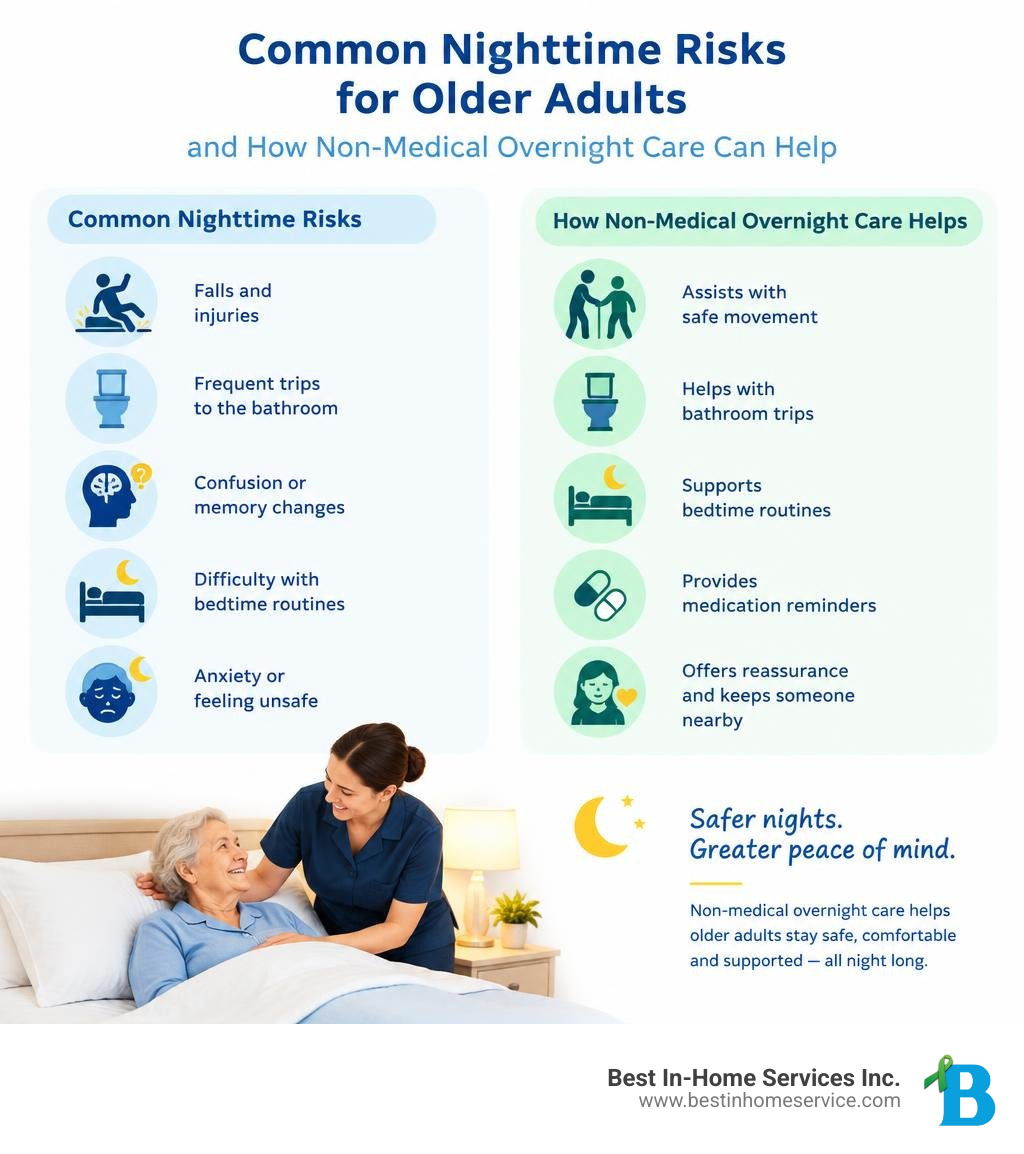
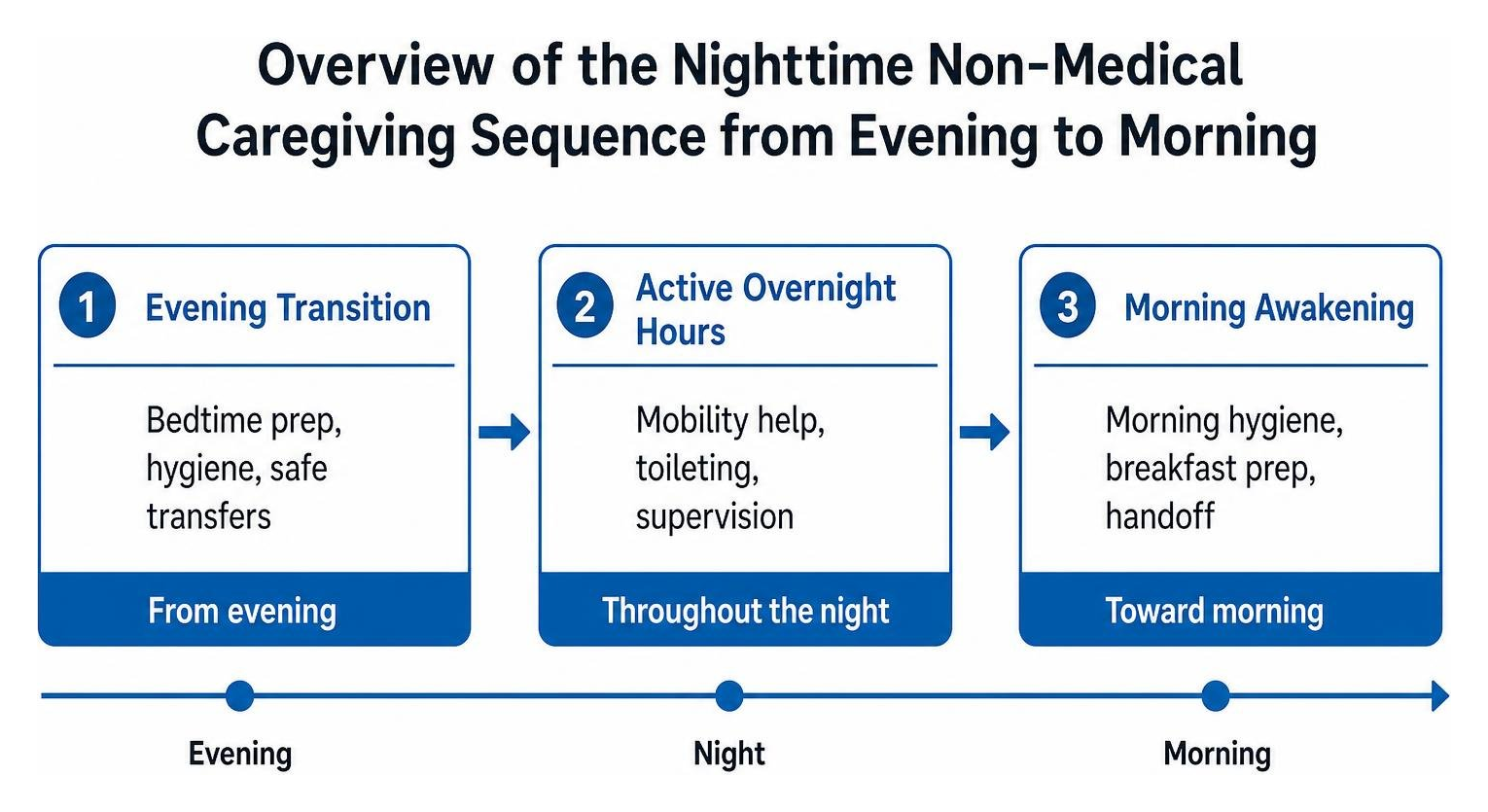
For many seniors, daytime activities run smoothly, but nighttime brings distinct challenges. Non-medical overnight care places a qualified, background-checked caregiver in the home through the evening and night. This support helps manage evening routines, assists with safe transfers, offers medication reminders, and ensures someone is present if difficulties arise.
Nighttime care allows seniors to remain comfortably in their familiar surroundings while maintaining steady routines. Whether an individual needs help settling in after dinner or requires guidance during a 2:00 AM walk to the bathroom, dedicated support bridges the vulnerable hours between dusk and dawn. Many families discover that arranging post-hospital care at home is particularly critical right after a medical procedure, when temporary weakness or grogginess makes unassisted movement risky.
Age-Related Sleep Disruptions and Nighttime Hazards
Sleep architecture naturally shifts as we age. Between 40% and 70% of older adults experience chronic sleep issues, ranging from frequent awakenings and insomnia to advanced circadian rhythm disruptions. As natural sleep patterns fragment, seniors frequently wake up disoriented in the dark.
Navigating a dark hallway with stiff joints, diminished night vision, or medication-related grogginess significantly heightens the risk of slips and falls. Furthermore, age-related changes in bladder control often necessitate multiple nighttime visits to the bathroom. Rushing to avoid an accident while half-asleep is one of the leading causes of serious household injuries among older adults.
Who Benefits from Non-Medical Nighttime Supervision
Non-medical nighttime supervision supports a wide range of individuals with diverse living situations:
- Independent Seniors Living Alone: Older adults who are largely self-sufficient during the day but feel anxious or physically unsteady when navigating their homes at night.
- Individuals with Progressive Mobility Impairments: Seniors using walkers, canes, or wheelchairs who need hands-on personal care assistance for safe transfers in and out of bed.
- Adults Recovering from Surgery or Illness: Individuals transitioning back home after orthopedic surgery, cardiac events, or acute illnesses who require temporary nighttime physical support.
- Individuals Experiencing Cognitive Decline: Seniors living with dementia, Alzheimer’s disease, or sundowning symptoms who may become disoriented, attempt to wander, or mistake the middle of the night for daytime.
Key Safety and Health Benefits of Nighttime Supervision

Having a steady, attentive presence during the night offers essential physical and emotional benefits for both seniors and their loved ones.
Fall Prevention, Mobility Support, and Emergency Response
Falls often lead to major health setbacks for older adults, and nighttime is when physical vulnerability peaks. A trained caregiver assists with every movement – helping seniors sit up safely on the edge of the bed, ensuring non-slip footwear is on, stabilizing their balance with a walker, and clearing dimly lit paths to the bathroom.
Beyond routine mobility assistance, a caregiver provides rapid, non-medical intervention should an unexpected event occur. If a senior suddenly experiences severe discomfort, becomes acutely confused, or suffers a sudden health issue, the caregiver immediately initiates proper safety protocols:
- Assessing the situation calmly without leaving the client unattended.
- Dialing 911 for professional emergency medical personnel if clinical intervention is warranted.
- Notifying designated family members immediately to keep everyone informed.
- Supplying first responders with vital non-medical details, such as recent changes in mobility, daily logs, and emergency contact lists.
Caregiver Respite and Rest for Primary Families
Family caregivers often take on nighttime duty in addition to working jobs and managing daytime household responsibilities. Waking up repeatedly to listen for footsteps or respond to calls for help leads to profound sleep deprivation, physical exhaustion, and burnout.
Utilizing structured respite care options for seniors gives family members their nights back. Spouses and adult children can sleep soundly through the night, confident that their loved one is in safe, professional hands, enabling them to maintain their own health and provide more patient, sustainable care during the daytime.
Comparing Service Models: Overnight Shifts vs. 24-Hour Live-In Care
Choosing the right care model requires understanding how shift structures, caregiver alertness, and daily living arrangements work.
Awake Shifts vs. Sleeping Shifts in Overnight Home Care
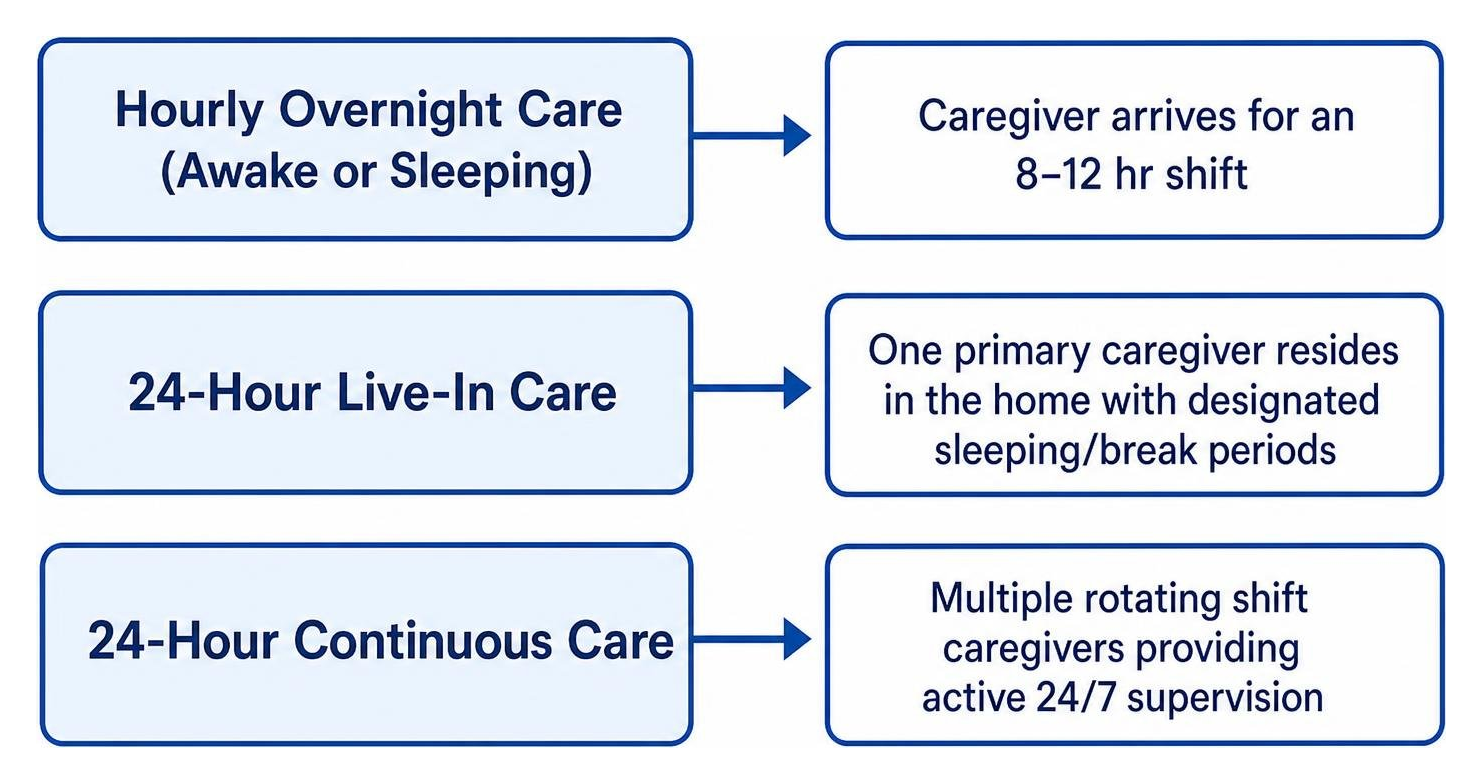
Overnight care is typically structured in one of two formats based on the client’s nighttime needs:
- Awake Overnight Shifts: The caregiver remains awake, fully alert, and actively attentive throughout the entire shift (typically 8 to 12 hours). This model is ideal for seniors with advanced dementia, high fall risks, frequent nighttime bathroom needs, or persistent wandering behaviors.
- Sleeping Overnight Shifts: The caregiver sleeps in a dedicated private room in the client’s home but is available to wake up and assist if the senior rings a bell or calls for help. This is best suited for seniors who usually sleep through the night but need reassurance or occasional help once or twice per evening.
When evaluating long-term arrangements, families often explore various live-in care options to see how sleeping shifts compare to daytime home support.
| Care Model | Caregiver Alertness | Best Suited For | Primary Living Requirements |
|---|---|---|---|
| Awake Overnight Care | Awake and active 100% of the shift | High fall risk, frequent wandering, regular nighttime toileting | Comfortable chair or designated monitoring area |
| Sleeping Overnight Care | Sleeps on-site, awoken when needed | Seniors who generally sleep well but need occasional help | Private bedroom and access to a bathroom |
| 24-Hour Live-In Care | Scheduled daily breaks and uninterrupted sleep periods | Seniors needing continuous companion and homemaker support | Dedicated private bedroom, board, and regular break coverage |
Overnight Shifts vs. Continuous 24-Hour Care
While overnight care concentrates exclusively on the evening and early morning hours, round-the-clock care spans all 24 hours of the day. Continuous 24-hour shift care utilizes two or three rotating caregivers working consecutive 8-to-12-hour awake shifts, ensuring constant vigilance.
For families dealing with late-stage progressive conditions, consulting a 24/7 dementia home care guide helps clarify when nighttime coverage alone is sufficient versus when full-day active supervision is required.
Specialized Nighttime Support for Memory Loss and Recovery
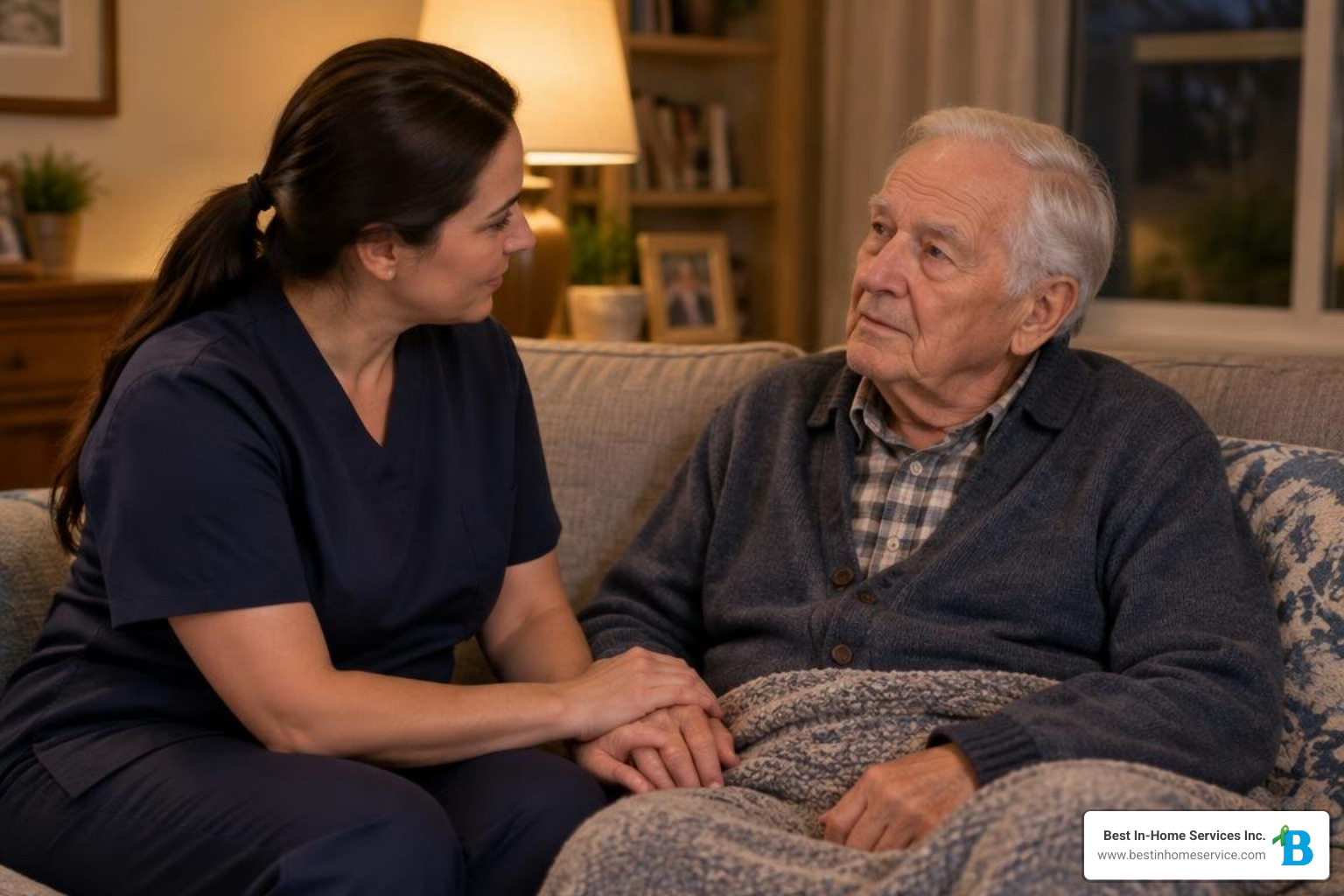
Nighttime non-medical care is uniquely valuable for individuals navigating cognitive decline or recovering from major hospital stays.
How Overnight Home Care Supports Dementia and Sundowning
Sundowning is a neurological phenomenon where confusion, anxiety, pacing, and agitation increase during late afternoon and evening hours. As natural daylight fades, shadows and low lighting can trigger visual misinterpretations, prompting individuals to pack bags, search for deceased relatives, or attempt to leave the house.
A trained memory caregiver provides vital support by:
- Establishing soothing, predictable bedtime routines to signal that it is time to rest.
- Offering calm, repetitive reassurance rather than correcting or arguing with disorientation.
- Monitoring external doors to prevent unsafe exit-seeking or wandering into cold weather.
- Gently redirecting midnight pacing toward safe, relaxing activities such as listening to soft music or having a light snack.
Families seeking comprehensive home memory strategies can learn more about dementia care in your own home to maintain environmental stability.
Short-Term Overnight Support Following Hospital Discharge
The first few nights following a hospital discharge represent a high-risk transition window. Anesthesia side effects, new medications, surgical incisions, and temporary weakness make simple movements hazardous.
Short-term overnight care provides practical support by managing transfers, offering timely non-medical medication reminders, assisting with hydration, and keeping living pathways clear. Utilizing targeted rehabilitation support at home during these initial weeks gives recovering seniors the physical backup they need to rest and rebuild strength safely.
Costs, Payment Options, and How to Choose a Reliable Provider
Understanding the logistical and financial framework of in-home senior support helps families plan sustainably.
Factors That Influence In-Home Care Costs
In-home care is structured to meet individual client needs rather than following a one-size-fits-all formula. The cost of in-home care in Chicago and the surrounding suburbs varies according to:
- The specific level of physical assistance required (e.g., companion support vs. hands-on personal transfer assistance).
- The total number of scheduled hours per week (keeping in mind standard 3-hour visit minimums for hourly shifts).
- The care schedule selected, including awake shifts, sleeping overnight shifts, or weekend coverage.
- Whether specialized memory support is needed.
- Any separate transportation mileage billing incurred when accompanying clients to community activities or appointments.
To fund overnight support, families frequently utilize private funds, long-term care insurance policies, or state-funded assistance programs. For qualifying individuals, state support resources such as In-Home Care – Illinois Department on Aging provide supportive services designed to help seniors remain safely in their residences.
Evaluating Caregiver Qualifications and Agency Licensing
When selecting a provider for nighttime care, families should verify that the agency adheres to rigorous regulatory standards. Best In-Home Services Inc. operates as an Illinois-licensed non-medical home care provider under Illinois Department of Public Health (IDPH) oversight.
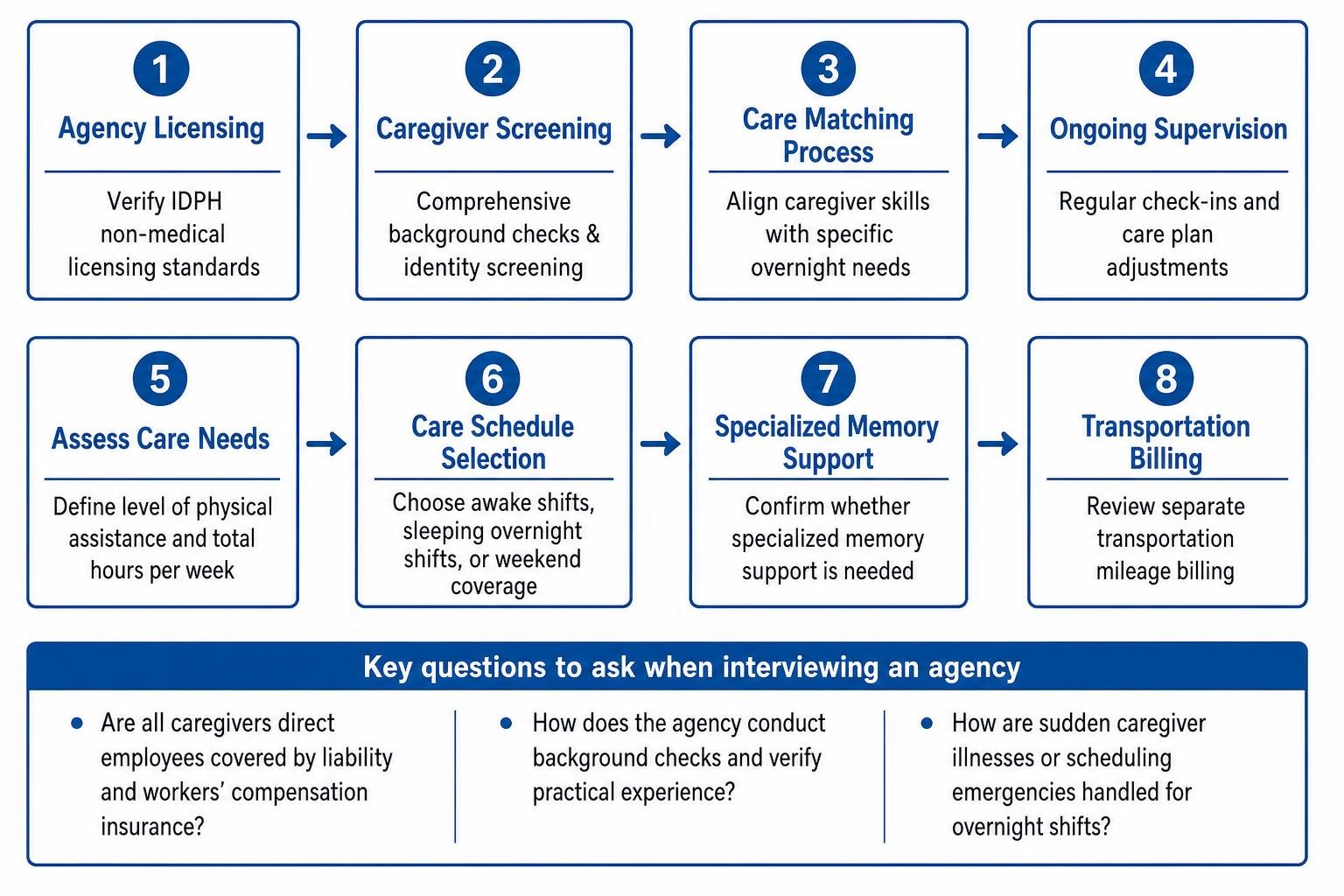
Key questions families should ask when interviewing an agency include:
- Are all caregivers direct employees covered by liability and workers’ compensation insurance?
- How does the agency conduct background checks and verify practical experience?
- How are sudden caregiver illnesses or scheduling emergencies handled for overnight shifts?
- How does the agency communicate shift notes and overnight observations to family members?
- Does the agency conduct periodic supervisory visits to ensure quality standards?
The Process of Starting Nighttime Care Services
Initiating overnight home care follows a straightforward, client-centered process:
- Initial Care Consultation: A detailed discussion regarding the senior’s routine, medical history, mobility limits, and sleep challenges.
- Comprehensive In-Home Safety Assessment: A supervisor visits the home to evaluate layout, lighting, bathroom accessibility, and fall hazards. Families can schedule a free in-home assessment to review these factors firsthand.
- Customized Care Plan Creation: Outlining exact evening schedules, transfer guidelines, hydration needs, and emergency contacts.
- Caregiver Matching and Introduction: Selecting a caregiver whose personality, schedule, and experience match the client’s needs.
- Ongoing Monitoring and Adjustment: Regular supervisory reviews to update the care plan as the senior’s health or mobility evolves.
Frequently Asked Questions About Nighttime Care
What is the difference between an awake and a sleeping overnight caregiver?
An awake caregiver remains completely alert throughout the night, performing active monitoring, helping with frequent bathroom visits, and providing continuous wandering supervision. A sleeping caregiver stays in a dedicated private bedroom on-site, resting during the night but ready to wake up and assist if the senior rings a call bell or requests help once or twice per evening.
Does Medicare pay for non-medical overnight home care?
No, standard Medicare does not pay for non-medical custodial care, such as overnight assistance with bathing, mobility, companionship, or supervision. Non-medical home care is typically covered through private pay, long-term care insurance policies, or specific state-funded programs like the Illinois Community Care Program for eligible individuals.
What factors affect overnight senior care costs?
Overnight home care costs depend on whether the shift is an active awake shift or a sleeping shift, the number of hours booked per night, the level of physical transfer assistance needed, and whether specialized dementia care is required. Exact rates vary based on these custom factors, and agencies provide individualized quotes following an in-home assessment.
How do overnight caregivers handle sudden emergencies at night?
If a non-medical emergency or sudden health change occurs, the caregiver remains calm, stays with the senior to ensure immediate physical stability, calls 911 for emergency medical services, and immediately contacts the designated family members. Caregivers also provide first responders with essential documentation, including daily logs, emergency contact details, and non-medical observational notes.
Conclusion
Nighttime should be a period of restful recovery, not anxiety or danger. Choosing the right overnight home care arrangement provides essential safety for seniors while allowing family caregivers to get the restorative sleep they need. Whether an older adult requires temporary support after surgery or dedicated awake supervision for memory loss, a customized care schedule makes aging in place practical and secure. If your family is exploring round-the-clock options, understanding when 24-hour elderly care is the best choice for your family can help guide your next steps.
Best In-Home Services Inc. is an Illinois-licensed non-medical home care agency based in Northbrook, IL (425 Huehl Rd, Bldg 13B, Northbrook, IL 60062; License #3000758). We are approved by the Illinois Department on Aging under the Community Care Program and recognized by the Illinois Department of Human Services / Rehabilitation Services for the Home Service Program.
Our team serves older adults and families throughout Cook, Lake, and DuPage counties, including Chicago, Evanston, Skokie, Wilmette, Kenilworth, Winnetka, Glencoe, Northbrook, Northfield, Glenview, Niles, Lincolnwood, Des Plaines, Wheeling, Melrose Park, Schaumburg, Inverness, South Barrington, Barrington Hills, Western Springs, Deerfield, Highland Park, Lake Forest, Riverwoods, Buffalo Grove, Long Grove, Kildeer, Vernon Hills, Mundelein, Naperville, Downers Grove, Woodridge, Oak Brook, and Hinsdale.
To discuss your family’s nighttime care needs, request a personalized quote, or schedule a free in-home consultation, call our Northbrook team at 224-636-5200.







 1-224-636-5200

 1-224-636-5210
 425 Huehl Rd 13B Northbrook IL 60062