
What You Need to Know About Home Care After Operation
Home care after operation is one of the most important — and most overlooked — parts of the entire surgical process. Hospitals discharge patients when they are medically stable, not when they are fully healed. That gap between “stable enough to leave” and “able to manage on your own” is exactly where things go wrong.
Here is what post-surgery home care typically involves:
- Personal care — help with bathing, dressing, and grooming while mobility is limited
- Medication reminders — ensuring prescriptions are taken on time and in the right dose
- Meal preparation — nutritious, easy-to-digest meals that support healing
- Mobility assistance — safe transfers, fall prevention, and support during movement
- Transportation — rides to follow-up appointments and therapy sessions
- Monitoring — watching for warning signs like fever, swelling, or wound changes
- Companionship — emotional support during what can be an isolating recovery period
The stakes are real. Nearly 20% of Medicare patients are readmitted to the hospital within 30 days of discharge — often because of preventable complications that proper home support could have caught early.
Recovery at home is almost always more comfortable than a facility stay. But comfort without preparation can quickly become a crisis.
I’m Lily Harrison, General Manager at Best In-Home Services Inc., where I coordinate personalized home care after operation for seniors and families across Chicago and Illinois. Over the years, I’ve seen how the right support in those critical first weeks can make the difference between a smooth recovery and a stressful setback.
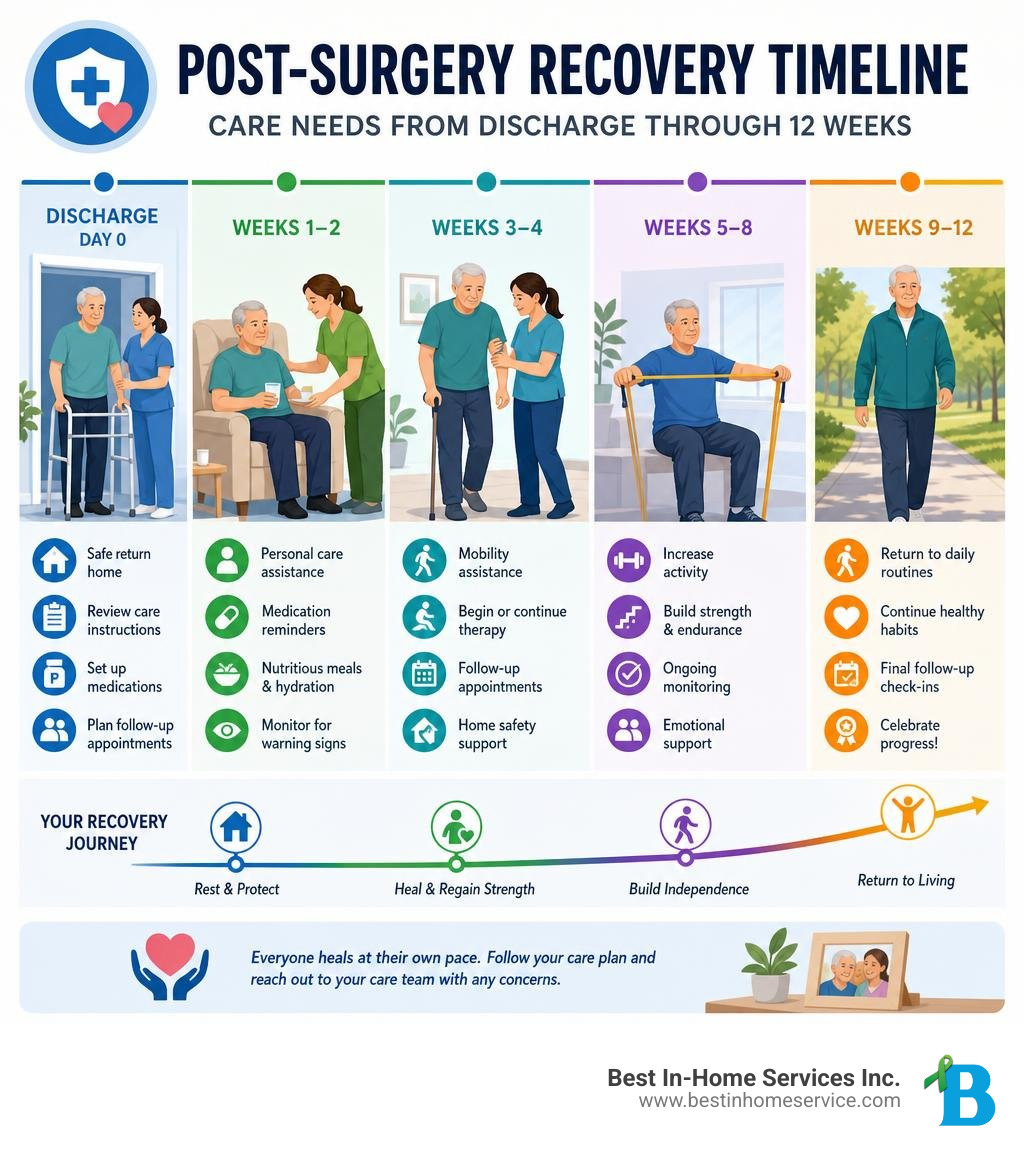
Why Home Care After Operation is the Best Choice for Recovery

When a doctor signs the discharge papers, families are often faced with a major decision: should our loved one recover in a skilled nursing facility, or should we bring them home? For the vast majority of patients, recovering in a familiar environment is not only the most comfortable option, but it also yields the best long-term outcomes.
Choosing to recover at home encourages a faster return to daily routines, which is essential for both physical and cognitive health. To understand the broader picture of transitioning after a hospital stay, you can read our comprehensive resource: A Guide to Post Hospitalisation Care and Recovery.
Defining Home Care After Operation
Post-surgical home care bridges the gap between medical treatment and everyday life. While clinical home health care involves intermittent visits from licensed nurses or physical therapists, personal home care provides continuous, non-medical daily support.
This type of care is designed to help patients manage their activities of daily living (ADLs) while they are under strict post-operative restrictions. Whether it is transitional care for the first 48 hours or ongoing support for several weeks, the primary goal is to keep the patient safe, comfortable, and on track to regain their independence. For families exploring why staying at home is so beneficial for long-term health, we detail the advantages in Why Senior Care at Home is the Best Choice for Aging in Place.
Comparing Home Recovery to Facility-Based Care
Recovering in a facility can sometimes feel institutional, restricting, and incredibly expensive. In contrast, recovering at home offers significant benefits:
- Lower Infection Risks: Hospitals and rehabilitation facilities are hotspots for antibiotic-resistant bacteria. Healing at home naturally reduces exposure to facility-acquired infections.
- Increased Physical Activity: Studies show that patients are actually less sedentary when healing at home rather than in a hospital or care center. The simple act of moving around a familiar environment promotes gentle, natural rehabilitation.
- Better Emotional Well-Being: Healing in one’s own bed, surrounded by personal belongings and family, dramatically reduces the risk of post-operative depression and anxiety.
- Cost-Effectiveness: Facility-based care can quickly drain family resources. Professional home care allows you to pay only for the hours of support you actually need, making it a much more financially sustainable option.
- Lower Readmission Rates: Because home care focuses on personalized, one-on-one attention, early warning signs of complications are caught quickly, resulting in lower readmission rates.
Preparing the Home Environment for a Safe Return

A successful recovery starts long before the patient arrives home. Preparing the physical space is critical to preventing falls, which are among the most common reasons post-surgical patients end up back in the emergency room.
For a complete breakdown of what to do before discharge, check out our guide on Post Hospital Discharge Essential Tips for a Smooth Transition Home. Additionally, families living in DuPage County can access local support and resources through DuPage County Community Services.
Setting Up Your Home Care After Operation
To ensure the home is ready for a safe recovery, we recommend doing a room-by-room walkthrough before the surgery date:
- Clear the Walkways: Remove all throw rugs, loose cords, and clutter from hallways and main living areas. Secure any remaining carpets with double-sided tape.
- Optimize Lighting: Install high-visibility nightlights in the hallways, bathrooms, and bedrooms to prevent nighttime disorientation.
- Set Up a Recovery Station: If the patient’s bedroom is upstairs, set up a temporary sleeping space on the ground floor. Keep essential items—like water, medications, a phone charger, and the TV remote—within arm’s reach of their bed or favorite chair.
- Equip the Bathroom: Install sturdy grab bars in the shower and next to the toilet. Place a non-slip rubber mat inside the tub, and consider adding a raised toilet seat and a shower chair to minimize bending.
- Prep the Kitchen: Stock the pantry with high-fiber foods and easy-to-heat meals. Keep frequently used dishes and utensils on counter-level shelves so the patient doesn’t have to reach or bend.
Essential Questions for the Discharge Planner
Before leaving the hospital, sit down with the discharge planner or surgeon and ask these critical questions:
- What are the exact weight-bearing and movement restrictions? (e.g., Can they bend past 90 degrees? Can they lift a gallon of milk?)
- What is the schedule for pain medications, and what are the potential side effects?
- How often should the surgical wound be cleaned, and what should it look like as it heals?
- Who do we call immediately if we notice a sudden change in their condition?
- When is the first follow-up appointment, and how will the patient get there?
- Do we need specialized medical equipment, and has it been ordered?
Key Services and Support Provided by Professional Caregivers
When a patient is recovering from an operation, daily tasks that once seemed effortless can become monumental hurdles. Professional caregivers provide essential, non-medical support that keeps the household running smoothly while the patient focuses entirely on healing.
In Chicago and the surrounding suburbs, families can access dedicated local assistance to ensure a safe transition. Whether you are in northern Chicago, the western suburbs like Downers Grove, northern suburbs like Winnetka and Schaumburg, or Lake County, professional in-home care services can be customized to meet your specific recovery needs. Having a reliable support system in place allows patients to recover in the comfort of their own homes while receiving the precise level of assistance they require.
Medication Management and Vital Monitoring
Managing a complex schedule of new post-operative medications can be incredibly confusing, especially when a patient is still feeling the lingering effects of anesthesia. Professional caregivers help by providing consistent medication reminders, ensuring that pain relievers, stool softeners, and antibiotics are taken exactly as prescribed.
While non-medical caregivers do not administer medications or adjust dosages, they keep detailed logs, monitor for common side effects like dizziness or nausea, and alert family members or nursing staff if something seems off.
Mobility, Physical Therapy Support, and Pneumonia Prevention
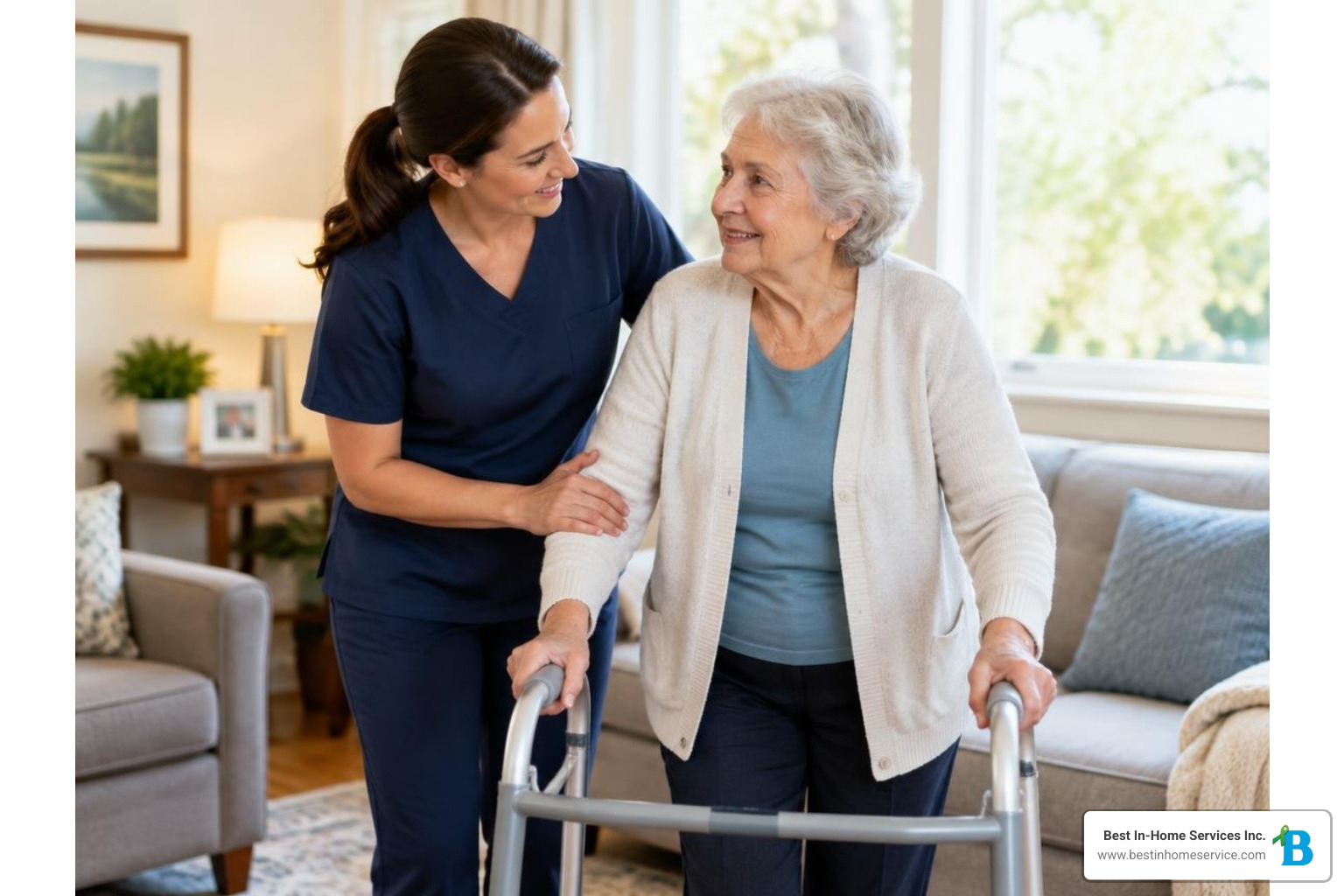
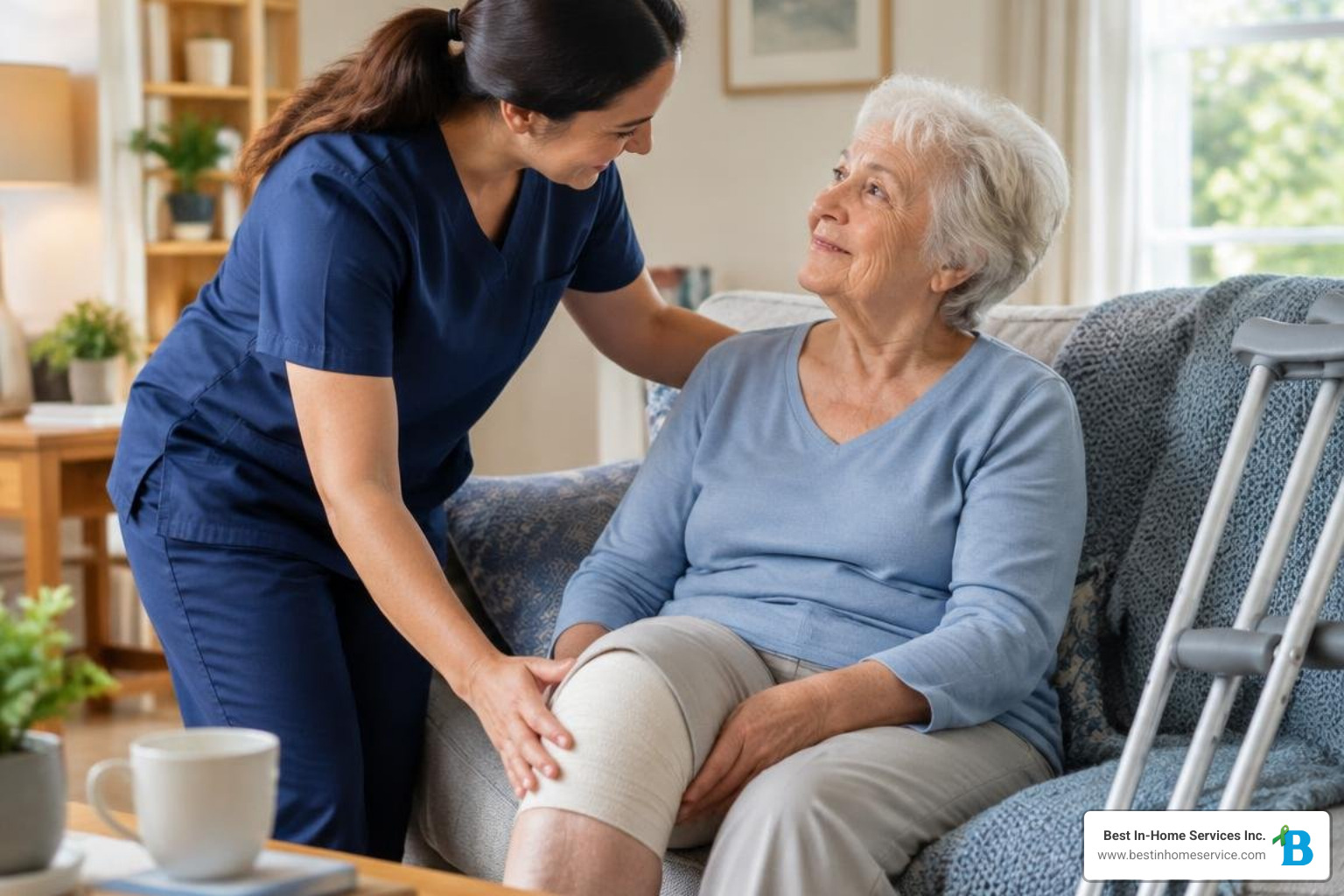
Moving safely after surgery is a delicate balance. Patients need to stay active to promote blood flow, but they must also avoid overexertion. Caregivers assist with safe transfers from bed to chair, help patients use walkers or crutches correctly, and provide steady support during daily walks.
Additionally, caregivers play a vital role in supporting prescribed physical therapy exercises and encouraging deep breathing routines. Pneumonia after surgery is a lingering risk that often results from anesthesia and a lack of mobility; caregivers help mitigate this by reminding patients to perform deep breathing exercises and change positions regularly.
Nutrition, Hydration, and Preventing Constipation
Proper nutrition is fuel for cellular repair, but major operations often leave patients with a severely suppressed appetite. Caregivers prepare light, nutrient-dense meals rich in protein and vitamins to accelerate tissue healing.
Furthermore, post-operative constipation is incredibly common due to the combination of opioid pain medications, anesthesia, and reduced physical activity. Caregivers help manage this by keeping a close eye on hydration—encouraging the recommended eight 8-ounce glasses of water daily—and incorporating high-fiber whole foods like fresh fruits, oatmeal, and vegetables into the daily diet.
Managing Risks and Timelines in the First 90 Days
The road to recovery is rarely a straight line. While the first few days home require the most hands-on help, the entire 90-day post-operative window carries distinct risks that families must actively manage to prevent hospital readmissions.
Mitigating the 30-to-90-Day Complication Risks
During the first few months after surgery, a patient’s risk profile shifts. Professional caregivers are trained to watch for early warning signs of complications that family members might easily miss:
- Infection: Caregivers monitor the incision site daily for increased redness, warmth, swelling, or unusual drainage, as well as tracking body temperature for fevers above 101.5°F.
- Blood Clots (DVT): Reduced mobility increases the risk of deep vein thrombosis. Caregivers watch for signs like sudden swelling, redness, or warmth in the calves.
- Dehydration and Malnutrition: If a patient is too weak to cook or drink water, they can quickly decline. Ongoing nutritional support keeps their energy levels stable.
- Fall-Related Setbacks: As patients start to feel better around weeks 3 and 4, they often attempt to do too much on their own, leading to accidental falls. Caregivers provide a gentle, guiding presence to ensure they don’t overextend themselves.
Determining the Level of Care: 24-Hour vs. Daily Visits
Not every recovery requires around-the-clock supervision, but some situations make 24-hour care a necessity. Daily visits (ranging from 4 to 8 hours) are generally ideal for patients who are mentally sharp, have minor mobility restrictions, and have family members available during the evening.
However, 24-hour or overnight care is highly recommended if the patient:
- Suffers from cognitive decline, dementia, or severe post-operative confusion (delirium)
- Is a high fall risk and frequently needs to use the restroom during the night
- Has strict surgical precautions that require two people for safe physical transfers
- Lives entirely alone without a local support network
To explore how continuous care can support a safe and seamless recovery, read our detailed article on 24 Hour In Home Care in Illinois: Essential Support for Recovery.
Navigating the Costs and Insurance for Post-Surgical Care
Understanding how to fund home care after operation can feel overwhelming, but knowing your options ahead of time prevents unexpected financial stress during recovery.
| Payment Method | What It Covers | Key Limitations |
|---|---|---|
| Medicare / Insurance | Short-term skilled care (nursing, physical therapy) | Does not cover long-term personal care or daily ADL assistance |
| Long-Term Care Insurance | Non-medical personal care, bathing, and daily assistance | Often has a waiting period (elimination period) before benefits kick in |
| VA Benefits / Aid & Attendance | Personal care, homemaking, and companion services | Requires military service during defined periods and clinical need |
| Private Pay | Flexible, customized care hours, 24/7 care, and ADL support | Paid entirely out-of-pocket by the family |
Payment Options for Personal Home Care
While Medicare covers clinical, physician-ordered home health services, it generally does not pay for non-skilled personal care. Families typically utilize private pay or long-term care insurance policies to cover the cost of professional caregivers.
If your loved one is a veteran, they may qualify for VA programs that help cover the costs of in-home care. We highly recommend reviewing your insurance policies and contacting a reputable agency well before the scheduled surgery date to confirm your coverage details.
Frequently Asked Questions About Post-Surgical Recovery
How long do most patients need post-surgery home care?
The duration of care depends entirely on the complexity of the operation and the patient’s overall health. Minor procedures may only require support for the first 48 to 72 hours. Major surgeries, such as joint replacements or cardiac operations, typically benefit from structured care for 2 to 6 weeks, with a gradual reduction in hours as the patient regains their physical independence.
What are the most common surgeries that benefit from in-home care?
The surgeries that most frequently benefit from professional in-home support include:
- Orthopedic Surgeries: Total hip, knee, or shoulder replacements
- Cardiac Surgeries: Coronary artery bypass grafts (CABG) or valve replacements
- Abdominal Procedures: Major hernia repairs, bowel resections, or gallbladder removals
- Cancer-Related Surgeries: Mastectomies or tumor removals requiring drain management and limited arm mobility
How do home care agencies coordinate with my surgical team?
Reputable home care agencies work closely with hospital discharge planners, surgeons, and visiting physical therapists. We review the official discharge summary, implement the doctor’s specific recovery protocols, and provide regular progress updates to the family and clinical team, ensuring everyone is aligned on the patient’s recovery goals.
Conclusion
Recovering from a major operation is a physical and emotional journey that shouldn’t be navigated alone. Attempting to manage the complex logistics of wound care monitoring, medication schedules, mobility restrictions, and daily household chores without support is a recipe for caregiver burnout and preventable hospital readmissions.
At Best In-Home Services Inc., we provide personalized, compassionate home care after operation in Chicago, Downers Grove, Winnetka, Schaumburg, and the surrounding communities. Our certified staff is available 24/7 to deliver custom care plans tailored to your loved one’s unique recovery needs, allowing your family to focus on what matters most: healing.
To learn more about what to expect during this transition and how to arrange professional support, read our guide on Post Hospital Care Throughout Illinois: What to Expect from Home Care After Surgery or contact us today to schedule a free in-home consultation.




 1-224-636-5200
 1-224-636-5210
  425 Huehl Rd 13B Northbrook IL 60062