
What Is In Home Senior Support — and Is It Right for Your Family?
In home senior support helps older adults live safely and independently in the place they love most: their own home. If someone you care about is struggling with daily tasks, memory issues, or recovery after a hospital stay, professional in-home care can make a real difference — without uprooting their life.
Here’s a quick overview of what in-home senior support includes:
| Type of Support | What It Covers |
|---|---|
| Personal care | Bathing, dressing, grooming, mobility |
| Companion care | Socialization, activities, emotional support |
| Household help | Meal prep, light housekeeping, errands |
| Specialized care | Dementia, Alzheimer’s, Parkinson’s, chronic illness |
| 24-hour care | Round-the-clock supervision and assistance |
| Respite care | Relief for family caregivers |
Most families start looking into home support after noticing small but worrying changes — a parent forgetting to pay bills, skipping meals, or struggling with basic hygiene. These are real signals that extra help is needed.
The good news? You don’t have to choose between quality care and keeping your loved one at home. Professional in-home care gives seniors the support they need while preserving the independence and comfort of familiar surroundings.
Understanding In Home Senior Support and Aging in Place
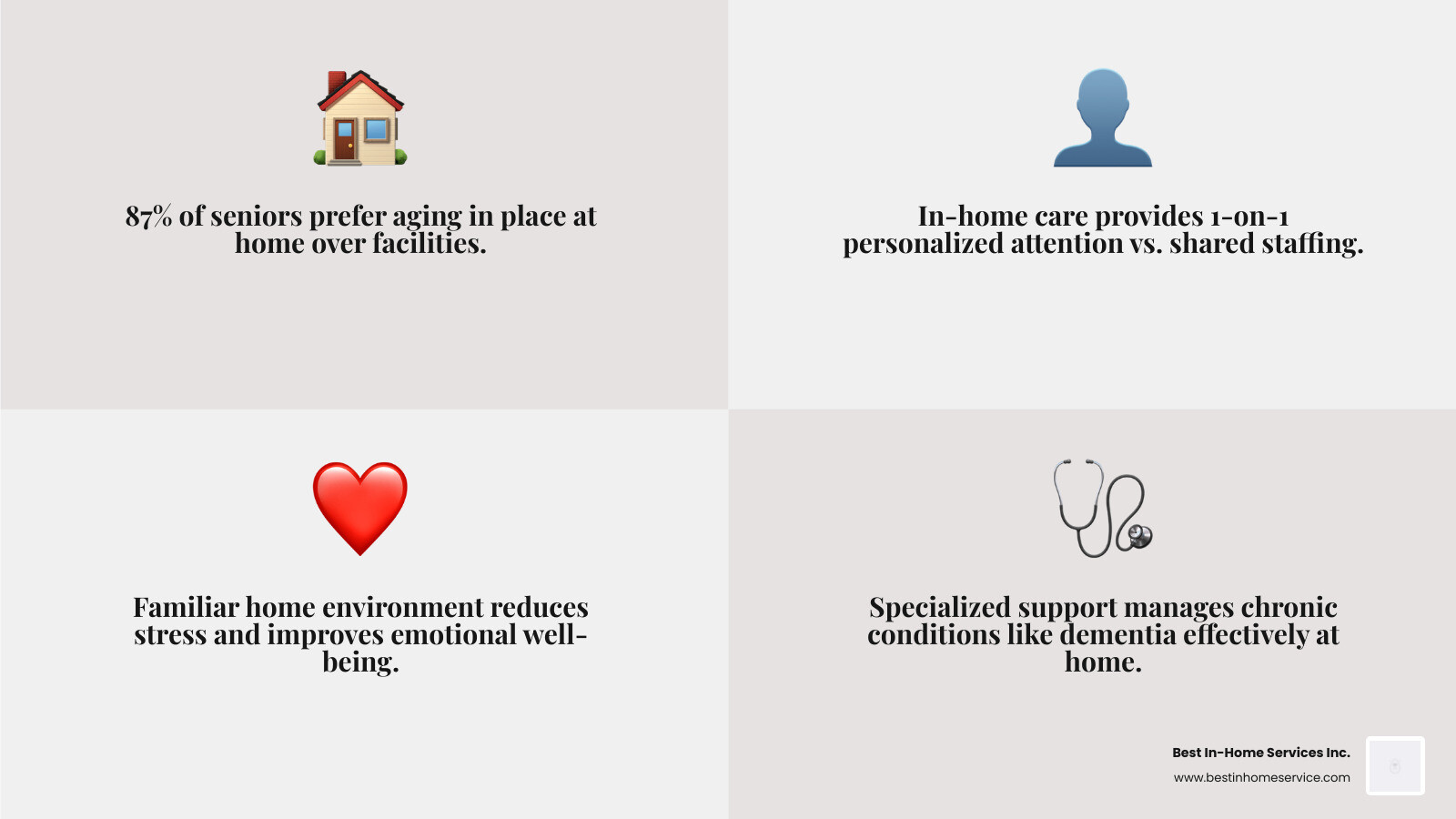
Aging in place is a term we use to describe the ability of a senior to live in their own home and community safely, independently, and comfortably, regardless of age or income level. For many of our neighbors in Chicago and the surrounding suburbs, the home is a repository of memories, a source of pride, and the place where they feel most secure.
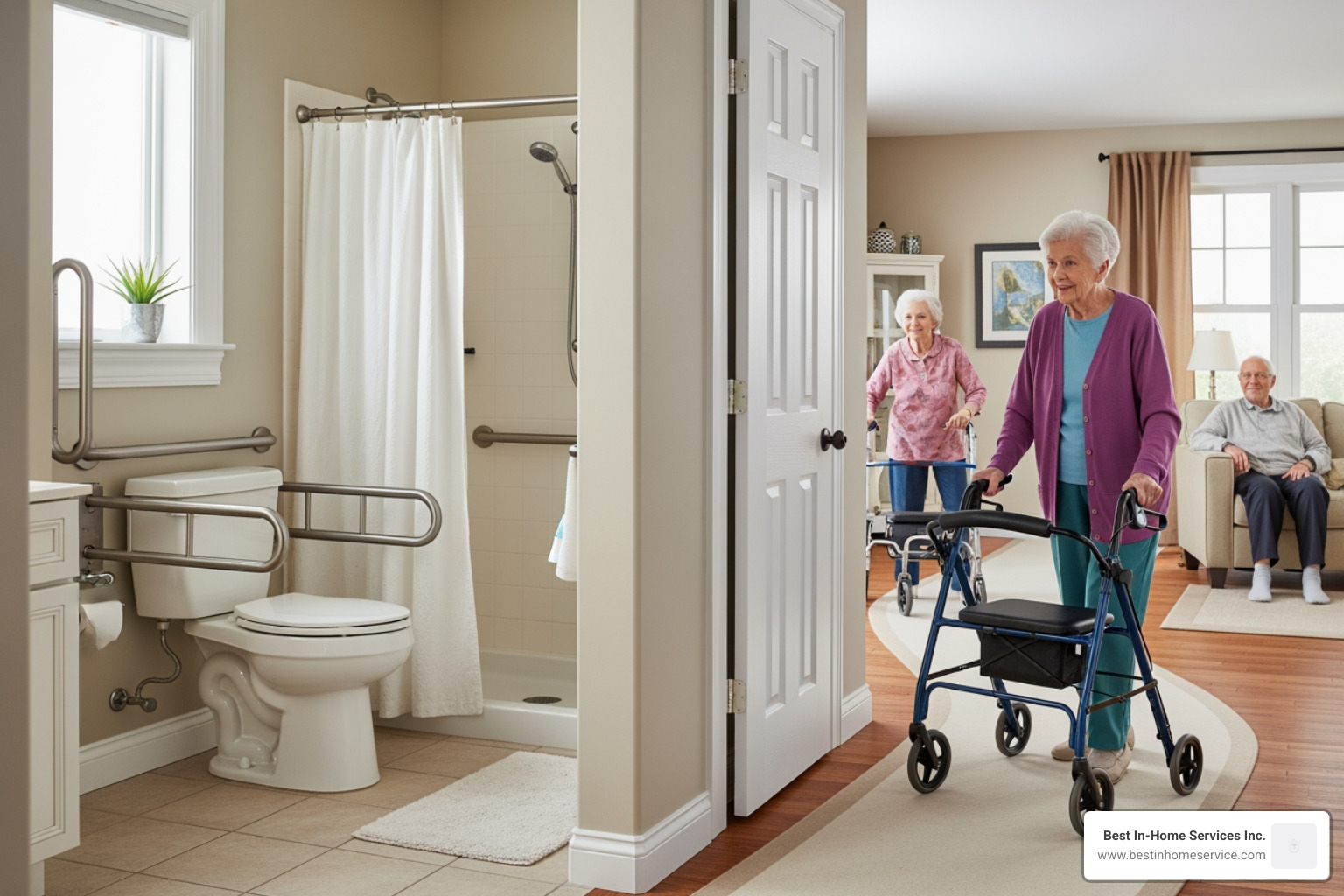
When we talk about in home senior support, we are referring to a wide range of services designed to make aging in place a reality. This isn’t just about “watching” someone; it’s about actively assisting with Activities of Daily Living (ADLs). These are the fundamental tasks we often take for granted—getting out of bed, showering, or making a sandwich—that can become mountainous obstacles as we age.
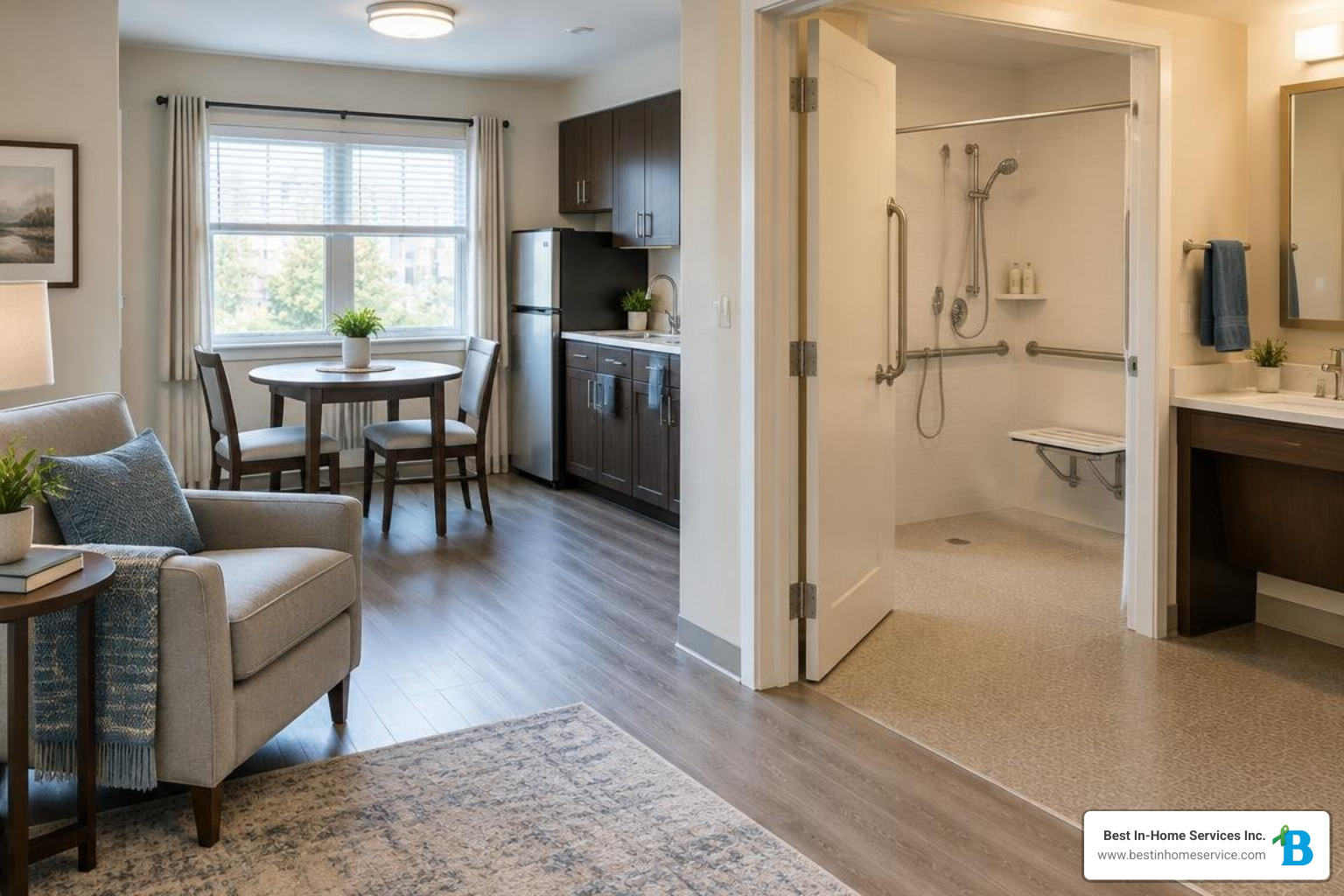
By bringing Home Services directly to the doorstep, we remove the stress of a massive life transition. Instead of moving to an unfamiliar facility, seniors can stay in the environment they know best. This familiarity is more than just a comfort; it is a vital component of safety. A senior who knows exactly where the light switch is and how many steps are in the hallway is significantly less likely to experience a fall than one navigating a new, sterile environment.
Types of In Home Senior Support Services
We believe that support should be as unique as the person receiving it. There is no “one size fits all” in caregiving. Depending on your family’s needs, support generally falls into several key categories:
- Companion Care: Loneliness can be just as detrimental to health as physical ailment. Companion care focuses on socialization. Whether it’s playing a game of cards, looking through old scrapbooks, or simply sharing stories over a cup of tea, this service keeps the mind engaged and the spirit high.
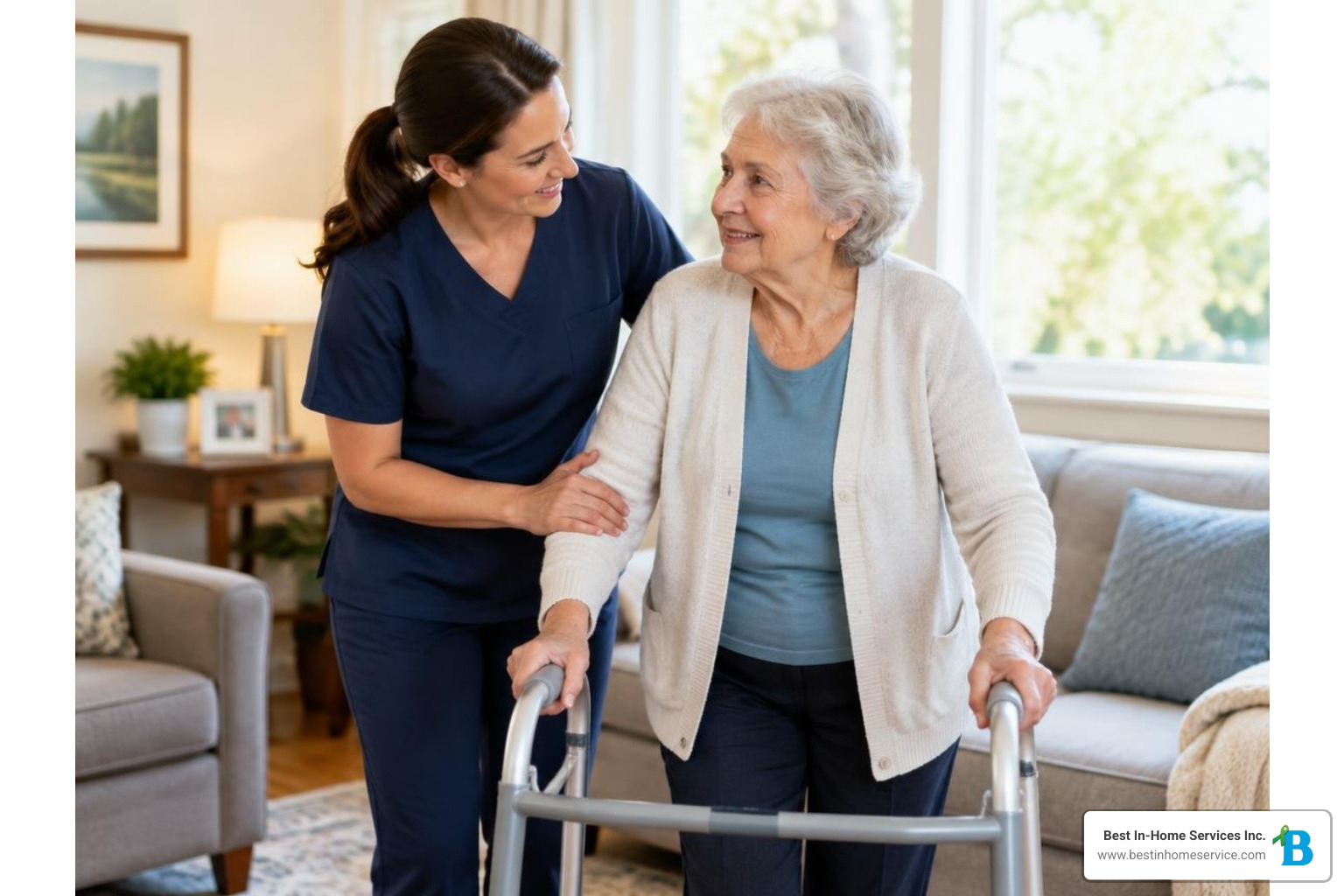
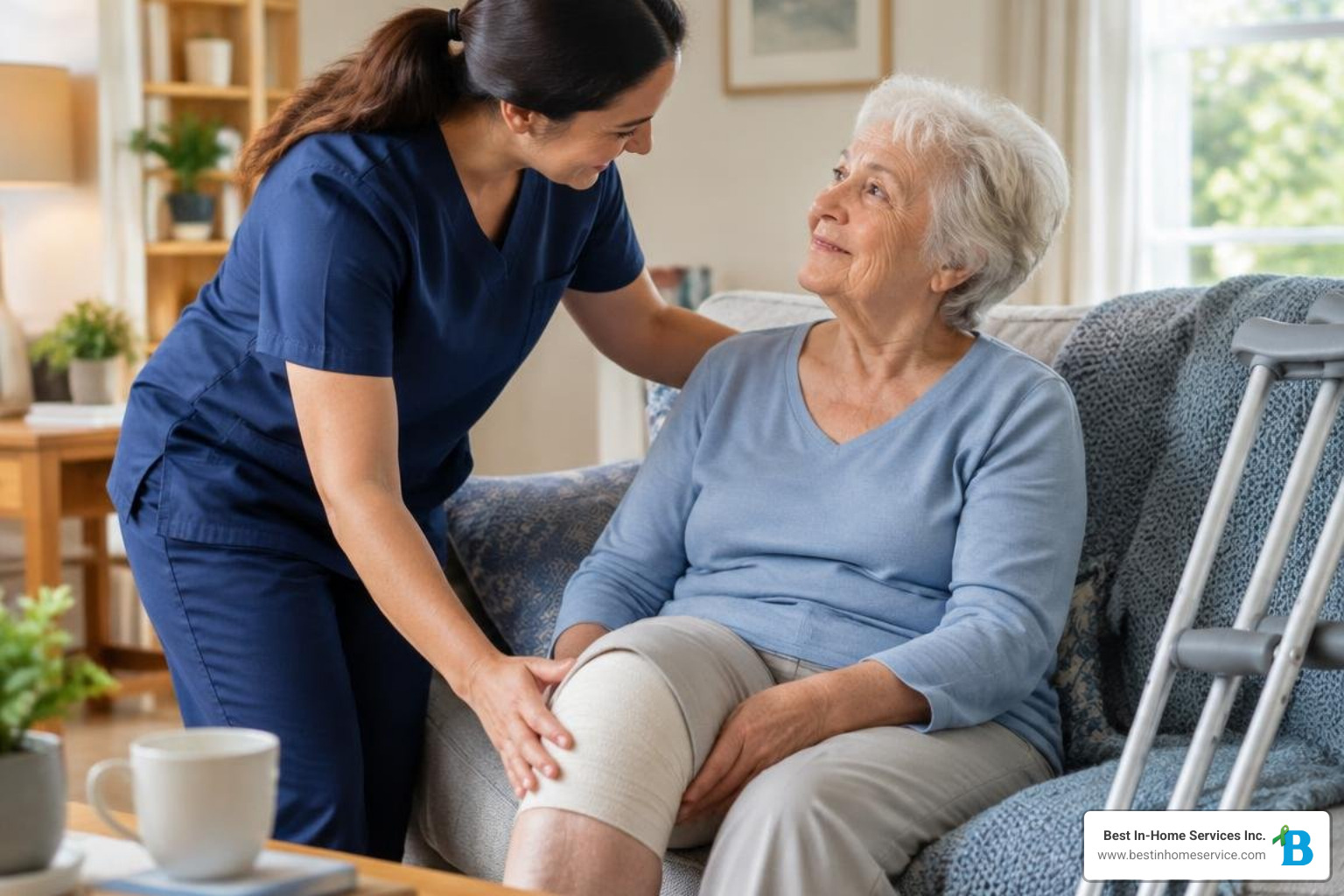
- Personal Care: This is hands-on assistance. It includes help with bathing, dressing, grooming, and mobility. Our goal is always to maintain the senior’s dignity while ensuring they are clean, safe, and comfortable.
- Household Help for Seniors: Sometimes, it’s the chores that pile up first. We assist with light housekeeping, laundry, and organizing. This takes the physical burden off the senior and ensures a sanitary living environment.
- Nutrition and Meal Planning: Healthy eating is a pillar of wellness. We help with grocery shopping and prepare nutritious meals that cater to specific dietary needs, ensuring our clients aren’t relying on frozen dinners or skipping meals entirely.
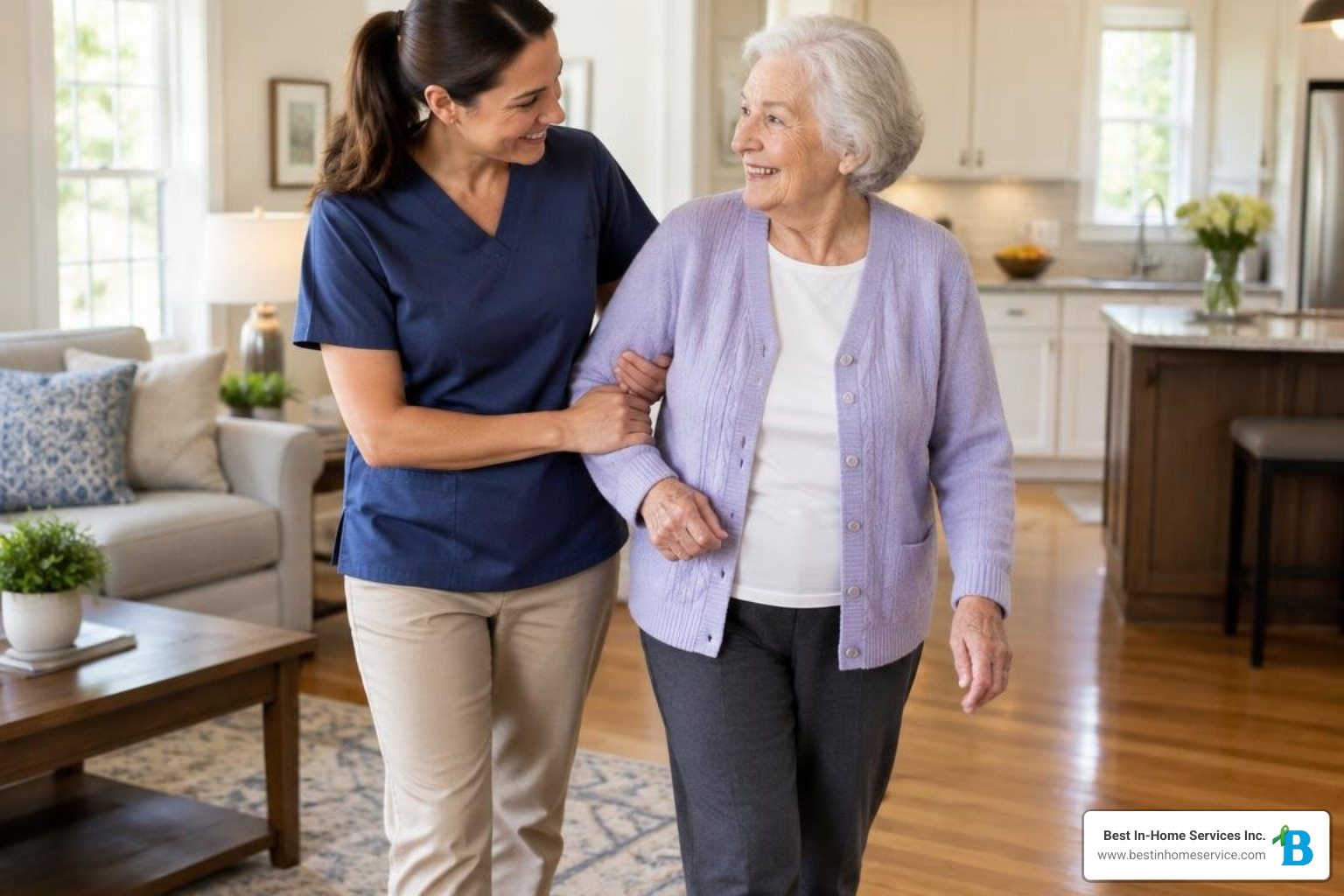
- Senior Appointment Assistance: Getting to the doctor or the pharmacy shouldn’t be a source of anxiety. We provide more than just a ride; we offer a steady arm to lean on and help navigating the check-in process.
Specialized Care for Chronic Conditions
For many families in the North Chicagoland and Lake County areas, the need for in home senior support goes beyond basic chores. When a loved one is diagnosed with a chronic condition, the level of care must scale accordingly.
Alzheimer’s Care and Dementia support require a specific, heart-centered approach. We focus on building genuine relationships and learning a senior’s life history to provide “reminiscence therapy.” By establishing stable routines and using positive reinforcement, we can help manage the personality changes and “sundowning” behaviors often associated with memory loss.
Similarly, conditions like Parkinson’s require caregivers who understand the progression of tremors and mobility challenges. We also provide Diabetic Management support, helping seniors monitor blood sugar levels and stick to strict meal schedules. Our Chronic Illness Management programs are designed to keep symptoms under control and prevent unnecessary hospital readmissions.
Comparing Home Care to Assisted Living
When families first realize a loved one needs help, the debate usually boils down to: “Should they stay home or move to a facility?” While assisted living has its place, many find that the benefits of staying home far outweigh the alternatives, both emotionally and practically.
| Feature | In-Home Senior Support | Assisted Living Facility |
|---|---|---|
| Care Ratio | 1:1 (Dedicated attention) | 1:10 or higher (Shared staff) |
| Environment | Familiar, comfortable home | New, clinical, or communal setting |
| Routine | Client sets the schedule | Facility sets the schedule |
| Cost | Pay only for hours needed | Fixed monthly rent + care fees |
| Personalization | Fully customized care plan | Standardized care protocols |
One of the biggest advantages of home care is the 1:1 care ratio. In a facility, one staff member might be responsible for a dozen residents. At home, our caregiver is there for your loved one and no one else. This allows us to Maximize Mobility through tailored exercises and immediate assistance, reducing the risk of accidents. For a deeper dive into this comparison, you can read our guide on Home Care vs Assisted Living.
Benefits of Personalized In Home Senior Support
The most profound benefit of in home senior support is often the emotional one. We call it the “Daughter Again” perspective. When a family member takes on the role of primary caregiver, the relationship often shifts from one of love and companionship to one of tasks and stress. You stop being the “daughter” or “son” and start being the “nurse” or “housekeeper.”

By bringing in professional help, we restore that relationship. You can go back to enjoying Sunday brunch or looking at old photos together, knowing that the physical and medical needs are being handled by experts. This Why Choose BIHS philosophy is at the core of everything we do: we handle the “work” so you can handle the “love.”
Navigating Costs and Government Resources
We understand that cost is a major factor for any family. In Illinois, the cost of in home senior support is typically billed at an hourly rate, which allows for a great deal of flexibility. You only pay for the time you actually need, whether that’s four hours a week or 24/7 support.
When Navigating Home Health Care costs, it’s important to look at all available resources. For those in specific regions, programs like In-Home Supportive Services (IHSS) (primarily for our California-based research interests) or the Illinois Department on Aging provide pathways for support. Specifically for our local neighbors, the Help In Your Home – Chicago program offers resources for seniors within the city limits.
Medicare, Medicaid, and Veterans Benefits
A common question we hear is: “Does Medicare cover this?” The answer is often complex. Standard Medicare has very limited coverage for home health services; it generally only covers short-term, physician-prescribed clinical care (like wound care) provided by Medicare-certified agencies. It typically does not cover long-term non-medical care or companion services.
However, there are other options:
- Medicaid: In Illinois, Medicaid may cover certain in-home services for those who meet income and asset requirements.
- Veterans Benefits: The VA Aid and Attendance benefit is a fantastic resource that can help wartime veterans and their surviving spouses pay for in-home care.
- Long-Term Care Insurance: If your loved one has a private long-term care policy, it often covers in home senior support.
- Private Pay: Many families choose to pay out-of-pocket for Individual Services to ensure they have the highest level of choice and flexibility in choosing their caregivers.
Choosing a Provider and Frequently Asked Questions
Selecting someone to enter your home and care for a vulnerable loved one is a massive decision. You should look for an agency that performs rigorous background checks, provides ongoing training, and matches caregivers based on personality as well as skill.
At Best In-Home Services Inc., we provide 24-Hour In-Home Care for those who need constant supervision. This is especially critical during Post-Hospital Care, where the first few days back home are the most dangerous for recovery. For more help with this transition, check out our Post-Hospital Discharge Tips.
Finding Local In Home Senior Support in Illinois
We are proud to serve a wide range of communities across the state. Whether you are looking for personalized care in DuPage County, home care solutions in North Chicago, or specialized support in Schaumburg, we have local teams ready to help. Our service area includes:
- Cook County: Chicago, Evanston, Skokie, Lincolnwood, Northbrook, and more.
- Lake County: Buffalo Grove, Highland Park, Lake Forest, and Mundelein.
- DuPage County: Naperville, Downers Grove, Hinsdale, and Oak Brook.
- North Chicagoland: Winnetka, Wilmette, Glencoe, and Kenilworth.
Choosing a licensed Illinois agency ensures that the provider adheres to state regulations regarding caregiver training and client safety.
How quickly can in home senior support start?
In many cases, we can have a caregiver in the home within a 48-hour window. The process typically begins with an initial consultation where we sit down with the family to discuss specific needs and goals. From there, we create a custom care plan and begin the caregiver matching process. In urgent situations—such as a sudden hospital discharge—we can often move even faster to ensure the senior isn’t left without support.
What are the early signs that a senior needs home support?
It’s better to start care too early than too late. Watch for these 10 Early Signs of Alzheimer’s or general decline:
- Hygiene Decline: Skipping showers or wearing the same clothes for days.
- Fall Risks: Frequent tripping or “furniture walking” (using tables/walls for balance).
- Unpaid Bills: Piles of unopened mail or late notices.
- Diminished Driving Skills: New dents on the car or getting lost in familiar areas.
- Kitchen Safety: Leaving the stove on or having expired food in the fridge.
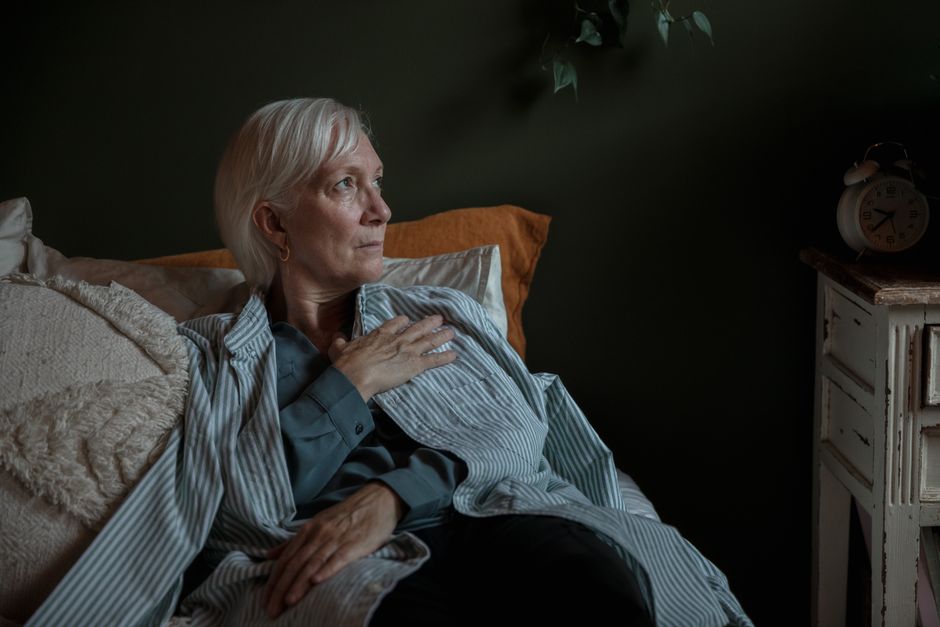
- Social Withdrawal: Stopping hobbies or avoiding phone calls.
- Medication Errors: Forgetting doses or taking too much.
- Weight Loss: Noticing that clothes are fitting loosely.
- Forgetfulness: Asking the same question multiple times in a few minutes.
- General Confusion: Feeling overwhelmed by simple tasks.
Conclusion
At Best In-Home Services Inc., we believe that every senior deserves to live with dignity and joy. Serving Chicago and the surrounding Illinois counties, our mission is to provide the highest quality in home senior support through our certified staff and 24/7 availability.
We don’t just provide a service; we provide a lifeline for families. From custom care plans to specialized memory support, we are here to ensure your loved one thrives at home. If you’re ready to take the next step and reduce the stress on your family, we are ready to help.


 1-224-636-5200
 1-224-636-5210
  425 Huehl Rd 13B Northbrook IL 60062