
When Someone You Love Has Alzheimer’s, Every Hour Matters
24 hour Alzheimer’s caregivers provide continuous, around-the-clock support for people living with Alzheimer’s disease — ensuring safety, comfort, and dignity at every hour of the day and night.
Here’s what 24-hour Alzheimer’s care typically includes:
- Continuous supervision to prevent wandering and falls
- Awake overnight monitoring for nighttime behaviors and confusion
- Help with bathing, dressing, meals, and medication reminders
- Emotional support and structured daily routines
- Immediate response to emergencies or sudden behavioral changes
Over 7 million Americans are currently living with Alzheimer’s dementia. Behind most of them is a family stretched thin. More than 11 million Americans provide unpaid care for people with Alzheimer’s or other dementias — logging an estimated 18.6 billion hours of care in 2023 alone. That’s not sustainable for most families.
About 60% of Alzheimer’s and dementia caregivers rate their emotional stress as high or very high. Caregivers of people with dementia are 2.5 times more likely to experience significant physical and emotional strain compared to caregivers for other conditions. Nearly 1 in 4 report their own health has gotten worse because of it.
Round-the-clock professional care isn’t a luxury. For many families in Chicago and across Illinois, it’s the difference between keeping a loved one safely at home — and a crisis.
I’m Lily Harrison, General Manager at Best In-Home Services Inc., where I’ve spent years coordinating 24 hour Alzheimer’s caregivers and personalized memory care for families across Chicago and Illinois. In this guide, I’ll walk you through everything you need to know — from spotting the warning signs that full-time care is needed, to choosing the right provider and planning for the road ahead.
24 hour alzheimer’s caregivers terms to know:
What is 24-Hour Alzheimer’s Care?
When families first hear the term “24-hour care,” they often picture a single caregiver living in the home. However, true 24-hour care is structured differently to ensure maximum safety.
Unlike standard home care, which may only cover a few hours a day for errands or companionship, round-the-clock care provides continuous, unbroken supervision. To understand how this works, we must look at how we schedule these services. In a true 24-hour care model, multiple caregivers rotate in shifts (typically two 12-hour shifts or three 8-hour shifts). This ensures that a fresh, fully alert caregiver is always awake and active, even in the middle of the night.
This is incredibly important for seniors with cognitive decline. If you want to explore the basics of in-home support, our Dementia Care in Your Own Home: All You Need to Know guide offers a great starting point.
| Care Type | Scheduling Structure | Overnight Status | Best For |
|---|---|---|---|
| Standard Home Care | Hourly blocks (e.g., 4 to 8 hours/day) | No overnight coverage | Early-stage support, errands, and meal prep |
| Live-In Care | One caregiver stays 24 hours (up to 4-5 days/week) | Caregiver sleeps (requires private bedroom & 8-hour break) | Seniors who sleep through the night but need general companionship |
| 24-Hour Shift Care | Rotating shifts (two 12-hour or three 8-hour shifts) | Caregivers are fully awake and monitoring 24/7 | Advanced dementia, nighttime wanderers, and high fall risks |
The Role of 24 Hour Alzheimer’s Caregivers vs. Live-In Care
Choosing between 24-hour shift care and live-in care comes down to your loved one’s sleep patterns and behavioral needs.
Under a live-in care model, a single caregiver resides in the home. By labor law and practical standards, they must be provided a private bedroom and an uninterrupted 8-hour sleeping block. If your loved one wakes up confused at 2:00 AM, a live-in caregiver may not hear them immediately, or they may become severely fatigued over time. For a deeper dive into this arrangement, read our Live-in Care for Dementia: A Complete Guide for Families.
For those in the suburban areas, families looking at options in Schaumburg, IL will find that if a senior frequently wanders or experiences nighttime agitation, rotating 24-hour shift care is the gold standard. With shift rotations, there is no need for a private bedroom because the caregiver does not sleep. They remain actively awake to monitor safety, manage medication schedules, and offer immediate comfort.
Warning Signs Your Loved One Needs Round-the-Clock Supervision
Alzheimer’s is a progressive disease, and it can be difficult for families to identify the exact moment when hourly care is no longer enough. Here are the key warning signs that a loved one requires 24-hour supervision:
- Frequent Wandering: Trying to leave the house at odd hours or getting lost in familiar surroundings.
- Sundowning and Nighttime Waking: Becoming highly agitated, anxious, or active as the sun goes down, often reversing sleep-wake cycles.
- High Fall Risk: Attempting to get out of bed unassisted despite severe mobility challenges or balance issues.
- Safety Hazards in the Home: Forgetting to turn off the stove, leaving water running, or misplacing essential items like keys in dangerous spots.
- Severe Confusion or Delusions: Not recognizing their home, accusing family members of theft, or experiencing vivid hallucinations.
If you are noticing these behaviors early on, check out our resource on 10 Early Signs of Alzheimer’s and How Home Care Can Help to evaluate the progression of the disease.
Why 24 Hour Alzheimer’s Caregivers are Essential for Safety
Safety is the primary reason families transition to round-the-clock care. In the middle to late stages of Alzheimer’s, a person’s spatial awareness and judgment decline significantly. Professional 24 hour Alzheimer’s caregivers act as eyes and ears, anticipating risks before they lead to injuries.
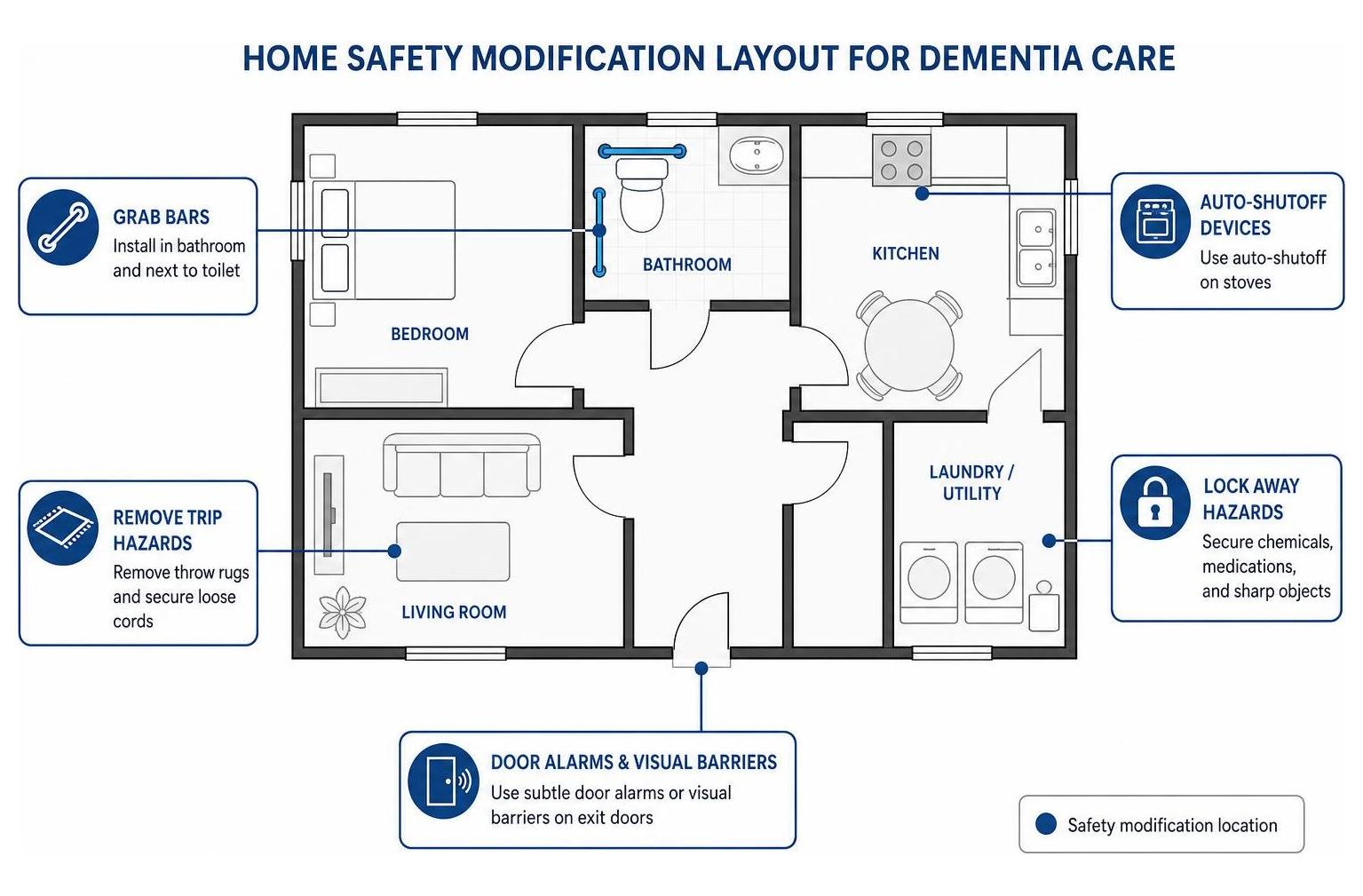
To support this level of safety, we recommend several key home modifications:
- Installing grab bars in the bathroom and next to the toilet.
- Removing throw rugs and securing loose electrical cords to prevent trips.
- Placing auto-shutoff devices on stoves and locking away household chemicals.
- Utilizing subtle door alarms or visual barriers (like matching paint or fabric over exit doors) to deter exit-seeking behavior.
Beyond physical modifications, caregivers manage complex medication schedules, prepare nutritious meals, and coordinate emergency responses. If a medical emergency occurs at 3:00 AM, a trained caregiver is right there to call for help and provide the necessary medical history to paramedics. For practical safety strategies, read our 24-7 Dementia Home Care Guide.
Training and Qualifications to Look For
Caring for someone with cognitive decline requires specialized skills that go far beyond standard caregiving. When evaluating providers, ensure their caregivers possess the following qualifications:
- Certified Nursing Assistant (CNA) or Home Health Aide (HHA) License: Ensures foundational clinical and personal care training.
- Dementia-Specific Training: Specialized instruction on cognitive exercises, validation therapy, and behavioral management through platforms like Care Academy.
- CPR and First Aid Certification: Essential for handling choking, falls, or sudden cardiac issues.
- Clean Background Checks: Comprehensive criminal background checks and reference verifications.
At Best In-Home Services Inc., 100% of our staff have direct care experience with Alzheimer’s disease, ensuring your family receives expert memory support. To learn more about screening standards in our local area, read our guide on Finding the Best 24/7 Home Health and Memory Care in Chicago.
Managing Sundowning, Wandering, and Nighttime Behaviors
Sundowning refers to the increased confusion, anxiety, and agitation that many Alzheimer’s patients experience in the late afternoon or early evening. When combined with wandering and sleep disturbances, it can turn the nighttime hours into a highly stressful period for families.
Our caregivers utilize the Four R’s Approach to manage these challenging behaviors:
- Reassure: Remind your loved one that they are safe, loved, and in the right place. Use a warm, gentle tone of voice.
- Reconsider: Put yourself in their shoes. Is their agitation caused by physical pain, a full bladder, or a confusing shadow in the room?
- Redirect: Gently guide their attention to a calming activity, such as listening to their favorite music, folding soft towels, or drinking a warm cup of decaffeinated tea.
- Relax: Maintain a calm, unhurried demeanor. Agitation can be contagious; staying relaxed helps de-escalate the situation.
For real-world examples of how families navigate these delicate behavioral shifts, read our compilation of Alzheimer’s Care: Real Stories of Families Adapting to Personality Changes in Loved Ones. Additionally, families in the northern suburbs who need dedicated night support can benefit from specialized overnight care to ensure safety while the rest of the household rests.
Supporting Family Caregiver Well-Being and Preventing Burnout
It is a well-known industry fact: you cannot pour from an empty cup. Providing round-the-clock care on your own is a recipe for physical and mental exhaustion. Caregiver burnout is a serious health risk that can lead to clinical depression, anxiety, and cardiovascular issues.
By bringing in professional 24 hour Alzheimer’s caregivers, family members can step back and reclaim their roles as daughters, sons, and spouses. Knowing that a trained professional is awake and watching over your loved one allows you to sleep through the night, return to work, and attend to your own health.
If you are looking for local support networks to share experiences and find resources, we highly recommend connecting with the Caregiver Support Groups – Chicago – SHARE Network, the Alzheimer’s Association Caregiver Support Group in DuPage County, or exploring the Dementia and Alzheimer’s Support Groups in Lake County, Illinois.
Creating a Daily Care Plan and Preparing for the Future
A structured, predictable routine is one of the best non-pharmacological tools we have for managing Alzheimer’s. When a senior knows what to expect next, their anxiety levels drop.
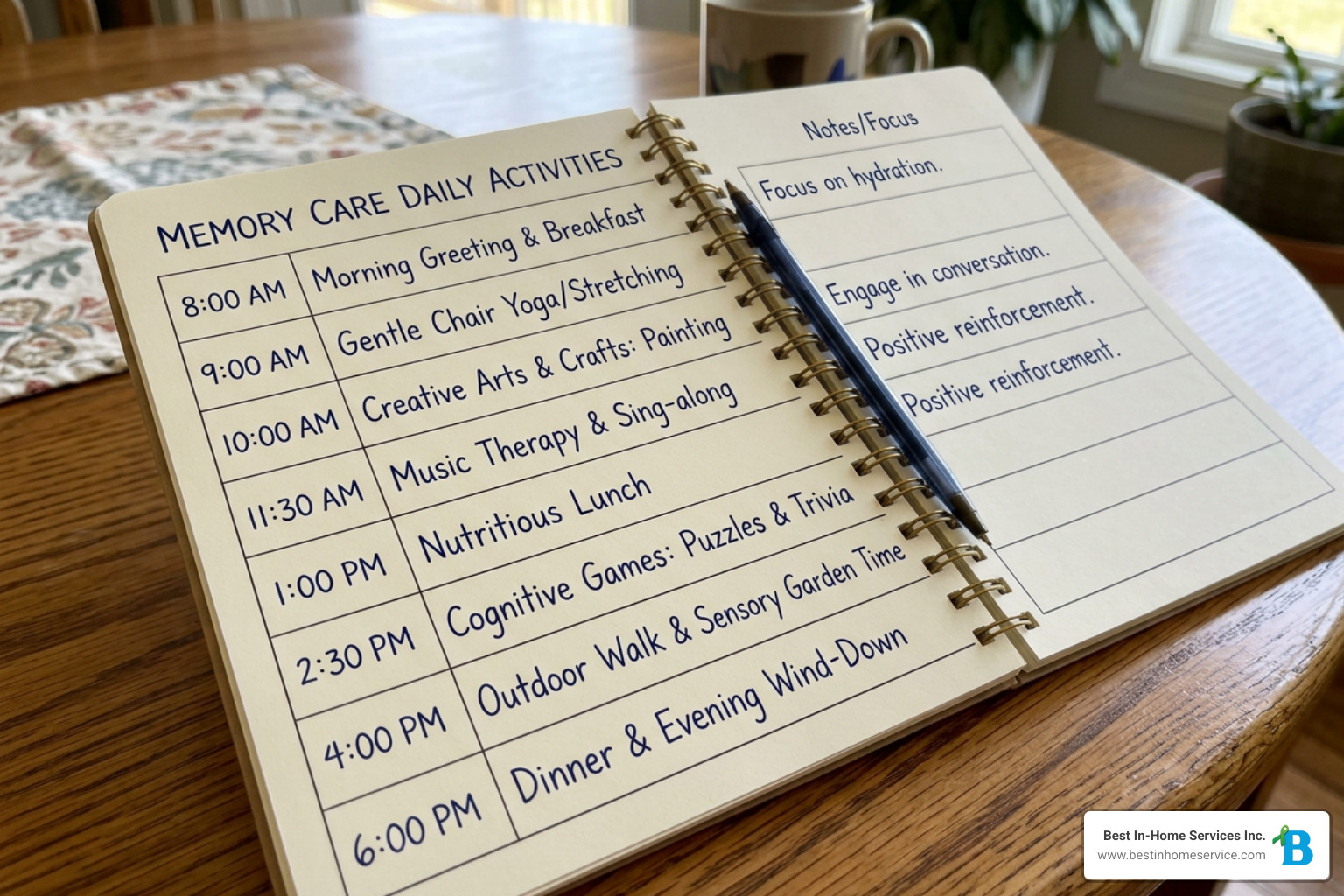
A comprehensive care plan should balance physical health, cognitive engagement, and relaxation. We often incorporate Montessori-based dementia programming, which focuses on sensory, motor, and social activities tailored to the senior’s historical interests (such as sorting colorful buttons, gardening, or listening to familiar classical music).
At the same time, families must plan for the future. Arranging care involves legal and financial preparations, including establishing power of attorney (both medical and financial), writing advance directives, and reviewing long-term care insurance policies.
How 24 Hour Alzheimer’s Caregivers Adapt to Advancing Stages
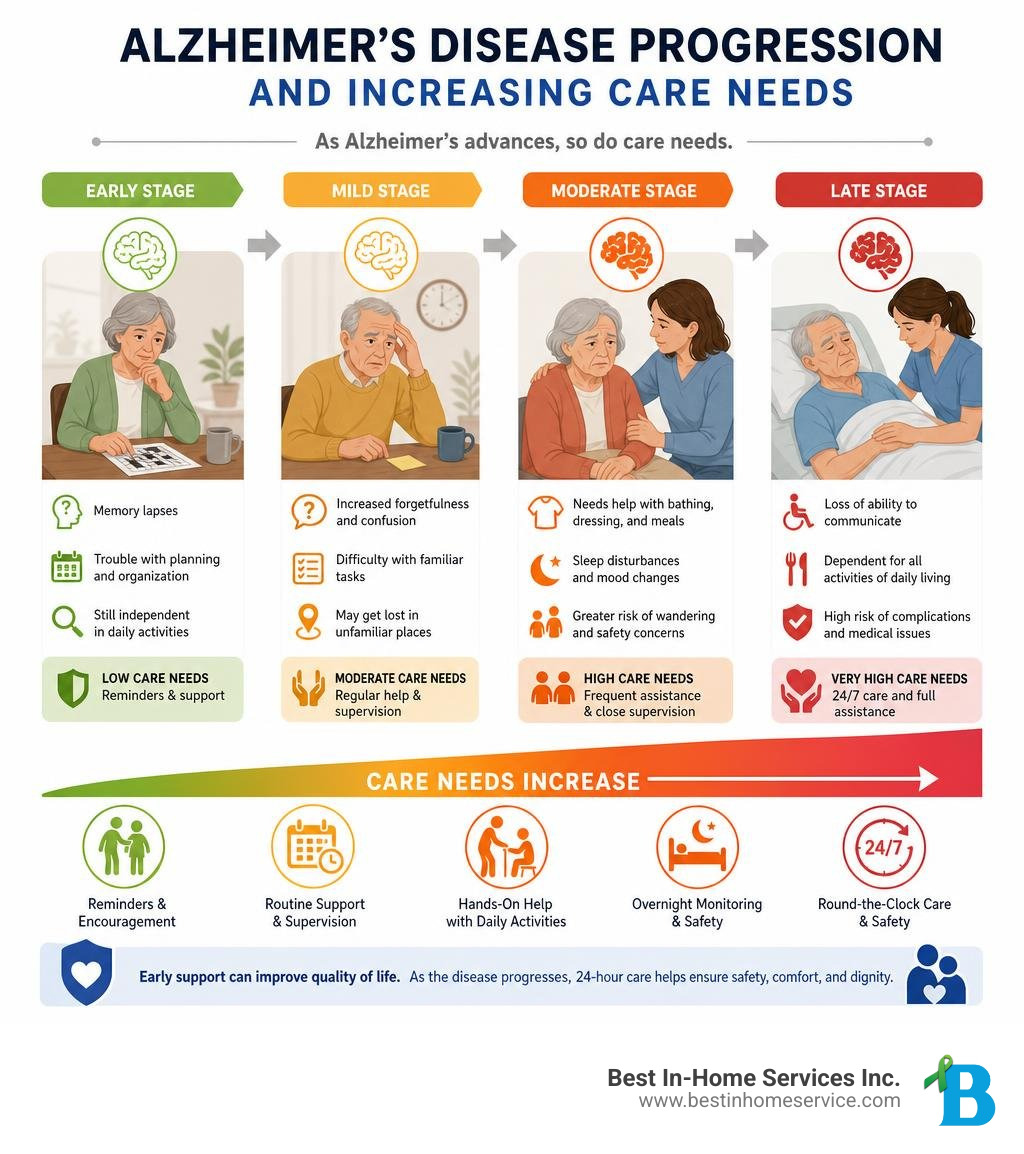
Alzheimer’s care must evolve as the disease progresses through its distinct stages:
- Early-Stage: The focus is on companionship, light cognitive exercises, and supporting independence. Caregivers assist with organizing schedules and encouraging social interaction.
- Middle-Stage: This stage requires personal care assistance (bathing, dressing, toileting) and active safety monitoring. Caregivers focus on managing behavioral symptoms like sundowning and wandering.
- Late-Stage: The focus shifts to preserving quality of life, comfort, and dignity. Caregivers provide total physical support, including repositioning to prevent pressure sores, feeding assistance, and sensory-based communication (touch and soft music).
Our team coordinates these transitions seamlessly. Learn more about our specialized memory services on our Services: Alzheimer’s Care page.
Evaluating and Choosing Reputable Care Providers
When searching for a 24-hour home care provider in Illinois, look for agencies that prioritize clinical oversight, caregiver consistency, and clear communication.
Always ask potential agencies if they are fully licensed, bonded, and insured. Inquire about how they handle backup care when a primary caregiver is sick, and ask how they match caregivers to your loved one’s personality and routines. To help guide your search in the local area, read our overview of the Best Dementia Care Options in Chicago. If you live in the southern suburbs, you can also explore local options in Downers Grove, IL to find the right fit for your family.
Frequently Asked Questions about 24-Hour Alzheimer’s Care
What is the typical cost of 24-hour Alzheimer’s care and what financial assistance options exist?
Because 24-hour shift care requires multiple awake caregivers, it is a significant financial investment. Most families utilize private pay or long-term care insurance (LTCI) to cover these costs. Some states also offer cash assistance programs or participant-directed services. To learn more about navigating these options, read our guide on Finding Peace of Mind with Chicago Dementia Care Services.
How do 24-hour shift rotations work for home care?
Typically, an agency will assign a consistent team of 2 to 3 caregivers to your home. They will work in rotating shifts—such as two 12-hour shifts (7:00 AM to 7:00 PM and 7:00 PM to 7:00 AM). During these shifts, the caregivers remain fully awake and active, conducting regular safety checks and assisting with any nighttime needs.
What are the primary triggers for challenging dementia behaviors?
The most common triggers include sudden changes in the environment (such as moving to a new home or loud noises), physical discomfort (like pain, hunger, or constipation), complex conversations that cause frustration, and disruptions to their established daily routine.
Conclusion
Caring for a loved one with Alzheimer’s is a profound journey, but you do not have to walk it alone. Professional 24 hour Alzheimer’s caregivers provide the continuous, specialized support your loved one needs to remain safely in the comfort of their own home, surrounded by familiar memories.
At Best In-Home Services Inc., we provide compassionate, certified memory care tailored to families across Chicago, Downers Grove, Winnetka, Schaumburg, and the surrounding Chicagoland suburbs. Let us give you the peace of mind you deserve.
Explore Our Personalized In-Home Care Services today, or reach out to our team to schedule a custom care consultation.






 1-224-636-5200
 1-224-636-5210
  425 Huehl Rd 13B Northbrook IL 60062