
Why Affordable Home Care for Seniors Is Worth Understanding Before You Decide
Finding affordable home care for seniors doesn’t have to mean settling for less. But with so many options, costs, and programs out there, it’s easy to feel overwhelmed — especially when you’re trying to do right by someone you love.
Quick Answer: How to Find Affordable Home Care for Seniors
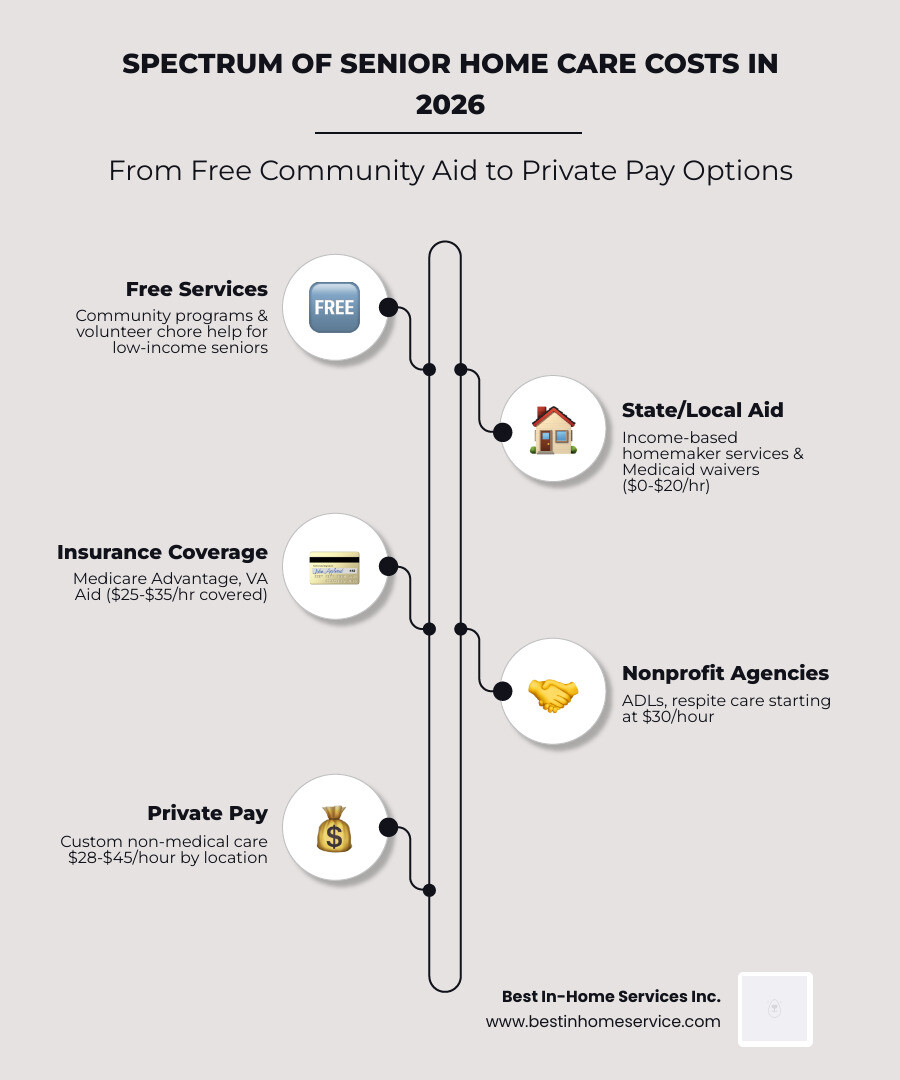
| Option | What It Covers | Cost Estimate (2026) |
|---|---|---|
| Private pay (out-of-pocket) | Any non-medical home care | Varies by provider/hours |
| Medicaid waiver programs | Personal care, daily living support | Low or no cost if eligible |
| Medicare Advantage plans | Some in-home care services | Depends on plan |
| VA Aid and Attendance | Veterans needing in-home help | Partially or fully covered |
| State/local assistance programs | Homemaker services, chore help | Income-based sliding scale |
| Nonprofit home care agencies | ADLs, companionship, respite | Best In-Home Service rates start at $35/hour, depending on the type of care |
Most families start this search because a parent, spouse, or grandparent needs more support at home — but a nursing home feels like too big a step. That instinct is usually right.
Home care lets seniors stay in familiar surroundings, on their own schedule, with one-on-one attention. And in many cases, it costs significantly less than assisted living or a nursing home facility.
The challenge is knowing where to start — and what you can actually afford.
This guide breaks it all down: the types of care available, what they cost in 2026, and how to pay for them — including programs many Chicago-area families don’t know they qualify for.
Understanding Affordable Home Care for Seniors
When we talk about affordable home care for seniors, we are usually referring to non-medical support that helps an older adult remain independent. This type of care focuses on helping with Activities of Daily Living (ADLs) and Instrumental Activities of Daily Living (IADLs).
ADLs are the basics: getting out of bed, bathing, dressing, and eating. IADLs are the “extras” that keep a household running, like grocery shopping, light housekeeping, and managing medications. By focusing on these Individual Services, families can often avoid the high price tag of a full-scale medical facility.
At Best In-Home Services Inc., we believe that quality care starts with the heart. Whether a senior needs help with a few loads of laundry or requires more intensive Home Services, the goal is to provide just enough support to keep them safe and happy without overcharging for services they don’t actually need.
Types of affordable home care for seniors
There isn’t a “one-size-fits-all” model for aging. Depending on your loved one’s health and your family’s availability, you might choose one or a combination of the following:
- Companion Care: This is often the most budget-friendly entry point. It involves a caregiver visiting to provide social interaction, help with hobbies, or take the senior to a local Chicago community center.
- Respite Care: This is a lifesaver for family caregivers. It provides a temporary break so you can recharge, knowing your loved one is in safe hands.
- Personal Assistance: This covers more “hands-on” help. Personal Care includes assistance with hygiene and mobility, ensuring seniors can navigate their homes safely.
Benefits of Home Care vs. Institutional Living
Choosing home care over a nursing home or assisted living facility isn’t just a financial decision; it’s an emotional one. Research shows that seniors feel more secure and comfortable in familiar surroundings.
In a facility, a senior is one of dozens. At home, they are the sole focus. This one-on-one attention often leads to better health outcomes because a caregiver can spot small changes in mood or physical health before they become emergencies. If you are struggling with this choice, our guide on Home Care vs Assisted Living: Which is Right for Your Family? explores these differences in depth.
Navigating the Costs and Factors of In-Home Care
As of May 2026, the landscape of senior care pricing has shifted. While inflation has affected everything from eggs to electricity, affordable home care for seniors remains a viable option for those who know how to navigate the market.
Generally, home care is billed by the hour. In the Chicago area—from Downers Grove to Northbrook—rates can vary based on the level of expertise required.
| Care Type | Best In-Home Service Rate | Assisted Living (Monthly Avg) | Nursing Home (Monthly Avg) |
|---|---|---|---|
| Companion / Homemaker Care | $35/hour | $5,500+ | $9,000+ |
| Dementia / Alzheimer’s Care | $42/hour | $7,000+ | $10,500+ |
| 24-Hour Care | Customized rate | Included | Included |
Factors Influencing Pricing
Why does one agency charge more than another? It usually comes down to three things:
- Caregiver Expertise: A caregiver with specialized training in memory care or Parkinson’s support will naturally command a higher rate than a companion.
- Visit Minimums: Minimum visit requirements affect the total cost of care. Best In-Home Service, Inc. has a 3-hour minimum per visit, allowing families to schedule focused support without committing to a full-day care block.
- Specialized Needs: The rate depends on the level and type of care required. For example, dementia and Alzheimer’s care requires specialized support and is priced differently from companion or homemaker care. More complex schedules, including 24-hour care, are quoted individually.
Financial Assistance and Insurance Coverage
One of the biggest myths we hear is that “Medicare pays for everything.” Unfortunately, that’s not quite true. Standard Medicare does not typically cover long-term, non-medical home care. However, there are several other “buckets” of money you can tap into.
- Medicare Advantage: Some of these private plans now offer supplemental benefits that include limited in-home support.
- Medicaid Waivers: For low-income seniors, Medicaid can be a primary source of funding for home-based services.
- VA Aid and Attendance: Veterans and their surviving spouses may qualify for a monthly pension bump specifically to pay for home care.
For those living in Illinois, the In-Home Service – Illinois Department on Aging provides a wealth of information on state-funded programs designed to keep seniors out of nursing homes.
State Programs for affordable home care for seniors
The Illinois Community Care Program (CCP) is a vital resource for seniors aged 60 and older who are at risk of nursing home placement. This program helps pay for “homemaker” services—essentially the ADL and IADL support we discussed earlier.
If you live within the city limits, the Help In Your Home – City of Chicago page lists local resources, including chore assistance and home-delivered meals, which can complement your professional care plan and keep total costs down.
Insurance and Private Pay Options
Most families utilize “Private Pay” for home care. This doesn’t mean you need a mountain of cash in a shoebox. Most of our clients at Best In-Home Services Inc. use a combination of:
- IRAs and 401(k)s: Withdrawing retirement funds to cover care.
- Social Security and Pensions: Using monthly income to cover a few hours of help each week.
- Long-Term Care Insurance: If your loved one had the foresight to buy a policy years ago, now is the time to use it.
Household Help for Seniors: More Than Just Chores, It’s Peace of Mind; it is an investment in their safety and your mental health.
Strategies for a Budget-Friendly Care Plan

Creating a plan for affordable home care for seniors is like building a puzzle. You don’t have to buy the whole box at once. You can start small and add pieces as needed.
One effective strategy is to look for nonprofit agencies or those that offer sliding scale fees based on income. Additionally, community resources like “volunteer chore services” can handle things like mowing the lawn or changing lightbulbs, allowing your paid caregiver to focus strictly on personal care.
Tips for Creating a Cost-Effective Schedule
To maximize your budget, consider these scheduling hacks:
- The “Gap” Method: Have a professional caregiver come in the mornings for bathing and breakfast, then have a family member or neighbor check in during the afternoon.
- Respite Coordination: Use professional Services only for the most difficult tasks (like bathing) and handle the easier tasks (like companionship) yourself.
- Flexible Hours: Some agencies offer better rates for consistent, long-term schedules rather than last-minute, “as-needed” visits.
Evaluating Quality in affordable home care for seniors

“Affordable” should never mean “dangerous.” When you are looking for a provider, you must vet them as if you were hiring a CEO—because they are the CEO of your loved one’s daily life.
A quality agency should provide:
- Background Checks: Every staff member should be thoroughly screened.
- Nurse Oversight: Look for agencies where a Registered Nurse (RN) helps create and supervise the care plan.
- Customized Plans: If an agency tries to sell you a “standard package,” walk away. Every senior is different.
How to Choose the Right Provider
We recommend choosing a licensed agency over a private hire from a classified ad. While a private hire might be cheaper per hour, an agency handles the taxes, insurance, and—most importantly—provides a backup if the regular caregiver gets sick.
At Best In-Home Services Inc., we pride ourselves on our 24/7 support and certified staff. If you’re wondering Why Choose BIHS, it’s because we treat our clients like our own family in Chicago, Evanston, and throughout the suburbs.
Frequently Asked Questions about Affordable Home Care for Seniors
Does Medicare cover long-term in-home personal care?
No. Standard Medicare (Parts A and B) only covers “Home Health Care” if it is medically necessary, short-term, and ordered by a doctor (like physical therapy after a stroke). For long-term help with bathing or cooking, you’ll need to look at Medicare Advantage, Medicaid, or private pay.
How can I find regional programs for low-income seniors?
In Illinois, your first stop should be the Area Agency on Aging (AAA). They can direct you to the Community Care Program or local “Senior Information and Assistance” offices in Cook, Lake, and DuPage counties.
Is it cheaper to hire a private caregiver or use an agency?
Initially, a private hire seems cheaper because you aren’t paying agency overhead. However, you become the employer. This means you are responsible for payroll taxes, workers’ compensation insurance, and finding a replacement if they quit. For most families, the “all-in” cost and risk of a private hire actually make a licensed agency more affordable in the long run.
Conclusion
Finding affordable home care for seniors in the Chicago area is entirely possible with the right strategy. By combining state resources, smart scheduling, and a trusted partner like Best In-Home Services Inc., you can ensure your loved one receives the dignity and care they deserve without exhausting the family’s savings.
Whether you are in Naperville, Skokie, or downtown Chicago, we are here to help you navigate this journey. We offer 24/7 support and custom care plans tailored to your specific budget and needs.
Ready to take the next step? Start with a Free Assessment to see how we can help. For more details, explore More info about affordable home care services.






 1-224-636-5200
 1-224-636-5210
  425 Huehl Rd 13B Northbrook IL 60062