
Where to Find Community Help for Seniors in Chicago
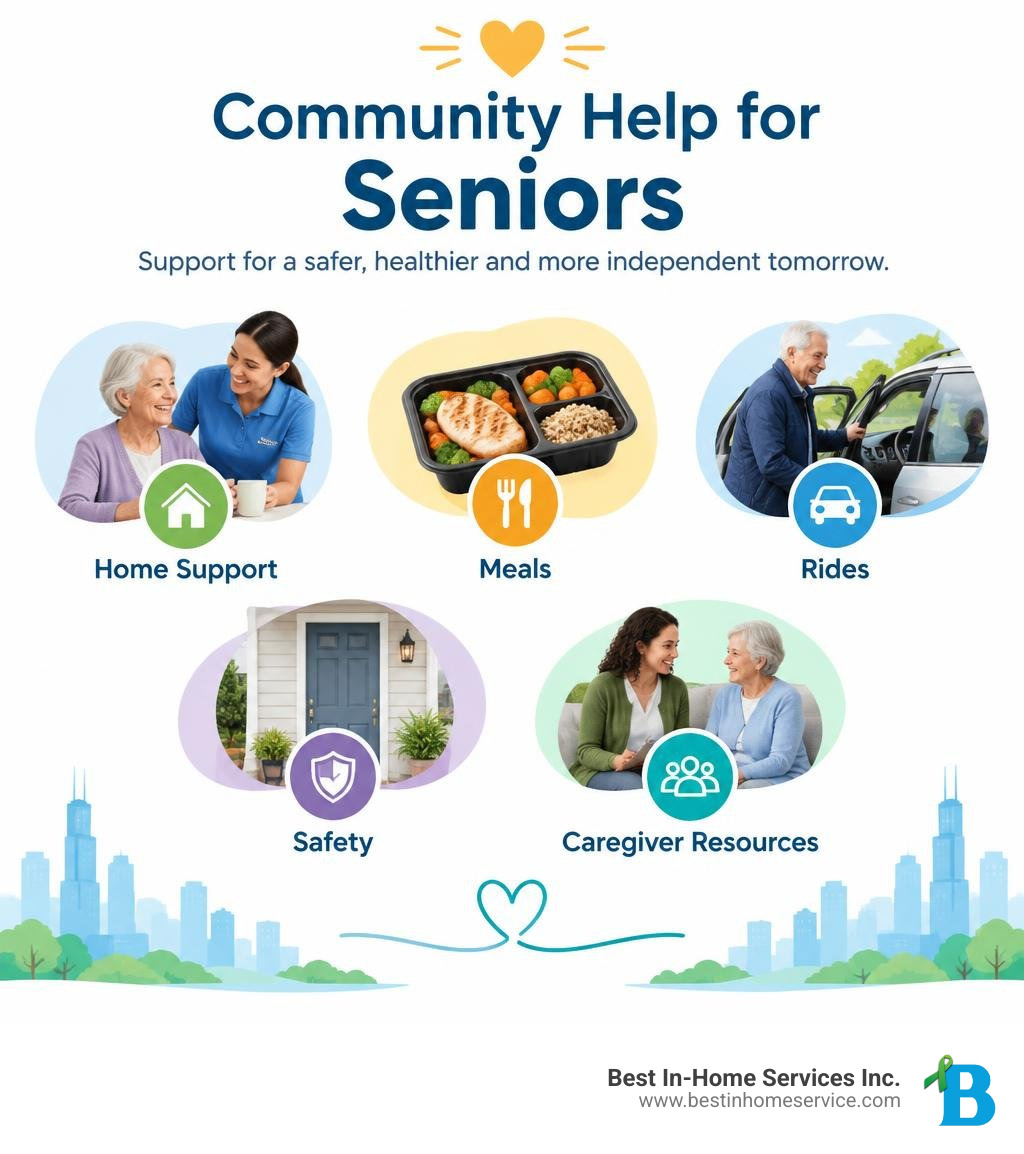
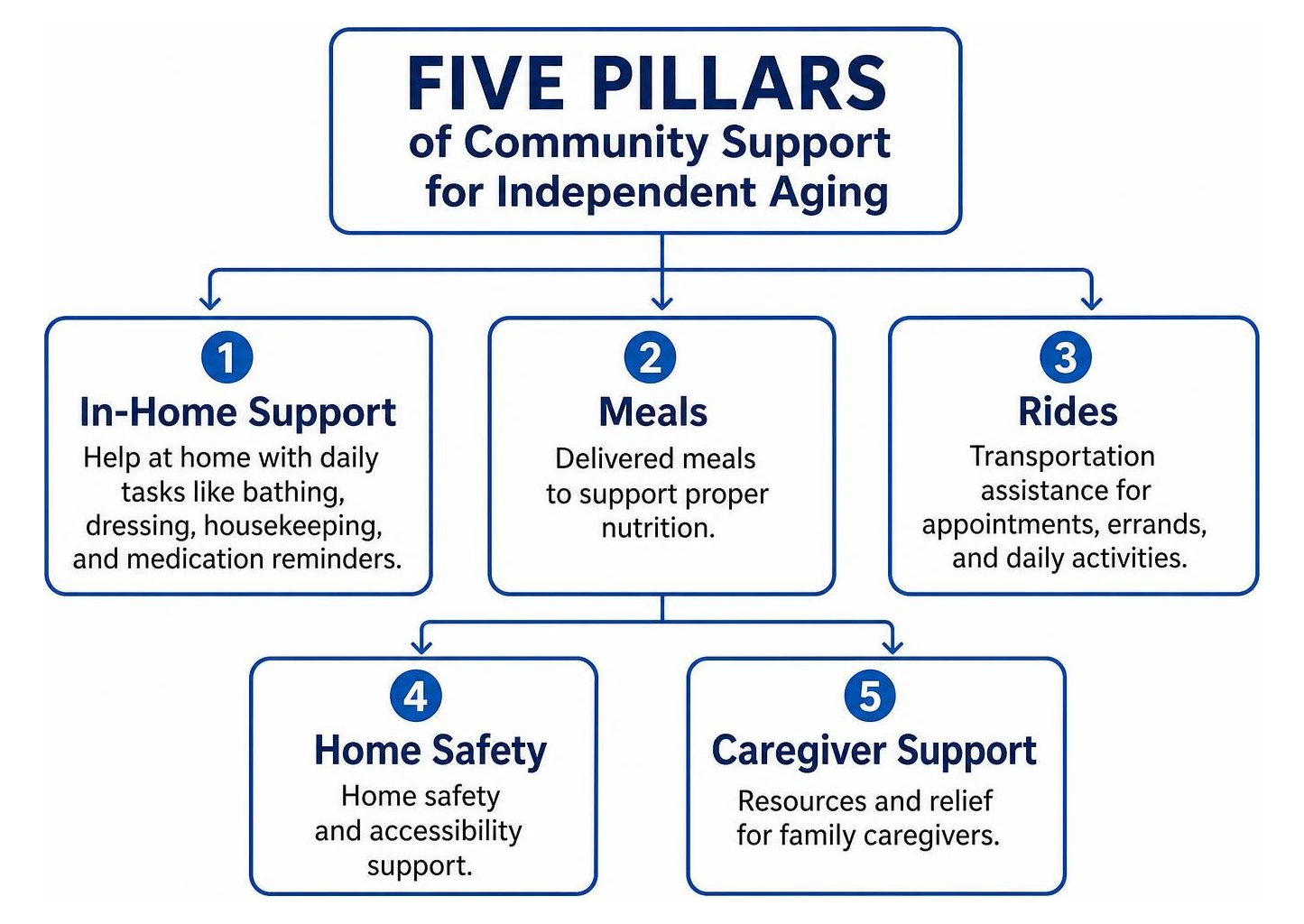
For community help for seniors in Chicago, start with the Illinois Department on Aging’s Community Care Program or a local senior services office. Ask about help at home, delivered meals, rides, home safety, and caregiver support. Tell them what help is needed and ask about eligibility, costs, and how to apply. You can combine programs to cover different needs and make aging in place more affordable.
Lily Harrison, General Manager at Best In-Home Service Inc., helps coordinate non-medical in-home care for Chicago-area families. This guide explains how community resources can fit alongside in-home support.
Community help for seniors terms to remember:
Types of Community Help for Seniors to Support Aging in Place
Most older adults prefer to live in their familiar surroundings for as long as possible. Staying at home safely, however, often requires a strong local network. A comprehensive care strategy combines family involvement, public programs, and professional support to manage daily tasks without exhausting a household budget.
Finding the right local assistance begins by identifying the core functional areas where help is needed most: nutrition, safe mobility, non-medical in-home support, and home accessibility. Consulting a regional community resource guide for older adults helps families locate Area Agencies on Aging (AAAs), municipal senior departments, and nonprofit coalitions that coordinate these essential supports across Cook, Lake, and DuPage counties.
Accessing In-Home Community Help for Seniors
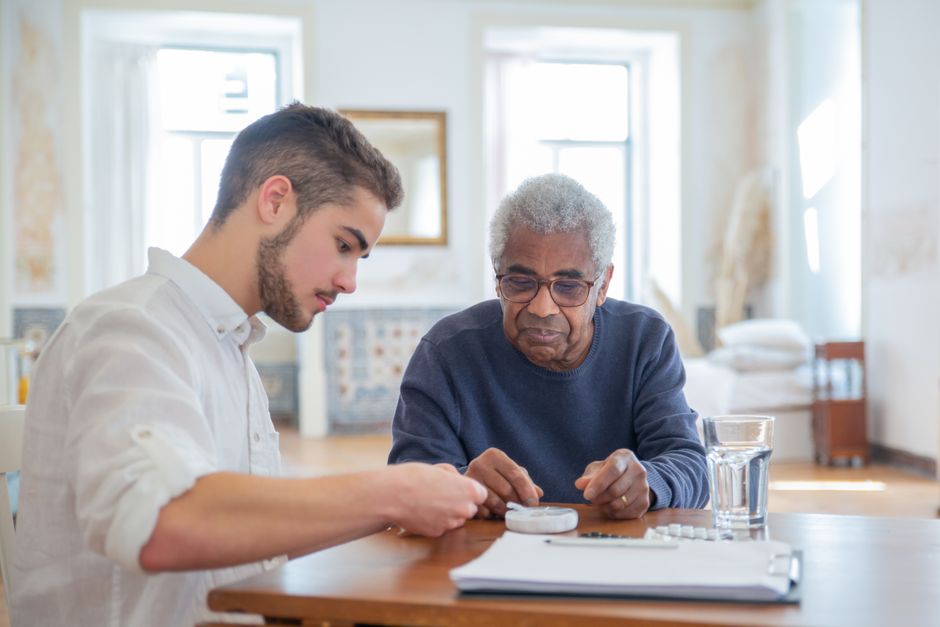
In-home community services provide practical assistance for older adults facing physical or cognitive challenges. Non-medical support covers activities of daily living (ADLs) and instrumental activities of daily living (IADLs), such as bathing, grooming, dressing, light housekeeping, laundry, and timely medication reminders.
For older adults who meet state eligibility criteria, the state-administered Community Care Program from the Illinois Department on Aging helps fund chore and homemaker services to prevent unnecessary placement outside the home. When state-funded hours do not cover all daily needs, families often combine public allocations with private household help for seniors to maintain safe routines throughout the week.
Nutritious Meal Delivery and Food Assistance Programs
Research indicates that older adults who lack nutritionally balanced meals often experience health complications that mimic serious chronic illnesses, leading to avoidable emergency room visits. Community nutrition initiatives help bridge this gap through several distinct channels:
- Home-Delivered Meals: Programs such as Meals on Wheels provide daily hot or frozen meals directly to homebound individuals aged 60 and older. Drivers also provide a quick safety check during delivery.
- Congregate Dining: Local community centers, park districts, and senior centers host weekday congregate dining programs. These sites serve balanced lunches while creating social connection opportunities.
- Supplemental Nutrition: Programs like the Supplemental Nutrition Assistance Program (SNAP) and local senior food pantry distribution days help stretch monthly grocery budgets.
Prioritizing well-rounded meals helps older adults maintain energy and physical resilience. Understanding the importance of nutrition and meal planning in senior care enables families to establish practical dining routines that work alongside home-delivered meal schedules.
Transportation, Safety, and Home Accessibility Programs
Giving up the car keys does not mean losing access to routine medical care, grocery stores, or community gatherings. Local transit initiatives and home modification programs ensure that seniors maintain their community connections and reduce environmental hazards inside their houses.

Specialized Transit and Medical Ride Assistance
Missed medical visits are frequently caused by transportation challenges. Municipalities and nonprofit groups throughout Northeastern Illinois offer several specialized transit options:
- Township and Dial-a-Ride Vans: Many township offices in Cook and DuPage counties coordinate curb-to-curb bus services for residents aged 60 and older.
- Volunteer Driver Programs: Organizations such as ElderCARE Lake County match vetted volunteer drivers with older adults needing escorted rides to routine medical and dental visits.
- ADA Paratransit and Subsidized Taxis: Regional transit authorities offer door-to-door paratransit for individuals with mobility impairments who cannot navigate fixed bus routes.
When medical visits require dedicated physical standby support, door-to-door navigation, and post-appointment routine setup, families often turn to non-medical senior appointment assistance from a dedicated caregiver.
| Transportation Option | Best Suited For | Booking Requirements | Accompaniment Level |
|---|---|---|---|
| Dial-a-Ride / Township Bus | Local grocery trips, senior center visits | Advance reservation (24–48 hours) | Curb-to-curb only |
| Volunteer Transit Networks | Routine medical and dental checkups | 3 to 7 days advance notice | Escort to clinic waiting room |
| ADA Paratransit | Regional transit across municipal boundaries | Advance scheduling and pre-certification | Door-to-door curb transit |
| Non-Medical Caregiver Transit | Complex medical visits, errands, pharmacy | Flexible hourly scheduling | Continuous physical presence and support |
Fall Prevention, Home Repairs, and Energy Assistance
Research shows that many falls are preventable through targeted environmental assessments and home modifications. State and municipal agencies provide access to home safety grants that fund the installation of grab bars, stair handrails, non-slip flooring, and modular wheelchair ramps.
Through the City of Chicago Senior Services division and county-level community action partnerships, income-qualified older adults can also access seasonal home weatherization, furnace repairs, and energy assistance through the Low-Income Home Energy Assistance Program (LIHEAP). Personal emergency response systems (PERS) featuring wearable alert pendants or smart sensors can be integrated into the home for rapid dispatch in an emergency.
Financial, Legal, and Medicare Counseling Resources
Managing health insurance forms, monthly utilities, and legal documentation can feel daunting. Fortunately, publicly funded counseling services offer objective guidance to help older adults safeguard their assets and secure entitled benefits.
SHIP Guidance and Benefit Access Counseling
The State Health Insurance Assistance Program (SHIP) is a free, unbiased counseling network that helps Medicare beneficiaries evaluate their healthcare coverage. Certified SHIP counselors help older adults compare Medicare Advantage plans, evaluate Part D prescription drug options, and identify opportunities to reduce out-of-pocket pharmaceutical expenses.
Additionally, community counselors through DuPage County Community Services and Cook County agencies assist seniors in completing Benefit Access applications. These programs determine eligibility for license plate fee discounts, transit ride free passes, and Medicaid waiver programs that support home-based services.
Legal Aid, Adult Protective Services, and Bill Payer Programs
Older adults and their families can access free or low-cost legal aid through legal advocacy clinics. These programs help establish essential advance directives, including:
- Illinois Statutory Short Form Power of Attorney for Healthcare
- Power of Attorney for Property and Financial Management
- Tenant rights advocacy and landlord dispute resolution
- Guidance on qualifying for local senior property tax exemptions
For seniors who struggle with monthly bookkeeping, nonprofit bill payer programs match screened volunteers with seniors to organize mail, balance checkbooks, and avoid utility shutoffs. To protect vulnerable adults from financial exploitation, neglect, or physical harm, the Adult Protective Services (APS) program investigates confidential reports involving adults aged 60 and older, intervening to ensure safety and stability.
Caregiver Relief, Technology Support, and Volunteer Initiatives
Sustaining a care routine at home requires adequate support for family caregivers. Connecting with structured community relief networks helps family members prevent physical and mental exhaustion.
Caregiver Respite, Support Groups, and Training
Family caregivers frequently balance their caregiving responsibilities with employment and other household commitments. Local Area Agencies on Aging coordinate caregiver support coalitions funded by the Older Americans Act, offering educational workshops, evidence-based dementia training, and peer support groups.
When primary caregivers need time off to attend to personal obligations, rest, or travel, arranging temporary respite care for seniors provides a vital breather. Reviewing the complete guide to respite care helps families structure scheduled non-medical relief visits so their loved ones maintain steady routines.
Digital Inclusion and Volunteer-Driven Community Help for Seniors
Digital connectivity reduces social isolation and keeps older adults in touch with distant relatives and virtual wellness programs. Community libraries across Chicago and surrounding suburbs offer beginner-friendly computer workshops, digital literacy coaching, and cyber scam awareness seminars to help seniors safely navigate online banking and telehealth portals.
Complementing digital initiatives, volunteer programs coordinate intergenerational activities, friendly phone check-ins, and seasonal volunteer yard cleanups. Dedicated companionship for elderly loved ones provides meaningful conversation, engaging recreational activities, and regular social interaction for older adults living alone.
Navigating Affordable Housing and Community Supports
When maintaining a standalone house becomes physically or financially unsustainable, older adults can explore community housing programs that lower living costs while keeping them connected to neighborhood resources.
Subsidized Senior Apartments and Housing Vouchers
Several federal and state programs provide subsidized housing tailored to older adults:
- HUD Section 202 Supportive Housing: Federally subsidized apartment developments designed for very low-income seniors aged 62 and older, offering rent structures capped at a percentage of household income.
- Housing Choice Vouchers (Section 8): State and municipal housing authorities manage voucher waitlists that help subsidize monthly rent in private market apartments.
- Senior Rent Freeze Programs: Local tax and housing initiatives help freeze assessed valuations or stabilize rents for qualifying low-income senior households.
Community Housing Supports That Complement Aging in Place
Moving into a dedicated senior apartment building does not mean giving up independence. Many older adults residing in independent senior buildings or suburban residential communities coordinate non-medical in-home care to help manage personal care routines, meal preparation, and housekeeping in their private apartments.
Frequently Asked Questions About Community Help for Seniors
How do low-income older adults apply for in-home care assistance?
Low-income older adults can contact their local Area Agency on Aging or designated Community Care Program intake agency in Illinois to request a Comprehensive Needs Assessment. An intake case manager reviews physical function, cognitive status, income levels, and non-exempt assets to determine eligibility for state-funded homemaker and adult day services under the Illinois Department on Aging’s programs.
What factors influence the cost of non-medical in-home senior care?
The cost of private non-medical in-home care in Chicago and the surrounding suburbs depends on the level of physical assistance required, the total number of scheduled hours per week, the consistency of the schedule, and whether specialized dementia assistance or overnight support is needed. Standard agency shifts generally require a minimum visit duration of 3 hours, and transportation mileage is billed separately when a caregiver uses their personal vehicle for errands or client appointments.
Where can family caregivers find free local respite care resources?
Family caregivers can access free or grant-subsidized respite care by contacting the Illinois Family Caregiver Support Program through their regional Area Agency on Aging. Faith-based networks, disease-specific charitable foundations (such as the Alzheimer’s Association), and local municipal senior departments also administer periodic respite relief grants and volunteer companion programs.
Conclusion
Building a sustainable plan for aging in place involves connecting public community programs, volunteer initiatives, and dependable in-home support. By combining meal delivery, local transit networks, utility assistance, and safety modifications, families can create an affordable, stable environment for their aging loved ones.
Best In-Home Service Inc. is an Illinois-licensed home care agency (License #3000758, based in Northbrook, IL) providing non-medical home care in Cook, Lake, and DuPage counties. We are licensed by the Illinois Department of Public Health, approved by the Illinois Department on Aging under the Community Care Program, and recognized by the Illinois Department of Human Services / Rehabilitation Services for the Home Service Program.
Our certified team provides companion care, personal care assistance, medication reminders, meal preparation, light housekeeping, mobility support, and specialized memory care throughout our service area, including Chicago, Evanston, Skokie, Winnetka, Northbrook, Glenview, Highland Park, Buffalo Grove, Naperville, Downers Grove, and Hinsdale.
To explore our custom care plans or discuss how our non-medical in-home services can complement your family’s community resources, contact our team at 224-636-5200 to schedule a free in-home consultation.






 1-224-636-5200

 1-224-636-5210
 425 Huehl Rd 13B Northbrook IL 60062