
How Senior Companionship Services Can Help With Loneliness
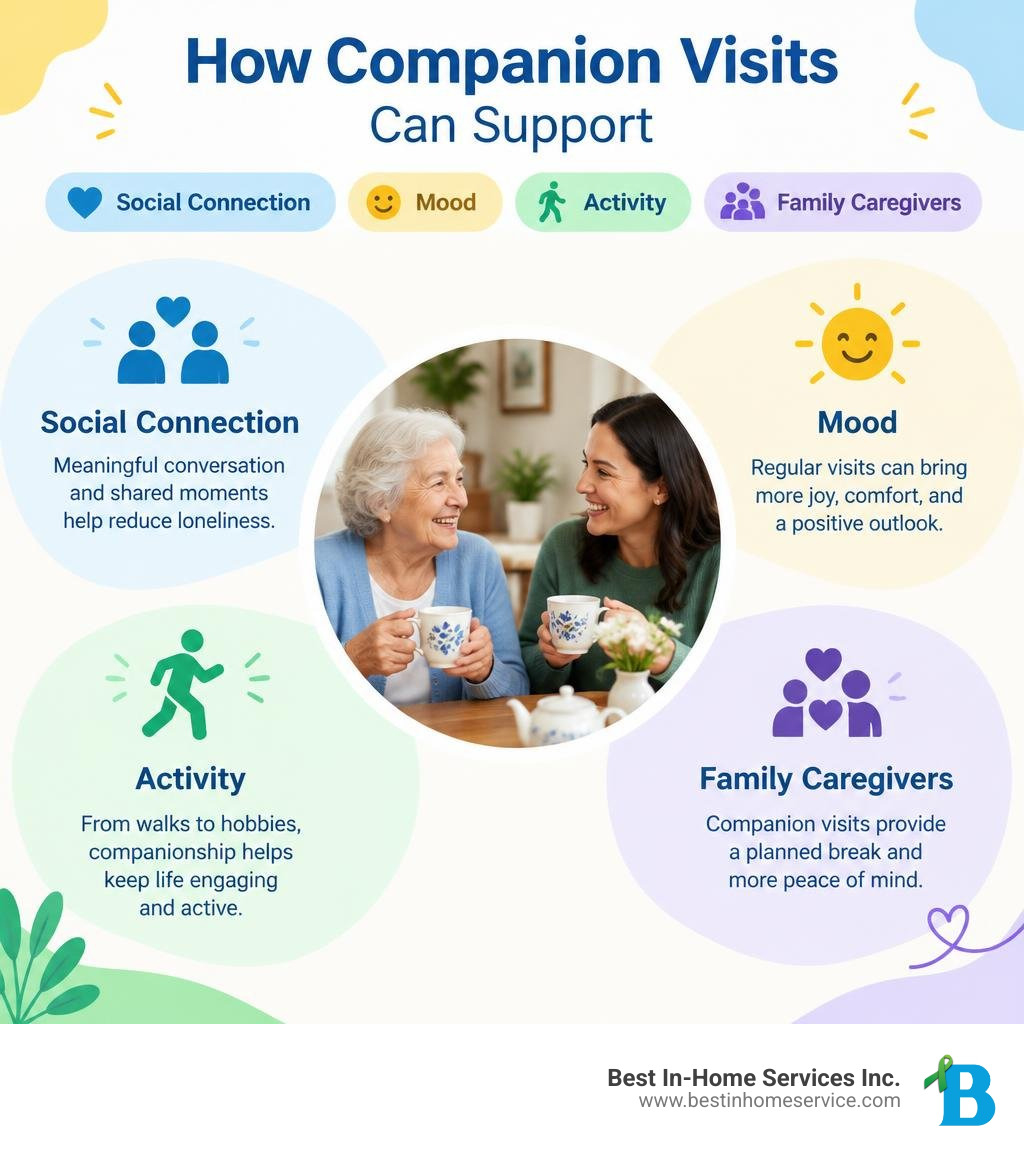
Senior companionship services provide regular, non-medical visits focused on conversation, shared activities, and social connection. A companion might play cards, take a walk, or help an older adult make a video call. If someone you love spends most days alone, ask what kind of company they would enjoy, then compare providers’ screening practices, schedules, and costs.
Regular visits can make it easier to stay engaged while aging at home. They can also give family caregivers a planned break, but they do not replace hands-on personal care or medical help when those are needed.
I’m Lily Harrison, General Manager at Best In-Home Service Inc., a Northbrook-based provider of non-medical home care in Illinois. I help coordinate in-home senior support, including senior companionship services, and this guide will help you decide whether companion visits are a good fit.
Discover more about senior companionship services:
What Are Senior Companionship Services and How Do They Work?
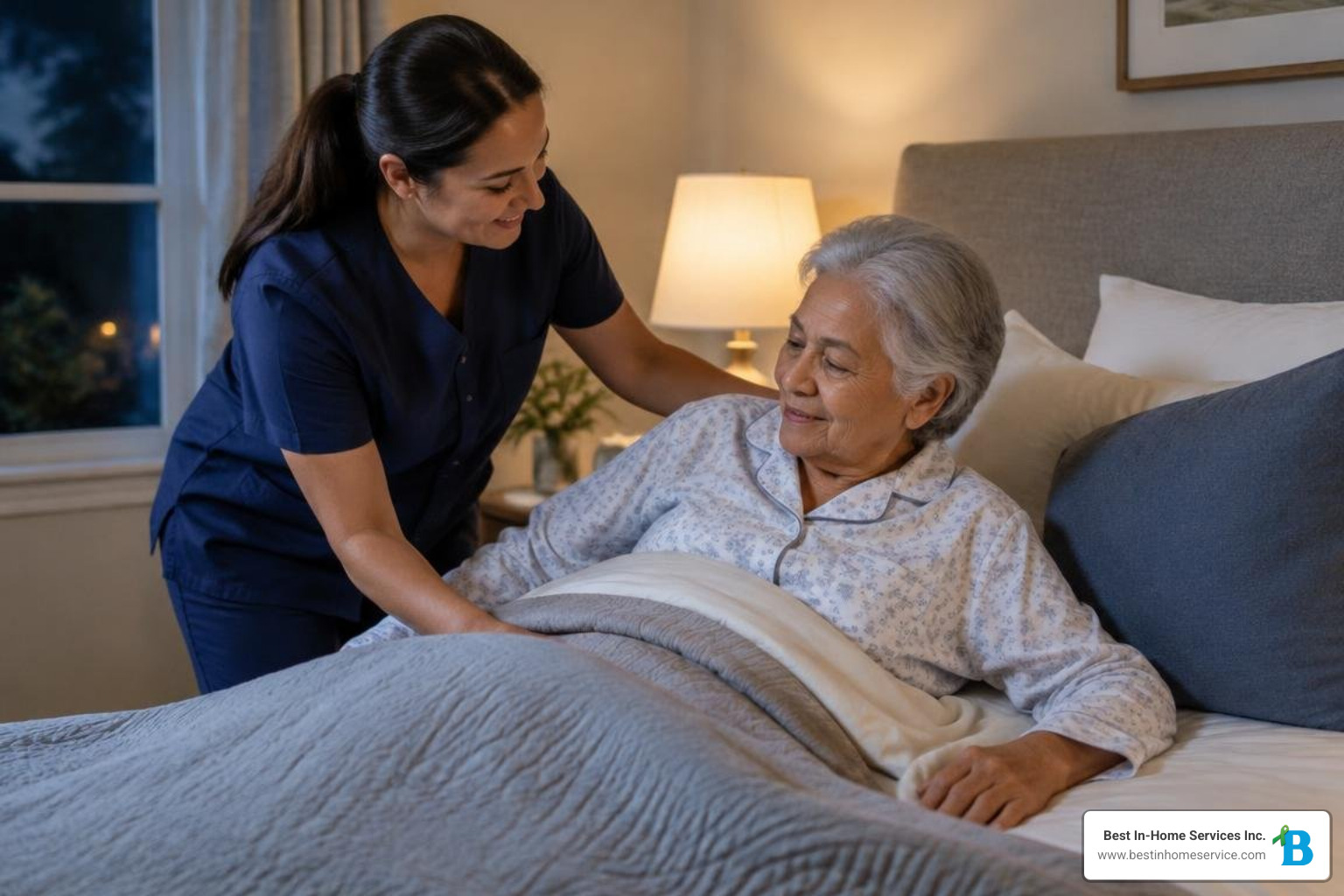
Aging in place is a wonderful goal, but living independently often brings quiet afternoons that stretch on a bit too long. Companion care focuses entirely on enriching daily life through structured social visits, shared interests, and non-medical emotional support. Rather than providing clinical treatments, a dedicated companion steps into the home as an attentive friend who brings warmth, structure, and active engagement back into the weekly routine.
Whether an aging parent lives in a house in Evanston, a condo in downtown Chicago, or a quiet neighborhood in Winnetka, having someone visit consistently transforms their living environment. These services work on customized schedules, ranging from a few hours a week to daily visits, ensuring older adults stay socially connected to their communities.
| Feature / Service Area | Non-Medical Companion Care | Hands-On Personal Care |
|---|---|---|
| Primary Focus | Socialization, emotional wellbeing, engagement | Physical hygiene, mobility, daily living support |
| Hands-On Assistance | No hands-on physical touching | Yes (bathing, dressing, grooming, transfers) |
| Daily Activities | Conversation, board games, reading, crafts | Bathing assistance, toileting, incontinence care |
| Home Support | Light housekeeping, organizing, shared hobbies | Meal prep, mobility assistance, physical safety |
| Errands & Outings | Grocery shopping, scenic drives, social events | Accompaniment to therapies and clinical visits |
| Medication Support | Friendly medication reminders | Medication reminders and routine tracking |
Companionship vs. Personal Care and Medical Assistance
Understanding the boundaries between care types helps families choose the right assistance. Companion care is strictly non-medical and non-physical. Companions do not administer injections, manage wound dressings, provide physical therapy, or take vitals. Those clinical tasks belong solely to licensed medical practitioners and home health nurses.
Furthermore, companion care differs from hands-on personal care. When an older adult requires direct physical help stepping into a shower, getting dressed, or managing physical transfers, distinguishing companion visits from personal care becomes crucial. Companions offer emotional reassurance and practical social presence, while personal care aides provide physical support for daily activities.
Daily Activities and Support Offered by Senior Companions
What does a typical companion visit actually look like? It revolves around whatever brings comfort and happiness to the individual. A companion might sit down over a cup of warm tea to discuss current events, solve crossword puzzles, organize family photo albums, or bake a favorite recipe together.
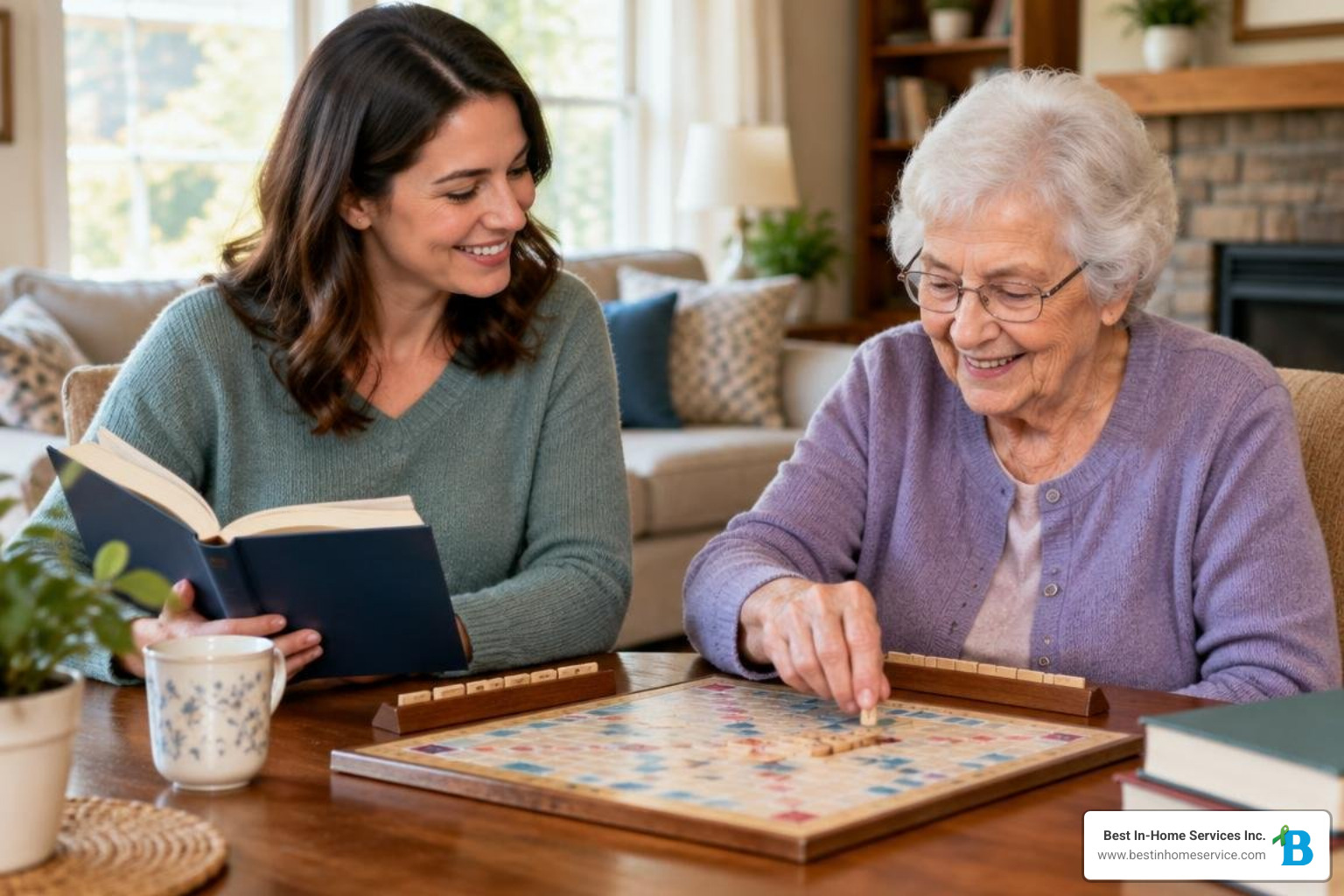
Beyond indoor activities, companions help bridge the gap to the outside world. They can assist with writing letters, setting up video chats with out-of-town grandchildren, or providing reliable accompaniment. Whether it is heading to the local pharmacy or arranging reliable senior appointment assistance for routine community visits, having a steady companion makes every trip enjoyable. Companions also take care of light household chores like watering plants or folding laundry, providing essential household help for seniors that keeps the living space comfortable.
Key Health and Emotional Benefits of Regular Social Connection
Prolonged isolation can quietly wear down an older adult’s spirit and vitality. Having consistent social interaction offers measurable emotional and cognitive benefits. Research shows that 89% of seniors experience reduced loneliness with regular companionship, while 98% of families report peace of mind knowing their loved one has regular, meaningful social interaction.
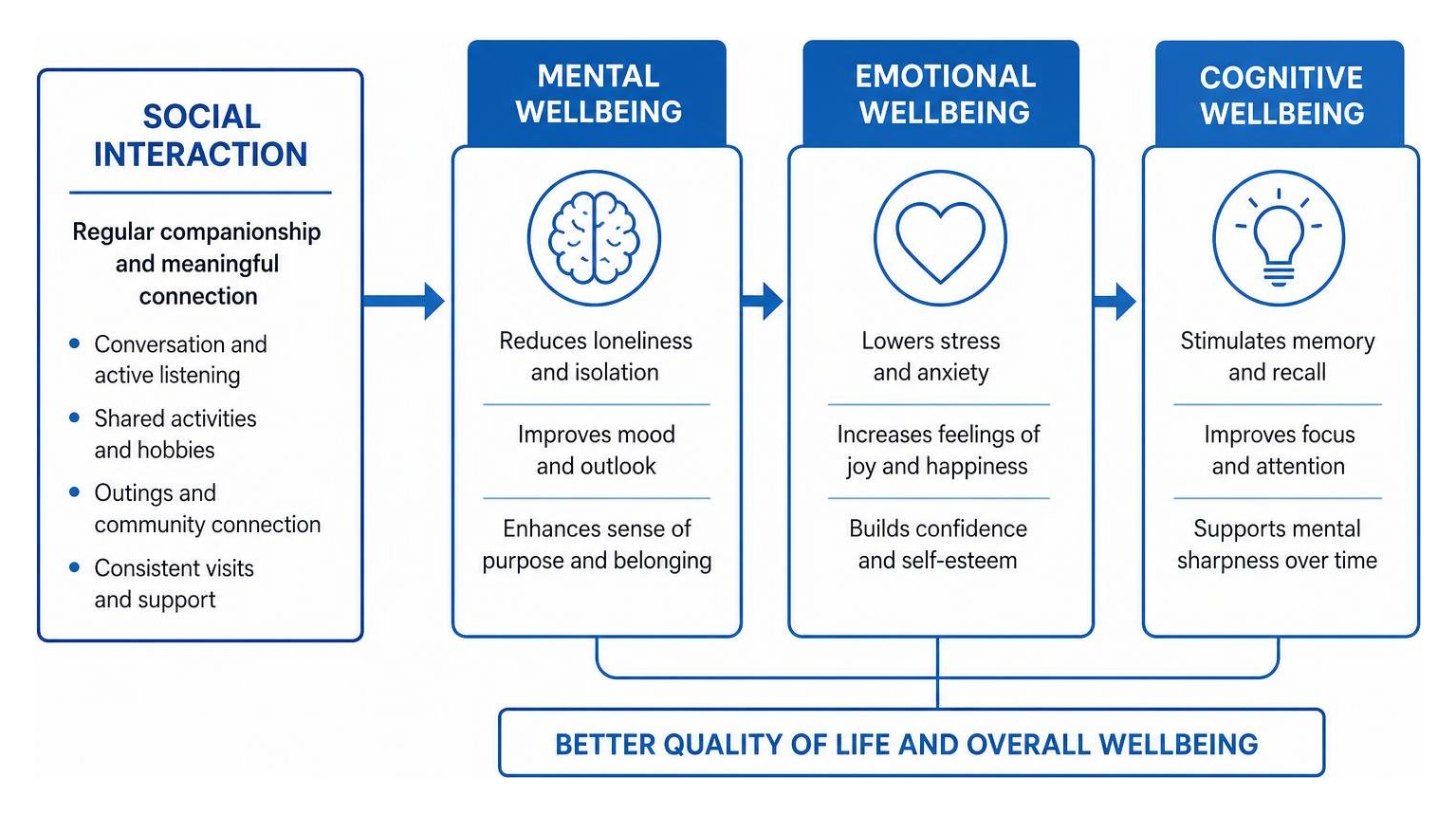
Exploring the psychological benefits of companionship highlights how shared laughter and active listening uplift an individual’s outlook on life.
Reducing Isolation and Improving Emotional Wellbeing
Loneliness is not simply an uncomfortable feeling; it can contribute to depressive symptoms and emotional fatigue. When an older adult has a scheduled visit to anticipate, their sense of purpose returns. They have someone waiting to hear their stories, celebrate small victories, and share daily moments.
This dynamic of social connection creates mutual benefits across communities. For instance, data surrounding the AmeriCorps Seniors volunteer health outcomes shows that 84% of volunteers report stable or improving health after one year of service, and 88% of volunteers who felt a lack of companionship reported fewer feelings of isolation. When people connect authentically, everyone benefits.
Cognitive Stimulation and Physical Activity Support
The human brain thrives on regular interaction. Engaging conversations, trivia games, and shared reading provide natural cognitive stimulation that keeps mental pathways active. In fact, 75% of seniors experience cognitive stimulation through engaging conversations and activities.

Companions also encourage gentle movement. A stroll through a park in Highland Park, a walk around the block in Glencoe, or simple stretching exercises can improve daily energy levels. This steady combination of mental and physical engagement is a core reason why companion care supports aging in place safely and happily.
Recognizing When an Aging Loved One Needs Social Support
It is common for older adults to downplay their isolation, telling their families that everything is fine. However, subtle changes in daily habits often reveal that living alone has become burdensome.
- Reluctance to leave the house for social events or religious services
- Leaving mail unopened and letting household organization slip
- Loss of enthusiasm for long-held hobbies, reading, or gardening
- Noticeable changes in mood, such as quiet withdrawal or irritability
- Skipping meals or relying solely on pre-packaged snacks
- Forgetting to take routine medications on time
Common Warning Signs of Senior Isolation
When an aging parent stops calling friends or skips regular community gatherings in places like Skokie or Des Plaines, it is time to look closer. A decline in home tidiness, expired food in the refrigerator, or a noticeable lack of personal grooming often points to social disengagement rather than purely physical limitations.
Recognizing these shifts early makes it easier to step in with compassionate solutions. If you are noticing these patterns, recognizing when in-home senior support is needed allows families to introduce companion care before loneliness leads to deeper emotional strain.
How Senior Companionship Services Relieve Family Caregiver Stress
Family caregivers often juggle their own careers, children, and personal responsibilities while trying to support an aging parent. This balancing act can lead to caregiver fatigue and emotional exhaustion.
When a dependable companion steps in, family caregivers can take a breath, run errands, or simply rest. Scheduled respite visits allow family members to step out of the exhausting role of constant supervisor and return to being loving sons, daughters, and partners.
Finding, Evaluating, and Financing Companion Care Options
Selecting the right companionship option requires careful research and clear communication. Families must decide between working with an established agency or attempting to hire an independent private aide directly.
When finding reputable companion care near you, working with a licensed agency provides built-in oversight, consistent coverage, and thorough vetting.
Evaluating Background Checks, Training, and Caregiver Matching
Safety and personal chemistry are essential when inviting someone into an older adult’s private home. Professional agencies handle rigorous vetting, including fingerprinting, criminal background screenings, and reference checks.
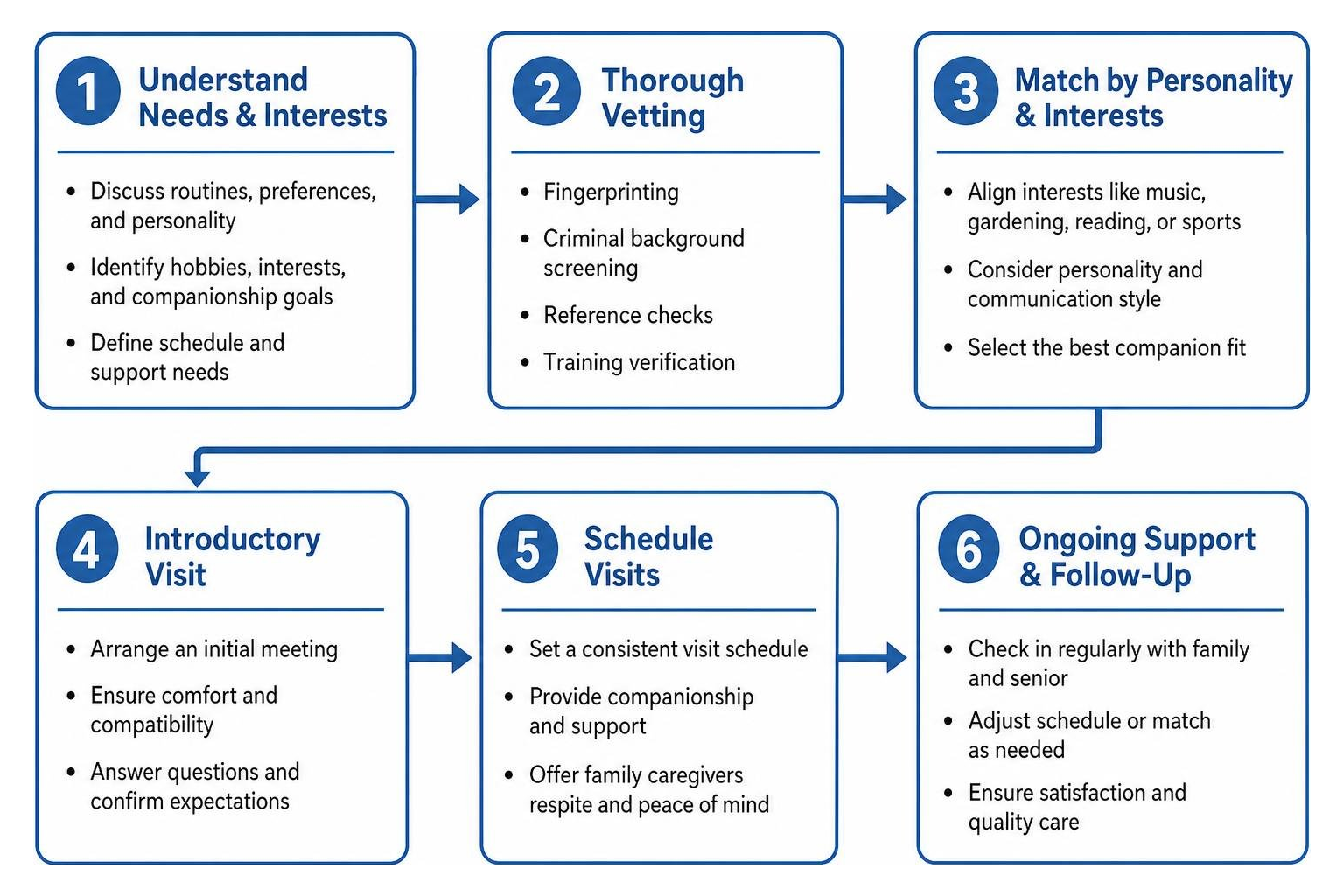
Equally important is personality matching. A companion who shares a passion for classical music, gardening, or local sports will build rapport much faster. When weighing professional companion care against casual hiring, families find that professional agency oversight ensures structured accountability and ongoing support.
Government Programs and Volunteer Senior Companionship Services
Families exploring budget-conscious options can investigate public and community-based resources. Organizations like local Area Agencies on Aging, religious congregations, and community centers often host volunteer visiting initiatives.
Programs such as the Senior Community Service Employment Program and national volunteer networks connect older adults with community members who provide friendly visits. While volunteer programs may offer less scheduling flexibility or shorter visits than private agency care, they serve as helpful community touchpoints for older adults living alone.
Frequently Asked Questions About Senior Companion Care
What is the difference between a companion and a personal care aide?
A companion provides non-medical social interaction, friendly conversation, hobby accompaniment, light housekeeping, and transportation assistance. A personal care aide is trained to provide hands-on physical assistance, such as bathing, dressing, grooming, incontinence care, and physical transfer support.
Are senior companionship visits covered by Medicare or insurance?
Standard Medicare and standard health insurance policies generally do not cover non-medical companion care services. Most companion care is paid privately through out-of-pocket funds or specialized long-term care insurance policies. In Illinois, certain state-administered programs, such as Medicaid waivers or Community Care Program plans, may assist eligible individuals with non-medical home support services.
How are companion care costs determined?
The cost of companion care in the Chicago area varies based on several practical factors, including the total number of scheduled hours per week, specific scheduling times (such as daytime, evening, or weekend visits), whether companion services are combined with personal care, and separate mileage billing for transportation requests. Licensed agencies typically maintain a standard shift minimum, such as three hours per visit, to ensure consistent and reliable staffing.
How many hours per week of companionship do older adults typically need?
Scheduling is highly personalized based on individual social needs and family routines. Many seniors start with two or three visits per week, lasting three to four hours per visit. Others benefit from daily weekday visits or extended companionship to provide consistent structure while family caregivers are at work.
Restoring Connection and Joy at Home
Loneliness does not have to be an inevitable part of growing older. By introducing dependable, engaging senior companionship services, older adults gain a trusted friend who brings energy, conversation, and routine back into their lives.
At Best In-Home Services Inc., our team provides dedicated non-medical companion and home care support across Cook, Lake, and DuPage counties – serving communities including Northbrook, Glenview, Deerfield, Highland Park, Schaumburg, Naperville, and Chicago. Whether your loved one would enjoy walks in the neighborhood, assistance with light chores, or friendly conversation over afternoon tea, we are here to support your family.
To discuss your family’s needs or schedule a free in-home consultation, contact Best In-Home Services Inc. today at 224-636-5200 or explore our personalized in-home care services to learn more.






 1-224-636-5200

 1-224-636-5210
 425 Huehl Rd 13B Northbrook IL 60062