
Why Home Help Services Matter for Families Navigating In-Home Care
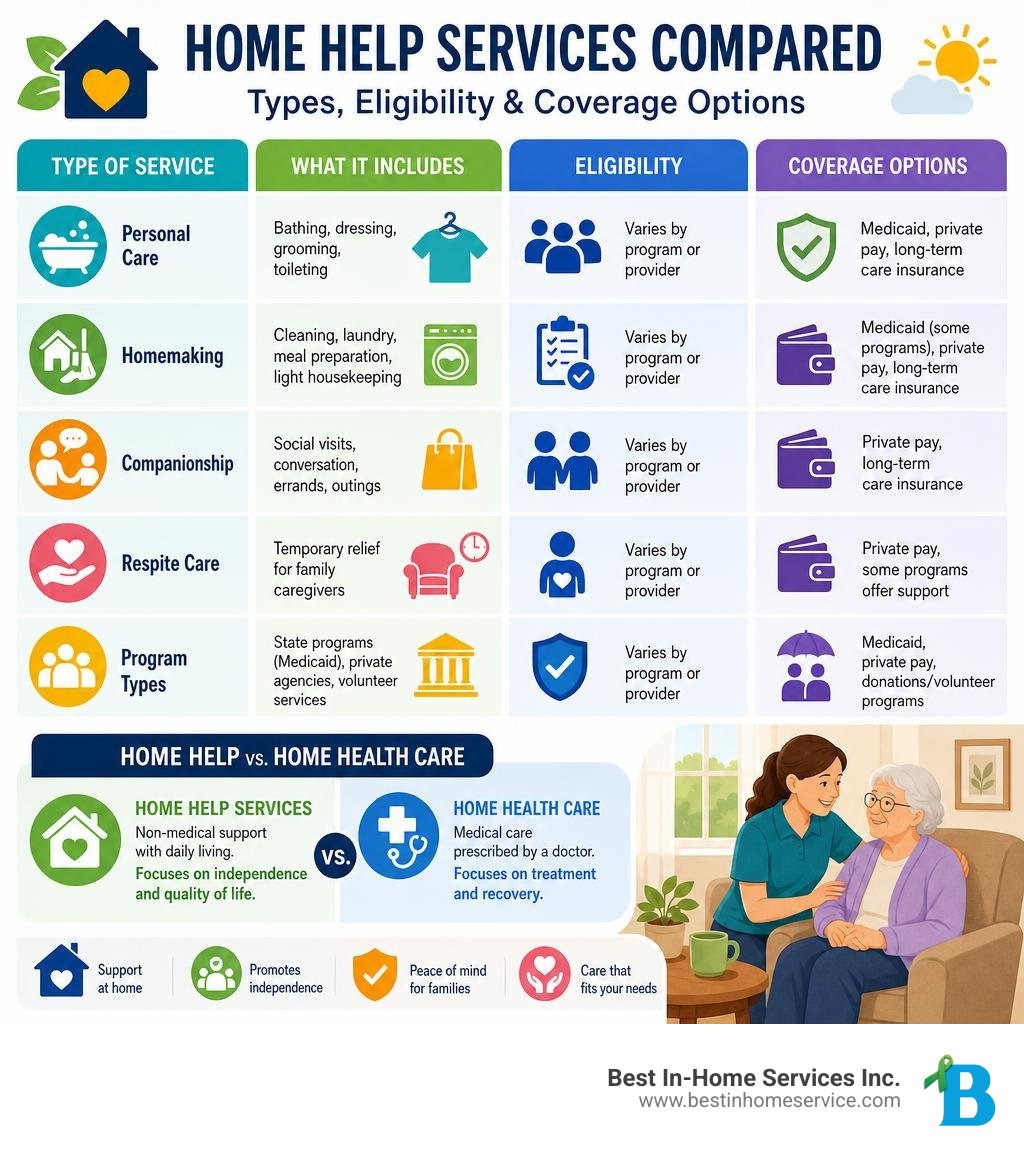
Home help services are non-medical, in-home support programs that help seniors and people with disabilities manage daily life safely at home. Here’s a quick overview:
| Type of Support | Examples |
|---|---|
| Personal care | Bathing, dressing, grooming |
| Homemaking | Cleaning, laundry, meal prep |
| Companionship | Social visits, errands, outings |
| Respite care | Temporary relief for family caregivers |
| Program types | Medicaid programs, private agencies, volunteer services |
Bottom line: Home help services are not the same as home health care. They focus on daily living support — not medical treatment.
Finding the right care for an aging parent or loved one in Chicago is rarely simple. There are state programs, private agencies, volunteer options, and everything in between — each with different eligibility rules, costs, and levels of support. For families dealing with dementia, memory issues, or the need for round-the-clock assistance, the choices can feel overwhelming.
This guide cuts through the noise. It compares the most common home help service models side by side, so you can make a confident, informed decision for your family.
I’m Lily Harrison, General Manager at Best In-Home Services Inc., where I’ve spent years coordinating personalized home help services for seniors and families across Chicago and Illinois. I’ll walk you through exactly what to look for — and what to watch out for.
Understanding Home Help Services and How They Differ from Home Health Care
When we begin exploring options for our aging loved ones, the terminology can quickly become confusing. Many families use “home help” and “home health” interchangeably, but they represent entirely different levels of care, regulatory structures, and funding sources.
At its core, home help services focus on assisting individuals with Activities of Daily Living (ADLs) and Instrumental Activities of Daily Living (IADLs).
- Activities of Daily Living (ADLs): These are essential self-care tasks. They include bathing, dressing, toileting, transferring (such as moving from a bed to a wheelchair), and eating.
- Instrumental Activities of Daily Living (IADLs): These are tasks necessary to live independently within a community. They include meal preparation, light housework, managing finances, shopping for groceries, and arranging transportation.
By providing reliable assistance with these everyday challenges, we can help seniors maintain their dignity and remain in their own homes. To learn more about the breadth of these offerings, you can read more info about home services.
These non-medical interventions are the cornerstone of aging in place. They prevent premature placement in institutional settings like nursing homes or assisted living facilities. For a deeper look into why staying at home is often the most beneficial route for a senior’s mental and physical well-being, explore our guide on Why Senior Care at Home is the Best Choice for Aging in Place.
Key Offerings of Home Help Services
The primary objective of home help is to keep the household running smoothly and safely. The most common services include:
- Meal Preparation: Ensuring seniors receive nutritious, hot meals that align with their dietary restrictions.
- Light Housekeeping: Dusting, vacuuming, washing dishes, and taking out the trash to prevent fall hazards and maintain hygiene.
- Medication Reminders: Helping seniors stay compliant with their doctors’ prescriptions without cross-contaminating or administering the medications directly.
- Companionship: Combating the epidemic of senior isolation through conversation, shared activities, and cognitive engagement.
An untidy or unmanaged home is more than just an eyesore; it can actively contribute to feelings of depression, anxiety, and physical vulnerability. For a closer look at how simple household assistance translates to emotional relief for the entire family, check out our article on Household Help for Seniors: More Than Just Chores, It’s Peace of Mind.
Home Help Services vs. Skilled Home Health Care
The dividing line between home help and home health care is clinical necessity.
Skilled home health care involves medical treatments administered by licensed professionals, such as Registered Nurses (RNs), Physical Therapists (PTs), or Occupational Therapists (OTs). This includes wound care, intravenous therapy, injections, and physical rehabilitation following a stroke or major surgery.
Because it is clinical, Medicare covers unlimited home health visits for eligible beneficiaries who are homebound and require part-time or intermittent skilled care. Under Medicare guidelines, “part-time or intermittent” typically translates to a maximum of 8 hours per day and up to 28 hours per week (though this can sometimes stretch to 35 hours in specific, short-term scenarios approved by a physician).
In contrast, standard Medicare does not cover non-medical home help services if that is the only type of care required. For seniors in Illinois who need non-medical help but cannot pay entirely out of pocket, state-administered programs like the Illinois Department on Aging Homemaker Services offer crucial public funding pathways to keep individuals safe in their communities.
5 Best Types of Home Help Services Compared
Choosing the best care model depends heavily on your budget, your loved one’s physical and cognitive needs, and how much administrative oversight you want to handle.

Below, we compare the five primary home help service models available to families today:
| Care Model | Best For | Typical Funding | Administrative Burden | Pros | Cons |
|---|---|---|---|---|---|
| 1. State Medicaid Programs | Low-income seniors | Medicaid / State Funds | High (strict eligibility) | Little to no cost | Waitlists; rigid hour limits |
| 2. Private-Duty Agencies | Customized, 24/7 care | Private Pay, LTC Insurance | Low (agency handles all) | Certified staff; backup care | Higher out-of-pocket cost |
| 3. Consumer-Directed (CDPAP) | Families with trusted relatives | Medicaid | Medium (family manages) | Familiar caregivers | Family must manage scheduling |
| 4. Caregiver Registries | Budget-conscious private pay | Private Pay | High (client is employer) | Lower hourly rates | No guaranteed backup care |
| 5. Volunteer Programs | Isolated seniors needing basic help | Free / Donations | Low | Cost-effective companionship | Limited hours; no personal care |
1. State-Administered Medicaid Programs (e.g., IHSS & Michigan Home Help)
For seniors who meet strict financial and functional eligibility requirements, state-funded programs are a lifeline. While California features its In-Home Supportive Services (IHSS) program and Michigan operates its Home Help program, Illinois residents rely on local equivalents to achieve the same goals.
In the Chicago metro area, programs managed through the Illinois Department on Aging and local county offices, such as DuPage County Community Services, provide access to Medicaid waiver benefits. These programs are explicitly designed to prevent premature nursing home placement.
To qualify for these state-funded programs, applicants must undergo a comprehensive functional assessment. In Illinois, this determines their Determination of Need (DON) score. Social workers evaluate the individual’s ability to perform ADLs and IADLs safely.
A major modern component of these state-funded programs is Electronic Visit Verification (EVV). Mandated by federal law, EVV requires caregivers to log their visits electronically using GPS or landline verification to confirm the exact time, date, and location of the services provided. This technology ensures transparency, prevents billing fraud, and guarantees that vulnerable seniors actually receive the care authorized by the state.
2. Private-Duty Home Care Agencies
When families require immediate, highly customizable care without the rigid income limits or waitlists of state programs, private-duty home care agencies are the gold standard.
Private-duty agencies employ their own caregivers, taking care of all background checks, payroll taxes, worker’s compensation, and liability insurance. This model is highly flexible, offering everything from a few hours of companionship a week to comprehensive 24/7 care.
For families dealing with complex, progressive conditions, private agencies offer specialized expertise. For example, at Best In-Home Services Inc., our caregivers receive specialized training in dementia, Alzheimer’s, and memory care. This clinical oversight ensures that as a client’s cognitive needs change, their care plan adjusts accordingly.
By selecting a reputable private-duty agency, you can access highly structured Personal Care Services tailored precisely to your family’s schedule and lifestyle, ensuring your loved one receives consistent, professional support right at home.
3. Consumer-Directed Personal Assistance Programs (CDPAP)
For seniors who are uncomfortable bringing strangers into their homes, Consumer-Directed Personal Assistance Programs (or local equivalents under Illinois’ Home Services Program) offer an appealing alternative.
This model allows the care recipient (or their designated representative) to recruit, hire, and train their own caregivers. The caregiver can be a trusted friend, a neighbor, or even a family member—including adult children.
The program is funded through Medicaid. Once the state approves the recipient for a set number of weekly care hours, the chosen caregiver is paid directly by a state-approved financial intermediary.
While this model provides unmatched comfort and keeps care “in the family,” it does place a significant administrative burden on the family. You must manage scheduling, find backup care if your primary caregiver falls ill, and handle basic supervisor duties.
4. Companion and Homemaker Registries
Companion and homemaker registries operate as matching services. They maintain a database of independent caregiver contractors and match them with families seeking help.
Because the caregivers are independent contractors rather than agency employees, registries usually feature lower hourly rates than traditional private-duty agencies. However, this cost savings comes with a trade-off: you become the employer.
When hiring through a registry, the family is often legally responsible for verifying the caregiver’s credentials, conducting independent background checks, and ensuring appropriate liability coverage is in place. Furthermore, if the caregiver calls in sick, registries are under no obligation to provide a guaranteed backup, leaving families to scramble for coverage.
5. Volunteer and Community-Based Senior Programs
For seniors who only require minimal, intermittent assistance, volunteer and community-based programs are an excellent, budget-friendly resource.
Local senior centers, faith-based organizations, and non-profits often run “friendly visitor” programs. Volunteers visit seniors for a few hours a week to play board games, assist with basic technology, or simply chat. Many of these programs also offer volunteer-led grocery shopping trips or coordinate local senior shuttle services.
While these programs do wonders for combating loneliness and providing family caregivers with short-term respite, they cannot assist with hands-on physical needs like bathing, toileting, or transferring.
Key Factors to Consider When Choosing a Provider
Selecting a home help services provider is a deeply personal decision. Entrusting the safety of a vulnerable parent or spouse to someone else requires careful evaluation.

When comparing your options, it is helpful to weigh the long-term benefits of in-home support against other options. You can read our comprehensive breakdown of Home Care vs Assisted Living to understand which environment suits your family’s needs best.
Caregiver Screening and Training Standards
Do not hesitate to ask prospective providers tough questions about their hiring and training pipelines. A reputable provider should perform:
- Comprehensive criminal background checks (both state and federal).
- Diligent reference checks.
- Regular drug screenings.
Additionally, ask about ongoing education. If your loved one is dealing with cognitive decline, general caregiving training is often not enough. Specialized memory care training ensures caregivers understand how to de-escalate sundowning behaviors, manage wandering risks, and communicate effectively without causing distress.
Technology Integration and Electronic Visit Verification (EVV)
In 2026, technology plays an indispensable role in ensuring care quality. Reliable providers utilize modern scheduling and tracking systems to keep families connected.
EVV compliance is not just a regulatory hurdle for state-funded care; it is a sign of an agency’s operational maturity. By utilizing real-time logging, families can instantly see when a caregiver arrives, what tasks were completed during the shift, and when they departed. This transparency builds trust and gives long-distance family caregivers immense peace of mind.
Frequently Asked Questions About Home Help
Navigating the transition to in-home care brings up many practical questions. Here are some of the most common questions families ask us. For a broader look at customized non-medical support, you can also view our Individual Services page.
What is the difference between home help and home health care?
Home help services are entirely non-medical. They assist with everyday tasks like meal preparation, companionship, light cleaning, and basic personal care (bathing and dressing). Home health care, on the other hand, is clinical medical care ordered by a doctor. It is provided by licensed nurses or therapists and includes wound care, physical therapy, and medication administration.
How do I apply for state-funded home help programs?
In Illinois, you can start by contacting your local Area Agency on Aging or the Illinois Department on Aging. They will coordinate a free in-home assessment to evaluate your loved one’s physical and cognitive needs (determining their Determination of Need score) and review your financial eligibility for Medicaid waiver programs.
Can family members be paid as caregivers under home help programs?
Yes, under certain state-administered consumer-directed Medicaid programs, eligible seniors can select a family member (such as an adult child) to act as their paid caregiver. The state-approved financial intermediary then handles the payroll and tax withholding. Spouse-to-spouse paid caregiving is often subject to strict limitations depending on the specific state waiver.
Conclusion
At the end of the day, there is no one-size-fits-all solution for senior care. Whether your family benefit most from a state-funded program, a volunteer companion, or a dedicated private-duty agency depends entirely on your unique circumstances.
If you are navigating this journey in Chicago or the surrounding suburbs—including Downers Grove, Winnetka, Schaumburg, Lake County, Cook County, DuPage County, or Naperville—we are here to help. At Best In-Home Services Inc., we specialize in providing compassionate, 24/7 support with certified staff and fully customized care plans designed to fit your family’s exact needs.
Ready to take the next step? Explore Our In-Home Care Services today, or reach out to our team to schedule a free in-home consultation. We’ll help you design a care plan that brings safety to your loved one and peace of mind to your entire family.