
Understanding Respite Care Aged Care: Types and Key Benefits
Respite care aged care provides planned or emergency short-term relief for primary caregivers while ensuring older adults receive safe, attentive assistance. Available through in-home aides, adult day centres, or short-term residential stays, respite services support daily living activities, medical needs, and social engagement so family members can rest and prevent burnout.
Caring for an aging parent or partner is deeply meaningful, but the daily demands can take a quiet physical and emotional toll. Roughly 20% of caregivers suffer from depression, according to Family Caregiver Alliance data, underscoring the need for structured support. Demand for home health and personal care aides is projected to grow by 21% through 2033 according to the Bureau of Labor Statistics, reflecting how essential professional caregiving partnerships have become.
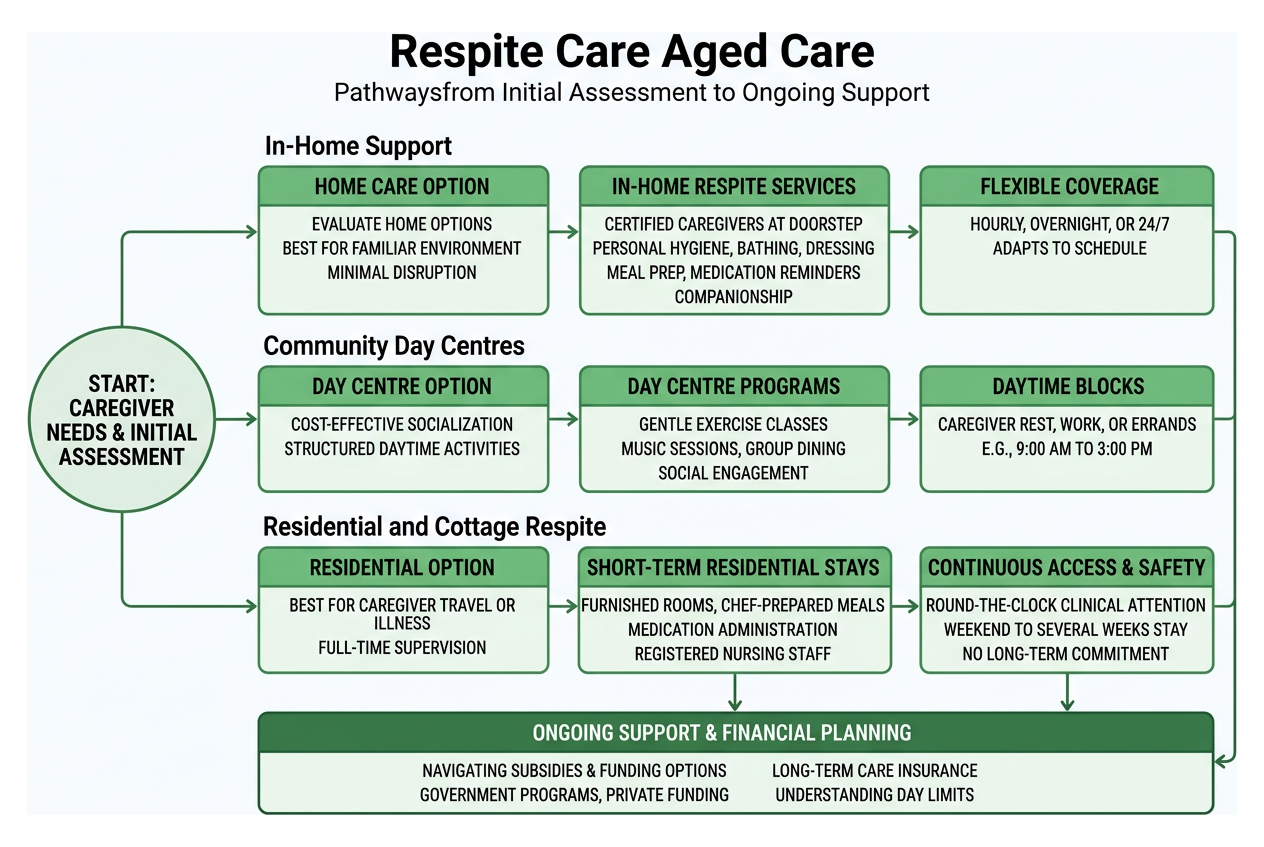
| Respite Model | Primary Setting | Best Suited For | Typical Schedule | Key Advantage |
|---|---|---|---|---|
| In-Home Respite | Senior’s private residence | Seniors who thrive in familiar environments; individuals with memory loss | Hourly, overnight, or 24/7 coverage | Minimal disruption to established daily routines |
| Adult Day Centres | Community or specialized facility | Seniors seeking social interaction, hobbies, and structured daytime activities | Daytime hours (e.g., 9:00 am to 3:00 pm) | Cost-effective socialization and peer engagement |
| Residential Respite | Licensed senior community or care home | Full-time supervision during caregiver travel, illness, or post-hospital recovery | Multi-day to multi-week temporary stays | Continuous clinical access and around-the-clock safety |
Choosing between these settings depends on your family dynamic, medical requirements, and overall lifestyle. Families often begin by evaluating in-home care options to see if remaining at home provides the most comfort and consistency.
In-Home Support and Community Day Centres
In-home respite brings certified caregivers directly to the doorstep. This model covers hands-on personal hygiene, bathing, dressing, meal preparation, medication reminders, and warm companionship. For seniors living with Alzheimer’s disease or other forms of dementia, remaining in a familiar setting avoids the disorientation that can accompany unfamiliar surroundings.
Community day centres provide another practical option, offering structured daytime activities such as gentle exercise classes, music sessions, and group dining. These programs give primary caregivers dedicated daytime blocks to work, handle household tasks, or run errands while their loved one participates in meaningful social engagement. Families can explore localized respite home health care options to determine whether daytime visits, hourly shifts, or full-day home visits work best for their current schedule.
Residential and Cottage Respite
When a caregiver plans a vacation, travels for work, or needs personal medical recovery, short-term residential stays provide dependable around-the-clock supervision. Residential communities and cottage-style facilities deliver furnished rooms, chef-prepared meals, medication administration, and access to registered nursing staff.
These temporary stays can range from a weekend to several weeks, offering a secure environment where seniors receive full clinical attention without the long-term commitment of permanent relocation.
Navigating Subsidies, Day Limits, and Funding Options
Understanding the financial side of senior assistance allows families to plan ahead without unexpected surprises. While many families utilize private self-funding or long-term care insurance policies, various government programs and community initiatives offer practical financial relief.
Investigating short-term respite care payment methods early in your caregiving journey helps identify potential benefits, sliding-scale programs, and public vouchers before burnout sets in.
How Assessments and Subsidies Work for Respite Care Aged Care
Publicly funded programs rely on standardized assessments to determine the level of assistance an older adult requires. In many comprehensive aged care frameworks, eligible individuals are entitled to up to 63 days of subsidised care in a financial year, encompassing both planned and emergency residential respite care.
If caregiving pressures persist or health needs escalate, an assessor can review the case and grant an extension of up to another 21 days. Formal guidance on fee structures, classification levels, and supplement allocations is available through the Residential respite subsidy and supplements framework.
For families navigating Medicare in hospice circumstances, Medicare will cover most of the cost for up to five consecutive days of respite care in an approved inpatient facility, offering vital breathing room during difficult end-of-life stages.
Special Provisions for Veterans and Emergency Home Relief
Veterans and their surviving spouses frequently have access to dedicated government support programs. Eligible veterans holding qualifying service cards can access structured respite allocations to prevent caregiver exhaustion.
- In-Home Veteran Allowances: For veterans, each financial year DVA will pay for up to 196 hours of in-home respite care, or 28 days of residential respite care, or a combination of both.
- Emergency Crisis Relief: Emergency short-term home relief (ESTHR) provides up to 216 hours per financial year, with 72 hours each episode or until alternative care is arranged.
- Support Coordination: Detailed eligibility guidelines, claims processing, and provider arrangements can be reviewed directly via the Department of Veterans’ Affairs Respite Care portal.
Managing Respite Stays, Absences, and Emergency Situations
Caregiving routines rarely follow a predictable script. A family caregiver might suddenly fall ill, experience an injury, or need to travel for an unexpected family matter. Having an emergency plan in place ensures your loved one receives high-quality assistance without delay.

Detailed operational policies regarding admissions, day balances, and care management can be referenced through official documentation on Managing residential respite care.
Arranging Emergency and Short-Term Respite Care Aged Care
When a crisis strikes, finding rapid support is essential. Emergency respite services provide urgent placement or fast-tracked in-home aides to ensure vulnerable seniors are never left unattended.
In Illinois, family caregivers facing sudden emergencies can explore state-supported initiatives through the Illinois Department of Human Services Respite Services, which connect local residents with trained providers, regional coalitions, and emergency relief vouchers.
Managing Hospital Stays and Temporary Absences
If a senior is admitted to the hospital during a temporary residential stay, specific administrative rules apply to protect their placement:
- Bed Retention: The facility continues to hold the resident’s place while they receive acute medical treatment.
- Absence Tracking: Short hospitalizations and single-night social outings are recorded as temporary absences rather than formal departures.
- Subsidy Continuity: In government-subsidized frameworks, provider subsidies generally continue during brief hospital episodes, ensuring seamless return and discharge coordination.
Finding Quality Respite Services in Chicago and Local Communities
Finding the right caregiver requires careful vetting, open communication, and an understanding of the local senior support network. In the greater Chicago area, families across Cook County, Lake County, and DuPage County have access to a wide range of specialized agencies and community services.

Whether you live in urban Chicago neighborhoods or suburban communities like Naperville, Schaumburg, Evanston, Skokie, or Glenview, partnering with a dependable team makes all the difference. Lily Harrison, General Manager at Best In-Home Services Inc., a trusted home health care provider, frequently emphasizes that matching the caregiver’s personality and skills to the senior’s unique interests creates the most rewarding, stress-free companionship.
Families seeking comprehensive information can consult our comprehensive guide to respite care options to review local care models. For seniors living with advanced cognitive conditions, arranging specialized memory care and 24/7 support ensures certified, compassionate oversight around the clock. Additionally, suburban residents can tap into regional resources through DuPage County Community Services Programs to explore local aging grants, transportation, and caregiver workshops.
Frequently Asked Questions About Respite Care
How many days of subsidised respite care can an older adult receive annually?
In standard subsidized aged care systems, an eligible older person can access up to 63 days of subsidised residential respite care within a single financial year. This allocation can be used for single weekend stays, multi-week blocks, or emergency care. If a caregiver experiences extended illness or ongoing hardship, an aged care assessor can approve an extension of up to 21 additional days.
What happens if a senior is hospitalized during a residential respite stay?
If an older adult requires acute hospital care during a respite stay, the care facility maintains detailed temporary absence records. The resident’s allocated room or bed is held, and government subsidies typically remain active throughout the brief medical stay, allowing the senior to return smoothly once discharged.
Can family caregivers access emergency respite care immediately?
Yes. In urgent circumstances – such as the sudden hospitalization or severe illness of the primary caregiver – emergency respite protocols allow for expedited entry into residential facilities or immediate in-home aide dispatch. Formal paperwork and comprehensive assessments can often be finalized shortly after the initial emergency placement is secured.
How much does senior home care cost at Chicago, IL?
The cost of senior home care in Chicago and nearby Illinois communities varies depending on the level of care required, the frequency of visits, and whether specialized dementia support is needed. Hourly rates apply for flexible companion and personal care shifts, while around-the-clock or live-in arrangements are structured on extended daily rates. Many families use a combination of private resources, long-term care insurance, and state caregiver support programs to balance their overall care expenses.
Conclusion
Caregiving is an act of profound dedication, but it should never come at the expense of your own health, happiness, or peace of mind. Taking regular, structured breaks ensures you return to your loved one refreshed, patient, and emotionally present.
At Best In-Home Services Inc., we provide dependable, custom home care throughout Chicago, Downers Grove, Winnetka, Buffalo Grove, Hinsdale, Oak Brook, and surrounding communities. Whether your family requires scheduled weekly companionship, specialized memory care, or around-the-clock assistance, our certified caregivers are here to help. Reach out to our team today to discover our dedicated in-home support services and build a sustainable care plan tailored to your family’s needs.







 1-224-636-5200

 1-224-636-5210
 425 Huehl Rd 13B Northbrook IL 60062