
Why Companion Care Services for Seniors Matter More Than You Think
Companion care services for seniors are non-medical, in-home support services that provide social engagement, emotional support, and help with everyday tasks — so older adults can stay safe and connected at home.
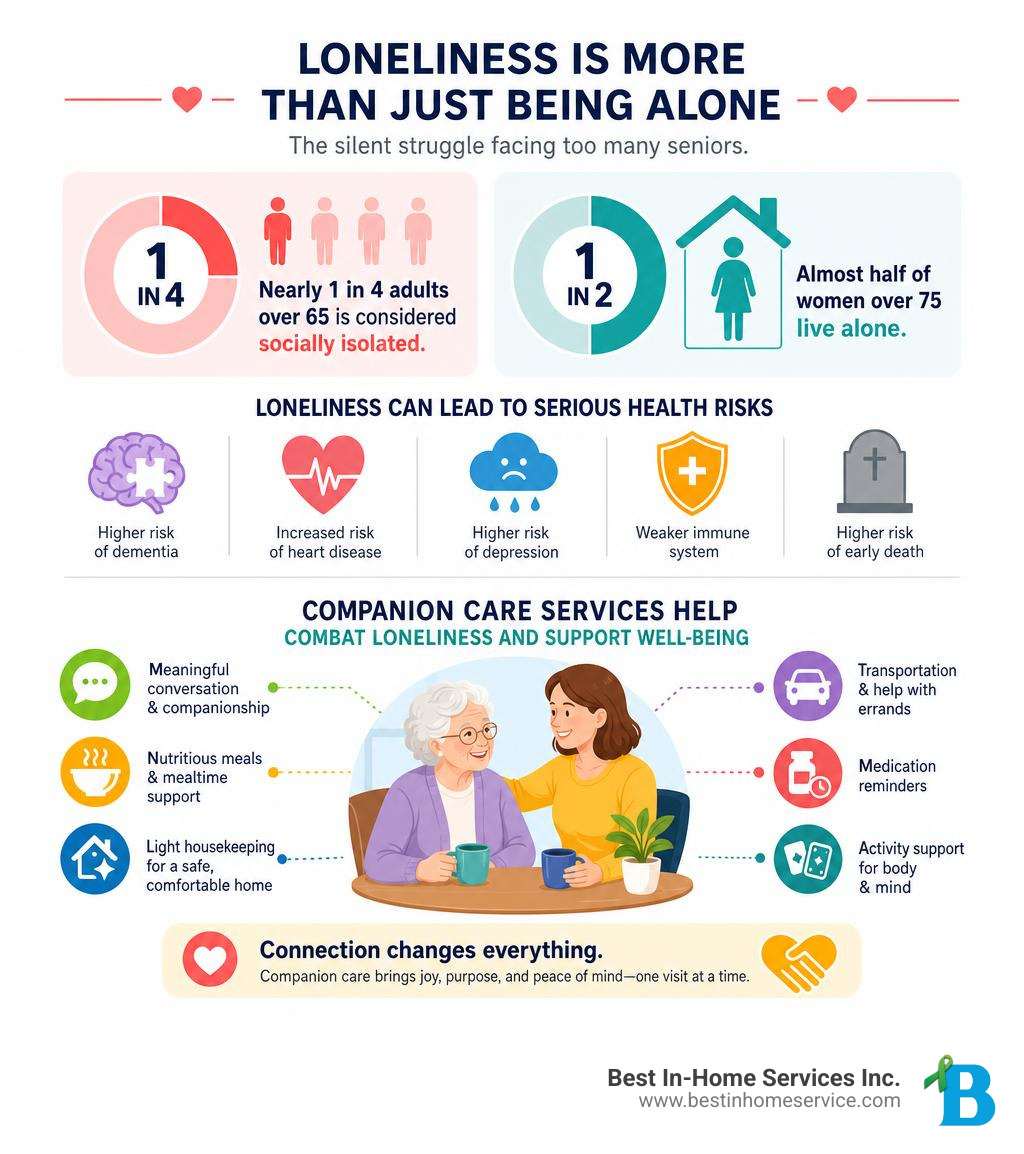
Here’s a quick overview of what companion care includes:
- Conversation and companionship — regular social interaction to reduce loneliness
- Meal preparation — help planning and cooking nutritious meals
- Light housekeeping — keeping the home tidy and manageable
- Transportation and errands — rides to appointments, grocery runs, and outings
- Medication reminders — gentle prompts to stay on schedule
- Activity support — games, walks, hobbies, and mental stimulation
Companion care does not include medical tasks like bathing, dressing, or wound care. That’s personal care — a different level of service.
Aging at home sounds simple. But for many Chicago-area seniors, the reality looks different.
Nearly 1 in 4 adults over 65 is considered socially isolated. And almost half of women over 75 live alone. Loneliness isn’t just uncomfortable — research links it to higher risks of dementia, heart disease, depression, and early death.
Families often don’t notice the warning signs until things have gotten serious. A missed meal here. A forgotten appointment there. A parent who seems quieter than usual.
That’s exactly where companion care steps in — not as a medical solution, but as a human one.
I’m Lily Harrison, General Manager at Best In-Home Services Inc., where I’ve spent years coordinating personalized companion care services for seniors across Chicago and Illinois. In this guide, I’ll walk you through everything you need to know — from what companion care actually includes to how to find the right fit for your family.
What Are Companion Care Services for Seniors?
At its core, companion care is designed to support a senior’s emotional and social well-being while assisting with the practical, non-medical aspects of daily life. It is not about managing clinical illnesses or administering medications; rather, it is about enrichment, safety, and human connection.
As our loved ones age, their social circles naturally shrink. Friends pass away, driving becomes difficult, and physical limitations make stepping out of the house a chore. Companion care steps in to bridge this gap. By focusing on the whole person—mind, body, and spirit—companionship helps seniors maintain their dignity and joy.
Many families confuse companion care with other senior care options. Understanding these differences is crucial to choosing the right level of support. To help clarify, we have outlined the core differences in the table below:
| Feature / Service | Companion Care | Personal Care | Respite Care |
|---|---|---|---|
| Primary Focus | Socialization, emotional support, and non-medical household help | Hands-on physical assistance with daily living activities (ADLs) | Temporary relief for family caregivers |
| Key Tasks | Conversation, hobbies, meal prep, light housekeeping, errands, transportation | Bathing, dressing, grooming, toileting, mobility assistance | Can include companion or personal care tasks on a short-term basis |
| Medical Tasks | None (non-medical) | None (non-medical, though highly physical) | None (unless combined with skilled home health) |
| Best Suited For | Seniors who are physically independent but lonely or need basic household help | Seniors with physical limitations, mobility issues, or advanced cognitive decline | Families who need a break from their primary caregiving duties |
By understanding these distinctions, you can see why Why Senior Care at Home is the Best Choice for Aging in Place remains a preferred route for families who want to preserve their loved one’s familiar environment and independence.
Key Activities Included in Companion Care Services for Seniors
What does a companion caregiver actually do during a visit? While every care plan we design is highly customized, professional companions typically help with a variety of daily tasks:
- Friendly Conversation and Socialization: Sharing stories, discussing current events, playing board games, or simply sharing a cup of coffee.
- Nutritious Meal Preparation: Planning balanced menus, grocery shopping, and cooking fresh meals. This is particularly vital because a poor diet directly impacts overall well-being and increases the likelihood of chronic conditions like heart disease and diabetes.
- Light Housekeeping: Dusting, vacuuming, laundry, washing dishes, and keeping living spaces clean and safe to prevent falls.
- Transportation and Errands: Escorting seniors to medical appointments, community events, or local grocery stores. Mileage at Best In-Home Service is billed separately at $0.75 per mile in addition to the hourly rate.
- Medication Reminders: Helping seniors stay on track with their prescriptions by offering verbal prompts (though companions cannot physically administer or organize pillboxes).

If you are exploring these options for a family member in Chicagoland, you can check out our dedicated Affordable non-medical care options to see how we structure our visits. Whether you need a companion in Winnetka, IL or require reliable In-home care services in Chicagoland, having a structured, warm routine makes all the difference.
How Companion Care Helps Seniors Avoid Assisted Living
The transition to a residential facility is often a source of anxiety for older adults. They love their homes, their neighborhoods, and their routines. Companion care acts as a powerful preventative measure, allowing seniors to remain in their beloved homes longer.
By taking over exhausting chores like grocery shopping, laundry, and meal prep, a companion removes the primary stressors of living alone. Additionally, having a watchful eye in the home means hazards are identified before they lead to injuries. This blend of safety and autonomy is why many families find that companion care is the perfect alternative to facility living. To explore how this compares to residential options, read our detailed guide on Home Care vs Assisted Living: Which is Right for Your Family?.
The Vital Benefits of Companion Care for Older Adults
The positive impacts of steady companionship extend far beyond a clean kitchen or a completed grocery list. Regular social engagement is a critical pillar of senior health.
- Improved Mental Health: Regular interaction significantly reduces the tendency to develop clinical depression and anxiety.
- Slower Cognitive Decline: Engaging in stimulating conversations, playing memory games, and participating in hobbies keeps the brain active, which can help mitigate symptoms of cognitive decline and dementia.
- Peace of Mind for Families: Knowing that a vetted, professional caregiver is looking out for your parent relieves the constant worry that many adult children carry daily.
For those residing in the western suburbs, utilizing local resources such as Supportive community programs in DuPage County alongside professional private care can create a robust, well-rounded safety net for your loved one.
Combating the Silent Epidemic of Senior Isolation
Social isolation is a quiet crisis. As mentioned earlier, CDC data indicates that 1 in every 3 adults over 45 feels lonely, and 1 in 4 adults over 65 is socially isolated.
This isolation is not just a sad state of affairs; it is a major public health hazard. Prolonged loneliness has been shown to have a physical health impact equivalent to smoking 15 cigarettes a day. It elevates blood pressure, weakens the immune system, and increases the risk of stroke. Companion care directly targets this epidemic by ensuring that no senior has to spend their days in silence.
How to Know When It Is Time for Companion Care
It can be difficult to recognize when a senior’s need for assistance has transitioned from “occasional helper” to “consistent companion.” Here are some of the most common signs that it is time to consider professional companion care:
- Unexplained Weight Loss: This often indicates they are forgetting to eat, struggle to cook, or are consuming expired food.
- Neglected Household Chores: A home that was once spotless now has piles of laundry, dirty dishes, or cluttered pathways.
- Social Withdrawal: Your loved one has stopped calling, attending community events, or participating in hobbies they once loved.
- Driving Mishaps or Anxiety: Scratches on the car, getting lost in familiar areas, or a sudden refusal to drive.
- Mild Memory Lapses: Forgetting appointments, repeating the same questions, or neglecting to take medications on time.
If you are noticing these changes, getting some extra Household Help for Seniors can prevent a minor struggle from turning into a major crisis.
Cost, Insurance, and Funding Options for Companion Care
Companion care pricing varies by provider, location, schedule, and the level of support required. National market medians for homemaker and companion services are often quoted in the mid-$20s per hour, while agency rates across Chicago and the surrounding suburbs generally run $30 to $45 per hour. These are market figures rather than any single agency’s pricing.
At Best In-Home Service, Inc., companion and homemaker care is $35 per hour, with a 3-hour minimum per visit. If your loved one also needs hands-on help with bathing, dressing, or mobility, personal care assistance is $37 per hour. Dementia and Alzheimer’s care is $42 per hour, overnight and weekend care are $40 per hour, and holiday care is $45 per hour. Continuous 24-hour care is quoted at a customized rate.
We serve Northbrook and the surrounding North Shore communities, and a customized quote is provided before services begin.
How is Companion Care Funded?
- Private Pay: The most common method. Families pay out-of-pocket for hourly, overnight, or 24/7 care.
- Long-Term Care Insurance: Many private policies cover non-medical companion care once certain triggers (like needing help with daily routines) are met. Always verify your policy details directly with your insurer.
- Medicare Limitations: It is important to note that traditional Medicare focuses strictly on clinical, medical care. Consequently, Medicare does not cover companion care services when they are the only services required.
- Veterans Benefits: Veterans and their surviving spouses may qualify for the VA Aid and Attendance benefit, which can help cover the cost of in-home companion care.
Steps to Find and Vet Companion Care Services for Seniors
When you are ready to bring a companion into your loved one’s home, finding someone you can trust is paramount. Here is a step-by-step approach to vetting providers:
- Work with a Licensed Agency: Agencies handle background checks, training, insurance, and payroll taxes, saving you from the legal and administrative headaches of hiring privately.
- Inquire About Caregiver Matching: The best agencies don’t just send the first available person. They match caregivers based on personality, shared interests, and care capabilities.
- Verify Vetting Procedures: Ensure the agency conducts criminal background checks, references, and driving record audits.
For a deeper dive into this process, we recommend reading How to Pick the Best In-Home Care Providers Without Losing Your Mind and our guide on Finding the Perfect Match Among Professional Caregivers for Seniors to ensure your loved one gets a companion they genuinely enjoy spending time with.
Frequently Asked Questions About Companion Care
Does Medicare cover companion care services?
No, traditional Medicare generally does not cover non-medical companion care because it is not considered “medically necessary” skilled care. However, some private Medicare Advantage plans have begun offering limited personal care or companion benefits. It is best to review your specific plan details annually.
What is the difference between companion care and personal care?
Companion care is entirely non-physical and focuses on emotional support, socialization, housekeeping, and errands. Personal care involves hands-on physical assistance, such as helping a senior bathe, dress, groom, use the restroom, or safely transfer from a bed to a wheelchair.
How do you create a personalized companion care plan?
A quality home care agency will start with a free, in-home assessment. During this meeting, a care coordinator evaluates the senior’s daily routine, physical safety, cognitive health, and personal interests. We then build a custom schedule—whether that is a few hours a week or 24/7 coverage—and select a caregiver whose personality and skills align with your family’s needs.
Conclusion
At Best In-Home Services Inc., we believe that aging in place shouldn’t mean aging in isolation. We provide personalized, high-quality elder care, memory care, and dementia support throughout Chicago and its surrounding suburbs—including Downers Grove, Winnetka, Schaumburg, Lake County, and Cook County.
With our 24/7 support, highly trained certified staff, and customized care plans, we ensure your loved one receives the safety they need and the friendship they deserve.
Ready to bring warmth, safety, and joy back into your loved one’s daily routine? Explore our personalized companion care services today or contact us to schedule a free in-home consultation.







 1-224-636-5200
 1-224-636-5210
  425 Huehl Rd 13B Northbrook IL 60062