
Why Elder Care Decisions Matter — and How to Get Them Right
Elder care covers a wide range of services that help older adults live safely, comfortably, and with dignity — whether at home or in a care facility.
Quick answer: What is elder care?
| Category | What It Includes |
|---|---|
| Personal care | Bathing, dressing, grooming, toileting |
| Daily living support | Meal prep, housekeeping, errands, medication reminders |
| Skilled care | Nursing visits, wound care, physical therapy |
| Companionship | Social interaction, mental stimulation, emotional support |
| Facility-based care | Assisted living, memory care, skilled nursing homes |
| Community services | Adult day programs, meal delivery, transportation |
Most families don’t think about elder care until a crisis happens — a fall, a hospital stay, or a sudden change in a loved one’s health. But the options available, the costs involved, and the decisions required can feel overwhelming when you’re already under stress.
Here’s what makes it harder: most elder care in the U.S. is still provided by family members, often at real personal cost — lost work hours, physical strain, and emotional exhaustion. And the landscape of paid care options, insurance coverage, and government programs is genuinely confusing.
This guide breaks it all down clearly, so you can make confident decisions for someone you love.
I’m Lily Harrison, General Manager at Best In-Home Services Inc., where I’ve spent years helping Chicago-area families navigate elder care — from first conversations about in-home support to coordinating 24/7 dementia and memory care for seniors who want to stay home. In this guide, I’ll walk you through everything you need to know to find the right care, understand your options, and plan ahead with confidence.
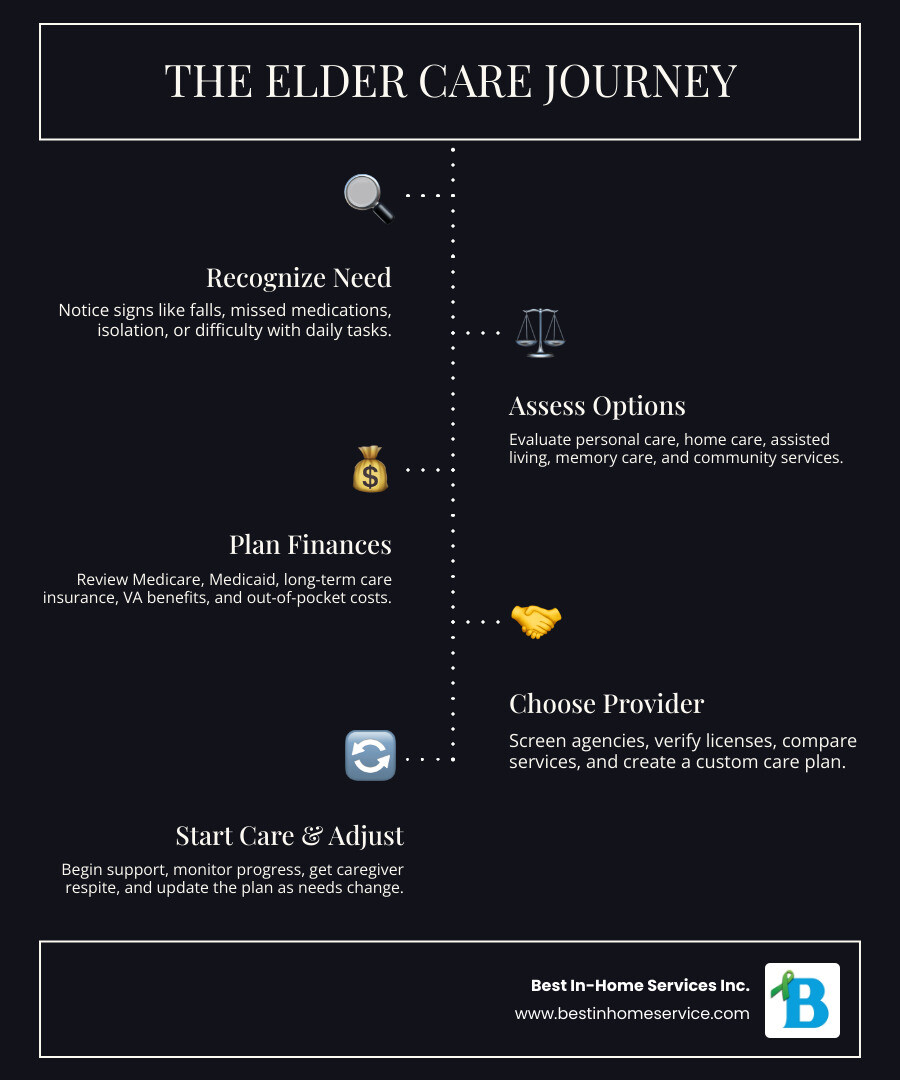
What Elder Care Means and What Services It Includes
What Is Elder Care?
At its core, elder care means support for older adults who need help with health needs, daily tasks, or both. It overlaps with long-term care, but families often use “elder care” more broadly to describe everything from a few hours of companionship to full-time supervision.
According to the National Institute on Aging’s overview of long-term care, long-term care includes services that help when someone can no longer manage everyday activities independently. That may happen gradually with aging, or suddenly after a stroke, fall, surgery, or worsening illness.
Elder care often includes help with:
- Activities of daily living, or ADLs, like bathing, dressing, toileting, eating, and moving safely
- Instrumental activities of daily living, or IADLs, like cooking, laundry, shopping, bills, and transportation
- Medication reminders or medication management support
- Mobility and fall prevention
- Chronic illness support
- Dementia and memory-related supervision
- Family caregiver relief
- Care coordination between family, doctors, therapists, and support services
Good elder care is not just about “doing tasks.” It is about protecting quality of life, safety, dignity, routines, and independence whenever possible.
Common Services Included in Elder Care
The exact services depend on the person’s needs, but most care plans combine practical help and emotional support.
Common services include:
- Bathing, dressing, grooming, and toileting assistance
- Walking and transfer support
- Meal planning and meal preparation
- Light housekeeping and laundry
- Grocery shopping and errands
- Transportation to appointments
- Medication reminders
- Companionship and conversation
- Cognitive stimulation and routine support
- Respite care for family caregivers
- Skilled nursing, wound care, or therapy when medically ordered
- Home safety support, such as reducing fall risks
For families focused on aging in place, household help can make a major difference. Our guide on household support for seniors explains why small tasks are often not small at all. Nutrition is another big one. Missed meals and poor hydration can quietly snowball into weakness, falls, and hospital visits, which is why we also emphasize nutrition and meal planning in senior care.
Signs an Older Adult May Need Elder Care
Families often ask us, “How do we know it’s time?” Usually, it is not one dramatic event. It is a pattern.
Watch for signs like:
- Recent falls or near-falls
- Missed medications
- Weight loss or spoiled food in the fridge
- Poor hygiene or wearing the same clothes repeatedly
- Trouble getting up from bed or a chair
- Increased forgetfulness or confusion
- Unpaid bills or unusual financial mistakes
- Unsafe driving
- Isolation or withdrawal
- Wandering or leaving the stove on
- Repeated hospital or ER visits
- A family caregiver who is clearly overwhelmed

A hospital discharge is another common turning point. After surgery or illness, someone may look “better” but still be unsafe alone. Our guide on post-hospital discharge support covers what to watch for during recovery.
Types of Elder Care Options for Different Needs
In-Home Elder Care and Aging in Place
In-home care helps older adults stay in familiar surroundings while receiving support. For many families in Chicago, Downers Grove, Schaumburg, Lake County, Northbrook, Naperville, and nearby communities, this is the preferred starting point.
Based on National Institute on Aging guidance for older adults living at home, home-based support may include personal care, homemaker services, meal delivery, transportation, home health services, adult day care, respite, and care management.
Benefits of in-home care include:
- Familiar routines and surroundings
- More one-on-one attention
- Flexible scheduling
- Easier family involvement
- Comfort for people with dementia
- Ability to scale from a few hours to 24/7 care
This is a big reason families choose aging in place. We go deeper in why senior care at home is the best choice for aging in place.
Assisted Living, Memory Care, and Nursing Homes
Not every situation can be managed safely at home forever, and that is okay.
Here is a simple breakdown:
- Assisted living offers housing, meals, supervision, and help with daily tasks
- Memory care is designed for people with Alzheimer’s disease or other dementias who need structured supervision and specialized support
- Nursing homes, or skilled nursing facilities, provide a higher medical level of care, often including 24-hour nursing
- Adult day services provide daytime supervision, socialization, and activities while the person returns home at night
- Hospice supports comfort-focused care near end of life
- Short-term rehab may follow hospitalization or surgery
Memory-related needs deserve special attention. Families comparing dementia support options may find these resources helpful: understanding memory care and Alzheimer’s care.
Aging in Place vs Moving to a Care Facility
There is no universal “best” choice. The right answer depends on safety, budget, care needs, home setup, and family capacity.
| Option | Pros | Challenges |
|---|---|---|
| Home care | Familiar setting, flexible support, one-on-one care, more independence | Can become costly with many hours, home may need modifications, family coordination required |
| Assisted living | Built-in meals, activities, staff presence, lower household burden | Less privacy, move can be stressful, not ideal for high medical needs |
| Memory care | Specialized dementia support and secure environment | Higher cost, transition can be emotionally difficult |
| Nursing home | Highest medical oversight | Institutional setting, expensive, less independence |
Aging in place can preserve comfort and identity. Facility care can provide stronger built-in staffing and social structure. The trick is being honest about current needs, not just hopes. Our comparison guide, home care vs assisted living, can help you weigh the tradeoffs without guesswork.
Elder Care Costs, Insurance, and Government Programs
Average Elder Care Costs in 2026
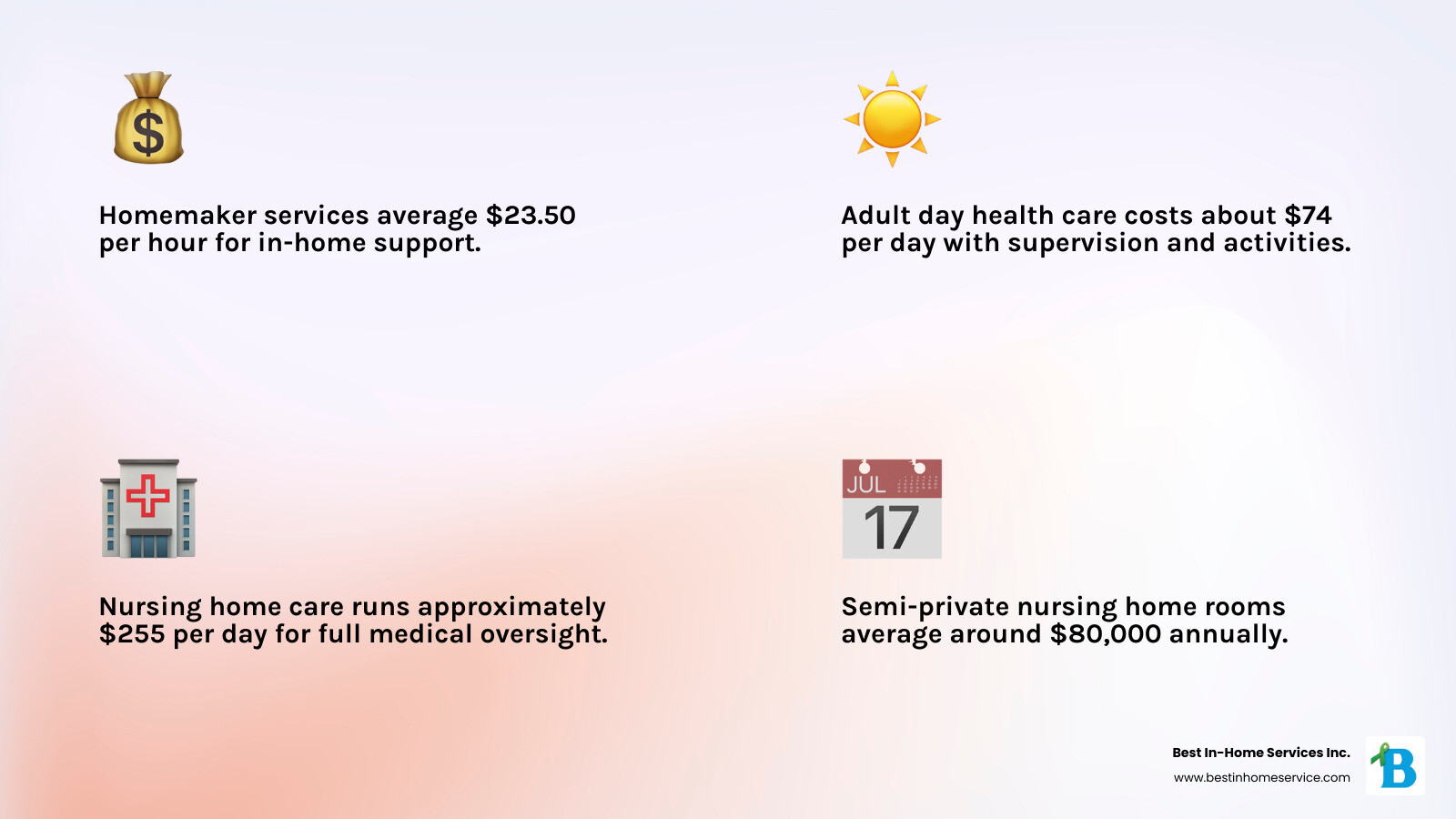
Costs vary widely, but national benchmark figures still help families plan. Research commonly cited in elder care planning shows these median rates:
- Homemaker services: $23.50 per hour
- Adult day health care: $74 per day
- Nursing home care: $255 per day
- Semi-private nursing home room: about $80,000 per year
You can also review a broad cost and coverage summary in this eldercare costs and insurance overview.
In the Chicago area, real pricing may be higher than national medians depending on:
- Number of hours needed each week
- Overnight or 24/7 coverage
- Dementia or behavioral support needs
- Licensed or certified staffing requirements
- Weekends and holidays
- Transportation or escort needs
What Affects the Price of Elder Care?
Families are often surprised that pricing is not just about “home vs facility.” It is about intensity.
Key cost factors include:
- Care hours per day or week
- Personal care vs companionship only
- Need for transfers, mobility help, or fall prevention
- Dementia care complexity
- Overnight awake care or live-in support
- Short-term recovery vs ongoing long-term care
- Size and layout of the home
- Travel time and service area
- Frequency of reassessments and care coordination
As a rule, a few hours of support each week is much easier on the budget than round-the-clock care. But round-the-clock care at home may still be worth it for families who want individualized support and to avoid a move.
What Medicare, Medicaid, and VA Benefits May Cover
This part trips up almost everyone, so here is the plain-English version.
Medicare:
- Usually covers short-term, medically necessary home health services
- May cover skilled nursing, therapy, or limited home health aide services if eligibility rules are met
- Must generally be provided through Medicare-certified agencies
- Does not typically cover custodial care such as ongoing help with bathing, dressing, meal prep, or housekeeping
Medicaid:
- Offers broader long-term care coverage than Medicare
- May cover nursing home care and some home- and community-based services
- Eligibility depends on income, assets, and Illinois program rules
- Often requires a spend-down of assets before qualifying
- Benefits and waiver options vary by state
VA benefits:
- Some veterans and surviving spouses may qualify for programs that help with care costs
- Benefits can include health coverage or pension-related assistance for those who need regular help
For national help understanding options, Eldercare Locator is a solid starting point. Families can also use Illinois SHIP and aging agencies for benefits counseling.
Other Ways Families Pay for Care
When insurance is limited, families often combine funding sources:
- Personal savings
- Pensions or retirement income
- Long-term care insurance
- Family cost sharing
- Home equity strategies such as a reverse mortgage
- Annuities
- Life insurance conversions or settlements
- Elder law planning for Medicaid eligibility
- Tax deductions or credits, where applicable
Planning early matters because long-term care insurance is generally more affordable before serious health decline begins.
How to Plan Ahead and Choose the Right Elder Care Provider
How Families Can Plan for Long-Term Elder Care Needs
The best time to plan is before a crisis. The second-best time is now. Not as catchy as a coffee mug quote, but true.
Use this checklist:
- Talk openly about care preferences
- Identify who can help and in what role
- Review finances and monthly affordability
- Complete advance directives
- Assign medical and financial power of attorney
- Make a medication list and emergency contact list
- Assess home safety and fall risks
- Plan for dementia progression if memory issues are present
- Research local care options before they are urgently needed
- Revisit the plan regularly
If someone wants to remain at home, think through realistic scenarios:
- What if they stop driving?
- What if they begin wandering?
- What if a spouse caregiver becomes ill?
- What if nighttime help becomes necessary?
Planning does not mean expecting the worst. It means reducing chaos later.
How to Choose the Right Elder Care Provider or Facility
Whether you are hiring in-home care or considering a facility, look past marketing language and focus on operations.
Ask about:
- Licensing and insurance
- Background checks
- Staff training and ongoing supervision
- Experience with dementia, mobility issues, or complex conditions
- Care plan customization
- Response times after hours
- RN oversight or clinical coordination
- Backup staffing if a caregiver is unavailable
- Family communication practices
- Complaint history and references
- Reassessments as needs change

At Best In-Home Services Inc., we know families want both warmth and reliability. That is why our approach centers on personalized care plans, certified staff, and support that can scale up to continuous care when needed. If your family is exploring around-the-clock help, our guide to 24-hour in-home care in Illinois explains what that level of support really involves.
Questions to Ask Before You Hire or Move Forward
Bring these questions to every consultation:
- What services are included in the hourly rate?
- Can the schedule change if needs increase?
- Do you offer after-hours support?
- How do you match caregivers with clients?
- What dementia training does staff receive?
- Who supervises the care plan?
- How are emergencies handled?
- How often is care reassessed?
- What happens if the regular caregiver is absent?
- How are families updated?
- What are the billing and cancellation policies?
- Is there a minimum number of hours?
The right provider should answer clearly, without dodging or drowning you in jargon.
Local and National Resources for Elder Care and Caregiver Support
Where to Find Elder Care Services in Your Community
If you are not sure where to start, use trusted public resources first.
Helpful starting points include:
- Eldercare Locator for national and local referrals
- Illinois Area Agencies on Aging
- SHIP counseling for Medicare questions
- Meals on Wheels and senior nutrition programs
- Adult day centers
- Transportation assistance programs
- Geriatric care managers
- Hospital discharge planners
These resources can help families locate support for meals, transportation, respite, benefits counseling, and long-term care guidance.
Illinois and Chicagoland Resources for Seniors and Families
For families in our service areas, these Illinois and Chicagoland resources are especially relevant:
- Illinois Department on Aging
- Community senior programs in DuPage County
- Senior services in Downers Grove Township
- Schaumburg senior resource directory
These can help with local referrals, benefits help, transportation, community programs, and family support across Chicago, DuPage County, Lake County, Schaumburg, and nearby suburbs.
How Caregivers Can Get Support and Respite
Family caregivers carry a huge share of elder care. They also burn out quietly.
Warning signs of caregiver burnout include:
- Constant exhaustion
- Irritability or depression
- Sleep problems
- Neglecting your own health
- Resentment mixed with guilt
- Feeling like you can never leave the house
Support options include:
- Respite care at home
- Adult day health programs
- Support groups
- Counseling
- Backup care plans
- Family meetings to divide responsibilities
- Dementia education and coaching
Even a few hours of relief each week can help. For families dealing with memory loss, our guide to Chicago dementia care services explores ways to create safer, more sustainable support.
Frequently Asked Questions About Elder Care
Does elder care only mean medical care?
No. Medical care is only one part of elder care. Many seniors mainly need help with daily routines, supervision, companionship, meals, transportation, or personal care. Some need skilled nursing too, but many do not.
When is it time to move from part-time help to 24/7 care?
It may be time to consider continuous care when there is nighttime wandering, frequent falls, unsafe behaviors, repeated emergencies, or severe caregiver exhaustion. If the person cannot be left alone safely for long periods, part-time care may no longer be enough.
Is home care enough for someone with dementia?
Sometimes yes, sometimes no. It depends on the stage of dementia, the home’s safety, behavior changes, wandering risk, sleep disruption, and family support. Many people with dementia do well at home for a long time with the right structure and trained caregivers. But if behaviors become severe or safety cannot be managed, memory care may become the better fit.
Conclusion
Reliable elder care is not one single service. It is a plan that fits the person, supports the family, and adjusts as needs change.
At Best In-Home Services Inc., we help families across Chicago and surrounding Illinois communities navigate those decisions with personalized in-home support, certified staff, custom care plans, and 24/7 help when needed. Whether your loved one needs a few hours of assistance, dementia support, or a higher level of continuous care, the goal is the same: safety, dignity, comfort, and peace of mind.
If you are ready to explore your options, learn more about our in-home care services.







 1-224-636-5200
 1-224-636-5210
  425 Huehl Rd 13B Northbrook IL 60062