
The Growing Need for Elder Care Assisted Living in America
Elder care assisted living is a residential option that helps older adults get daily support — like meals, medication reminders, and personal care — while still living as independently as possible.
Here’s a quick overview of what it means and who it’s for:
| Question | Quick Answer |
|---|---|
| What is it? | A residential community where seniors get help with daily tasks but don’t need full nursing home care |
| Who needs it? | Seniors who struggle with mobility, self-care, or daily activities but are not medically complex |
| What’s included? | Meals, housekeeping, medication management, social activities, and personal care |
| Does Medicare cover it? | No — most costs are paid out of pocket, through Medicaid, or long-term care insurance |
| Is in-home care an alternative? | Yes — many families choose professional in-home care to avoid facility placement entirely |
America is aging fast. Life expectancy has jumped by 10 years since 1960, and the senior population is expected to double from 49 million to 98 million by 2060. At the same time, 4 in 10 seniors between ages 65 and 79 already live with at least one disability — and that rises to 7 in 10 for those 80 and older.
For families, that means one unavoidable question: What kind of care does my loved one actually need — and where should they receive it?
This guide walks you through everything: what assisted living is, how it compares to other options (including professional in-home care), what it costs, and how to find the right fit for your family.
I’m Lily Harrison, General Manager at Best In-Home Services Inc., where I’ve spent years helping Chicago-area families navigate elder care assisted living decisions — from understanding facility options to arranging certified, compassionate in-home support as an alternative. My goal with this guide is to give you clear, honest information so you can make the best choice for your loved one with confidence.
Evaluating Elder Care Assisted Living: Costs, Services, and Options
When an aging parent or relative begins to struggle with daily tasks, it is completely normal to feel overwhelmed. You might notice they are skipping meals, forgetting their medications, or experiencing frequent falls.
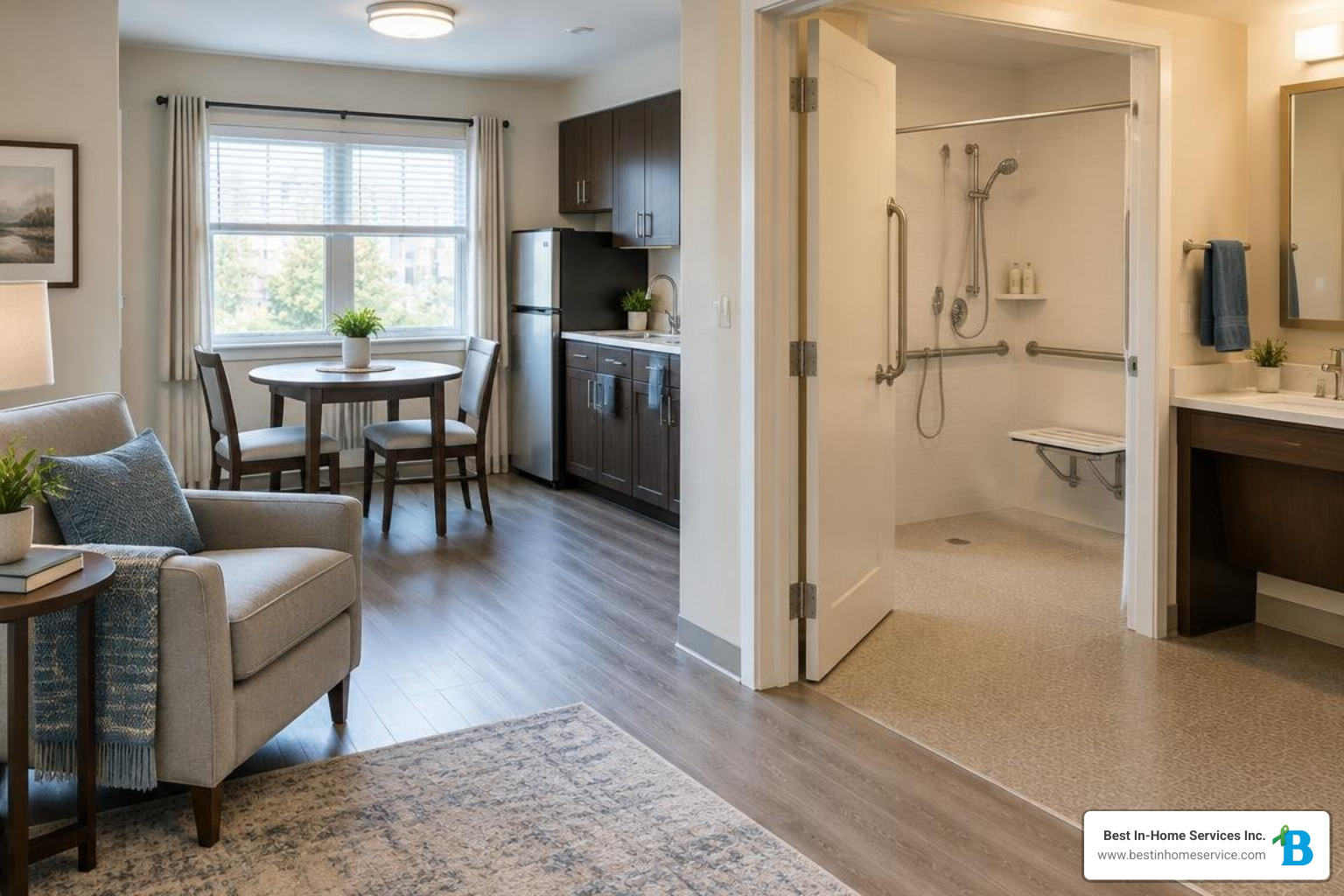
As you start exploring options, you will find that elder care assisted living occupies a unique middle ground in the senior care continuum. It is designed for older adults who want to maintain their independence but need a helping hand with activities of daily living (ADLs) such as bathing, dressing, grooming, and managing medications.

Unlike clinical environments, these communities focus heavily on lifestyle, socialization, and hospitality. To understand how local municipalities define and regulate these environments, you can review the official Assisted Living Information provided by the City of Chicago.
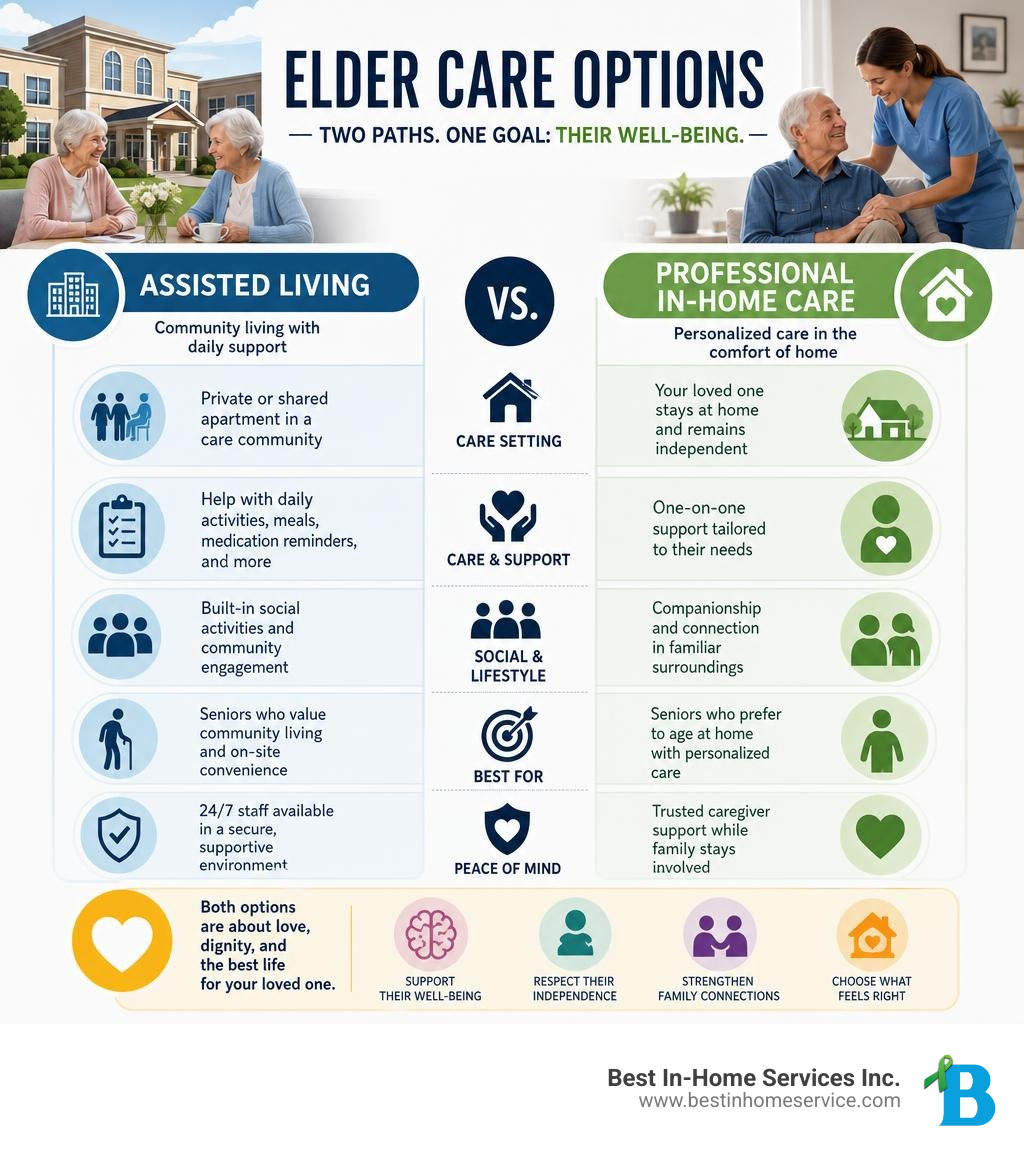
Defining Assisted Living vs. In-Home Care
For many families in the Chicago area—from Winnetka down to Downers Grove—the primary decision isn’t which facility to choose, but whether to move a loved one into a facility at all.
Professional in-home care allows seniors to remain safely in the comfort of their own homes while receiving the exact same personal care, companionship, and medication reminders they would get in a facility. It preserves their daily routines, lets them keep their beloved pets, and keeps them connected to their neighbors.
To help you weigh these paths, we have broken down the core differences:
| Feature | Assisted Living Facilities | Professional In-Home Care |
|---|---|---|
| Living Environment | Residential community; private or semi-private apartment. | The senior’s own house or apartment. |
| Personalization | Group-oriented schedules; staff care for multiple residents. | One-on-one, highly customized care tailored entirely to the individual. |
| Cost Structure | Flat monthly base rate plus additional care tier fees. | Hourly or flat daily rates; pay only for the exact hours of care needed. |
| Socialization | Structured group activities, communal dining rooms. | Community outings, neighborhood walks, and dedicated companion care. |
| Independence | Must adapt to community rules and dining schedules. | Absolute freedom to set one’s own schedule, meals, and routines. |
Choosing between these options requires looking at your family’s unique lifestyle and emotional needs. For a deeper dive into this comparison, read our detailed guide: Home Care vs Assisted Living: Which is Right for Your Family?.
Many families discover that keeping their loved ones at home is not only emotionally comforting but also highly practical. You can explore why staying put is often the preferred path in our article on Why Senior Care at Home is the Best Choice for Aging in Place. If you are just starting this journey, it helps to look at the broad spectrum of Care Options for Seniors in Chicago Area to see how different services fit together.
Typical Services and Amenities Offered
If you do choose a residential community, you will find they generally offer a robust package of hospitality and personal care services designed to make life easier and more enjoyable. These typically include:
- Nutritional Dining Programs: Most modern communities provide three chef-prepared meals a day. Many have moved away from rigid dining hours to offer flexible, all-day dining models (for example, from 7 a.m. to 6 p.m.) with custom-designed daily menus that rotate weekly to prevent culinary boredom.
- Housekeeping and Laundry: Weekly apartment cleaning, linen services, and personal laundry help eliminate the physical burden of home maintenance.
- Medication Management: Trained staff assist with organizing, reminding, and administering medications to ensure safety and compliance.
- Social and Recreational Activities: Communities often employ dedicated activities coordinators to organize everything from fitness classes (like seated aerobics) and art workshops to happy hours, book clubs, and local outings.
- 24-Hour Emergency Support: On-site staff are available around the clock, and apartments are equipped with emergency pull cords or wearable call buttons.
The Benefits of a Continuum of Care
One of the major advantages of modern senior living networks is the “continuum of care.” This model allows residents to transition smoothly between different levels of assistance as their physical or cognitive needs change over time.
For example, a senior might enter a community in an independent living apartment, transition to assisted living as mobility declines, and eventually move into a secure memory care wing—all without having to move to an entirely new campus.
However, a continuum of care is not exclusive to residential facilities. At Best In-Home Services Inc., we provide a seamless continuum of care right at home. We can start by providing light companionship a few hours a week, gradually introducing personal care, and eventually scaling up to 24/7 specialized dementia or hospice support.
Additionally, we offer temporary relief through short-term care options to prevent family caregiver burnout. Learn more about arranging temporary support in The Ultimate Guide to Respite Care Options in Chicago Area.
Assisted Living vs. Memory Care: Understanding the Differences
It is very common for families to confuse assisted living with memory care, but they are designed for entirely different stages of cognitive health. While assisted living focuses primarily on physical support and lifestyle convenience, memory care is a highly specialized environment tailored specifically for individuals living with Alzheimer’s disease, vascular dementia, or other forms of cognitive decline.

According to historical health data, approximately half a million older adults developed Alzheimer’s in 2020 alone, and the prevalence of cognitive diseases has continued to rise steadily. Understanding the operational differences between these two care levels is essential for keeping your loved one safe.
Key Differences in Care and Environment
Memory care units (often called “neighborhoods” or “cottages”) feature distinct physical layouts and care philosophies:
- Enhanced Security: Memory care environments are secured with keypad entries and delayed-egress doors to prevent wandering, which is a common and dangerous symptom of advanced dementia.
- Relationship-Based Care: Staff in memory care receive specialized training in dementia communication, behavioral management, and sensory stimulation. They focus on honoring moments of success and preserving personal dignity rather than correcting memory lapses.
- Sensory and Cognitive Activities: Daily schedules feature structured, memory-stimulating therapies such as puzzles, music therapy, reminiscence storytelling, and dedicated sensory rooms designed to calm anxiety and prevent “sundowning” (increased confusion and agitation in the late afternoon).
- Physical Layouts: Hallways are often circular to prevent residents from feeling frustrated by dead ends, and outdoor courtyards are fully enclosed and secure.
Specialized Options for Veterans and Diverse Groups
Seniors are not a monolith, and many seek out communities that cater to their specific backgrounds, service history, or cultural traditions.
Currently, 1 in 4 veterans (about 4.7 million nationwide) live with a service-connected disability. For these heroes, specialized veteran-centered care can make a massive difference. Many assisted living communities work closely with the Department of Veterans Affairs (VA) to help veterans secure Aid and Attendance benefits, which can help cover the costs of daily personal care.
For families looking for specialized or general residential senior care in the northern suburbs, you can research options via the Assisted Living Facilities in Lake County, Illinois directory.
Additionally, there are specialized communities and in-home care programs throughout the Chicago area designed to support specific cultural, religious, or dietary needs. Whether your family requires Kosher meal preparation, bilingual caregivers, or LGBTQIA+-affirming environments, there are resources available to ensure your loved one feels respected and at home.
If you are exploring local facilities, you can check directories such as:
- The Best Assisted Living Facilities in Downers Grove, IL
- 10 Best Assisted Living Facilities in Winnetka, IL
- The Best Assisted Living Facilities in North Chicago, IL
- The Best Assisted Living Facilities in Schaumburg, IL
Financial Planning: Costs and Payment Methods
Let’s talk numbers. Senior care is a significant financial investment, and understanding the fee structures is essential for long-term planning.
In the Chicago metropolitan area, prices vary widely depending on the location, apartment size, and the level of care required. Most facilities charge a “base rate” that covers housing, basic utilities, meals, and housekeeping. On top of that, they add “care tiers” based on how much physical assistance your loved one needs.
How do families pay for this? The most common methods include:
- Private Pay: Utilizing personal savings, pension income, retirement accounts, or the proceeds from selling a family home.
- Long-Term Care Insurance: Private policies that specifically cover assisted living or in-home personal care, provided the policy was purchased before the senior developed a disqualifying condition.
- Veterans Benefits: The VA Aid and Attendance program provides monthly, tax-free pension enhancements to eligible wartime veterans and surviving spouses to help cover care costs.
- Medicaid Waivers: While standard Medicaid does not cover room and board in assisted living, many states offer waiver programs. In our area, the Cook County Supportive Living Program | HFS allows Medicaid-eligible seniors to live in certified supportive living facilities that offer assisted living services.
Comparing Costs: Assisted Living vs. In-Home Care
One of the biggest financial misconceptions is that moving to a facility is always the most economical choice. In reality, professional in-home care is often far more cost-effective, especially if your loved one only needs part-time assistance.
With assisted living, you are paying a flat monthly rate that covers housing and meals 24/7, regardless of how much active care is used. With professional in-home care, you only pay for the exact hours of care you need.
For example, if your parent simply needs three hours of help in the morning with bathing, dressing, and meal prep, hiring an in-home caregiver is significantly more affordable than paying a full monthly facility rent.
To explore how to budget for these services effectively, read our guide on Affordable Home Care for Seniors in Chicago. You can also review the 5 Best Home Care Options for Seniors in Chicago Area and find out how to access the Best Home Care Services for Elderly in Chicago IL to compare rates and service structures.
How to Choose the Right Community for Your Loved One
If you decide that a residential community is the best path forward, choosing the right facility requires careful research, in-person tours, and a clear understanding of what to look for.
To start your search in the western suburbs, you can look at the comprehensive directory of 45 Assisted Living Facilities in Dupage County, IL … to compare local options, capacities, and licensing details.
When is the Right Time for Elder Care Assisted Living?
Knowing when to transition a loved one to a higher level of care is rarely simple. Often, families wait until a crisis—like a broken hip or a major medication error—forces their hand. To prevent emergencies, look for these early warning signs:
- Mobility Decline: Unsteadiness when walking, difficulty standing up from a chair, or a history of recent, unpublicized slips and falls.
- Self-Care Challenges: Poor personal hygiene, wearing the same clothes for days, or noticeable, unexplained weight loss (which often indicates they are struggling to cook or shop for groceries).
- Cognitive Changes: Forgetting to take critical medications, leaving the stove on, or getting lost in familiar neighborhoods.
- Social Isolation: Withdrawing from hobbies, refusing to leave the house, or showing signs of depression.
- Caregiver Burnout: If you, as the primary family caregiver, are experiencing chronic exhaustion, anxiety, or physical strain, it is a clear sign that professional backup is required.
For a deeper look at evaluating these signs and coordinating professional help, read our Comprehensive Guide to Reliable Elder Care.
Questions to Ask During a Facility Tour
When you tour a potential community, do not just focus on the beautiful lobby or the model apartment. You need to look past the marketing and ask the staff direct, practical questions.
Here is a quick checklist of essential questions to ask during your visit:
- What is your staff-to-resident ratio during the day, in the evening, and overnight?
- What is your staff retention rate? Have your key caregivers and managers been here for several years?
- What specific training do your caregivers receive, especially regarding dementia and emergency protocols?
- How flexible are your dining hours and meal choices? Can residents order food outside of standard meal times?
- Are your monthly fees all-inclusive, or will we be charged extra for every level of physical assistance?
- What happens if my loved one’s physical or cognitive needs increase? Will they be forced to move to a different facility?
For advice on how to screen care providers thoroughly without feeling overwhelmed, check out our guide on How to Pick the Best In-Home Care Providers Without Losing Your Mind.
Transitioning Your Loved One to Elder Care Assisted Living
The move from a long-time family home to a senior living environment is a major life transition that can trigger a complex emotional spectrum—including grief, guilt, anger, and relief.
To make this transition as smooth and positive as possible, keep these best practices in mind:
- Involve Them in the Process: Let your loved one participate in selecting their apartment, choosing which furniture to bring, and planning the layout. This helps them maintain a sense of control over their life.
- Focus on Comfort and Familiarity: Pack cherished family photos, favorite quilts, and familiar decorative items. Try to set up their new apartment to mirror the layout of their old home as closely as possible.
- Build Staff Relationships: Get to know the care team, the dining staff, and the activities director. Share your loved one’s personal history, preferences, and quirks with them so they can provide personalized, empathetic care.
- Provide Consistent Companionship: Regular visits and phone calls during the first few weeks are critical for preventing feelings of abandonment.
If you are worried about your loved one feeling lonely during this transition, or if you want to ensure they have dedicated, one-on-one companionship, we can help. Learn how personalized visiting services can ease this journey in The Ultimate Guide to Companionship for Elderly Loved Ones.
Frequently Asked Questions about Assisted Living
Does Medicare pay for assisted living costs?
No, standard Medicare does not pay for residential assisted living room, board, or personal care costs. Medicare is designed to cover acute medical care, such as hospital stays, doctor visits, prescription medications, and short-term skilled physical rehabilitation after an injury or surgery. Most families must pay for assisted living out of pocket, or utilize private long-term care insurance, VA benefits, or state-specific Medicaid waivers.
Are pets allowed in assisted living facilities?
Yes, many modern assisted living facilities are proudly pet-friendly! Many communities allow residents to bring small dogs or cats, recognizing that animal companionship is incredibly beneficial for emotional well-being and reducing loneliness. Some facilities even feature private, landscaped courtyards or walking paths specifically designed for residents with pets. Always ask about weight limits, breed restrictions, and pet deposits during your tour.
What is the difference between in-home care and assisted living?
The primary difference lies in the living environment and the level of personalized attention. In an assisted living community, your loved one moves into a residential facility where care is shared among a rotating staff looking after dozens of residents.
With professional in-home care, your loved one remains in the absolute comfort of their own home, receiving dedicated, one-on-one attention from a single caregiver. In-home care is highly customizable, allowing you to pay only for the exact hours of care needed while preserving your loved one’s complete independence and daily routines.
Conclusion
Navigating the golden years is a journey filled with deeply personal decisions. Whether you choose a vibrant residential elder care assisted living community or decide that remaining at home with professional support is the best path, the ultimate goal is to ensure your loved one lives with dignity, comfort, and joy.
At Best In-Home Services Inc., we believe that aging in place is one of the greatest gifts you can give a senior. Our certified, compassionate caregivers are dedicated to providing the highest standard of personalized care—from basic companionship to specialized dementia support—right in the comfort of home, serving families across Chicago, Cook County, Lake County, and Dupage County.
We are here to walk alongside your family every step of the way. To learn more about how we can support your loved one’s independence and provide you with peace of mind, Explore Our Senior Care Services today.






 1-224-636-5200
 1-224-636-5210
  425 Huehl Rd 13B Northbrook IL 60062