
What Are Senior Care Services at Home? A Quick Answer for Chicago Families
Senior care services at home cover a wide range of support options that help older adults live safely and comfortably in their own homes — without moving to a facility.
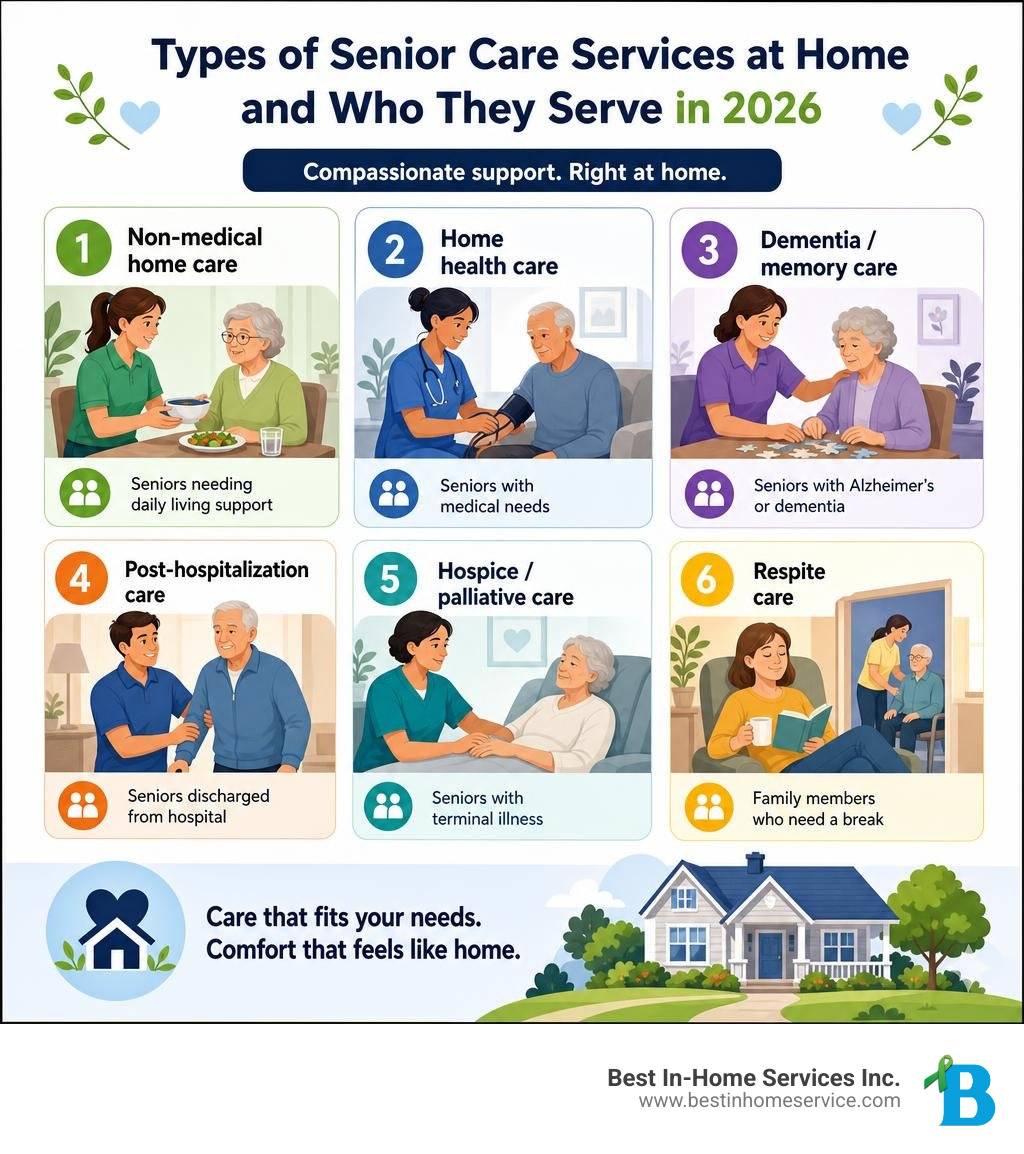
Here is a quick overview of the most common types:
| Type of Care | What It Includes | Who It’s For |
|---|---|---|
| Non-medical home care | Personal care, companionship, meal prep, housekeeping | Seniors needing daily living support |
| Home health care | Nursing, wound care, physical therapy (physician-ordered) | Seniors with medical needs |
| Dementia/memory care | Cognitive support, safety monitoring, family guidance | Seniors with Alzheimer’s or dementia |
| Post-hospitalization care | Recovery support, medication reminders, transitional help | Seniors discharged from hospital |
| Hospice/palliative care | Comfort and dignity at end of life | Seniors with terminal illness |
| Respite care | Temporary relief for family caregivers | Family members who need a break |
Nearly 70% of people who turn 65 will need some form of long-term care during their lifetime. For many Chicago-area families, that care begins at home — and for good reason. Staying home means staying independent, staying connected, and staying in a familiar environment that supports wellbeing.
But knowing where to start can feel overwhelming. What kind of care does your loved one actually need? What does it cost? How do you find someone you can trust?
This guide answers all of those questions clearly and completely.
I’m Lily Harrison, General Manager at Best In-Home Services Inc., where I help families across Chicago and Illinois find compassionate, certified senior care services at home — from dementia and memory care to 24/7 daily support. Over the years, I’ve guided hundreds of families through this exact process, and I want to make it as simple as possible for yours.
Understanding the Types of Senior Care Services at Home

When exploring senior care services at home, the first step is understanding the landscape. In-home care is not a one-size-fits-all solution. It is a highly customizable spectrum of services designed to meet your loved one right where they are.
For many seniors, the ultimate goal is maintaining their independence in the place they love most. Researching options reveals Why Senior Care at Home is the Best Choice for Aging in Place, as it keeps older adults connected to their neighborhoods, friends, and daily routines while providing a safety net of professional support.
Whether your loved one lives in the heart of Chicago, the North Shore suburbs like Winnetka and Glencoe, or western suburbs like Downers Grove and Naperville, they can access a variety of tailored home care solutions.
Non-Medical Senior Care Services at Home
Non-medical home care forms the foundation of daily living support. This type of care does not require a doctor’s prescription, and it is focused on helping seniors manage their everyday routines safely.
- Activities of Daily Living (ADLs): This includes essential personal care tasks such as bathing, dressing, grooming, toileting, and transfers (helping a senior safely move from a bed to a wheelchair).
- Companionship: Social isolation is a major health risk for older adults. Companion care focuses on emotional well-being, conversation, and shared activities. If you are wondering whether to hire a volunteer or a trained professional, read our guide on Companion Care Services for Seniors: Rent a Bestie or Professional Help?.
- Meal Preparation: Our caregivers ensure seniors receive nutritious, delicious meals tailored to their dietary needs.
- Light Housekeeping: Keeping a home clean is essential for fall prevention. Caregivers can assist with laundry, dusting, vacuuming, and basic kitchen cleanup. For more details on how these chores bring comfort, explore Household Help for Seniors: More Than Just Chores, It’s Peace of Mind.
Local organizations, such as the Home Care Services Program – Chicago – Casa Central , also showcase how community-focused non-medical care can transform lives by keeping seniors safely in their communities.
Understanding Non-Medical Home Care vs. Skilled Home Health Care
It is incredibly common for families to confuse home care with home health care. While they sound identical, they serve entirely different purposes:
- Non-Medical Home Care (Personal Care): Provided by professional caregivers or Certified Nursing Assistants (CNAs). It focuses on daily living assistance, companionship, and safety. This is generally paid for privately, via long-term care insurance, or through specific state waiver programs.
- Skilled Home Health Care: This is clinical care prescribed by a physician. It is provided by licensed healthcare professionals, such as Registered Nurses (RNs), physical therapists, or occupational therapists. It includes wound care, administering intravenous medications, physical therapy sessions, and clinical health monitoring.
To learn more about finding clinical support, see our guide on Private Home Health Care: Finding the Best Help for Your Home. For a stress-free look at how these medical and non-medical pieces fit together in Cook and DuPage counties, read about Navigating Chicago Home Health Care Without the Headache.
Recognizing the Signs That It Is Time for In-Home Care

One of the hardest parts of the aging journey is admitting that help is needed. Many seniors will downplay their struggles to avoid being a burden or out of fear of losing their independence. As family members, we must look past verbal assurances and watch for physical, cognitive, and environmental clues.
Recognizing these red flags early can prevent major crises, such as devastating falls or severe medication errors. If you suspect your loved one is struggling, reviewing the 10 Early Signs of Alzheimer’s and How Home Care Can Help can provide valuable context on what to look for.
Physical and Cognitive Indicators
Changes in a senior’s physical capabilities or mental sharpness are often the clearest indicators that they require senior care services at home.
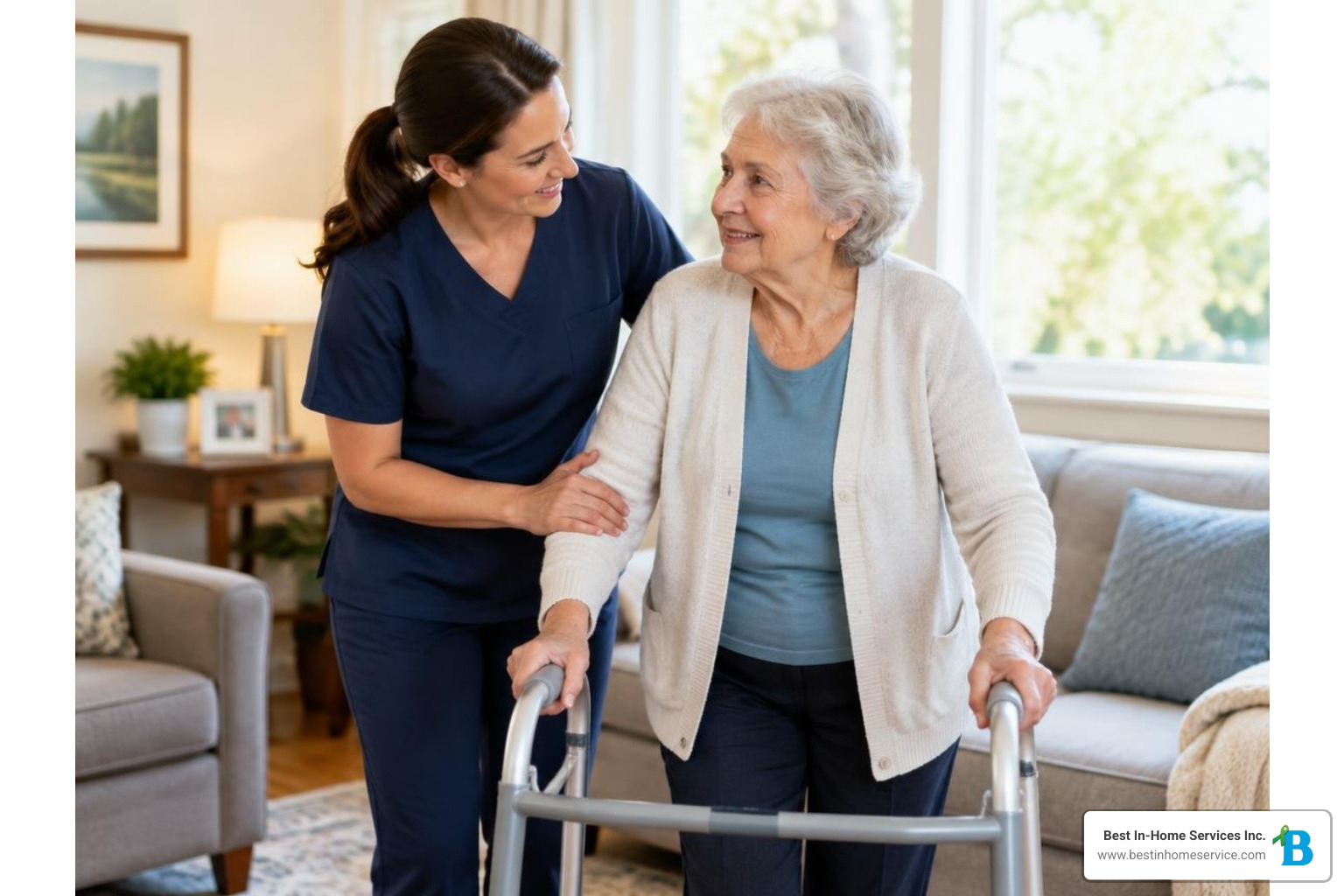
- Mobility Issues: Unsteadiness on their feet, difficulty standing up from a favorite chair, or holding onto walls and furniture while walking (known as “wall surfing”).
- Unexplained Weight Loss: This can point to nutritional deficiencies, difficulty cooking, forgetting to eat, or underlying medical conditions.
- Decline in Personal Hygiene: Wearing the same clothes for several days, an unusual body odor, or neglected dental care often indicates that bathing or grooming has become too difficult or frightening.
- Forgetfulness and Confusion: Forgetting to take critical medications, leaving the stove on, or getting lost in familiar areas of town.
- Missed Appointments: If your loved one is missing doctor visits or social events because they can no longer drive safely or manage their calendar, it’s time to step in. Learn how professional support can bridge this gap in Senior Appointment Assistance: Why It’s More Than Just a Ride.
Environmental and Safety Red Flags
Sometimes, the physical state of the home speaks louder than any conversation. When visiting your parent or relative in Chicago, Evanston, or Naperville, look out for:
- A Cluttered or Dirty Home: Stacked dishes, overflowing garbage, or piles of laundry in a home that was previously kept spotless.
- Unpaid Bills and Mail: Unopened mail, past-due notices, or utilities being disconnected due to missed payments.
- Expired or Moldy Food: A refrigerator filled with expired groceries, or a pantry containing little to no food.
- Frequent Falls or Unexplained Bruises: If you notice new bruises or if they admit to “slipping” but downplay it, their safety is compromised.
To help them stay safe and physically active, read about how to Maximize Mobility: Essential Activities to Keep Seniors Active and Thriving at Home.
Specialized Care Options for Complex Health Needs
Many seniors face complex, ongoing health challenges that require specialized attention. General care is wonderful, but chronic conditions demand caregivers who understand the specific progression of diseases and how to manage them safely at home.
Dementia and Alzheimer’s Senior Care Services at Home
Dementia care requires an immense amount of patience, specialized communication techniques, and safety protocols. Memory loss can lead to confusion, personality changes, and wandering, which can be highly stressful for family caregivers.
In-home memory care provides a safe alternative to secure facilities. Professional caregivers focus on:
- Cognitive Stimulation: Engaging seniors in puzzles, music, memory books, and familiar hobbies to keep their minds active.
- Safety Monitoring: Ensuring external doors are secure and utilizing monitoring systems to prevent wandering.
- Anxiety and Agitation Management: Using gentle redirection and maintaining a calm, predictable daily routine.
To learn more about keeping your loved one safe in their familiar environment, read our ultimate guide: Dementia Care in Your Own Home: All You Need to Know. For specialized resources on advanced cognitive decline, check out our dedicated Alzheimer’s Care services.
For diabetic seniors who also struggle with cognitive or mobility decline, specialized daily routines are critical. You can learn more about this in How In-Home Care Can Support Diabetic Management for Seniors.
Post-Hospitalization and Transitional Care
The period immediately following a hospital discharge is a high-risk time for seniors. Without proper support, many end up being readmitted within 30 days due to medication errors, falls, or failure to follow post-operative instructions.
Transitional care bridge programs ensure a smooth journey from hospital bed to home comfort:
- Caregivers can meet the family at the hospital to assist with discharge paperwork.
- They ensure prescriptions are picked up and coordinate with pharmacies.
- They provide vital non-medical recovery support, helping the senior rest while managing light housekeeping and meal prep.
For a successful transition, review our checklists on Post Hospital Discharge: Essential Tips for a Smooth Transition Home and learn what to expect in Illinois by reading Post Hospital Care Throughout Illinois: What to Expect from Home Care After Surgery.
Navigating the Costs and Payment Options for Home Care
Understanding how to fund senior care services at home is one of the most stressful parts of the process. Costs vary depending on the level of care required, the frequency of visits, and your location in the Chicago metropolitan area.
Here is a breakdown of the primary payment options available to families:
| Payment Option | What It Covers | Key Limitations / Requirements |
|---|---|---|
| Private Pay | All types of non-medical home care and private duty nursing | Out-of-pocket; requires personal savings or assets |
| Long-Term Care Insurance (LTCi) | Non-medical personal care, dementia care, 24/7 care | Policies vary; often has a waiting/elimination period |
| Veterans Benefits (Aid & Attendance) | In-home personal care and daily living assistance | Must meet specific military service and clinical needs criteria |
| Medicaid Waivers | Non-medical home care for low-income seniors | Must meet strict financial and clinical eligibility rules |
| Medicare | Short-term, medically necessary home health care | Does not cover long-term, non-medical custodial care |
For families looking to balance quality and budget, explore our resource on Affordable Home Care for Seniors in Chicago.
Understanding Medicare and Medicaid Coverage
A common misconception is that Medicare will pay for standard daily home care. Medicare generally covers only short-term, medically necessary home health services (such as physical therapy or wound care following surgery) and does not cover non-medical home care or long-term custodial care.
For low-income seniors, Medicaid waiver programs can be a lifesaver. In Illinois, programs like the Community Care Program (CCP) help seniors age 60 and older receive in-home services at little to no cost. To learn more about state-funded programs and eligibility, visit the Area Agencies on Aging – Illinois Department on Aging .
Private Pay and Alternative Funding Sources
If your loved one does not qualify for Medicaid, there are several private funding avenues to explore:
- Long-Term Care Insurance (LTCi): If your parent purchased a policy years ago, it will likely cover non-medical personal care at home. We recommend reviewing the policy early to understand the elimination period (the out-of-pocket days required before benefits kick in).
- VA Aid and Attendance: This benefit provides monthly pension increases to eligible veterans and surviving spouses who require help with daily activities like bathing or dressing.
- Reverse Mortgages: Homeowners can convert a portion of their home equity into tax-free cash, which can be used to pay for professional in-home caregivers.
If you live in DuPage County (including Naperville, Woodridge, or Hinsdale), you can find localized financial and community aid programs through the Community Services Programs | DuPage Co, IL .
How to Choose and Vet a Reputable Home Care Agency
Inviting a caregiver into your loved one’s private home is an act of immense trust. Whether you are looking for care in Chicago, Downers Grove, or Winnetka, vetting agencies thoroughly is non-negotiable.
Using a licensed, bonded, and insured agency is highly recommended over hiring independent caregivers privately. Agencies handle caregiver screening, employment taxes, worker’s compensation, liability insurance, and—crucially—provide backup coverage if your regular caregiver is sick.
To make this selection process easier, read our guide on How to Pick the Best In-Home Care Providers Without Losing Your Mind.
Key Questions to Ask Potential Agencies
When interviewing home care agencies, don’t be afraid to ask tough questions. A reputable agency will answer them transparently:
- Are your caregivers employees of the agency, or are they independent contractors? (Always choose agencies that employ their staff directly.)
- What screening and background checks do you perform? (Ensure they run national criminal background checks and check the Illinois Department of Public Health registry.)
- How do you handle backup care if a caregiver calls out?
- Do you have registered nurses (RNs) supervising care plans and caregivers?
- Can you provide local references or testimonials from families in our area?
To narrow down your options in the Cook County area, consult The Best Home Care Agencies in Chicago.
The Importance of Caregiver Matching and Supervision
A great care experience relies heavily on the relationship between the senior and the caregiver. The best agencies don’t just send the first available person; they match caregivers based on experience, care needs, and personality.
Furthermore, care plans must be dynamic. A senior’s health can change quickly. Regular supervision and care plan adjustments—ideally overseen by a registered nurse—ensure that safety is never compromised. Learn how we approach this process in our guide on Finding the Perfect Match Among Professional Caregivers for Seniors.
Frequently Asked Questions About At-Home Senior Care
What is the difference between home care and assisted living?
The primary difference is the environment and the level of personalization. Assisted living facilities require your loved one to move into a community setting, which can be disorienting for many seniors. Home care allows seniors to remain in their own homes, receive one-on-one personalized attention, and maintain their daily routines. For a deep-dive comparison, read Home Care vs Assisted Living: Which is Right for Your Family?.
Can home care services be adjusted as my loved one’s needs change?
Yes, absolutely. Reputable home care agencies offer highly flexible scheduling. Services can start with just a few hours a week for companionship and light housekeeping, and gradually scale up to 24-hour or live-in care as physical or cognitive needs increase. If you are navigating a recovery or advanced chronic illness, check out 24 Hour In-Home Care in Illinois: Essential Support for Recovery.
How quickly can in-home senior care services begin?
In many cases, care can begin within 24 to 48 hours after an initial in-home assessment. For urgent situations, such as an unexpected hospital discharge, some agencies can expedite the onboarding process to start care the same day. To see how to quickly coordinate care in the Chicago area, check out the Home Care Agency in Chicago: The No-Stress Shortlist.
Conclusion
Choosing senior care services at home is one of the most loving and practical decisions you can make for an aging family member. It provides them with the dignity of staying in their own home, surrounded by their memories, while giving you the peace of mind that they are safe, well-nourished, and cared for.
At Best In-Home Services Inc., we provide personalized, certified care across Chicago and the surrounding suburbs. We are here to help you navigate every step of this journey with warmth, professionalism, and 24/7 support.
If you are ready to explore how we can support your family, visit our Services page to learn more, or contact us today to schedule a free care assessment. Let us help your loved one age extraordinarily, right where they belong.




 1-224-636-5200
 1-224-636-5210
  425 Huehl Rd 13B Northbrook IL 60062