
When 24 Hour Elderly Care Can Help a Loved One Stay Safe at Home
24 hour elderly care provides continuous support at home for an older adult who cannot safely be left alone. It may be delivered by a live-in caregiver who has scheduled rest time, or by rotating caregivers who provide awake coverage day and night. The right choice depends on needs such as fall risk, nighttime wandering, dementia symptoms, mobility limits, and help with personal care.
Around-the-clock support can include companionship, meals, light housekeeping, transportation, bathing and dressing assistance, medication reminders, and specialized memory care. It can also give family caregivers needed relief while helping a loved one remain in familiar surroundings.
I am Lily Harrison, General Manager at Best In-Home Services Inc., where I help families across Chicago and Illinois coordinate personalized 24 hour elderly care for seniors needing daily support, dementia care, and dependable supervision at home. This guide explains how to compare care models, assess costs, and choose support that fits your family’s situation.
More about 24 hour elderly care:
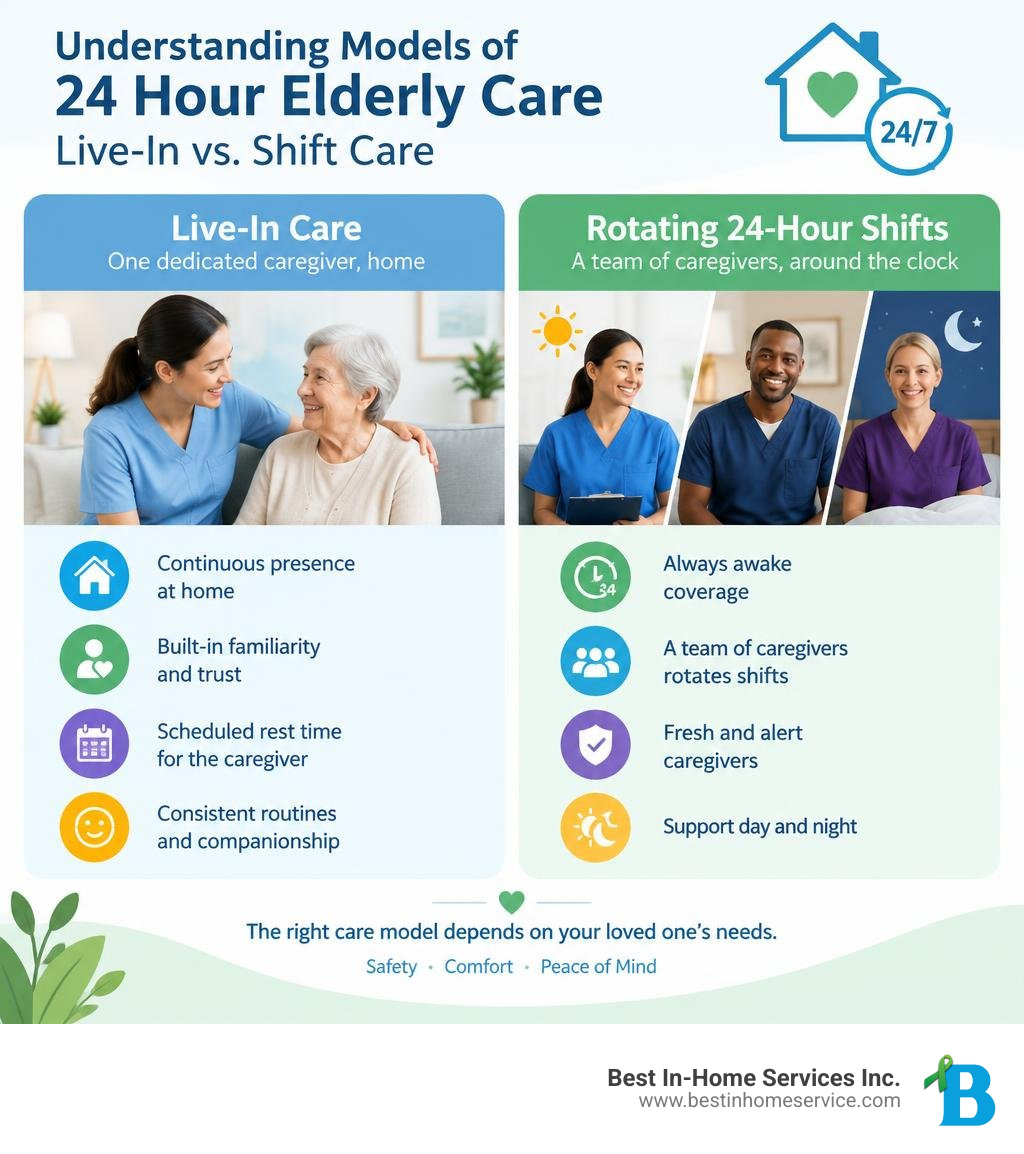
Understanding Models of 24 Hour Elderly Care: Live-In vs Shift Care
Live-In Care vs 24/7 Shift-Based Coverage
When families begin exploring continuous home assistance, choosing between live-in arrangements and rotating shift care represents the primary operational decision. Both options ensure an older adult is never left unattended, yet they differ fundamentally in daily scheduling, caregiver living arrangements, and nighttime supervision.
In a live-in model, one or two primary caregivers reside in the home during their working periods. The household must provide a private bedroom and adequate personal space where the aide can rest. Under typical labor guidelines, live-in aides require an uninterrupted sleep period at night alongside scheduled breaks throughout the day. This structure works exceptionally well for seniors who maintain regular sleeping patterns and primarily require presence, daytime guidance, meal preparation, and peace of mind. To explore how this setup functions across local households, families often review comprehensive live-in care options in Chicago to assess space and schedule requirements.
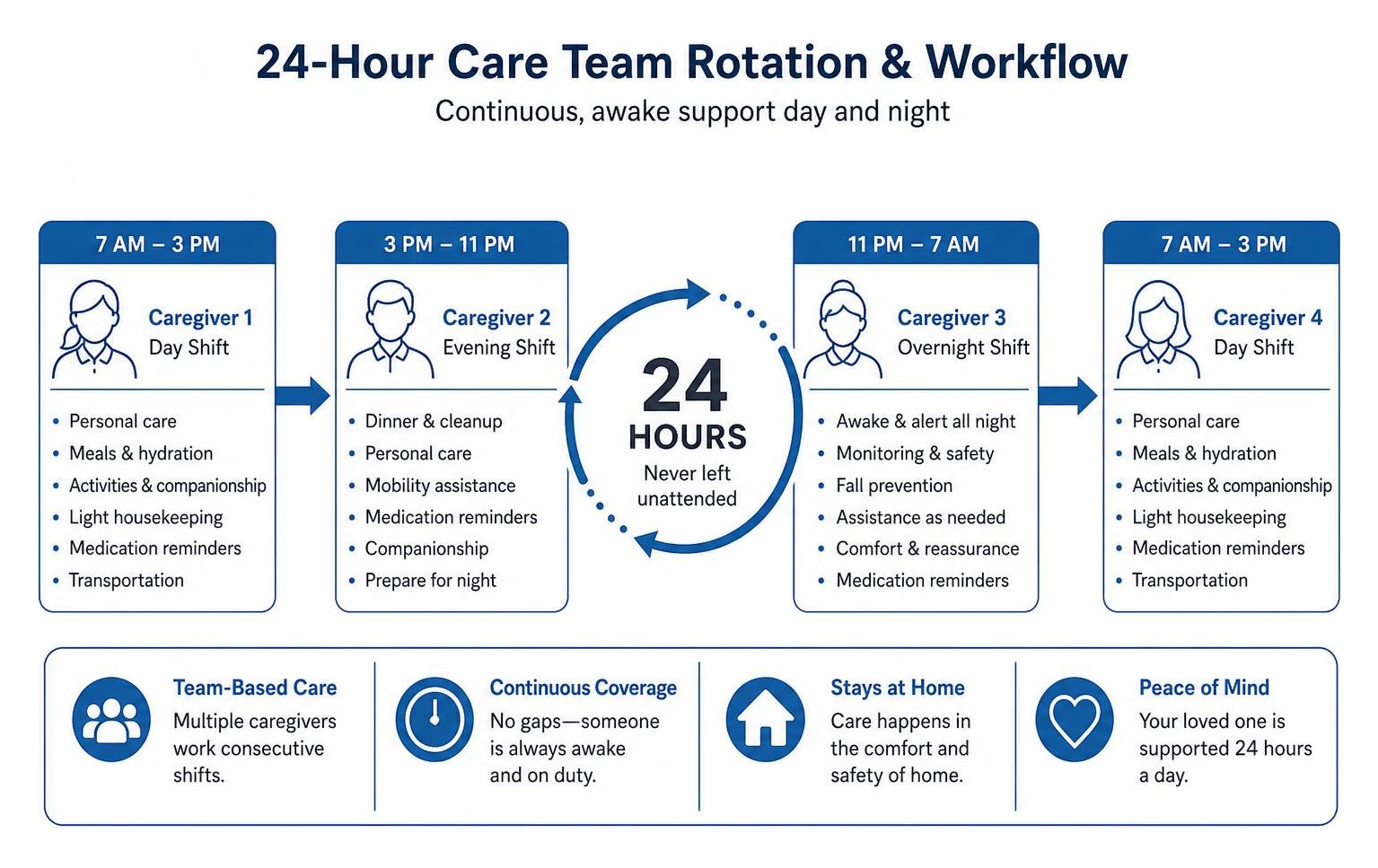
In contrast, 24/7 rotating shift care utilizes multiple dedicated caregivers who work consecutive shifts, typically lasting eight or twelve hours each. Caregivers on shift remain entirely awake, alert, and active throughout the night. This arrangement requires no dedicated sleeping quarters because each professional returns to their own home at the conclusion of their shift. Families dealing with severe dementia, nighttime agitation, frequent repositioning needs, or chronic insomnia benefit significantly from this continuous waking presence.
| Feature | Live-In Care | 24/7 Shift-Based Care |
|---|---|---|
| Caregiver Quarters | Dedicated private bedroom required | No sleeping quarters needed |
| Nighttime Coverage | Caregiver sleeps on-site with scheduled rest | Continuous, fully awake monitoring |
| Staff Rotation | Typically one to two consistent caregivers | Team of multiple caregivers working shifts |
| Best Suited For | Stable night routines and steady supervision | High nighttime needs, wandering, active medical care |
| Billing Structure | Daily flat rate structure | Hourly rate for all 24 hours |
Comparing In-Home Support With Other Care Settings
Navigating the choice between private home assistance and residential facilities involves weighing physical comfort, emotional wellness, and daily autonomy. Transitioning to an institutional facility often introduces significant disruption into an older adult’s life. Relocating requires adapting to rigid cafeteria schedules, unfamiliar communal layouts, and rotating facility staff who must divide their attention among dozens of residents simultaneously.
Maintaining an older adult in their private home preserves cherished routines and familiar surroundings. One-on-one personal attention guarantees that daily support adjusts directly to the individual rather than forcing the senior to adapt to an institution. Whether enjoying a morning walk through a quiet neighborhood in Naperville IL, tending to a backyard garden in Evanston IL, or dining at custom hours, remaining at home supports dignity and personal independence throughout the aging journey.
Core Services, Specialized Memory Support, and Home Safety
Comprehensive Services Included in 24 Hour Elderly Care
Around-the-clock home care encompasses a broad spectrum of supportive tasks customized to individual daily needs. Dedicated caregivers assist with essential activities of daily living while ensuring the household operates smoothly and safely.
The core assistance categories generally include:
- Personal Care Assistance: Dignified support with bathing, grooming, dressing, oral hygiene, and safe toileting.
- Mobility and Transfers: Hands-on stability during walking, bed-to-chair transfers, and gentle range-of-motion exercises.
- Homemaking and Nutrition: Preparing fresh, balanced meals tailored to dietary requirements, along with dishwashing, laundry, and light housekeeping.
- Medication Management: Consistent reminders to take prescribed medications on schedule, tracking hydration, and observing overall wellness.
- Companionship and Errand Support: Engaging in meaningful conversation, puzzles, hobbies, and providing safe accompaniment to local medical appointments.
For seniors returning from hospital stays or surgeries, continuous guidance serves as an essential 24-hour support for recovery, helping prevent complications and reducing readmission risks.
Specialized Dementia and Alzheimer’s Management
Managing progressive memory loss requires advanced patience, specialized communication techniques, and around-the-clock vigilance. Cognitive conditions frequently bring symptoms such as sundowning, daytime confusion, anxiety, and unmonitored wandering. When an older adult attempts to exit the home during late-night hours, having an alert caregiver present prevents dangerous accidents.
Our certified professionals utilize established 24/7 dementia home care strategies to structure soothing daily routines, reduce sensory overload, and redirect confusing behaviors with gentle validation. Having specialized Alzheimer’s caregivers for memory support ensures that cognitive decline does not force an abrupt institutional placement, allowing seniors across communities like Schaumburg and Northbrook to thrive in peaceful, familiar environments.
Fall Prevention and Home Safety
Environmental hazards within the home present serious risks to older adults with limited balance or sensory changes. An essential component of continuous care involves evaluating the living space to remove trip hazards, optimize lighting, and facilitate safe movement.
Caregivers provide continuous physical stabilization while navigating stairs, transitioning out of bathtubs, or standing up after meals. In addition to direct hands-on support, families can tap into state resources such as state in-home care programs through the Illinois Department on Aging, which provide structured caregiver support and community guidance. Installing assistive safety technology, including grab bars, shower benches, and Personal Emergency Response Systems (PERS), further protects seniors living across Dupage County and Cook County.
Evaluating Costs, Financial Assistance, and Care Alternatives
Cost Breakdown and Financial Assistance Options
Planning for continuous care requires a clear understanding of payment structures and funding alternatives. Home care agencies generally bill live-in services at a predictable daily flat rate, whereas shift-based 24/7 coverage is billed at an hourly rate for every working hour across the day and night.
When families ask, “how much does senior home care cost in Chicago, IL?”, the overall investment depends on the required care level, whether specialized memory care is needed, and the specific staffing model chosen. For a detailed discussion on budgeting considerations, families can review our guide on analyzing 24-hour care costs in Chicago alongside practical strategies to cover in-home care expenses.
Funding options typically involve:
- Private Pay: Using retirement income, savings, investments, or home equity to fund personalized services.
- Long-Term Care Insurance: Many policies reimburse daily or hourly home care costs once a physician certifies that the policyholder requires help with two or more daily living activities.
- Medicare Limitations: Traditional Medicare does not cover ongoing non-medical custodial care, live-in aides, or 24/7 supervision; it only covers short-term, intermittent skilled therapy or nursing from certified agencies following a qualifying hospital discharge.
- Medicaid and State Waivers: Medicaid programs provide home health coverage for qualifying low-income seniors, though specific program benefits, hours, and eligibility thresholds vary across Illinois.
Community Resources and Respite Services
Caring for an aging parent without outside support inevitably leads to severe caregiver burnout, emotional strain, and physical exhaustion. Utilizing community caregiver networks and supportive local services allows family caregivers to step away, rest, and attend to their personal well-being.
Organizations providing Community Services Programs | DuPage Co, IL connect families with localized support networks and helpful household assistance resources.
When family caregivers need temporary relief for a weekend, a vacation, or several weeks, scheduling respite home health care options provides professional coverage so families know their loved one remains completely safe.
Evaluating 24 Hour Elderly Care Agencies in Chicago and Suburbs
Selecting the right care provider is essential for long-term safety and comfort. Working with an established agency ensures proper legal compliance, thorough employee vetting, comprehensive liability insurance, and ongoing supervisory oversight.
When speaking with agencies in communities such as Skokie, Oak Brook, Glenview, and Highland Park, families should evaluate key operational criteria. Lily Harrison, General Manager at Best In-Home Services Inc., a trusted home health care provider, emphasizes reviewing supervisory systems, caregiver training, and emergency replacement protocols. Families can learn more about this vetting process through our guides on choosing the best 24-hour home care services and finding certified 24/7 senior care in Chicago.
Key questions to ask prospective agencies include:
- Are all caregivers fully employed, background-checked, insured, and bonded by the agency?
- How does the agency manage nurse delegation and ongoing caregiver training?
- What contingency plans exist if a scheduled caregiver is ill or delayed?
- How frequently do care coordinators conduct in-person quality checks?
- Can the agency adjust schedules smoothly if the client’s needs increase?
Frequently Asked Questions About Around-the-Clock Support
Does Medicare pay for round-the-clock home care?
Medicare does not pay for continuous 24-hour non-medical care or live-in assistance. Medicare coverage is restricted to short-term, intermittent skilled nursing care, physical therapy, or occupational therapy prescribed by a doctor following an acute medical event or hospital stay. These skilled visits must be administered by a Medicare-certified agency for limited durations each week. All ongoing custodial care, including daily bathing, dressing, meal preparation, and round-the-clock safety supervision, must be covered out-of-pocket, via long-term care insurance, or through qualifying state Medicaid programs.
What is the main difference between live-in care and 24-hour shift care?
The primary distinction centers on sleeping quarters, caregiver schedules, and nighttime attentiveness. Live-in care relies on one or two consistent caregivers who reside temporarily in the home and require a private bedroom to receive an uninterrupted eight-hour sleeping period. In contrast, 24-hour shift care utilizes rotating teams of caregivers who work consecutive eight- or twelve-hour shifts. Shift caregivers stay awake and actively monitoring throughout the entire night, making shift care ideal for individuals who experience frequent nighttime wakefulness, wandering, or intense medical needs.
How can family caregivers get relief from continuous care duties?
Family members caring for aging relatives can obtain vital relief by utilizing structured in-home respite care services. In-home respite support ranges from scheduled daytime hours to temporary around-the-clock coverage. Local caregiver support groups, community meal programs, and area agencies on aging also provide educational resources and emotional support to help prevent chronic caregiver fatigue.
Conclusion
Ensuring an aging loved one receives dependable, attentive assistance is one of the most important decisions a family can make. Choosing around-the-clock home support allows older adults across Chicago, Hinsdale, Buffalo Grove, Downers Grove, and surrounding suburbs to enjoy comfortable independence in the private homes they love. Whether your family requires scheduled live-in assistance or continuous awake shift care, Best In-Home Services Inc. delivers tailored care plans designed around your family’s exact needs.
To learn how our compassionate, certified caregivers can bring dependable support to your household, explore comprehensive in-home care services today and schedule a personalized family consultation.







 1-224-636-5200
 1-224-636-5210
  425 Huehl Rd 13B Northbrook IL 60062