
When a family member begins struggling with everyday routines, deciding on the next step can feel overwhelming. Many older adults want nothing more than to stay in their beloved home, surrounded by familiar memories and routines. Understanding why senior care at home is the best choice for aging in place allows families to see how tailored assistance keeps seniors safe while preserving their dignity and independence. For families throughout the Chicago area, including communities such as Naperville, Evanston, and Downers Grove, elderly home care in Chicago provides flexible support that adapts to each senior’s daily needs.
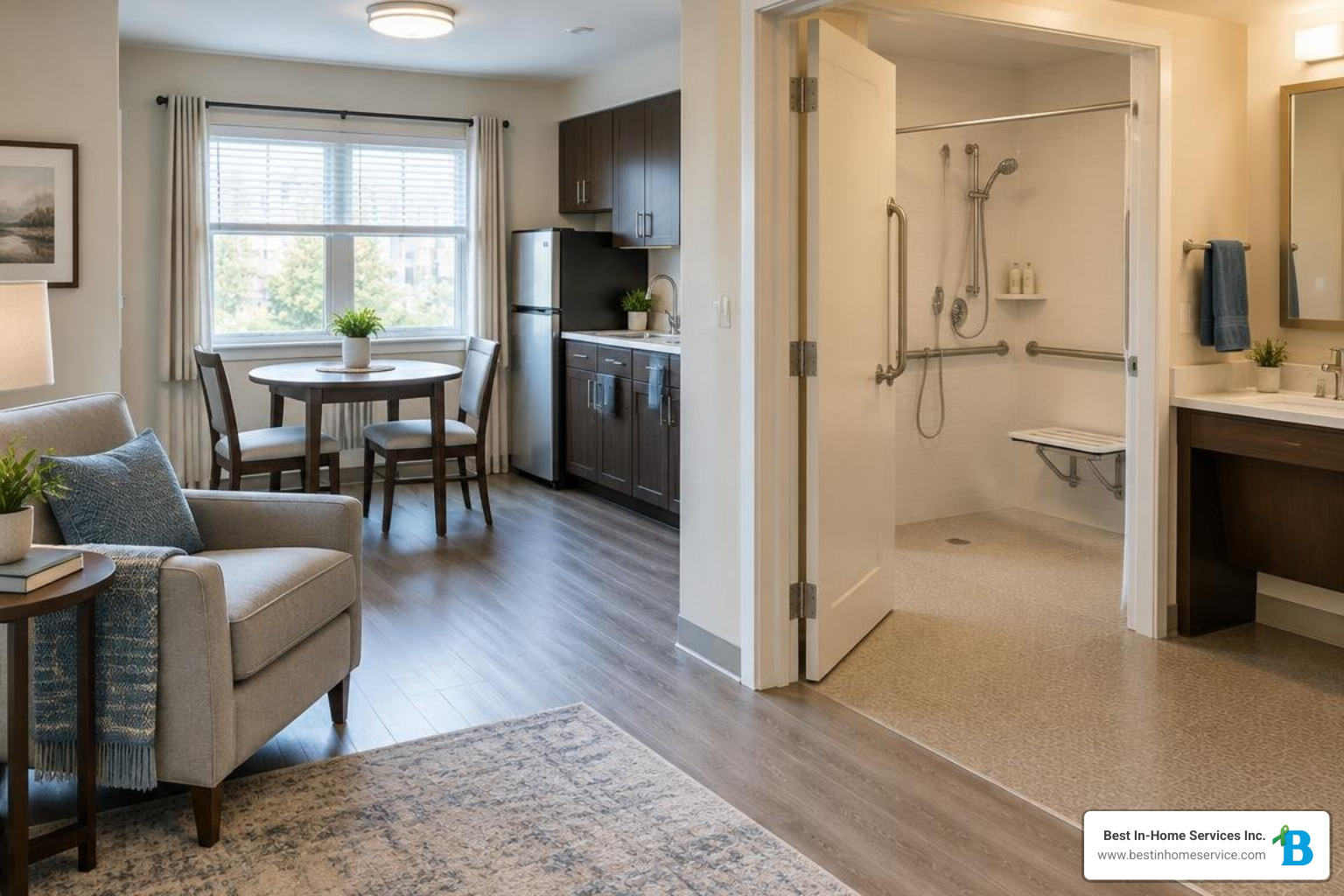
Everyday support spans a broad spectrum. It ranges from hands-off assistance such as light housekeeping and social visits to hands-on physical support with activities of daily living. Evaluating the home environment for safety – such as clearing trip hazards, improving lighting, and organizing daily necessities – ensures that aging in place remains a sustainable, comfortable journey.
Personal Care and Companion Support
Understanding the distinction between companionship and personal care helps families choose the right assistance. Companion care focuses primarily on emotional well-being, mental engagement, and light household help. Personal care, on the other hand, involves hands-on support for physical routines, including bathing, dressing, and incontinence management.
When cognitive changes arise, specialized memory and dementia care becomes essential. Dedicated caregivers provide reassuring structure, redirection, and gentle oversight to prevent wandering and reduce anxiety.
| Feature | Companion Support | Personal Care | Specialized Memory Care |
|---|---|---|---|
| Primary Focus | Social engagement & basic chores | Hands-on physical assistance | Cognitive support & safe routines |
| Key Tasks | Conversation, errands, light cleaning | Bathing, dressing, grooming, toileting | Wandering prevention, cueing, structure |
| Skill Level | General caregiving & companionship | Trained caregiver / personal aide | Dementia-trained caregiver |
| Hands-On Contact | Minimal to none | Moderate to high | Moderate to high with supervision |
Key Services Included in Elderly Home Care Plans
A customized care plan adapts to the unique rhythm of a senior’s day. Rather than forcing an individual into an unfamiliar institutional routine, care plans weave essential support directly into their preferred lifestyle.
According to Lily Harrison, General Manager at Best In-Home Services Inc., a trusted home health care provider, effective care plans often combine several core service areas:
- Meal preparation and nutrition: Planning, cooking, and serving balanced meals tailored to physician-recommended dietary guidelines.
- Mobility and transfer assistance: Helping individuals move safely from beds to chairs, navigate hallways, and reduce fall risks.
- Hygiene and personal grooming: Providing respectful support with bathing, oral care, and dressing.
- Medication reminders: Cueing seniors to take their prescribed medications at the right times to maintain health stability.
- Light housekeeping and organization: Handling laundry, dishwashing, and keeping living spaces tidy and sanitary.
For a broader look at designing long-term care routines, our comprehensive guide to reliable elder care offers step-by-step insights into maintaining daily quality of life.
Government Programs, Subsidies, and Payment Assistance
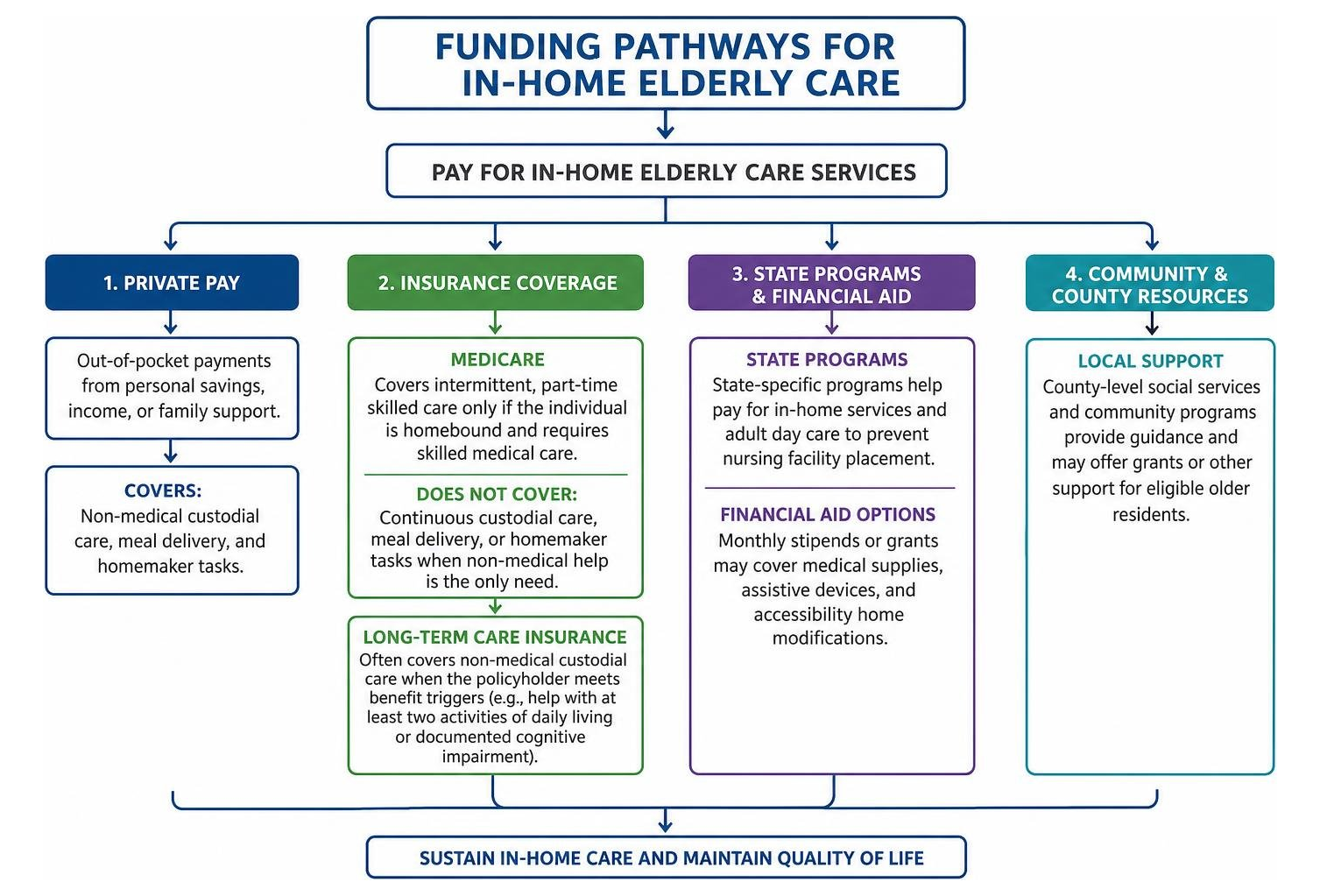
Navigating the financial side of elder care requires understanding the differences between private financing, state initiatives, and federal benefits. Costs generally depend on the level of hands-on care required, weekly hours, and whether specialized memory supervision is needed.
Families in suburban areas often tap into county-level social services for guidance and community grants, such as Community Services Programs which assist eligible older residents with supportive community resources.
Insurance Coverage and Eligibility Considerations
Traditional health insurance and Medicare have strict limits when it comes to non-medical home support. Medicare will cover intermittent, part-time skilled nursing care, physical therapy, speech therapy, and home health aide visits only if a qualified healthcare provider certifies that the individual is homebound and requires skilled medical care.
However, Medicare does not pay for continuous around-the-clock custodial care, meal delivery services, or homemaker tasks when non-medical help is the only support needed. Long-term care insurance policies, on the other hand, often cover non-medical custodial care, provided the policyholder meets specific benefit triggers – typically needing help with at least two activities of daily living or having documented cognitive impairment.
State Programs and Financial Aid Options
State-specific programs can bridge the gap for low-income seniors who are at risk of institutional placement. In Illinois, eligible older adults can access the Illinois Department on Aging Community Care Program, which helps pay for adult day care and in-home services to prevent unnecessary nursing facility placement.
Other states have established similar subsidy models. For instance, some state programs provide monthly financial stipends or special assistance grants to cover essential medical supplies, assistive devices, and accessibility home modifications, helping family caregivers sustain care at home.
Comparing In-Home Care Arrangements and Caregiver Support
Choosing the right care setting is a deeply personal decision. In-home care offers unmatched individual attention, allowing older adults to maintain their cherished routines within a familiar setting they already know and love. Families in communities such as Skokie, Glenview, and Oak Brook can access senior home care services designed to support aging in place with dignity.

Families looking for practical strategies to discuss care transitions can review our guide on how to navigate home care help for your aging parents.
Evaluating In-Home Assistance for Aging in Place
In-home care offers several distinct advantages for seniors who want to age comfortably at home:
- Consistent daily routines: Seniors wake, eat, and rest according to their own personal schedules.
- Familiar emotional surroundings: Staying in a recognizable setting brings significant comfort to seniors with memory loss or sensory sensitivities.
- One-on-one attention: Caregivers focus exclusively on one individual, ensuring rapid responses to needs and subtle changes in health.
- Preserved independence: Older adults retain ownership over their environment, pets, hobbies, and social visits.
Selecting the Best Elderly Home Care Providers
Choosing a professional agency requires careful vetting. Entrusting a loved one’s well-being to a professional team requires complete transparency, rigorous background checks, and clear communication channels.
When evaluating agencies, families can rely on our guide explaining how to pick the best in-home care providers without losing your mind to evaluate important quality indicators:
- Screening and background checks: Ensuring all caregivers undergo comprehensive state and national criminal background clearances.
- Licensing and accreditation: Verifying that the agency is fully licensed, insured, and bonded according to state regulations.
- Ongoing training: Confirming that care professionals receive continuous education in dementia care, infection control, and fall prevention.
- Supervision and backup coverage: Asking how the agency manages sudden caregiver illness and provides seamless schedule replacements.
Essential Resources and Respite for Family Caregivers
Family caregiving is an act of deep love, but it can also lead to physical fatigue and emotional burnout. Juggling work, personal obligations, and caregiving duties without outside help frequently leads to stress and health challenges for the family member providing care.

Utilizing respite care allows family members to step away for a few hours, a weekend, or several weeks to rest, travel, or attend to personal matters, knowing their loved one is in capable hands. Exploring the ultimate guide to respite care options in Chicago area gives family caregivers actionable avenues to recharge.
Beyond respite services, families can connect with local caregiver support groups, consult with professional geriatric care managers, or contact national organizations like the Eldercare Locator (a public service of the Administration for Community Living accessible at 1-800-677-1116) to find community-based support. For families in communities such as Highland Park, Wilmette, and Northbrook, home care assistance offers reliable short-term relief when caregivers need time to rest and recover.
Frequently Asked Questions About In-Home Senior Support
What tasks are typically not covered by insurance?
Traditional health insurance and standard Medicare do not pay for ongoing custodial care, continuous 24-hour non-medical oversight, meal delivery programs, or independent housekeeping when medical skilled care is not needed. These supportive tasks are typically funded through private pay, long-term care insurance policies, or specific state-funded assistance programs.
How do families determine the appropriate level of in-home support?
Determining the right level of support starts with a comprehensive care assessment. Families should evaluate their loved one’s ability to handle daily living activities independently, review any mobility or fall risks, assess cognitive stability, and identify gaps in social interaction. An agency care coordinator can help translate these observations into a custom care plan that balances support with independence.
How much does senior home care cost in Chicago, IL?
The cost of senior home care in Chicago, IL varies depending on the specific level of care required, the total hours of assistance scheduled each week, and whether specialized dementia care or around-the-clock support is necessary. Because every care plan is customized to the individual, services are generally billed on a flexible hourly basis or through structured daily rates for live-in arrangements. Families can utilize private savings, long-term care insurance, or state-funded assistance programs to help manage care expenses. For more detailed guidance on elderly home care costs in Chicago, families can speak with a local care coordinator.
How do families arrange emergency respite care quickly?
When unexpected situations – such as a primary caregiver’s sudden illness or an urgent hospital discharge – families can contact licensed home care agencies directly. Professional agencies maintain a roster of vetted, trained caregivers and can often conduct rapid assessments and coordinate care schedules within 24 to 48 hours.
Conclusion
Aging in place allows seniors to enjoy their later years in the comforting environment they know best. By creating thoughtful, personalized care plans, families can protect their loved one’s health, foster daily independence, and maintain peace of mind. Whether your family needs companion support, specialized memory care, or around-the-clock assistance, our team at Best In-Home Services Inc. is here to help every step of the way. We invite you to explore comprehensive senior care services and discover how our dedicated caregivers can support your family’s needs. For personalized support in your community, contact our Chicago home care team today.





 1-224-636-5200
 1-224-636-5210
  425 Huehl Rd 13B Northbrook IL 60062