
What Is Elder Care at Home — and Is It Right for Your Family?
Elder care at home means professional support that helps older adults live safely and independently in their own home, rather than moving to a facility.
Here is a quick overview of what it includes and who it is for:
| Question | Quick Answer |
|---|---|
| What is it? | Non-medical and medical support provided in a senior’s own home |
| Who needs it? | Seniors needing help with daily tasks, dementia care, or post-hospital recovery |
| What does it include? | Personal care, meals, companionship, medication reminders, mobility support |
| How fast can it start? | Often within 24 to 72 hours |
| Does Medicare cover it? | Not for non-medical care — most families pay privately or use long-term care insurance |
| How do you find help? | Call the Eldercare Locator at 1-800-677-1116 or contact a local home care agency |
For many families in Chicago, the decision to arrange care at home comes suddenly — after a fall, a hospital discharge, or the first signs of memory loss. The good news is that home care can start quickly, and the right plan makes an enormous difference in both safety and quality of life.
This guide gives you a clear, practical checklist so you know exactly what to look for, what to ask, and what to expect.
I’m Lily Harrison, General Manager at Best In-Home Services Inc., where I help Chicago-area families arrange certified, compassionate elder care at home for seniors who need dementia support, daily assistance, or 24/7 care. Over the years, I’ve seen how the right caregiver match and a personalized plan can transform a family’s peace of mind.
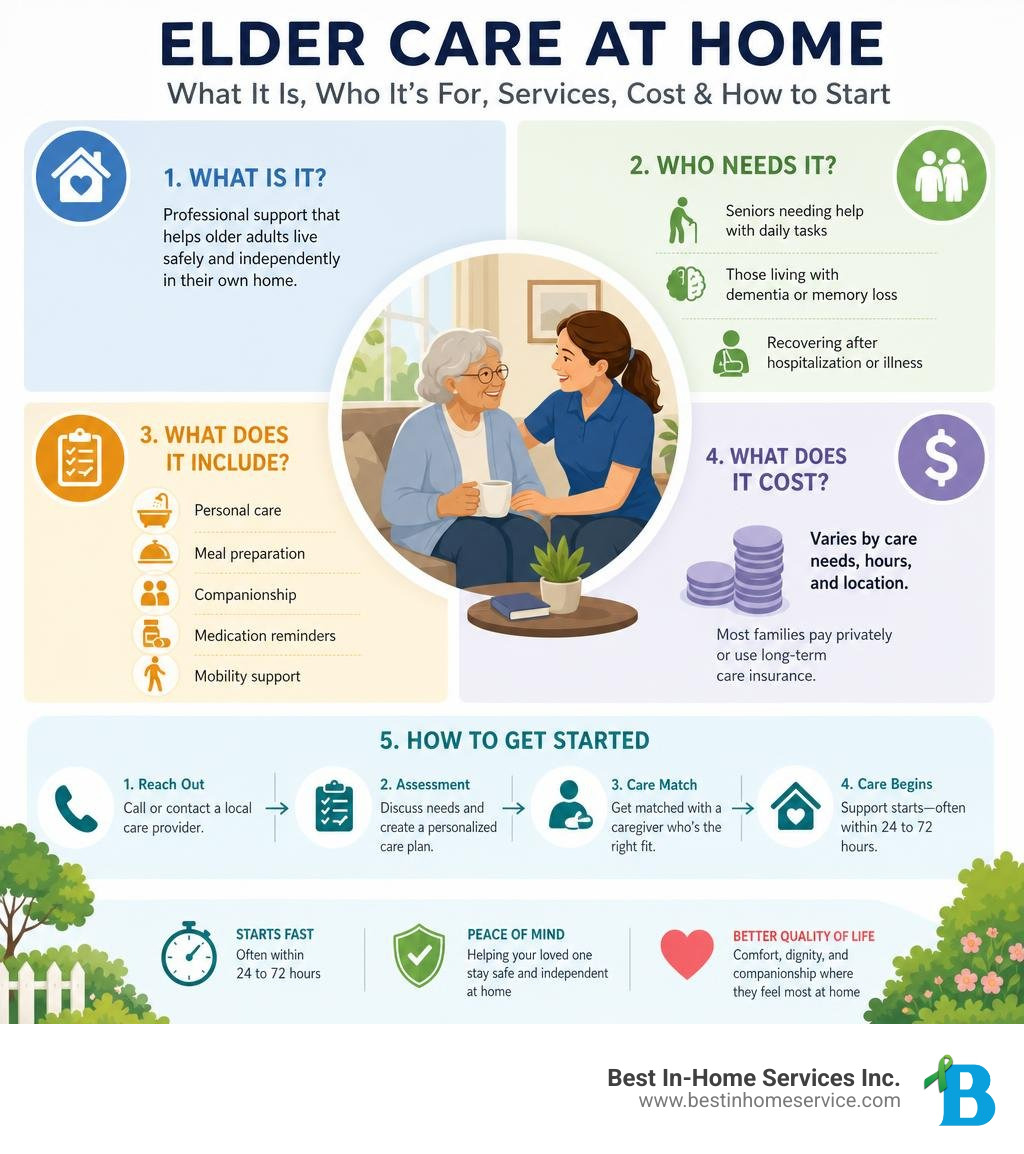
Elder care at home explained:
Understanding Elder Care at Home and How It Differs from Facility Care
When we begin exploring long-term support for our aging parents, the terminology can quickly feel overwhelming. We hear terms like “home care,” “home health care,” “assisted living,” and “nursing homes” thrown around interchangeably. However, these services serve completely different purposes, and choosing the wrong one can lead to unnecessary costs or gaps in support.
To help your family make the most informed decision, let’s break down the definitions and look at why Why Senior Care at Home is the Best Choice for Aging in Place.
- Elder Care at Home (Non-Medical Home Care): This type of care focuses on helping seniors with the activities of daily living (ADLs) and instrumental activities of daily living (IADLs). It is designed to help seniors maintain their independence while staying in their own homes. Services are highly customizable and can range from a few hours a week to round-the-clock supervision. Because it is non-medical, it does not require a doctor’s prescription to begin.
- Home Health Care: Unlike standard elder care, home health care is clinical, medical care prescribed by a physician. It is usually short-term and provided by licensed medical professionals such as registered nurses (RNs), physical therapists, or occupational therapists. It is often initiated after a major surgery or hospital stay. To learn more about clinical options in our area, you can review this list of Home Health Care Agencies in Chicago and Illinois.
- Assisted Living Facilities: This option requires the senior to move out of their home and into a residential community. While these facilities offer social activities and basic help with daily tasks, they lack the individualized, one-on-one attention that a dedicated home caregiver provides. Furthermore, the transition out of a beloved home can be emotionally disruptive for many seniors.
- Skilled Nursing Facilities (Nursing Homes): These are residential medical institutions designed for individuals who require 24/7 clinical monitoring and high-level medical care. They are highly structured and institutional, which can sometimes feel restrictive for seniors who still value their autonomy.
To help you visualize these differences, we have put together a quick comparison table:
| Care Type | Primary Focus | Location | Medical Supervision | Schedule Flexibility |
|---|---|---|---|---|
| Elder Care at Home | Non-medical ADLs, companion care, safety | Senior’s own home | RN-supervised care plans | Extremely high (hourly to 24/7) |
| Home Health Care | Skilled nursing, physical therapy, wound care | Senior’s own home | High (doctor-ordered) | Set by medical necessity |
| Assisted Living | Group housing, basic personal care, social events | Residential facility | Moderate | Fixed facility schedules |
| Nursing Home | 24/7 clinical care, complex medical needs | Institutional facility | Very high | Rigid institutional routines |
Choosing to support your loved one’s desire for aging in place keeps them in familiar surroundings, preserves their daily routines, and keeps them connected to their local community.
The Essential Checklist for Planning Care

When we step into professional caregiving, we want to ensure our loved ones are in the safest, most capable hands. Crafting a checklist of caregiver qualifications, screening standards, and specialized care capabilities is essential.
At Best In-Home Services Inc., we believe that reliable care is built on trust, transparency, and rigorous screening. When evaluating agencies or individual caregivers, here is the baseline checklist of qualifications you should look for:
- Comprehensive Background Checks: Every caregiver must undergo criminal background checks, sex offender registry searches, and reference verifications.
- Proper Licensing and Insurance: Ensure the agency is fully licensed by the state and carries liability insurance and workers’ compensation. This protects your family from liability in the event of an accident.
- Professional Training and Certifications: Caregivers should have verified training in transfer safety, infection control, emergency protocols, and basic personal care.
- Dementia and Memory Care Training: If your loved one is living with cognitive decline, the caregiver must have specific training in managing behaviors, communicating effectively, and preventing wandering.
- Clear Backup Protocols: What happens if the assigned caregiver gets sick? A reputable agency must have a reliable pool of backup staff who are familiar with your loved one’s care plan.
By keeping these standards high, you can confidently navigate the process of Finding the Best Helping Hands Aged Care for Your Loved Ones and build a Comprehensive Guide to Reliable Elder Care tailored to your family’s unique situation.
Evaluating If Elder Care at Home Is Right for Your Loved One
How do you know when it is time to bring in professional help? Often, the signs accumulate slowly. We might notice that our parents’ refrigerator is empty, their home is unusually cluttered, or they have begun wearing the same clothes for several days in a row.
To evaluate whether elder care at home is the right choice, families should assess four key areas:
- Activities of Daily Living (ADLs): Is your loved one struggling with basic self-care tasks such as bathing, dressing, toileting, or grooming?
- Cognitive Decline: Are they forgetting to take critical medications, leaving the stove on, or getting confused about the time of day?
- Physical Mobility and Fall Risk: Have they had any recent falls, or do they struggle to stand up from a chair or navigate stairs safely?
- Social Isolation: Are they spending most of their time alone, which can accelerate depression and cognitive decline?
If you are noticing these signs, it is helpful to learn How to Navigate Home Care Help for Your Aging Parents early, before a minor safety issue turns into a medical emergency.
Selecting the Right Services for Elder Care at Home
One of the greatest benefits of home care is that it is not an “all-or-nothing” decision. We can customize the care plan to fill in the exact gaps your loved one needs help with.
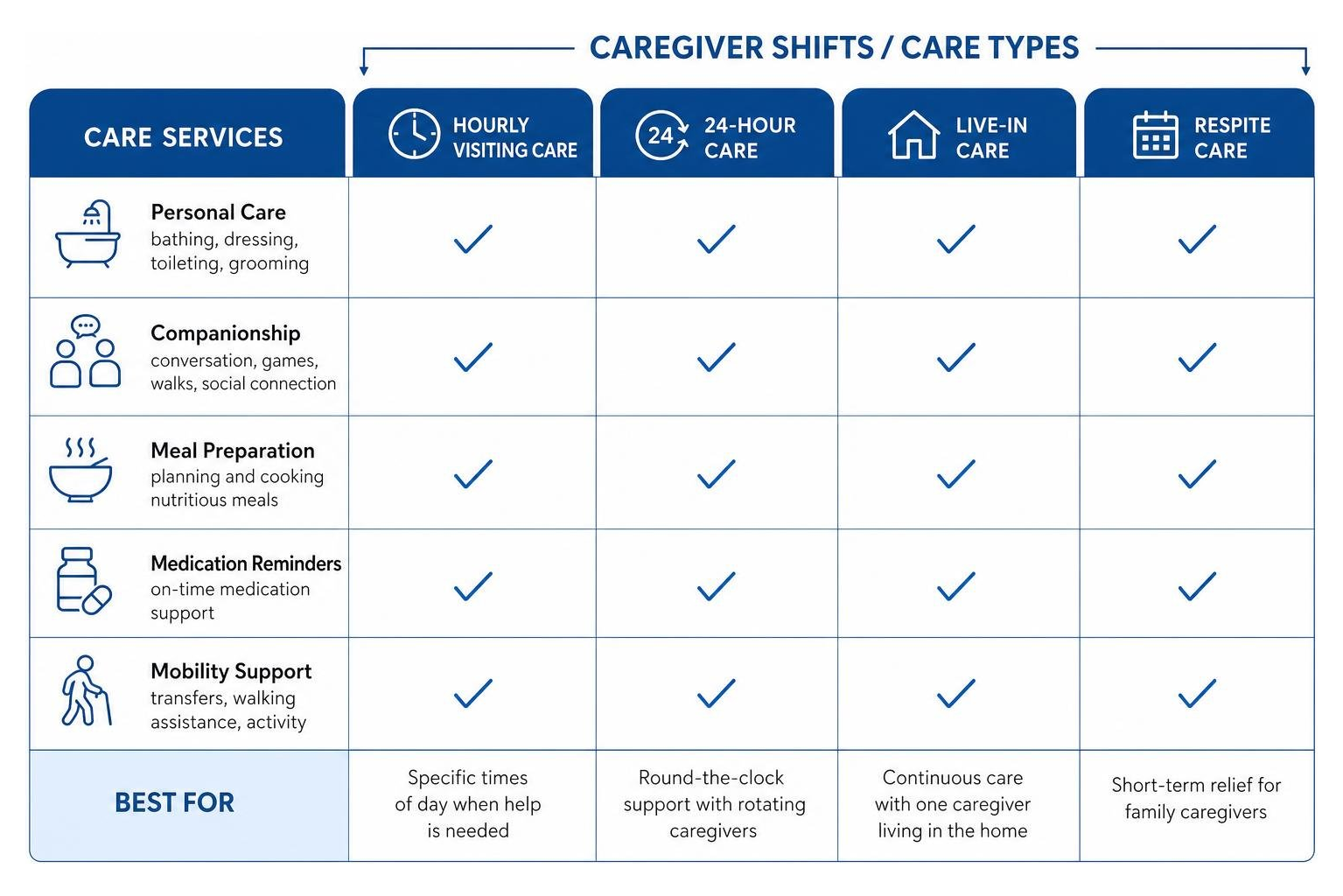
Depending on your family’s needs, we can combine several core services:
- Personal Care: Dignified assistance with bathing, grooming, dressing, toileting, and incontinence care. Learn more about our Personal Care Services.
- Companionship: Engaging in conversation, playing games, reading, and accompanying seniors on walks to prevent isolation. For a deeper dive into this, read The Ultimate Guide to Companionship for Elderly Loved Ones.
- Meal Preparation: Planning and cooking nutritious meals that align with dietary restrictions (such as low-sodium or diabetic-friendly diets). Discover why this matters in The Importance of Nutrition and Meal Planning in Senior Care.
- Medication Reminders: Helping seniors stay on track with their medication schedules to prevent dangerous dosage mistakes.
- Mobility Support: Assistance with transferring safely from bed to wheelchair, steadying their gait, and encouraging light physical activity. See our tips on how to Maximize Mobility: Essential Activities to Keep Seniors Active and Thriving at Home.
For those residing in specific communities throughout Chicagoland, local support is widely available. Families in Downers Grove, Winnetka, Chicago Near North, and Schaumburg can easily access personalized care plans tailored to their loved one’s needs.
Choosing Between Hourly, 24-Hour, and Live-In Care
The amount of care your loved one needs will dictate how care is scheduled. Understanding the differences between these scheduling models will help you manage both safety and your budget:
- Hourly Visiting Care: Perfect for seniors who only need help during specific times of the day — such as a few hours in the morning to assist with bathing and breakfast, or a few hours in the evening to prepare dinner and help with the bedtime routine.
- 24-Hour Care: This model involves multiple caregivers working in rotating shifts (usually 8-hour or 12-hour shifts) to ensure someone is awake, alert, and active at all times. This is ideal for seniors who wander at night, have advanced dementia, or require frequent physical repositioning.
- Live-In Care: A single caregiver lives in the home with the senior, requiring a private bedroom and regular sleeping hours. This is highly cost-effective compared to 24-hour care, but it requires the senior’s routine to align with a caregiver’s need for 8 hours of uninterrupted sleep.
- Respite Care: Temporary, short-term care designed to give family caregivers a well-deserved break to rest, travel, or attend to their own personal needs.
Navigating Costs, Insurance, and Funding Options

Let’s talk about the elephant in the room: the cost of care. Planning for senior care in 2026 requires a clear-eyed understanding of the financial landscape. Because non-medical home care is highly personalized, costs vary depending on where your loved one lives and the level of care they require.
In the Chicago metropolitan area, hourly rates for non-medical home care typically range from $35 to $40 per hour, depending on the complexity of care (such as advanced memory care vs. basic companion visits).
When it comes to paying for elder care at home, families typically rely on a combination of resources:
- Private Pay: Many families pay for home care out-of-pocket using personal savings, retirement funds, or the sale of a home. We discuss these financial strategies further in our guide on Affordable Home Care for Seniors in Chicago.
- Long-Term Care Insurance: If your loved one has a long-term care insurance policy, it will often cover non-medical home care once they require help with a certain number of ADLs.
- Medicaid and State Programs: For seniors who meet specific financial and physical need criteria, state-funded programs can help cover home care costs. In Illinois, the Community Care Program – Illinois Department on Aging helps seniors age 60 and older remain in their homes by providing subsidized home care services.
- Local County Support: If you live in DuPage County, you can explore the Community Services Programs | DuPage Co, IL for local assistance options. For families in Lake County, local volunteer and community support can be found through ElderCARE Lake County.
- National Resources: The Eldercare Locator, a public service of the Administration for Community Living, connects older adults and families to community services and can be reached at 1-800-677-1116.
It is important to note that traditional Medicare does not cover long-term, non-medical home care if that is the only care your loved one requires.
Frequently Asked Questions About Home Care
Navigating senior care comes with a lot of questions. Here are the most common questions families ask us when they are getting started.
How quickly can home care services typically begin?
In most cases, we can begin care within 24 to 72 hours of your initial call.
Our onboarding process starts with a comprehensive, in-home care assessment led by an experienced care manager. During this assessment, we evaluate your loved one’s physical mobility, cognitive health, safety risks, and personal preferences. This allows us to build a customized care plan and match them with the perfect caregiver. In urgent situations — such as an unexpected hospital discharge — we can often fast-track this process to ensure a safe transition home.
What role do family members play when professional care is involved?
Professional home care is designed to support family caregivers, not replace them. We view our relationship with families as a collaborative partnership.
While our certified caregivers handle the daily physical tasks, family members play a vital role in care coordination and emotional support. We keep you fully informed through secure communication portals, regular shift notes, and direct updates from our care managers. This ensures you always know how your loved one is doing, even if you live miles away.
Does Medicare cover non-medical home care services?
No, Medicare does not pay for non-medical home care services (such as meal preparation, light housekeeping, or companion visits) when that is the only care needed.
Medicare is designed to cover acute, clinical medical care, such as short-term skilled nursing care or physical therapy following a hospital stay. For ongoing assistance with daily life, families must rely on private funds, long-term care insurance, or state-specific programs like the Illinois Community Care Program.
Conclusion
Arranging elder care at home is one of the most loving decisions you can make for your aging parents. It honors their independence, preserves their dignity, and allows them to remain in the comfort of their cherished home.
At Best In-Home Services Inc., we are dedicated to helping families throughout the Chicago area navigate this journey with ease and confidence. From Downers Grove to Winnetka, and across Cook, DuPage, and Lake Counties, our certified, compassionate staff is here to provide personalized care plans and 24/7 support.
If you are ready to explore how we can support your family, we invite you to learn more about our Best In-Home Services Inc. Services or contact us today to schedule your free, no-obligation in-home care assessment. Let us give you the peace of mind you deserve.





 1-224-636-5200
 1-224-636-5210
  425 Huehl Rd 13B Northbrook IL 60062