
When Is It Time for 24/7 Certified Senior Support?
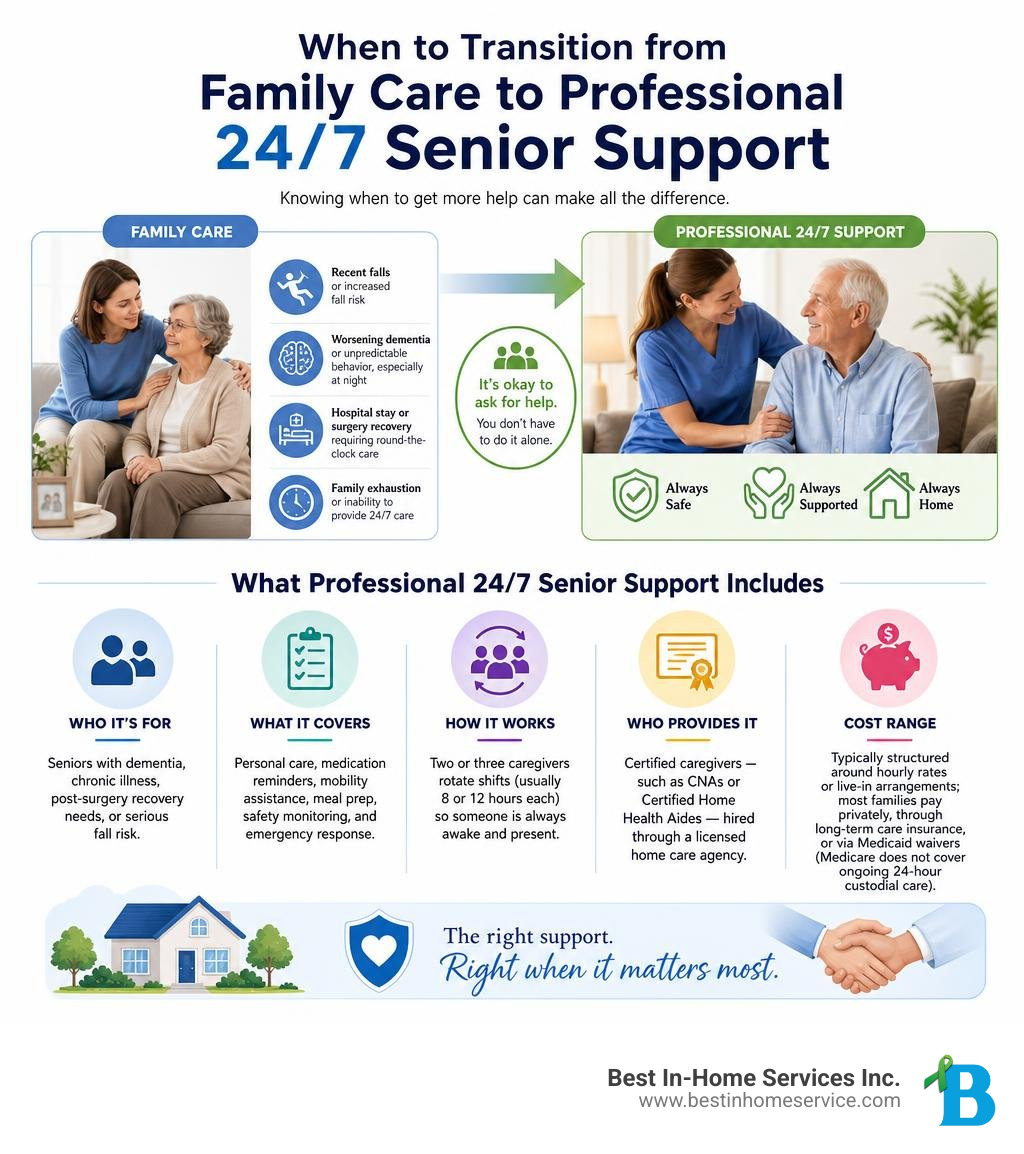
24/7 certified senior support means round-the-clock care provided by trained, vetted caregivers — available every hour of every day, including nights, weekends, and holidays.
Here’s what it typically includes:
- Who it’s for: Seniors with dementia, chronic illness, post-surgery recovery needs, or serious fall risk
- What it covers: Personal care, medication reminders, mobility assistance, meal prep, safety monitoring, and emergency response
- How it works: Two or three caregivers rotate shifts (usually 8 or 12 hours each) so someone is always awake and present
- Who provides it: Certified caregivers — such as CNAs or Certified Home Health Aides — hired through a licensed home care agency
- Cost range: Typically structured around hourly rates or live-in arrangements; most families pay privately, through long-term care insurance, or via Medicaid waivers (Medicare does not cover ongoing 24-hour custodial care)
There comes a point when checking in on an aging parent a few times a week just isn’t enough anymore. Maybe they’ve had a fall. Maybe the dementia is progressing and nights have become unpredictable. Maybe a recent hospital stay made it clear that coming home safely means having someone there — all the time.
You’re not alone in facing this. Around 70% of older adults will need some form of long-term care in their lifetime, and many of those needs don’t stop at sundown. Falls are the leading cause of injury in adults 65 and older, with 1 in 4 seniors falling each year. And for the more than 6 million Americans living with Alzheimer’s or other dementias, nighttime wandering and sundowning can make unsupervised hours genuinely dangerous.
The good news: professional 24/7 in-home care makes it possible for seniors to stay in the home they love — safely, with dignity, and with real peace of mind for their families.
I’m Lily Harrison, General Manager at Best In-Home Services Inc., where I help Chicago-area families find compassionate, certified 24/7 certified senior support tailored to their loved one’s specific needs. In the sections below, I’ll walk you through everything you need to know — from what to look for in a caregiver to how to pay for it.
What is 24/7 Certified Senior Support?
At its core, 24/7 certified senior support is a comprehensive care solution designed for older adults who require continuous, round-the-clock monitoring and assistance. Unlike casual check-ins or part-time help, this level of care ensures that there is never a moment when your loved one is left vulnerable or alone.

This support integrates assistance with Activities of Daily Living (ADLs)—such as bathing, dressing, toileting, and eating—with Instrumental Activities of Daily Living (IADLs), which include meal preparation, light housekeeping, laundry, and running essential errands. By having a trained professional on hand at all times, families in Cook, Lake, and DuPage counties can rest assured that physical safety, nutritional needs, and emotional companionship are fully managed. For a deeper look at locating the right care team in our region, explore our guide on Finding the best 24/7 home health and memory care in Chicago.
How 24/7 Certified Senior Support Differs from Standard Care
A common point of confusion for families is distinguishing between standard home care, overnight care, and true 24-hour support.
- Standard Home Care: Usually involves a caregiver visiting for a set number of hours during the day (e.g., 4 to 8 hours) to assist with lunch, light cleaning, and basic mobility.
- Overnight Care: Typically features a caregiver who arrives in the evening and stays through the night. Depending on the agreement, this caregiver may sleep during designated hours unless woken to assist with a bathroom trip.
- Live-In Care: A single caregiver resides in the senior’s home. However, by law, live-in caregivers must be provided with an uninterrupted 8-hour sleeping period and a private room. If your loved one frequently wakes up disoriented or needs help throughout the night, live-in care can result in severe caregiver fatigue and safety gaps.
- 24-Hour Rotating Care: This is the gold standard of safety. We schedule multiple caregivers to rotate in 8-hour or 12-hour awake shifts. There is always an active, alert professional in the home, ensuring that your loved one is never left unsupervised.
| Care Type | Shift Structure | Caregiver Status at Night | Best Suited For |
|---|---|---|---|
| Standard Home Care | 4–8 hours during the day | Not present | Seniors who are mostly independent but need help with daily chores. |
| Live-In Care | 1 caregiver lives in the home | Allowed to sleep (requires 8 hours of rest) | Seniors who need daytime help and general overnight presence, but sleep through the night. |
| 24-Hour Rotating Care | 2–3 caregivers in 8 or 12-hour shifts | Always awake and actively monitoring | Seniors with advanced dementia, high fall risks, or medical needs requiring immediate nighttime response. |
Key Benefits of Round-the-Clock Supervision
The primary benefit of continuous supervision is, without a doubt, safety. Because falls are incredibly common and often lead to a rapid decline in health, having an awake caregiver to assist with transfers—especially during those middle-of-the-night bathroom visits—is a lifesaver.
Beyond physical safety, round-the-clock care provides structured medication management, preventing dangerous double-dosing or missed prescriptions. It also addresses the profound isolation that many homebound seniors feel. Having a warm, familiar face to talk to, share meals with, and rely on reduces anxiety and depression significantly. For local resources and community-based programs that can assist families in the Downers Grove area, you can also consult the Senior Services – Downers Grove Township directory.
Clinical Situations Requiring Round-the-Clock Care
While some families choose 24/7 care for companionship and general safety, many transitions are driven by specific clinical needs. When a senior’s health condition progresses to a point where they can no longer navigate their home or manage their symptoms independently, professional intervention becomes necessary.
Whether managing a progressive illness or recovering from a major medical event, continuous care stabilizes the home environment. To understand how this level of care serves as a vital bridge during recovery, read our detailed article on 24-hour in-home care in Illinois essential support for recovery.
Dementia and Alzheimer’s Support
Dementia presents unique challenges that are incredibly difficult for family caregivers to manage alone, particularly as the disease reaches its moderate and advanced stages. Two of the most challenging behaviors associated with cognitive decline are wandering and sundowning.
Sundowning refers to the increased confusion, anxiety, and agitation that many dementia patients experience in the late afternoon and early evening. This often transitions into sleep disturbances, where the senior may wake up at 2:00 AM convinced they need to “go to work” or “go home,” leading to dangerous wandering. A specialized caregiver trained in memory care knows how to gently redirect these behaviors without causing distress, maintaining a calm environment and preventing elopement. If you are currently navigating these challenges, our 24/7 dementia home care guide offers practical strategies and support.
Post-Surgery and Transitional Care
Returning home after a major surgery—such as a hip or knee replacement, heart surgery, or stroke rehabilitation—is a highly vulnerable period. The first few weeks at home carry a high risk of hospital readmission due to falls, surgical site infections, or incorrect medication usage.
A 24/7 care team assists during this critical transitional phase by:
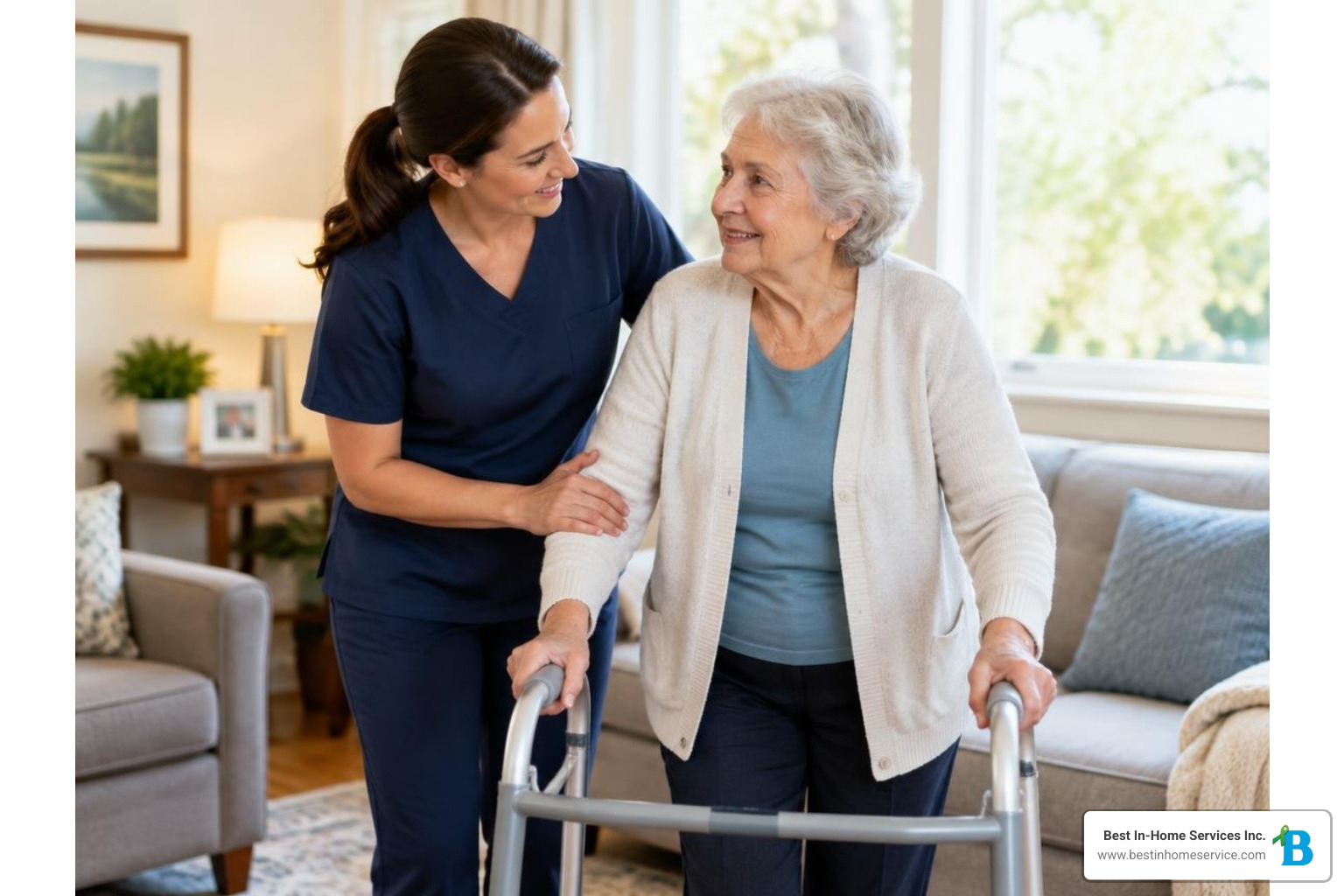
- Providing hands-on mobility assistance to ensure the senior does not put improper weight on a healing joint.
- Assisting with physical therapy exercises prescribed by visiting therapists.
- Monitoring surgical wounds for signs of infection or swelling.
- Preparing nutritious meals that promote tissue healing and strength recovery.
Vetting Caregivers: Certifications, Background Checks, and Shift Structures
Entrusting the safety of your parent or spouse to a team of caregivers is a significant emotional step. To gain complete peace of mind, it is crucial to understand the vetting standards, professional credentials, and organizational structures that reputable home care agencies utilize.

At Best In-Home Services Inc., we believe that exceptional care starts with exceptional standards. Every caregiver we employ undergoes rigorous screening, including comprehensive criminal background checks, regular drug testing, and reference verification. To learn more about our specific hiring benchmarks and training requirements, you can review our dedicated Certifications page.
Essential Qualifications and Training to Look For
When evaluating caregivers for round-the-clock support, look for specific professional designations and training modules:
- Certified Nursing Assistant (CNA) or Certified Home Health Aide (CHHA): These professionals have completed state-approved training programs and passed clinical competency exams covering infection control, safe transfer techniques, and vital sign monitoring.
- Certified Senior Advisor (CSA): Professionals with this credential have completed advanced coursework through the Society of Certified Senior Advisors, demonstrating a deep understanding of the physical, social, and financial aspects of aging.
- Specialized Memory Care Training: Caregivers should possess specific training in non-pharmacological dementia care, communication strategies for cognitive decline, and behavior de-escalation.
- CPR and First Aid Certification: Essential for rapid, correct response during an unexpected medical emergency.
For families seeking broader community support and specialized senior advocacy resources in the Chicagoland area, the Aging Services Community Resources – Howard Brown Health portal is an excellent tool.
How Agencies Structure 24-Hour Shifts
Providing seamless 24-hour care requires careful logistical planning. A reputable agency will never expect a single caregiver to work multiple days in a row without sleep; instead, they will structure a small, dedicated team.
Typically, we assign two to three consistent caregivers to a client’s home, dividing the 24-hour period into either three 8-hour shifts or two 12-hour shifts. This consistency is vital. It allows the caregivers to build deep, trusting relationships with your loved one, learn their subtle non-verbal cues, and notice immediately if their physical or mental health changes. To understand how we design these care teams and maintain consistent standards, read our Comprehensive guide to reliable elder care.
Costs and Financial Options for 24-Hour In-Home Care
Let’s address the elephant in the room: round-the-clock care is a significant financial commitment. Because caregivers must be paid for every hour they are in the home—including overnight hours when the senior may be sleeping—the monthly costs can accumulate quickly.
In the Chicago metropolitan area, hourly rates for certified caregivers generally range from $28 to $38 per hour, depending on the complexity of the care required. When calculated for a full 24-hour day, this translates to roughly $670 to $912 per day. While this is a substantial investment, many families find it highly competitive when compared to the cost of private-pay memory care facilities or skilled nursing homes, especially because it offers one-on-one, personalized attention that institutional care simply cannot match.
Understanding Insurance and Government Benefits
Navigating the financial landscape of senior care can feel like studying a foreign language. Here is a breakdown of how different funding sources apply to 24/7 in-home care:
- Medicare: It is a common misconception that Medicare covers long-term care. Medicare does not pay for ongoing, 24-hour custodial care (help with bathing, dressing, and daily life). It only covers short-term, intermittent skilled nursing care or physical therapy prescribed by a physician.
- Long-Term Care Insurance (LTCI): If your loved one has an active LTCI policy, it will often cover a significant portion of in-home personal care. These policies usually require proof that the senior needs help with at least two ADLs.
- Veterans Benefits (VA Aid & Attendance): Eligible wartime veterans and their surviving spouses may qualify for the Aid and Attendance pension, which provides additional monthly income specifically to help pay for in-home care.
- Medicaid Waivers: In Illinois, specific Medicaid waiver programs (such as the Community Care Program) can help cover the costs of in-home care for qualifying low-income seniors.
To explore localized financial assistance programs, senior counseling, and community-based support in DuPage County, families can visit the Community Services Programs | DuPage Co, IL resource page.
Complementary Support Services
To help manage costs and provide a holistic care environment, families often combine 24/7 in-home care with other local services. For example, utilizing adult day care centers a few times a week can give your primary care team a scheduled break while providing your loved one with social stimulation.
Other invaluable resources include home-delivered meal programs (like Meals on Wheels), specialized senior transportation services for medical appointments, and professional geriatric care management to oversee the entire care ecosystem. To see how these diverse support structures fit together under a unified care approach, refer to The complete guide to ABP home care services and support.
Preparing for the Transition to Round-the-Clock Care
Introducing professional caregivers into a loved one’s private home is an emotional transition. It is completely normal for seniors to feel a sense of lost independence or to resist having “strangers” in their space.
The key to a successful transition is involving your loved one in the process as much as possible, focusing on caregiver-client compatibility, and maintaining open lines of communication. For families managing this transition specifically for a parent with cognitive decline, our guide on Live-in care for dementia a complete guide for families offers gentle, step-by-step advice.
Preparing Your Home for 24/7 Certified Senior Support
Before the care team arrives for their first shift, taking a few practical steps to prepare the home will ensure a smooth, safe start for everyone involved:
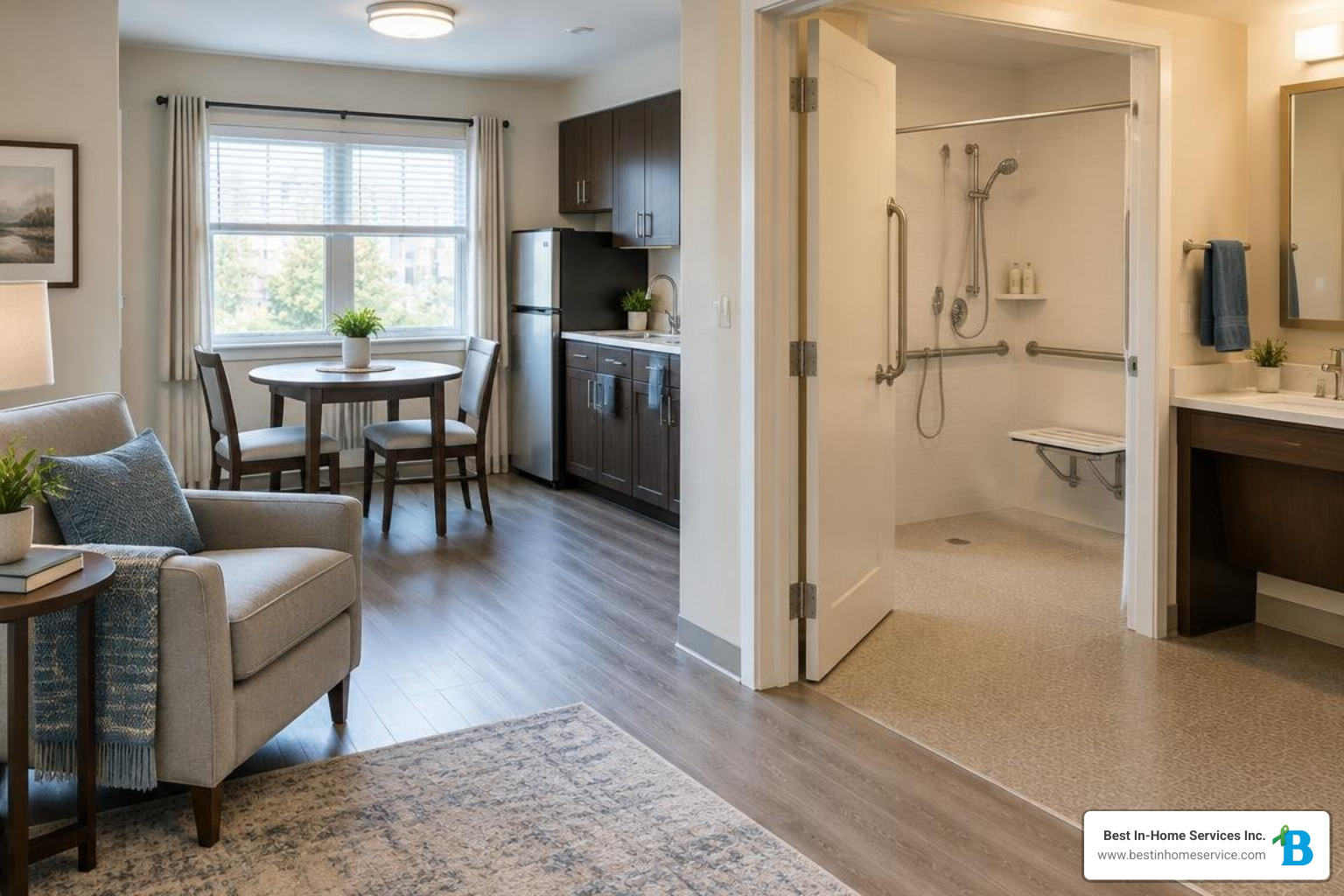
- Conduct a Home Safety Assessment: Clear away clutter, secure loose rugs, and ensure that hallways and stairwells are well-lit. Install grab bars in the bathroom and secure any loose handrails.
- Create a Caregiver Space: While 24-hour rotating caregivers do not “live” in the home, they still need a designated, comfortable place to sit, keep their personal belongings, and document care notes during their shift.
- Organize Medical Information: Keep a centralized binder containing emergency contact numbers, a current list of all medications and dosages, insurance cards, and copies of any legal documents like a Power of Attorney (POA) or Living Will.
- Secure Valuables: While professional agency caregivers are fully bonded and insured, securing high-value jewelry, sensitive financial documents, and spare cash in a locked safe is a standard best practice that prevents misunderstandings and ensures peace of mind for everyone.
Frequently Asked Questions About 24/7 Senior Care
What is the difference between live-in care and 24-hour care?
Live-in care utilizes a single caregiver who resides in the home and is legally entitled to designated sleeping breaks and private time. 24-hour care utilizes a rotating team of two or three caregivers who work in awake shifts, ensuring that someone is actively monitoring your loved one at all times of the day and night.
Does Medicare pay for 24/7 in-home care?
No. Medicare does not cover ongoing, round-the-clock custodial care. It only covers short-term, medically necessary home health visits (like physical therapy or wound care) following a hospital stay. Most 24/7 care is funded privately, through long-term care insurance, or via state-specific Medicaid waivers.
How do agencies ensure caregiver consistency?
Reputable agencies build a small, dedicated “care team” of two to three consistent caregivers for each client. This ensures that your loved one always sees familiar faces, while also providing built-in backup coverage if one caregiver is sick or takes time off.
Conclusion
Making the decision to transition to 24/7 certified senior support is a profound act of love. It allows your aging parent or spouse to remain in the comfortable, familiar surroundings of their own home, surrounded by their memories, while receiving the high-level, dedicated care they need to stay safe.
At Best In-Home Services Inc., we are committed to walking this path with you. Serving families across Chicago, Downers Grove, Winnetka, Schaumburg, and the surrounding collar counties, we provide personalized, RN-supervised care plans designed to bring harmony back to your home and real peace of mind to your family.
To learn more about our philosophy of care and our commitment to clinical excellence, read about Why choose BIHS. If you are ready to discuss how we can support your family, Schedule a consultation with Best In-Home Services Inc. today.




 1-224-636-5200
 1-224-636-5210
  425 Huehl Rd 13B Northbrook IL 60062