
Care Services, Living Arrangements, and State Regulations
Core Definitions: Supportive Living vs Assisted Living
When navigating the senior living landscape, families often find the terminology confusing. While both settings emphasize personal autonomy in a residential environment, their regulatory structures and financial foundations differ.
- Supportive Living Facility (SLF): In Illinois, a supportive living community operates under the state’s specialized Supportive Living Program (SLP). Designed as an affordable alternative to nursing facilities, it provides housing, personal care, and social services while allowing eligible low-income seniors and individuals with physical disabilities to use Medicaid waiver benefits to cover care services.
- Assisted Living Community (ALF): Traditional assisted living refers to managed residential settings designed for older adults who require routine personal support but do not need 24-hour skilled nursing care. These communities generally operate on a private-pay model, offering bundled housing, hospitality, and tiered levels of assistance.
Understanding these senior living distinctions helps families pinpoint the right setting based on personal care needs and financial standing.
Target Residents and Eligibility Criteria
While both options provide non-medical personal assistance, the admission requirements and target demographics diverge:
- Age and Demographics: Assisted living communities cater predominantly to older adults, commonly requiring residents to be 55 or 65 years and older. In contrast, the Illinois Supportive Living Program serves older adults (aged 65+) as well as adults aged 22 to 64 who have diagnosed physical disabilities.
- Functional Need: In both models, residents typically need help with activities of daily living (ADLs) – such as bathing, dressing, medication management, grooming, and mobility support. Candidates must be medically stable and able to participate in their daily care routines without requiring ongoing skilled clinical treatments.
- Financial Eligibility: Traditional assisted living communities evaluate a prospective resident’s private assets, pensions, or long-term care insurance policies. Supportive living communities evaluate both income and asset limits to determine eligibility for the state’s Medicaid Home and Community-Based Services (HCBS) waiver.
- Cognitive Status: Seniors experiencing mild memory changes can often thrive in either environment. However, individuals with advanced dementia or behaviors requiring secured perimeter monitoring usually require dedicated memory care neighborhoods or specialized memory support rather than standard supportive living.
Choosing a residential community involves looking closely at the daily environment, staffing standards, and recreational programming available to your loved one.
Whether living in Chicago, Des Plaines, or Lincolnwood, residents in both supportive living and assisted living enjoy private apartment living. These layouts range from studio apartments to one-bedroom units, complete with private bathrooms, emergency call pull-cords, and kitchenettes. Both settings provide communal dining rooms, structured activity calendars, group outings, and scheduled transportation to medical appointments and local shops.
Exploring all senior care options in the Chicago area allows families to weigh these community amenities against the benefits of one-on-one personal assistance.
Comparing Services and Daily Support in Supportive Living vs Assisted Living
Both residential models offer a robust baseline of daily living services delivered by certified nursing assistants (CNAs) and resident care aides under nursing supervision.
| Feature / Service | Supportive Living Facility (SLP) | Assisted Living Facility (ALF) |
|---|---|---|
| Primary Oversight | Illinois Department of Healthcare and Family Services (HFS) | Illinois Department of Public Health (IDPH) |
| Typical Target Group | Seniors (65+) & adults (22–64) with physical disabilities | Older adults (typically 55+ or 65+) |
| Medication Support | Reminders and administration by trained staff | Reminders and administration by trained staff |
| ADL Assistance | Help with bathing, dressing, grooming, transfers | Tiered levels of personal care assistance |
| Apartment Style | Private studio or one-bedroom units with kitchenettes | Private studios, 1-bedroom, or 2-bedroom suites |
| Meals & Housekeeping | 3 daily meals, weekly laundry, and housekeeping | 3 daily meals, weekly housekeeping, linen service |
| Social Programming | Organized group activities, wellness events, outings | Extensive wellness, fitness, and lifestyle clubs |
| Payment Options | Medicaid waiver, private pay, SSI/SSDI | Private pay, long-term care insurance |
State Licensing and Regulatory Differences in Illinois
Regulation is the defining operational distinction between these two models:
- Supportive Living Program (SLP): Governed by the Illinois Department of Healthcare and Family Services (HFS), supportive living facilities operate under a federal Medicaid 1915(c) Home and Community-Based Services waiver. To maintain certification, SLF providers must adhere to strict state standards regarding physical accessibility, resident rights, staffing ratios, and transparent Medicaid billing practices.
- Assisted Living Communities: Regulated by the Illinois Department of Public Health (IDPH) under the Assisted Living and Shared Housing Act, traditional assisted living residences adhere to state safety, building, and health codes. However, they retain greater flexibility in their tier-pricing models, private fee structures, and service packages.
Cost Breakdown and Financial Assistance: Medicaid vs Private Pay
Medicaid and Medicare Coverage Rules
A common misconception among families is that Medicare will cover residential senior living. Medicare does not pay for custodial care – meaning it will not pay for room, board, or routine assistance with dressing, bathing, or medication reminders in either assisted living or supportive living communities. Medicare only pays for medically necessary, short-term skilled services, such as physical therapy or post-hospital rehabilitation.
For low-income seniors, the Illinois Medicaid Supportive Living Program bridges this gap by covering the service cost of custodial support for those who meet asset and income guidelines. Understanding these long-term care financial considerations is critical for sustaining care over multiple years.
Making the Right Choice: When to Choose Each Option
Selecting the right care setting requires evaluating your loved one’s physical mobility, cognitive status, long-term finances, and living preferences.
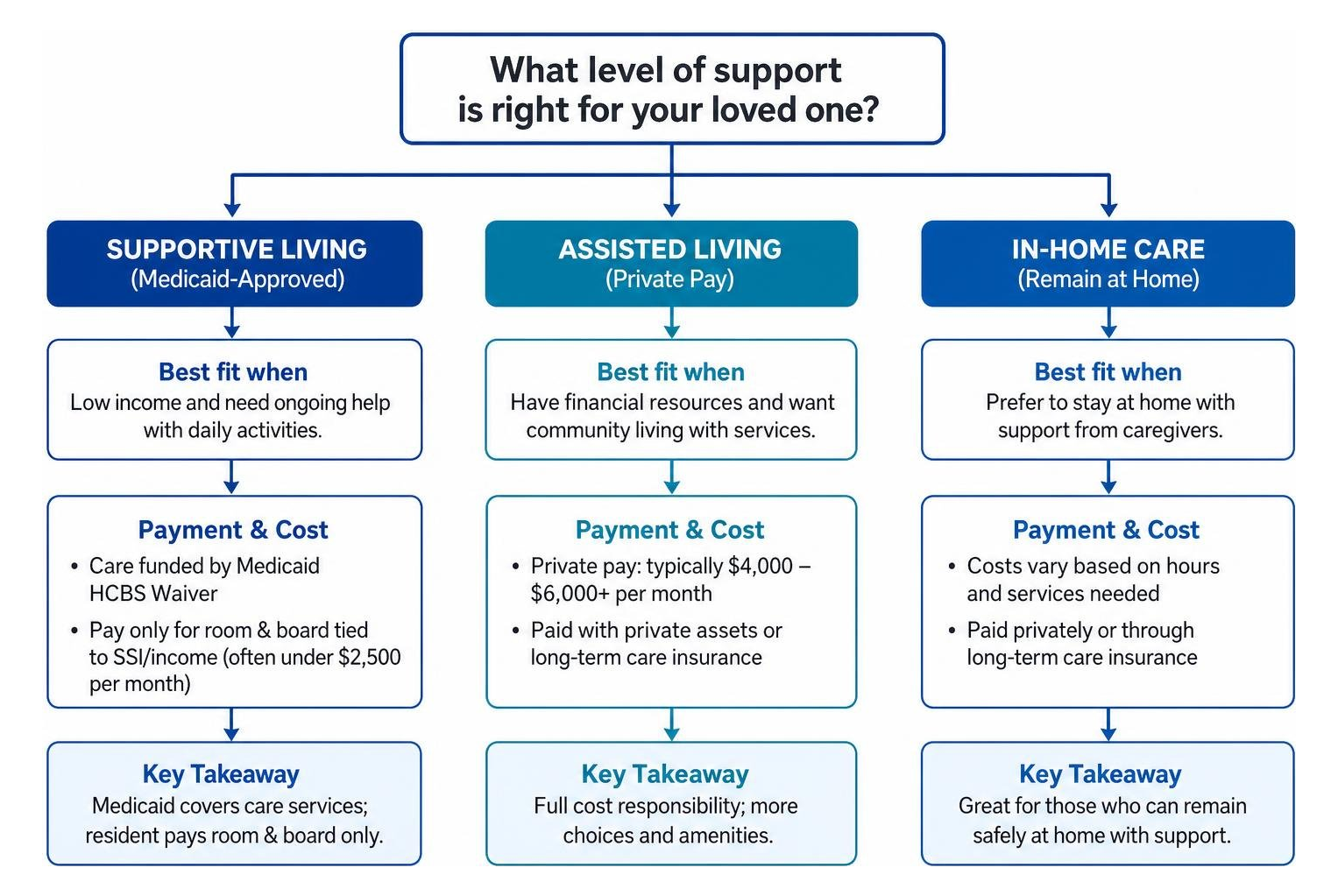
Families should carefully examine whether facility placement or remaining at home aligns best with their goals. Comparing home care vs assisted living helps ensure you explore every pathway before making a major move.
Key Indicators for Choosing Supportive Living
Supportive living is often the ideal solution when:
- Financial Resources Are Limited: Your loved one relies on Social Security, SSI, or has depleted private savings and qualifies for Illinois Medicaid.
- Care Needs Are Moderate: The individual requires consistent assistance with ADLs like showering, meal preparation, and medication reminders, but does not need constant clinical monitoring.
- A Community Setting Is Desired: The individual feels isolated living alone and would benefit from on-site dining and peer socialization.
- Younger Adults Need Physical Support: The individual is between 22 and 64 years old with a physical disability that requires accessible housing with daily assistance.
When Assisted Living or In-Home Care Is the Better Fit
Traditional assisted living or personalized in-home support may be the preferred choice when:
- Private Assets Are Available: The family has sufficient retirement savings or long-term care insurance to afford market-rate monthly rents and premium amenities.
- Specialized Memory Care Is Required: The senior has mid-to-late stage Alzheimer’s disease or dementia requiring secure spaces and dedicated memory-support programming.
- The Individual Prefers to Age in Place: Many seniors strongly prefer to remain in the comfort and familiarity of their own home. Choosing in-home senior care for aging in place provides custom one-on-one attention from dedicated caregivers without the upheaval of moving to a new facility.
Frequently Asked Questions About Supportive Living and Assisted Living
What is the primary difference between supportive living and assisted living in Illinois?
The fundamental difference lies in licensing and funding. Assisted living facilities are regulated by the Illinois Department of Public Health (IDPH) and operate primarily on a private-pay basis. Supportive living communities are certified by the Illinois Department of Healthcare and Family Services (HFS) and accept Medicaid waiver funding, making them accessible to low-income seniors and younger adults with physical disabilities.
Does Medicare pay for supportive living or assisted living?
No. Medicare does not cover long-term custodial care, room and board, or assistance with daily living activities in either setting. It only covers skilled medical services, physician appointments, and short-term rehabilitative therapies.
Can residents transition between supportive living and assisted living as needs change?
Yes, transitions can occur if a resident’s financial status or medical acuity changes. However, moving between communities involves reassessing functional needs, verifying room availability, and completing new admission paperwork. When health needs advance to continuous skilled nursing, a transition to a skilled nursing facility may be necessary.
How does the cost of in-home care compare to residential facilities?
The cost of in-home care in Chicago varies according to the level of assistance required, the number of scheduled hours, the care schedule, specialized care needs (such as memory support), overnight or weekend requirements, and separate transportation mileage billing when caregiver travel is requested. Services are provided with a 3-hour visit minimum, allowing families to pay only for the care hours they need rather than comprehensive facility base fees. Families can contact Best In-Home Services Inc. to discuss specific scheduling options and receive a personalized consultation or quote.
Conclusion: Navigating Senior Care Options in Illinois
Finding the right long-term care solution requires balancing personal care needs, lifestyle preferences, and long-term financial resources. Whether your family selects a Medicaid-certified supportive living community, a private assisted living residence, or decides to keep your loved one comfortable at home, planning early helps avoid rushed decisions during health emergencies.
For families in Cook, Lake, and DuPage counties who prefer to keep their loved ones safe in familiar surroundings, Best In-Home Services Inc. provides dedicated non-medical personal assistance, Alzheimer’s and memory support, meal preparation, companionship, and medication reminders. Our Northbrook-based agency is licensed by the Illinois Department of Public Health, approved by the Illinois Department on Aging under the Community Care Program, and recognized by the Illinois Department of Human Services / Rehabilitation Services for the Home Services Program.
To explore how personalized home care can support your family across Chicago, Evanston, Skokie, Glenview, Wheeling, Naperville, and surrounding communities, schedule a free in-home consultation by calling us at 224-636-5200 or learn more about our personalized elder care services in Chicago and surrounding suburbs.







 1-224-636-5200
 1-224-636-5210
  425 Huehl Rd 13B Northbrook IL 60062