
Choosing Senior Care Services in Northfield
The right care depends on the specific daily support needed to keep aging parents comfortable and safe. In-home care provides assistance with bathing, meals, companionship, and daily routines while allowing seniors to remain in the comfort of their familiar surroundings. For someone experiencing memory loss, tailored home support offers dedicated supervision and reassurance throughout the day and night.
In Northfield, where about one in four residents is 65 or older, planning care often starts with a look at the home itself. A ranch may have long walks between rooms; a split-level may require frequent stairs. This guide covers the northfield senior care services, costs, and local factors worth checking before you hire.
Lily Harrison, General Manager at Best In-Home Service Inc., an Illinois-licensed non-medical home care agency (License #3000758) based in Northbrook, helps coordinate northfield senior care services for families who need daily support or dementia care at home; below is a quick view of the in-home options available.
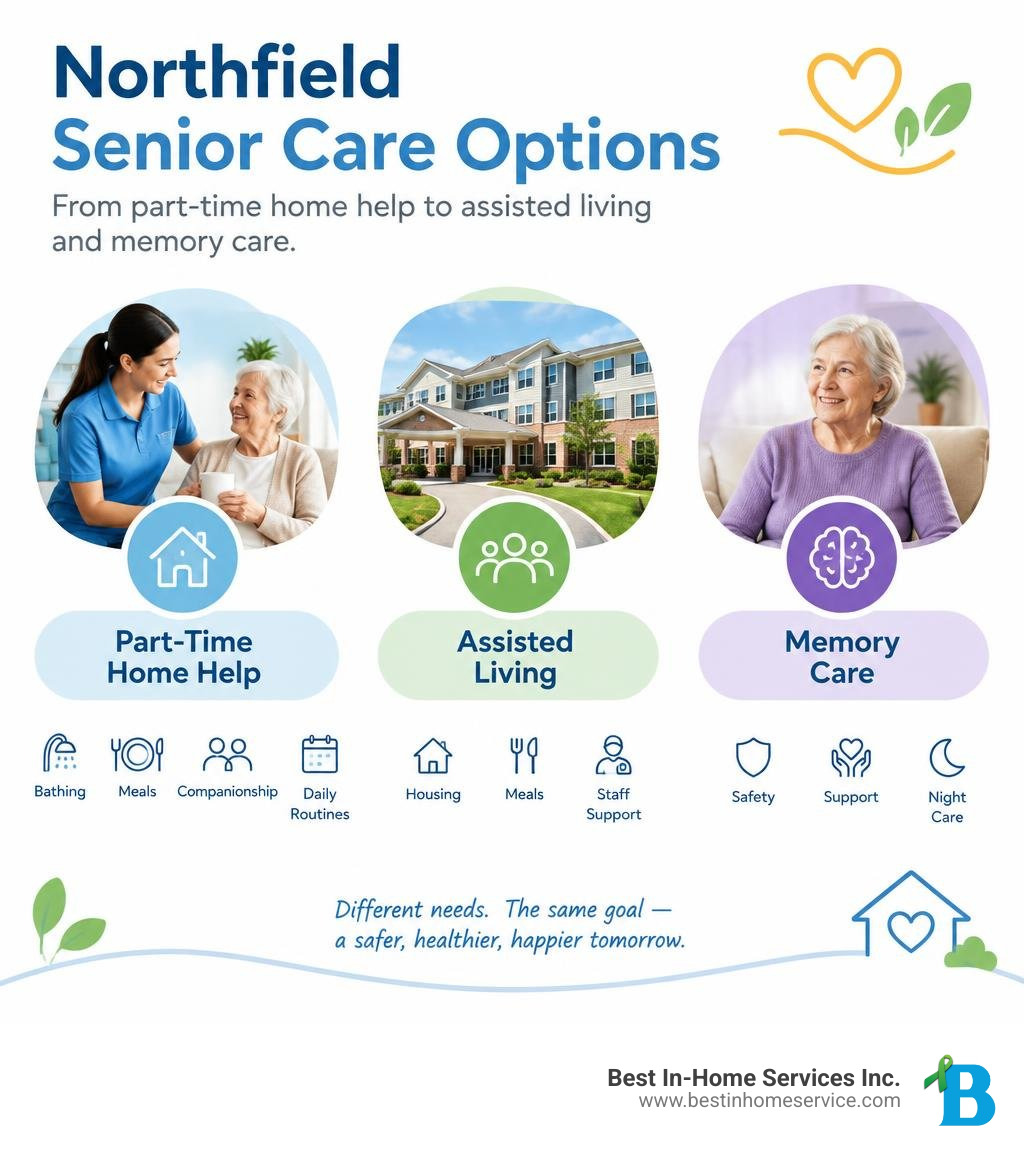
More about senior care services:
Comparing Northfield Senior Care Services: In-Home Care Schedules
Selecting the right care schedule is one of the most practical steps when arranging support. Non-medical home care adapts to daily routines, whether your family requires assistance for a few hours in the morning, overnight oversight, or around-the-clock presence.
The overall cost of in-home senior care in Northfield varies based on several distinct factors, including the total hours scheduled, the level of hands-on physical assistance required, whether overnight awake support is needed, and any separate mileage fees for caregiver-provided transportation. Many families utilize private funds, long-term care insurance policies, Veterans Affairs (VA) Aid and Attendance benefits, or the Illinois Department on Aging Community Care Program to cover non-medical home services.
Understanding how different schedules function can help you determine the appropriate setup for your household:
| Care Schedule Type | Typical Coverage | Primary Focus Areas | Best Suited For |
|---|---|---|---|
| Hourly In-Home Care | Scheduled visits (3-hour visit minimum) | Morning hygiene, meal prep, medication reminders, errands | Seniors needing targeted daily assistance or companionship |
| Overnight Care | 8 to 12 hours of evening coverage | Bedtime routine, nighttime bathroom transfers, fall risk reduction | Individuals prone to nighttime confusion, restlessness, or mobility risks |
| 24/7 or Continuous Care | Ongoing multi-shift coverage | Continuous oversight, all daily living tasks, meal preparation | Seniors with advanced dementia, high fall risk, or non-ambulatory needs |
Families who take time to evaluate these options often find that understanding care at home provides the clarity needed to balance cost, flexibility, and quality of life.

Architectural Challenges of 1960s Northfield Housing
Northfield features a rich residential history, with a median home construction year of 1968. The architectural fabric is dominated by sprawling single-story ranch homes and multi-tiered split-level properties. While these homes are beautiful and spacious, their specific floor plans introduce unique physical challenges as mobility changes.
In a large ranch layout, the primary living area, kitchen, and master suite are often separated by long, continuous hallways. For an aging adult with reduced stamina, walking back and forth across the house multiple times a day can lead to physical exhaustion and an increased risk of balance loss. In contrast, split-level homes feature half-flights of stairs connecting the entryway, main floor, bedrooms, and lower family rooms. Navigating these steps daily can place strain on arthritic joints and elevate fall risks.
Our caregivers help address these structural hurdles by organizing daily essentials, supporting transfers, and minimizing unnecessary trips across the residence to promote independent aging in place.
Essential Northfield Senior Care Services for Aging in Place
Non-medical in-home care covers a wide range of essential daily activities tailored to maintain comfort and safety. Key services include:
- Personal Care Assistance: Hands-on help with bathing, showering, grooming, dressing, and gentle personal hygiene.
- Mobility and Transfer Support: Assistance with standing, walking, wheelchair transfers, and repositioning to prevent strain.
- Companion Care and Engagement: Meaningful conversation, cognitive games, accompaniment on walks, and social connection to reduce isolation.
- Homemaker and Meal Services: Nutritious meal planning, grocery shopping, light housekeeping, linen changes, and laundry.
- Medication Reminders: Timely prompts to ensure vital medications are taken consistently according to doctor instructions.
- Transportation and Accompaniment: Safe transport to local medical appointments, North Shore community centers, or grocery markets.
Families seeking reliable non-medical support can access dedicated Northfield elder care designed around their specific household schedule.
Specialized Dementia and Memory Support at Home
According to public health data from the Alzheimer’s Association, nearly one in three adults over the age of 85 lives with Alzheimer’s disease or another form of dementia. When cognitive decline begins to impact short-term memory, judgment, and orientation, structured daily routines become essential.
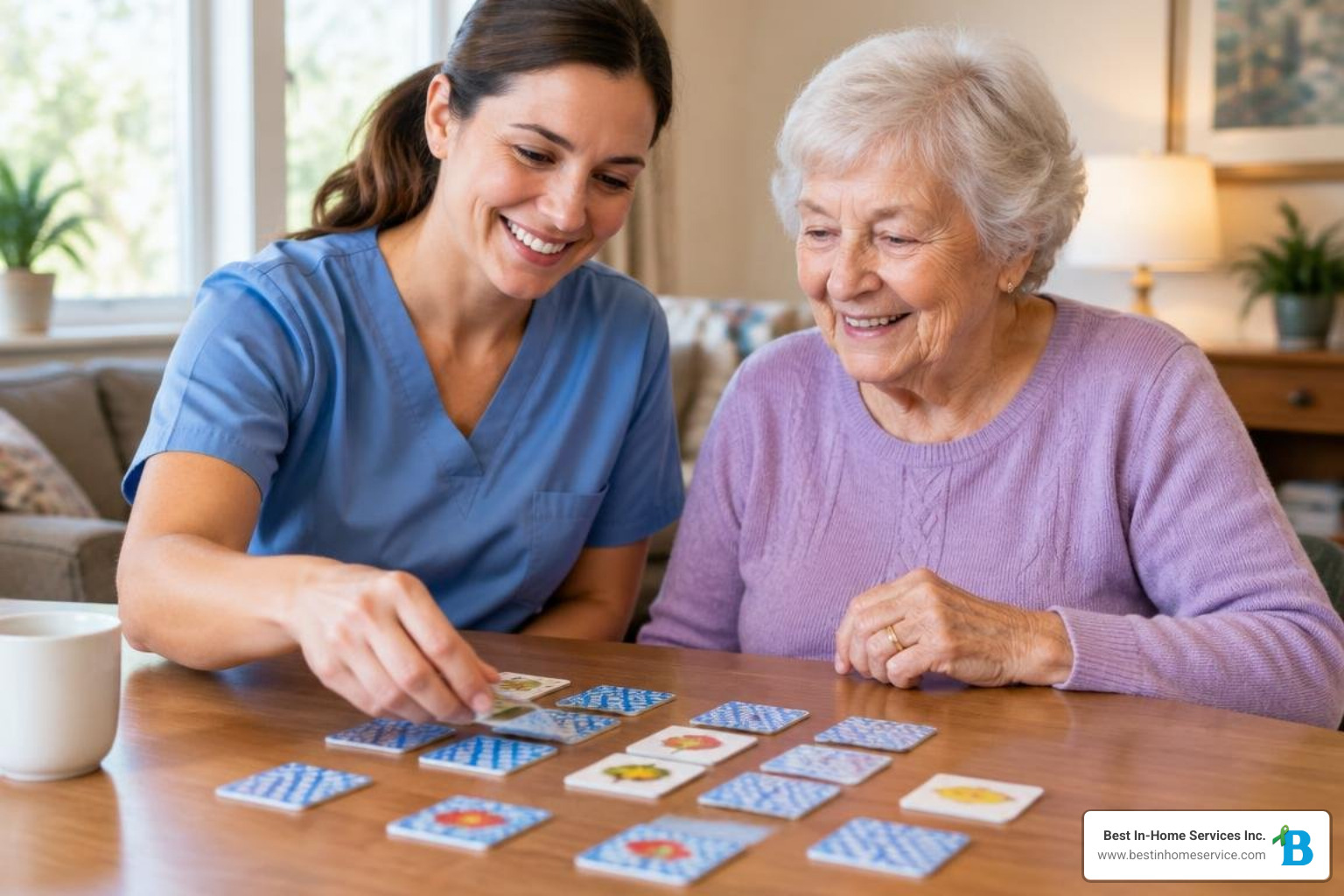
Caring for a loved one with memory loss requires patience, consistency, and specialized communication techniques. When evaluating care pathways across Cook County, exploring regional care options allows families to choose personalized in-home support that best preserves their parent’s emotional equilibrium.
Specialized Northfield Senior Care Services for Alzheimer’s and Dementia
For many individuals living with cognitive changes, remaining in a familiar domestic environment helps preserve orientation and calm. Remaining at home with familiar surroundings helps reduce disorientation and avoid unnecessary stress.
In-home memory care focuses on:
- Wandering Prevention: Maintaining gentle, vigilant oversight to ensure exterior doors remain secure and the individual stays safe.
- Environmental Grounding: Using familiar furniture, photographs, and long-standing home layouts to reduce disorientation.
- Routine Consistency: Aligning meals, activities, and rest times to structured, predictable daily rhythms.
- Hydration and Nutrition Prompts: Offering fluids and balanced meals regularly, as seniors with memory impairment often forget to drink or eat.
When around-the-clock safety and comprehensive supervision are required, families often benefit from exploring comprehensive live-in home care arrangements.
Key Warning Signs Your Loved One Needs In-Home Support
Changes in a senior’s abilities can occur gradually or suddenly after an illness. Watch for these common warning signs:
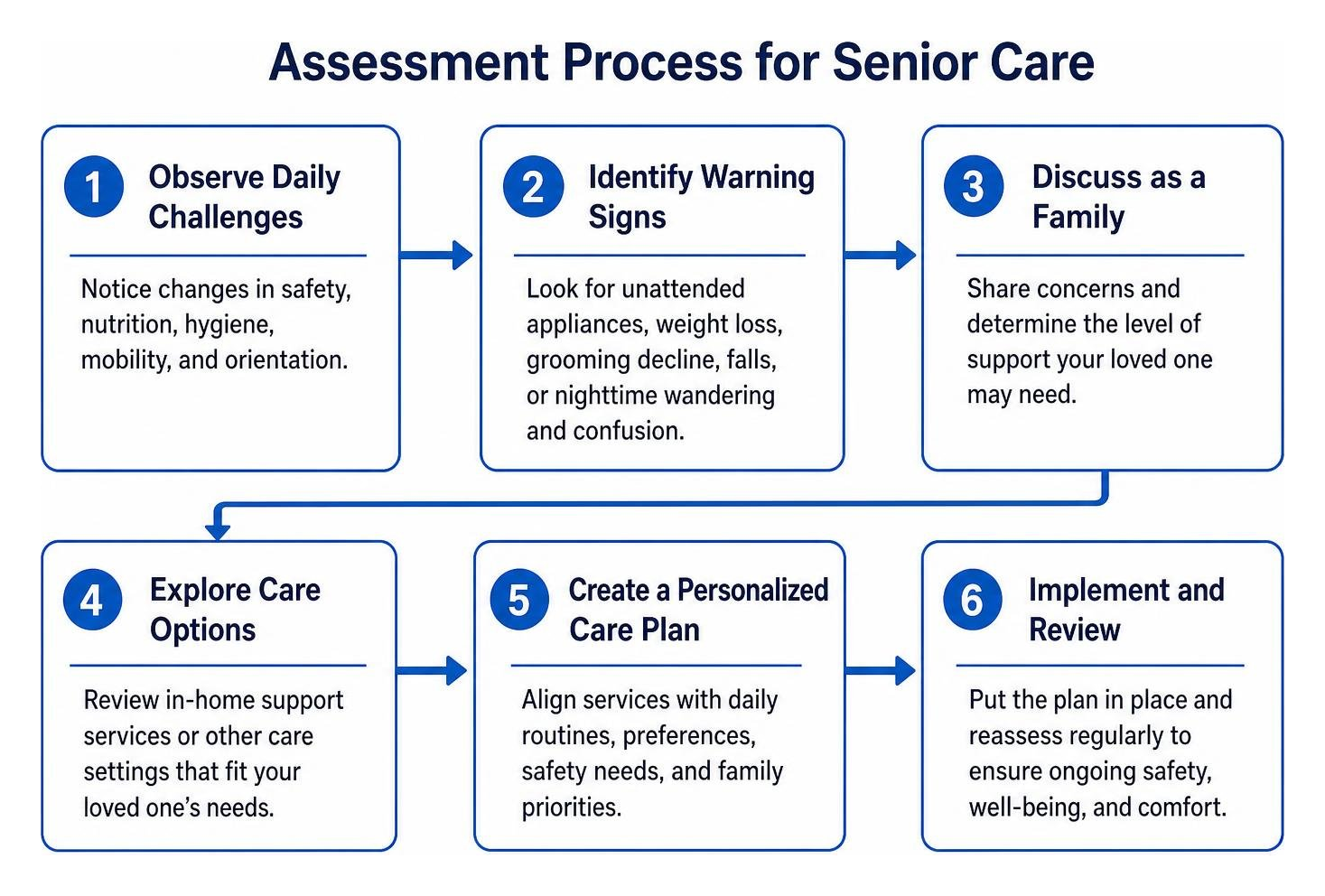
- Unattended Appliances: Stoves, ovens, or space heaters left running without supervision.
- Unexplained Weight Loss: Spoiled food in the refrigerator, missed meals, or difficulty preparing balanced dishes.
- Hygiene and Grooming Decline: Wearing soiled clothes repeatedly, neglecting bathing, or struggling with buttons and zippers.
- Frequent Stumbles or Falls: Unexplained bruising, holding onto walls for balance, or reluctance to walk across open rooms.
- Nighttime Wandering and Confusion: Getting up repeatedly during the night, attempting to leave the house, or fear of being alone after dark.
Navigating Local Logistics and State Licensing in Illinois
When inviting a professional caregiver into your home, verifying regulatory credentials ensures that strict standards for safety, training, and accountability are met. Non-medical home care agencies in Illinois must comply with state licensing requirements to protect vulnerable adults.
Best In-Home Service Inc. (BIHS) is an Illinois-licensed non-medical home services agency (License #3000758) based in Northbrook. We are licensed by the Illinois Department of Public Health (IDPH), approved by the Illinois Department on Aging (IDoA) under the Community Care Program, and recognized by the Illinois Department of Human Services / Division of Rehabilitation Services (IDHS/DRS) for the Home Services Program.
Every caregiver undergoes comprehensive state-mandated background checks, reference verifications, and ongoing non-medical care training. If you are starting this journey, navigating care for aging parents becomes significantly easier when working alongside an experienced local team.
Maintaining Care Continuity Near the Skokie River Watershed
Northfield’s geography presents unique logistical considerations, particularly due to the Skokie River and Middle Fork watersheds that meander through the village. During heavy seasonal rainfall and spring thaws, localized street flooding can impact low-lying roadways near the river corridor and surrounding forest preserves.
To prevent disruptions in care, our local administrative team monitors regional weather alerts and establishes pre-planned detour routes throughout Northfield and neighboring communities such as Glenview, Winnetka, and Wilmette. In the event of severe weather or impassable neighborhood roads, our Northbrook coordination office deploys localized backup caregivers and stays in direct communication with families to guarantee uninterrupted care continuity.
How to Guide a Resistant Parent Toward In-Home Support
It is common for older adults to resist the idea of introducing a caregiver into their home. Seniors often fear losing their independence, having their privacy invaded, or admitting that daily tasks have become difficult.
Approaching this conversation with empathy and patience can ease tensions:
- Focus on Partnership Rather Than Limitations: Frame caregiving as support that enables them to keep living in their own home comfortably, rather than focusing on what they can no longer do alone.
- Start with Non-Intrusive Tasks: Introduce help gradually by starting with assistance for meal preparation, light housekeeping, or transportation for shopping, before transitioning to personal care.
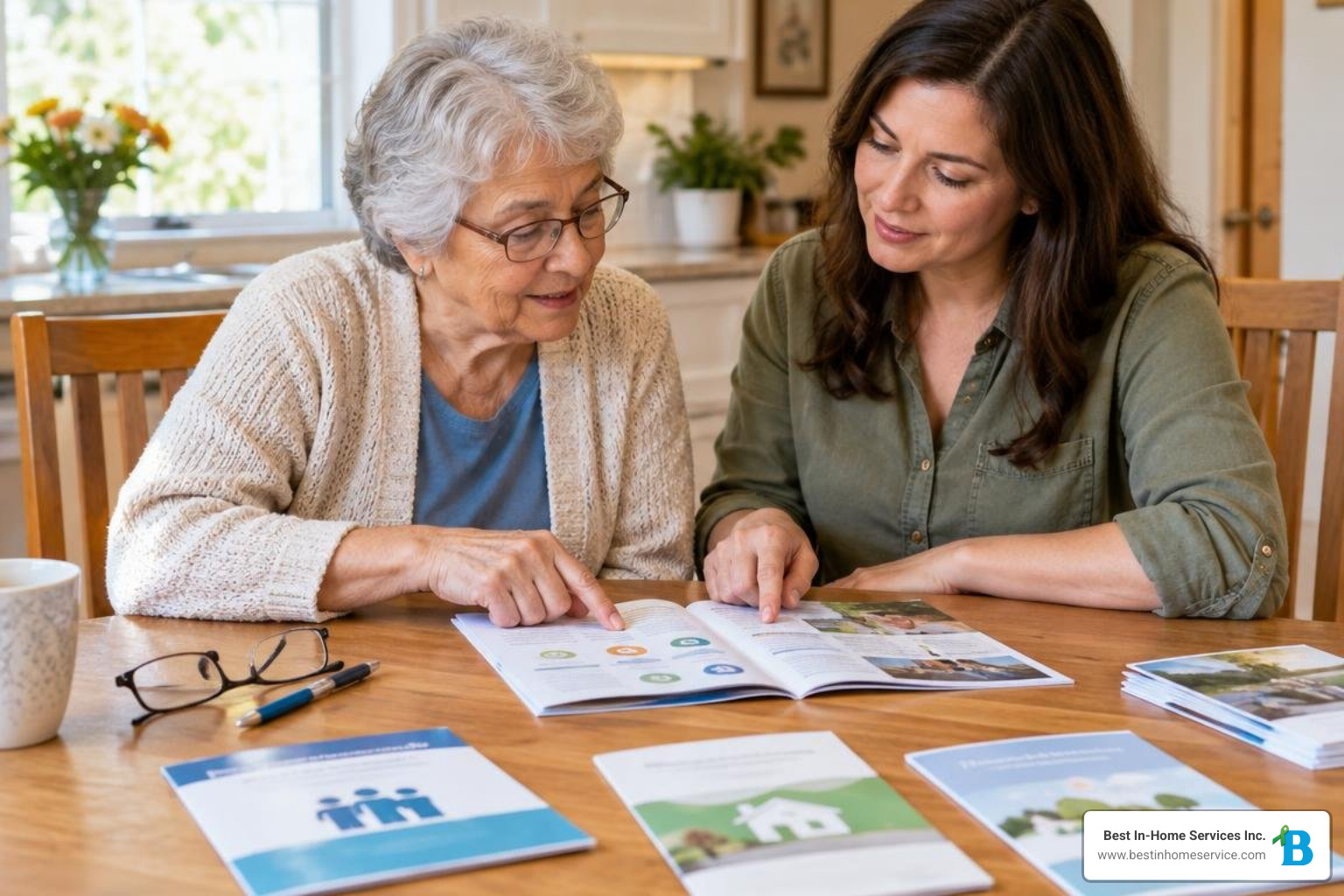
- Schedule a Free In-Home Assessment: Framing the initial visit as an informational conversation with a Care Coordinator allows your parent to ask questions, share preferences, and maintain agency in the decision.
- Propose a Trial Period: Suggest trying care on a short-term, temporary basis for a few weeks to see how it feels without committing long-term.
Taking a thoughtful, collaborative approach helps families when choosing trusted in-home providers that respect their parent’s personal boundaries.
Frequently Asked Questions About Senior Care in Northfield
How do Northfield’s 1960s homes affect senior mobility and fall risk?
Many Northfield homes built during the late 1960s feature expansive single-floor ranch layouts or split-level floor plans. In ranch homes, long walking distances between bedrooms and living spaces can lead to fatigue. In split-level layouts, multiple short sets of stairs create repeated trip hazards. Non-medical caregivers assist by organizing living spaces, assisting with transfers, and providing steady walking support to mitigate these layout-specific fall risks.
What state licenses and credentials should an in-home care provider hold in Northfield, IL?
An in-home care provider operating in Northfield must be licensed as a Home Services Agency by the Illinois Department of Public Health (IDPH). Families should verify that the agency performs criminal background checks, maintains proper liability insurance, and provides structured non-medical training. Agencies may also hold approvals from the Illinois Department on Aging (IDoA) and the Illinois Department of Human Services (IDHS).
How do caregivers manage service during Skokie River flood disruptions?
Because portions of Northfield lie within the Skokie River floodplain, seasonal storms can cause localized road closures. Licensed local agencies maintain proactive emergency protocols, including pre-mapped detour routes across Cook and Lake County borders, local caregiver assignment matching, and 24/7 administrative communication to ensure shifts are covered without delay.
What factors influence the cost of senior home care in the northern suburbs?
The cost of non-medical in-home care depends entirely on individual requirements, including the total number of hours scheduled per week, whether care occurs during day shifts, overnights, or around the clock, the specific hands-on physical needs involved, and any separate mileage billing for transportation services. Care is delivered with a 3-hour visit minimum, and families can request a personalized consultation to determine exact scheduling needs.
Conclusion
Aging in place in Northfield allows older adults to remain connected to the neighborhood, memories, and comforts they cherish. With the right non-medical support, seniors living in classic ranch and split-level homes can safely navigate daily routines while maintaining their preferred lifestyle.
At Best In-Home Service Inc., our Northbrook-based team provides reliable, Illinois-licensed non-medical care across Cook, Lake, and DuPage counties. To learn how we can assist your family, explore comprehensive home care services or contact us directly at 224-636-5200 to schedule a free in-home care assessment.






 1-224-636-5200

 1-224-636-5210
 425 Huehl Rd 13B Northbrook IL 60062