
How Companion Care Helps Widowers Living Alone
Companion care for widowers offers regular conversation and non-medical help with daily routines after the loss of a spouse. A caregiver can share a meal, help with light household tasks, and encourage activities outside the home. It can be a good fit when a widower wants to stay at home but finds quiet days or familiar chores harder to manage alone.
The goal is not to replace family, friends, or grief support. It is to add steady, practical support shaped around what he wants and needs.
Lily Harrison serves as General Manager at Best In-Home Services Inc., an Illinois-licensed non-medical home care provider based in Northbrook. The agency coordinates individualized in-home support for older adults, including companion care for widowers who need company and help with daily routines.
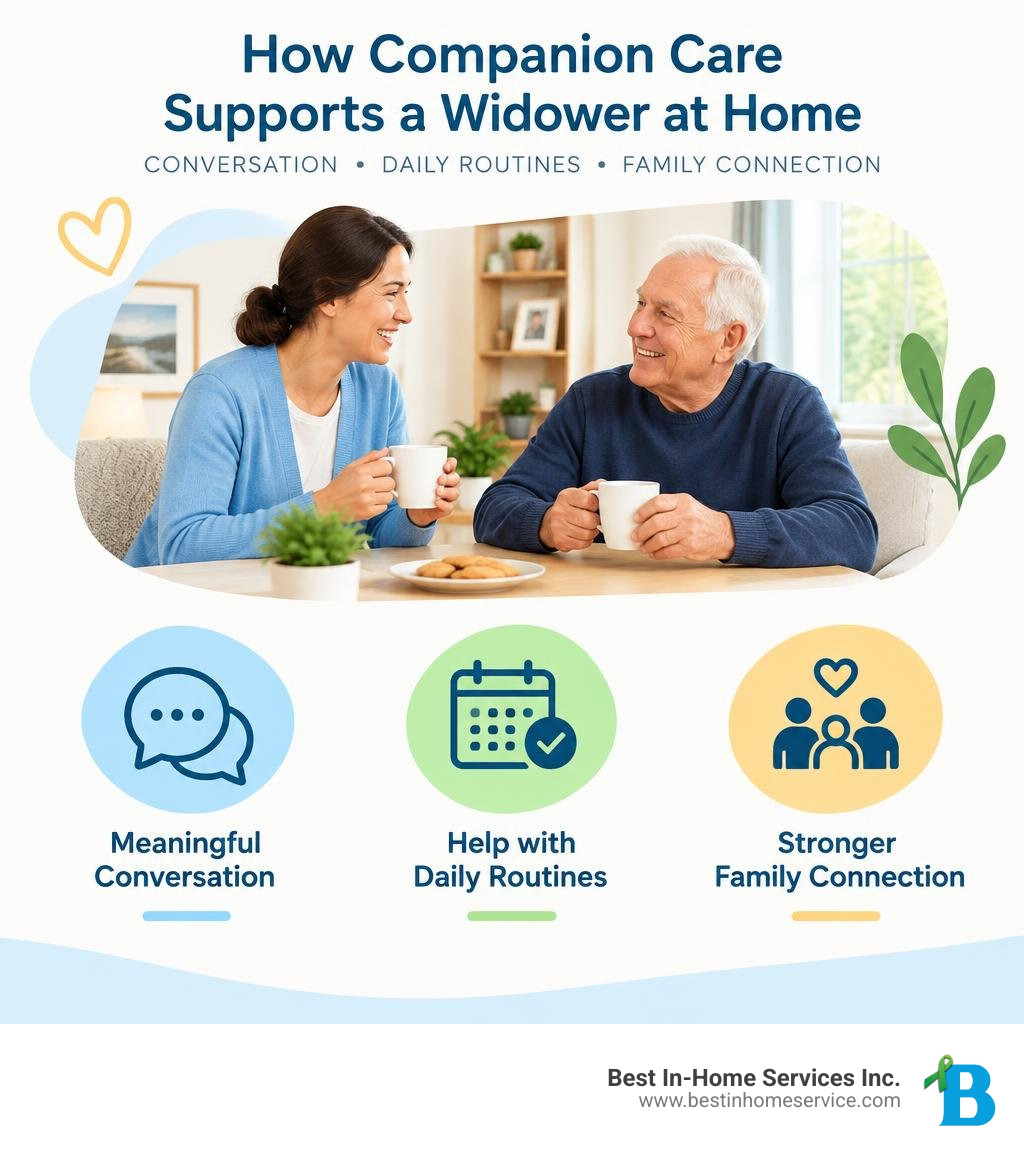
Understanding Companion Care for Widowers and Its Non-Medical Scope
When a spouse passes away, the sudden silence inside a home can feel overwhelming. Everyday tasks that were once effortlessly shared or handled by a partner become confusing or exhausting hurdles. Understanding the role of non-medical support begins with comprehending the value of companionship for elderly loved ones.
Companion care focuses primarily on social engagement, emotional support, and instrumental activities of daily living (IADLs). Unlike clinical health services, companion caregivers do not administer injections, manage complex wound care, or make medical diagnoses. Instead, they provide a reliable, friendly presence that helps an older man maintain his independence, preserve his dignity, and keep up with healthy daily habits.
Caregivers can assist with grocery shopping, organize cluttered closets, share lively conversations about sports or history, and accompany seniors on neighborhood walks. By taking over or assisting with routine household logistics, companion care ensures that an aging gentleman never feels stranded or forgotten inside his own home.
Non-Medical Support vs. Live-In Home Care
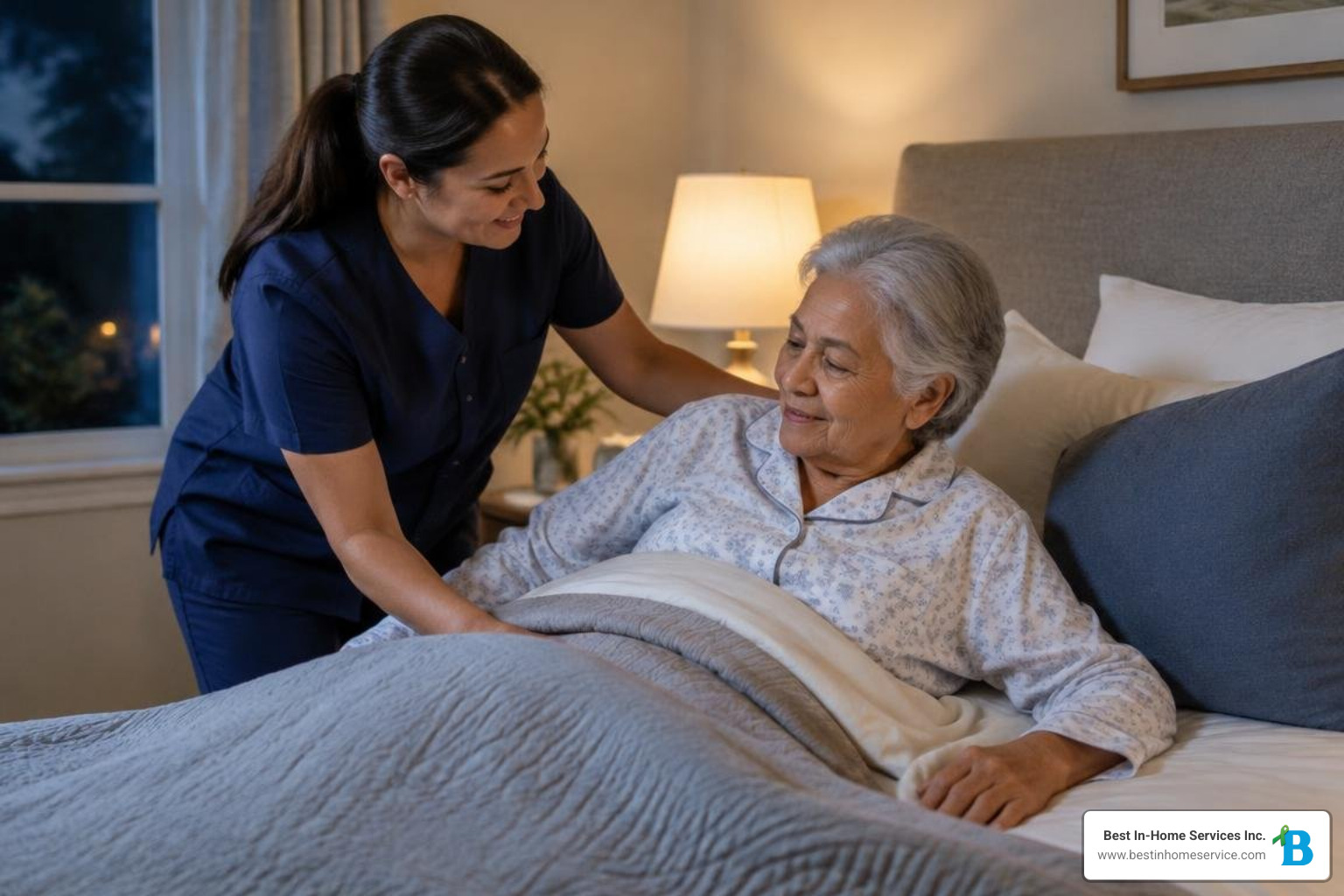
Depending on a senior’s individual physical health, cognitive status, and daily routine, the level of required assistance can vary significantly. Some widowers only need a friendly visitor for a few hours several times a week, while others benefit from around-the-clock presence. Families considering ongoing support often explore comprehensive live-in home care services as their loved one’s needs change.
| Care Aspect | Hourly Companion Care | Live-In Home Care |
|---|---|---|
| Primary Focus | Social connection, light homemaking, errands | Continuous overnight and daytime presence |
| Caregiver Schedule | Scheduled visits (subject to hourly visit minimums) | Caregiver resides on-site with designated sleep breaks |
| Personal Assistance | Medication reminders, meal planning, companionship | Full personal care, mobility help, 24-hr oversight |
| Care Scope | Non-medical only | Non-medical only |
Key Signs a Grieving Man Needs Professional In-Home Help
It is common for family members living in communities like Evanston, Glenview, or Naperville to wonder when their father or grandfather truly needs structured help rather than just occasional Sunday dinners. Grief manifests in many ways, but progressive self-neglect is a clear sign that professional assistance is warranted.
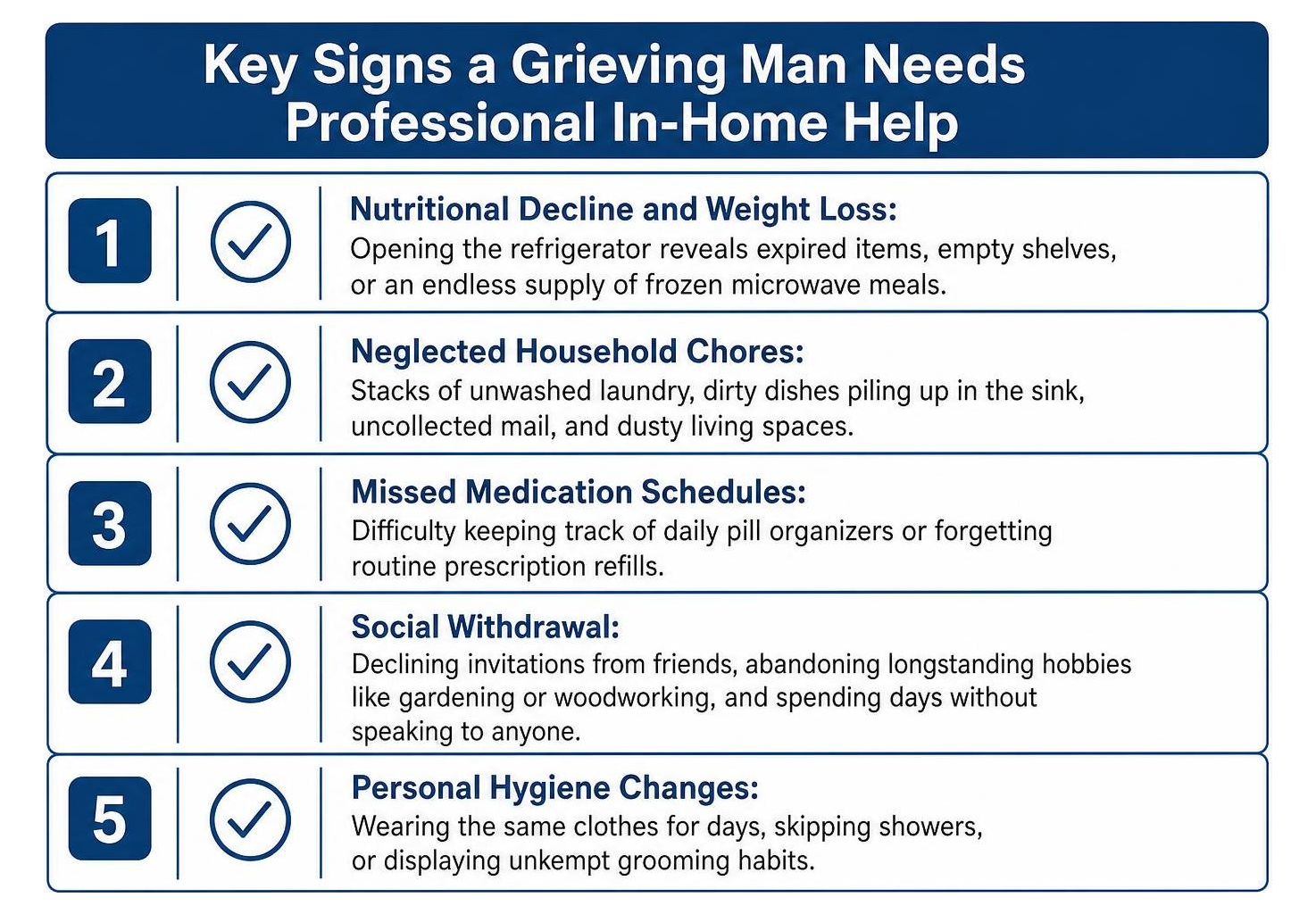
- Nutritional Decline and Weight Loss: Opening the refrigerator reveals expired items, empty shelves, or an endless supply of frozen microwave meals.
- Neglected Household Chores: Stacks of unwashed laundry, dirty dishes piling up in the sink, uncollected mail, and dusty living spaces.
- Missed Medication Schedules: Difficulty keeping track of daily pill organizers or forgetting routine prescription refills.
- Social Withdrawal: Declining invitations from friends, abandoning longstanding hobbies like gardening or woodworking, and spending days without speaking to anyone.
- Personal Hygiene Changes: Wearing the same clothes for days, skipping showers, or displaying unkempt grooming habits.
- Home Safety Hazards: Leaving burners on the stove, accumulating tripping hazards, or showing unsteady balance when moving around the house.
The Unique Emotional and Practical Challenges Men Face After Losing a Spouse
Losing a lifelong partner reshapes every facet of a man’s daily existence. Historically, many older men relied heavily on their wives to manage domestic logistics, plan nutritious meals, coordinate social calendars, and maintain family connections. When that partner is gone, widowers often face a dual crisis: profound emotional grief combined with unfamiliar household management responsibilities.

Overcoming Social Isolation and the “Second Wave” of Grief
In the initial days following a loss, neighbors, friends, and family often rally around the surviving spouse with flowers, cards, and prepared casseroles. However, after several weeks, visitors return to their normal routines, leaving the widower to face what grief specialists call the “second wave” of loss. This period brings the heavy realization of solitary living, quiet evenings, and administrative burdens.
Men are statistically less likely to reach out for emotional help or openly express deep vulnerability to their social circles. A dedicated companion caregiver steps into this void naturally, offering regular conversational engagement without judgment. Engaging in companion care services for seniors helps re-establish a weekly rhythm, and families in Lake County can also connect their loved ones with local community grief support services for specialized bereavement support groups.
Daily Living Assistance: From Meal Preparation to Household Routines
Practical daily assistance restores structure to a household that might otherwise feel unmoored. A companion caregiver can introduce simple, healthy routines that keep a widower grounded:
- Nutritious Meal Planning: Preparing fresh, home-cooked meals tailored to dietary requirements (such as low-sodium or diabetic diets) rather than relying on processed convenience foods.
- Light Housekeeping and Laundry: Washing bedding, folding clothes, wiping down countertops, and keeping walkways clear of clutter.
- Errands and Community Transportation: Driving to local grocery markets, the pharmacy in Skokie or Schaumburg, barber appointments, or community senior centers.
- Prescription Reminders: Providing verbal prompts to take prescribed medications at the correct times of day.
- Mental and Physical Stimulation: Playing board games, solving puzzles, discussing current news, or walking around local parks in Highland Park or Oak Brook.
How to Select and Arrange Companion Care for Widowers Living Alone
Arranging in-home support requires delicate communication, especially if an older gentleman values his self-reliance and feels resistant to having “strangers” in his house.
Steps for Families Arranging Companion Care for Widowers
Establishing care works best when approached as a collaborative, respectful partnership between the widower, his family, and the agency.
- Start with an Empathetic Conversation: Focus on practical assistance rather than perceived limitations. Frame the caregiver as an assistant who helps with chores and cooking so he has more energy for his favorite pastimes.
- Identify Daily Routine Gaps: Make a list of specific chores and times of the week where he feels most overwhelmed or lonely.
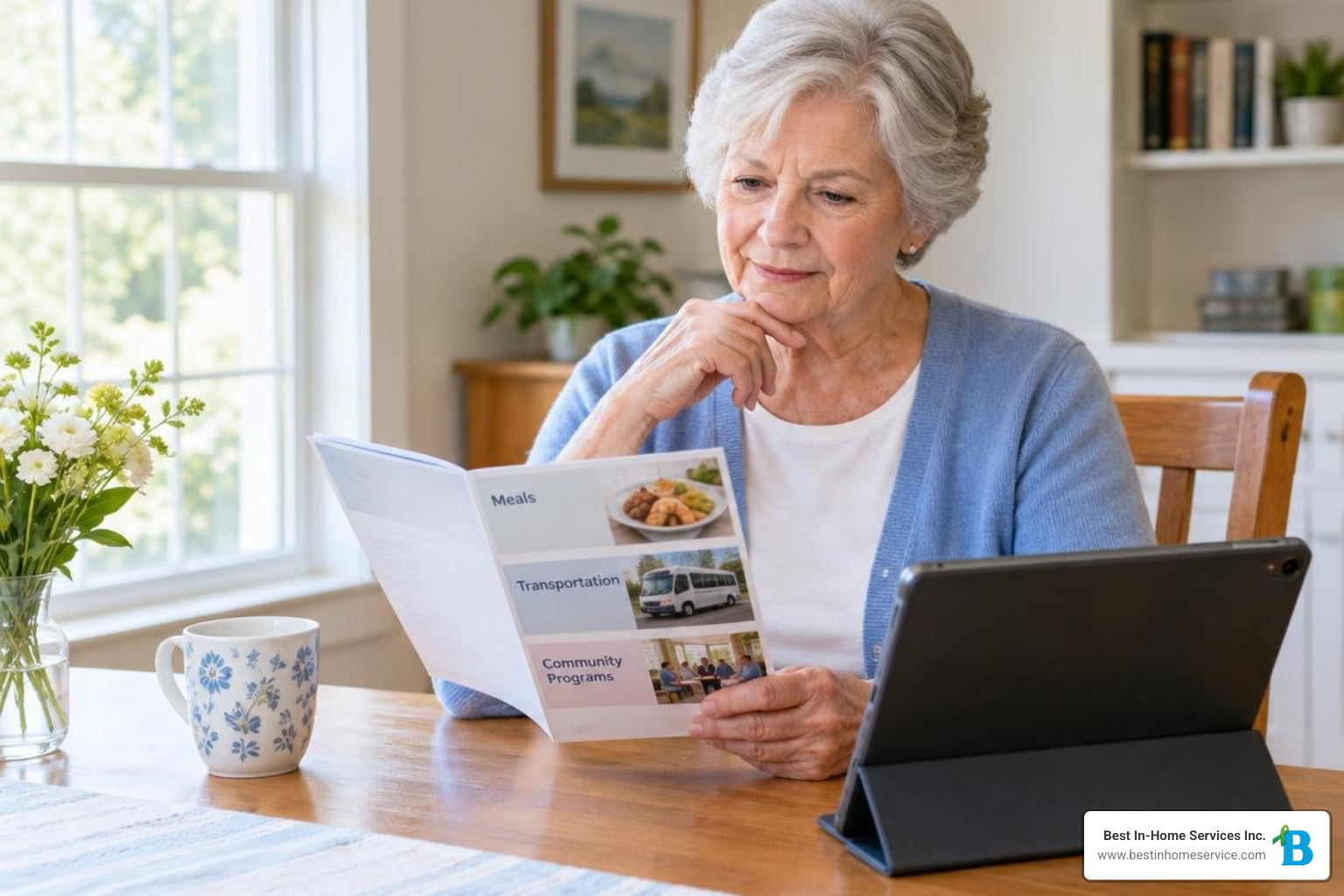
- Search for Reputable Local Agencies: When exploring locating reliable companion care for seniors near me, look for established local organizations with certified caregivers and rigorous screening processes.
- Participate in an In-Home Assessment: Invite the care coordinator into the home to meet your loved one in person, evaluate the environment, and build a customized care plan.
- Introduce Care Gradually: Start with a few scheduled visits per week (keeping in mind standard visit minimums) to allow a natural bond to form before expanding hours.
Evaluating Home Care Agencies, Background Checks, and Compatibility
Choosing the right care team involves more than just picking a name from a directory. Knowing how to pick the best in-home care providers means asking direct questions about licensing, oversight, and caregiver matching:
- Licensing and Compliance: Ensure the agency is fully licensed by the Illinois Department of Public Health (IDPH).
- Thorough Background Screening: Inquire about state and federal background checks, reference verifications, and ongoing staff training.
- Personality and Interest Matching: Agencies should take time to match caregivers who share common interests, communication styles, and temperaments with your loved one.
- Supervision and Backup Protocols: Ask how the agency manages caregiver illnesses, schedule changes, and ongoing supervisory check-ins.
Costs, Financial Assistance, and VA Benefits for Surviving Spouses
Planning for in-home companionship involves understanding the various funding options, public benefits, and schedule flexibility available to Illinois families.
Comparing Hourly Companion Care and Home Care Schedule Expenses
The cost of in-home care across the Chicago metropolitan area varies based on several personalized factors. Rather than a fixed flat fee, pricing is determined by the total number of scheduled hours per week, whether care falls on weekends or overnights, and whether specialized memory support or incidental transportation is required.
Families committed to aging in place at home find that scheduled hourly companion visits offer significant budget flexibility compared to residential facilities. Most licensed agencies require a standard 3-hour visit minimum per shift to ensure dedicated caregiver consistency. Because transportation involves vehicle operation, mileage driven during errands or appointments is typically billed separately.
Frequently Asked Questions About Companion Care for Widowers
What is included in companion care for widowers?
Companion care covers non-medical support designed to keep an older man safe, socially engaged, and comfortable at home. Standard services include friendly conversation, meal planning and preparation, light housekeeping, laundry assistance, medication reminders, grocery shopping, and accompaniment to community outings or medical appointments.
What factors affect the cost of companion care in Illinois?
In-home care costs in Chicago and surrounding suburbs depend on the level of hands-on assistance required, the frequency and duration of scheduled shifts, weekend or holiday scheduling, and whether driving services are utilized. Licensed agencies can provide an itemized quote after an initial care assessment.
Can VA Aid and Attendance benefits cover companion care services?
Yes. The VA Aid & Attendance benefit can be used to pay for non-medical companion and personal care services provided by a licensed home services agency. Because the benefit is paid as a direct, tax-free monthly pension, families have the flexibility to select the licensed home care provider that best meets their personal needs.
Conclusion
Solitude after the loss of a spouse does not have to turn into painful isolation. With thoughtful, steady non-medical companion care, widowers across our communities can rediscover regular daily routines, enjoy freshly prepared meals, and share meaningful conversation in the comfort of their longtime homes.
Best In-Home Services Inc. is an Illinois-licensed home care agency (License #3000758) based in Northbrook, Illinois. We are approved by the Illinois Department on Aging under the Community Care Program and recognized by the Illinois Department of Human Services / Rehabilitation Services for the Home Service Program. Our team provides dedicated, certified non-medical caregivers across Cook, Lake, and DuPage counties – including communities such as Northbrook, Evanston, Deerfield, Highland Park, Schaumburg, Naperville, Downers Grove, and Chicago.
If you or an aging loved one could benefit from friendly in-home companionship or personalized daily support, we invite you to explore private home health care and finding dedicated support at home. Call our team directly at 224-636-5200 to schedule a free, no-obligation in-home care assessment and discuss a personalized schedule tailored to your family’s needs.





 1-224-636-5200

 1-224-636-5210
 425 Huehl Rd 13B Northbrook IL 60062