
When Does Home Care Cost More Than Assisted Living?
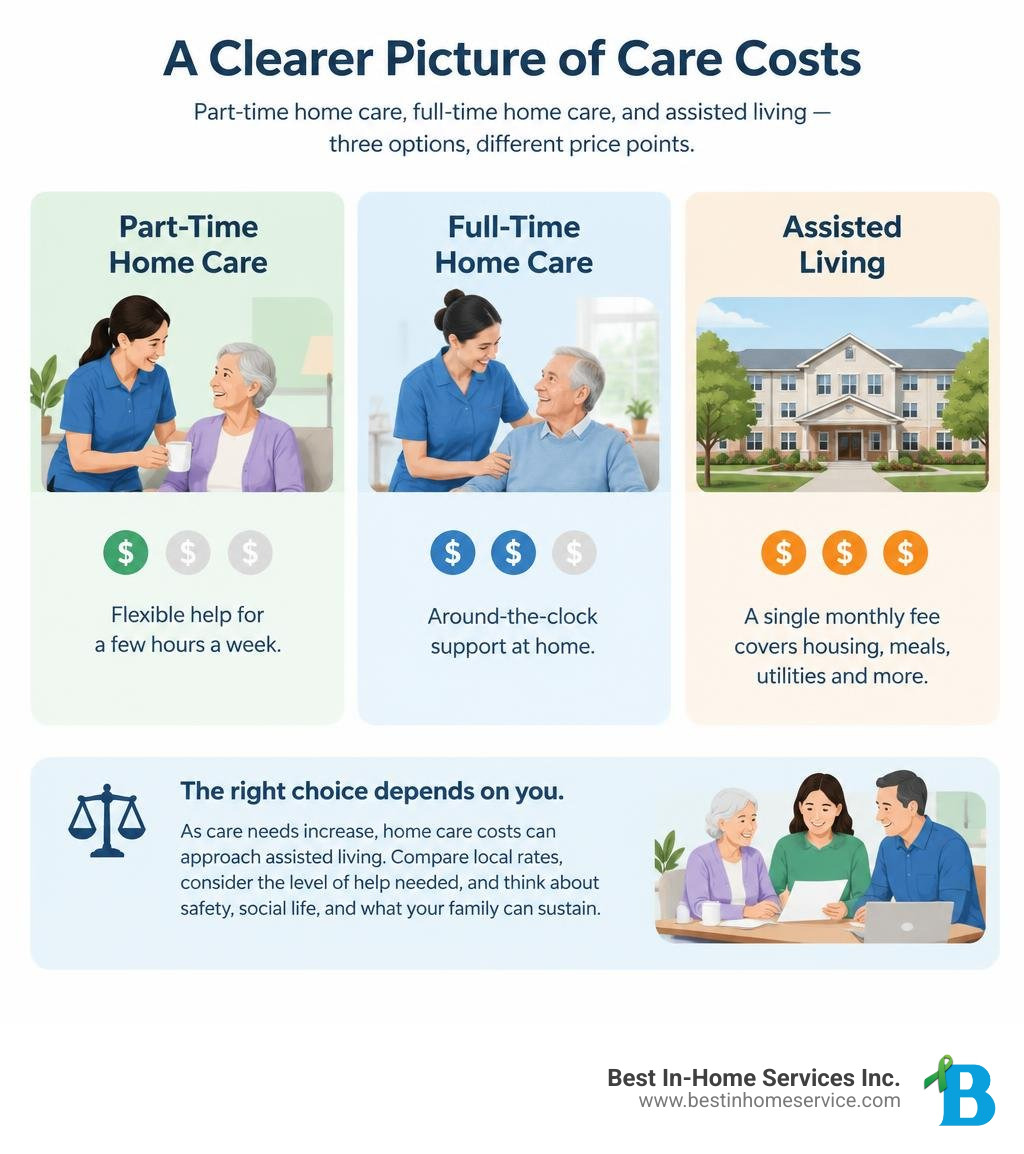
For families comparing assisted living vs home care costs, part-time help at home is often less expensive. As paid care approaches 40 hours a week, the care bill can rival an assisted living fee. There is no fixed crossover point: local rates, the level of help needed, and the cost of keeping a home all matter. Compare quotes for the same care needs, then consider safety, social life, and how much help family can sustain.
Best In-Home Services Inc. is a Northbrook-based, Illinois-licensed non-medical home care provider that coordinates in-home support for Chicago-area families. This guide will help you compare assisted living vs home care costs beyond the first price you see.
Understanding Assisted Living vs Home Care Costs in 2026
When evaluating long-term care for an aging parent or loved one, understanding the structural differences between residential care and in-home support is essential. Assisted living facilities charge a comprehensive monthly residential rate that bundles housing, hospitality, utilities, group dining, and basic supervisory support into one recurring bill. In contrast, home care is billed based on scheduled caregiver hours, offering complete flexibility to scale support up or down as needs evolve.
Industry reports highlight that the financial comparison between these two models depends heavily on how many hours of care an individual requires each week. An ASHA report on senior living versus home care costs shows that while senior living communities offer predictable monthly pricing, aging at home allows families to pay strictly for the exact assistance they need without paying for unused facility amenities.
To help you frame your budget, the table below outlines typical national medians across common senior care arrangements:
| Care Setting / Schedule | Billing Structure | Primary Inclusions |
|---|---|---|
| Part-Time Home Care (20 hrs/week) | Hourly rates | One-on-one personal care, meal preparation, companionship, errands |
| Full-Time Home Care (44 hrs/week) | Hourly rates | Comprehensive daily personal care, homemaking, mobility assistance |
| Assisted Living Community | Base monthly fee + care tiers | Housing, communal dining, group activities, basic supervision |
| Memory Care Community | Base monthly fee + specialized tier | Secure residential housing, specialized cognitive programming |
| 24/7 Live-In or Shift Home Care | Daily or hourly rate | Continuous around-the-clock individual supervision and assistance |
The Crossover Point: When Assisted Living vs Home Care Costs Shift
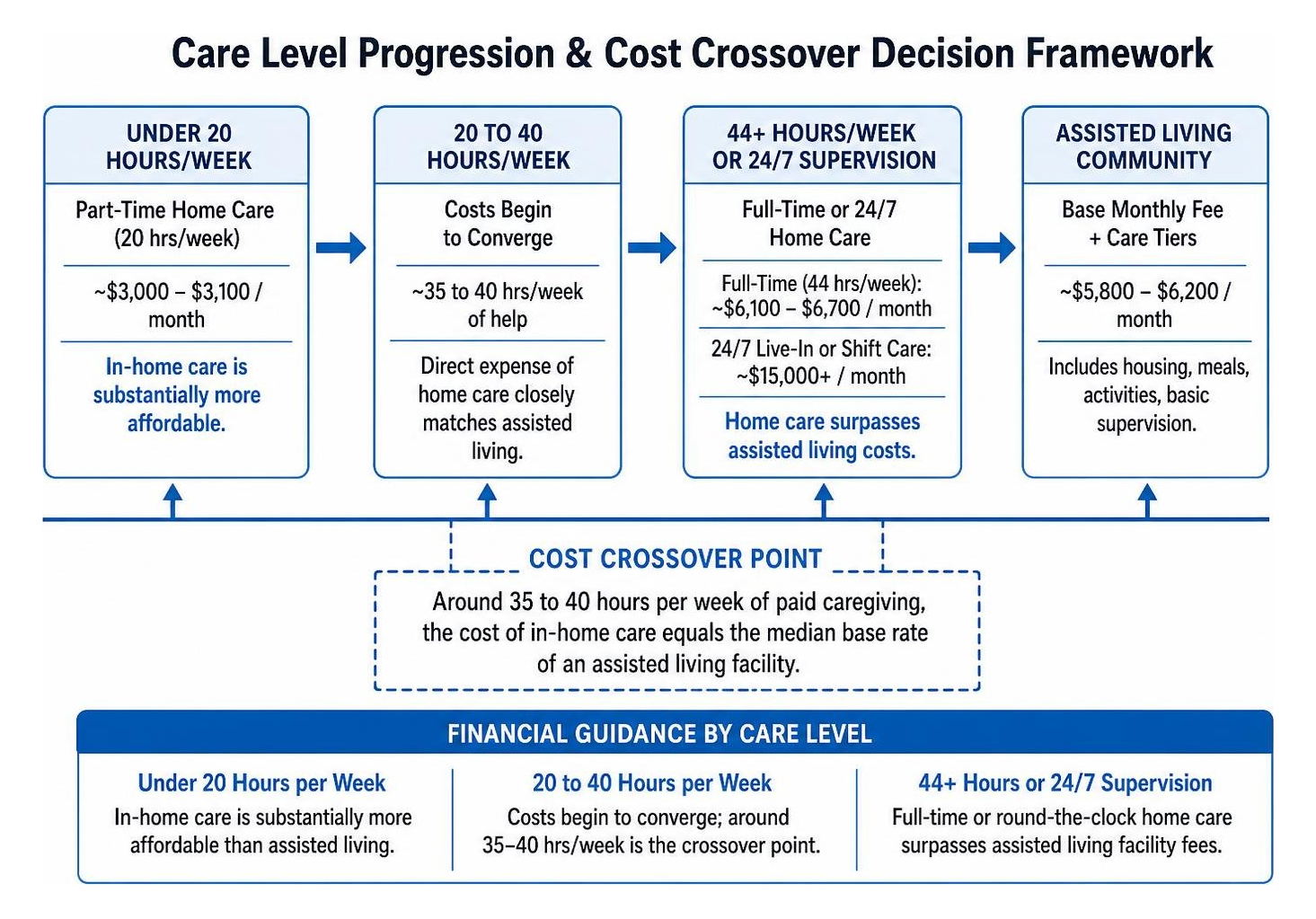
The financial crossover point refers to the specific number of weekly paid caregiving hours at which staying home becomes equal to or more expensive than moving into a residential facility.
As a general benchmark:
- Under 20 Hours per Week: In-home care is substantially more affordable than moving into an assisted living facility. Part-time care allows seniors to stay in familiar surroundings while keeping monthly expenses well below residential facility fees.
- 20 to 40 Hours per Week: Costs begin to converge. When a senior requires approximately 35 to 40 hours of weekly help, the direct expense of hiring professional caregivers closely matches the median base rate of an assisted living facility.
- 44+ Hours or 24/7 Supervision: Full-time or round-the-clock home care surpasses standard assisted living facility fees. Continuous 24-hour home care can exceed $15,000 monthly, making facility living financially preferable unless one-on-one dedicated attention or remaining at home is the family’s paramount priority.
When comparing home care vs assisted living costs, it is vital to remember that home care costs are dynamic. You can adjust hours from week to week, whereas residential contracts require fixed monthly commitments.
Hidden and Additional Expenses: Aging at Home vs. Residential Communities
A direct comparison of headline prices often overlooks the hidden expenses inherent to each living arrangement. Headline fees rarely tell the whole financial story.

The True Cost of Aging in Place
Aging in place requires maintaining a private residence. To accurately calculate the cost of remaining at home, families must factor in ongoing household expenses alongside care fees:
- Housing and Property Costs: Property taxes, homeowners insurance premiums, and mortgage balances or rent payments.
- Home Maintenance and Repairs: Roof replacements, HVAC servicing, plumbing repairs, lawn care, and snow removal.
- Home Safety Adaptations: Grab bar installations, wheelchair ramp additions, stair lifts, and bathroom modifications. Research shows that while nearly 77% of seniors prefer to remain at home, only about 10% of residences are naturally aging-ready without accessibility retrofits.
- Food and Daily Living: Groceries, household supplies, and utility bills (electric, gas, water, internet).
- HOA and Condo Dues: Unpredictable special assessments or escalating association fees.
Exploring budget-friendly caregiving options helps families balance home overhead with professional support, maximizing savings during early care stages.
Memory Care and Specialized Support Surcharges
When cognitive decline from Alzheimer’s disease or other forms of dementia enters the picture, residential costs rise sharply. Standard assisted living communities are often unequipped to safely support residents experiencing wandering, exit-seeking behaviors, or severe confusion.
In contrast, professional home care agencies provide tailored dementia support directly within the senior’s familiar environment without facility community fees or room-transfer surcharges.
How to Pay for Senior Care: Medicare, Medicaid, and Insurance
Financing long-term senior care requires navigating public assistance guidelines, private insurance plans, and personal financial strategies. Understanding how to cover in-home care costs enables families to protect their assets while securing quality support.
Medicare vs. Medicaid for Long-Term Care
A common misconception among families is that Medicare pays for residential assisted living or long-term custodial home care.
- Medicare: Medicare is designed for acute medical needs and short-term rehabilitative support. It does not cover custodial care – such as help with bathing, dressing, meal preparation, or general supervision – whether delivered in a private home or an assisted living facility.
- Medicaid: Medicaid is the largest public payer for long-term custodial care for individuals meeting strict income and asset limits. Through Home and Community-Based Services (HCBS) waivers, many state Medicaid programs allocate funding to help seniors receive non-medical personal assistance at home rather than entering institutional nursing facilities.
In Illinois, our agency is approved by the Illinois Department on Aging under the Community Care Program and recognized by the Illinois Department of Human Services / Rehabilitation Services for the Home Service Program, helping eligible seniors access vital in-home support.
Private Pay, Veterans Benefits, and Asset Strategies
For families using private funds or exploring alternative financing options, several avenues can help offset long-term care expenses:
- Long-Term Care Insurance: Depending on the specific policy terms, private long-term care insurance can cover both licensed in-home care services and certified assisted living facilities once a senior requires help with two or more Activities of Daily Living (ADLs).
- VA Aid and Attendance Benefits: Eligible wartime veterans and surviving spouses can receive monthly pension enhancements to help pay for personal care aides or assisted living fees.
- Home Equity and Reverse Mortgages: Seniors aging in place can sometimes leverage home equity conversion mortgages (HECM) to fund in-home safety renovations and recurring care hours.
- Life Insurance Conversions: Certain permanent life insurance policies can be converted into long-term care benefit plans or liquidated to fund immediate care needs.
Non-Financial Factors: Quality of Life, Safety, and Caregiver Strain
While financial planning is essential, non-financial considerations – including emotional well-being, cognitive health, physical safety, and family balance – often dictate the best choice for a loved one.

Social Engagement vs. Familiar Surroundings
Choosing where to receive care involves balancing community social programming with the comfort of familiar surroundings.
Assisted living facilities excel at providing structured social calendars, communal dining rooms, group exercise classes, and organized outings. For seniors experiencing profound loneliness or isolation in their neighborhoods, this group setting can offer valuable engagement.
On the other hand, moving out of a lifelong home can trigger disorientation, acute anxiety, and transfer trauma, especially for individuals experiencing cognitive decline. Understanding why senior care at home supports aging in place reveals how one-on-one companion care enables older adults to maintain cherished daily routines, remain near longtime neighbors, keep beloved pets, and enjoy deeply personalized one-on-one attention from a dedicated caregiver.
Fall Risks, Supervision, and Family Caregiver Burnout
Balancing safety risks against family caregiving capacity is a critical consideration for every family:
- Environmental Safety and Mobility: While residential facilities offer barrier-free layouts and emergency call cords, dedicated in-home aides provide direct hands-on mobility assistance and active standby support during transfers and bathing.
- One-on-One Attention vs. Shared Facility Staffing: In assisted living communities, resident-to-staff ratios often range from 8-to-1 to 15-to-1 during daytime shifts and can widen substantially at night. In-home care delivers 100% dedicated, one-on-one attention tailored entirely to the individual’s immediate schedule.
- Mitigating Caregiver Burnout: Family caregivers frequently experience physical exhaustion, chronic stress, and emotional strain when managing an aging parent’s needs alone. Utilizing short-term respite care provides family members with essential relief while keeping their loved one supported.
- Comprehensive Round-the-Clock Needs: When continuous night-time wandering or complex non-medical support is needed, exploring comprehensive 24-hour elderly care solutions allows seniors to maintain round-the-clock safety within the comfort of home.
Frequently Asked Questions About Senior Care Costs
At what point does home care become more expensive than assisted living?
Home care generally becomes more expensive than moving into an assisted living community when a senior requires more than 40 hours of paid one-on-one care per week. While part-time support (such as 15 to 25 hours weekly) is significantly more cost-effective than paying for a full-time residential facility, continuous 24/7 in-home shift care exceeds standard assisted living base rates due to the extensive one-on-one labor involved.
Does Medicare pay for assisted living or non-medical home care?
No. Medicare does not cover the monthly room-and-board fees of assisted living facilities, nor does it cover ongoing non-medical custodial home care (such as help with bathing, dressing, meal preparation, or companionship). Medicare only covers short-term, medically necessary skilled care, such as intermittent home health physical therapy or short-term post-acute rehabilitation prescribed by a physician.
How do dementia and memory care needs affect monthly pricing?
Dementia and memory care requirements significantly increase residential facility expenses. Assisted living facilities routinely add specialized memory care fees or place residents into dedicated, secure memory care wings, which cost more per month than standard base rates. With in-home care, specialized dementia and memory support is integrated into the caregiver’s scheduled hourly visits without residential facility move-in fees or community surcharges.
What factors influence the cost of non-medical home care in the Chicago area?
The cost of senior home care across Cook, Lake, and DuPage counties varies based on several specific factors:
- The level of physical assistance and personal care support needed
- The total number of hours scheduled each week
- The frequency of visits (noting our standard 3-hour visit minimum)
- Whether services involve specialized overnight care, weekend scheduling, or 24-hour care options
- Transportation assistance, where caregiver mileage during errands or medical accompaniment is billed separately
Conclusion: Making the Right Care Choice for Your Family
Comparing assisted living and in-home care costs requires evaluating both direct care fees and the total living expenses associated with each setting. For families seeking cost flexibility, personalized one-on-one attention, and the emotional comfort of remaining in familiar surroundings, non-medical in-home care offers an adaptable, budget-conscious solution.
At Best In-Home Services Inc., we are an Illinois-licensed home care agency (License #3000758) based in Northbrook, Illinois, licensed by the Illinois Department of Public Health. We provide tailored non-medical home care – including personal care assistance, companion care, dementia and memory support, meal preparation, medication reminders, light housekeeping, and transportation accompaniment – to families throughout Chicago and surrounding communities, including Evanston, Glenview, Highland Park, Schaumburg, Naperville, and Oak Brook.
To explore customized senior care solutions tailored to your family’s budget and schedule, call our team today at 224-636-5200 to schedule a free, no-obligation in-home care consultation.







 1-224-636-5200

 1-224-636-5210
 425 Huehl Rd 13B Northbrook IL 60062