
Evanston Dementia Support Services: Where Families Can Start
Families looking for Evanston dementia support services can find local memory cafés, caregiver support groups, adult day programs, safety education, transportation help, and in-home care options. A good first step is to contact Evanston Senior Services, visit the Dementia Resource Center at the Evanston Public Library, or join a memory café for low-pressure social connection.
Key local support options include:
- Weekly virtual memory café: Thursdays from 2-3 p.m. on Zoom.
- In-person memory café: Held monthly at the Robert Crown Community Center.
- Caregiver support and respite: Support groups, adult day services, and programs that give family caregivers time to rest.
- Practical planning help: Resources for wandering prevention, home safety, driving decisions, legal planning, transportation, and benefits.
- Community involvement: Training and volunteer opportunities through the Dementia-Friendly Evanston Initiative.
Dementia changes daily life for the person diagnosed and everyone who helps care for them. Evanston’s local network can help families stay connected, reduce isolation, and make safer, more informed choices as needs change.
I’m Lily Harrison, General Manager at Best In-Home Services Inc., where I help Chicago-area families coordinate personalized dementia care, daily support, and around-the-clock assistance at home. In this guide to Evanston dementia support services, I will help you understand the community resources and care paths that may support a loved one’s comfort, safety, and independence.
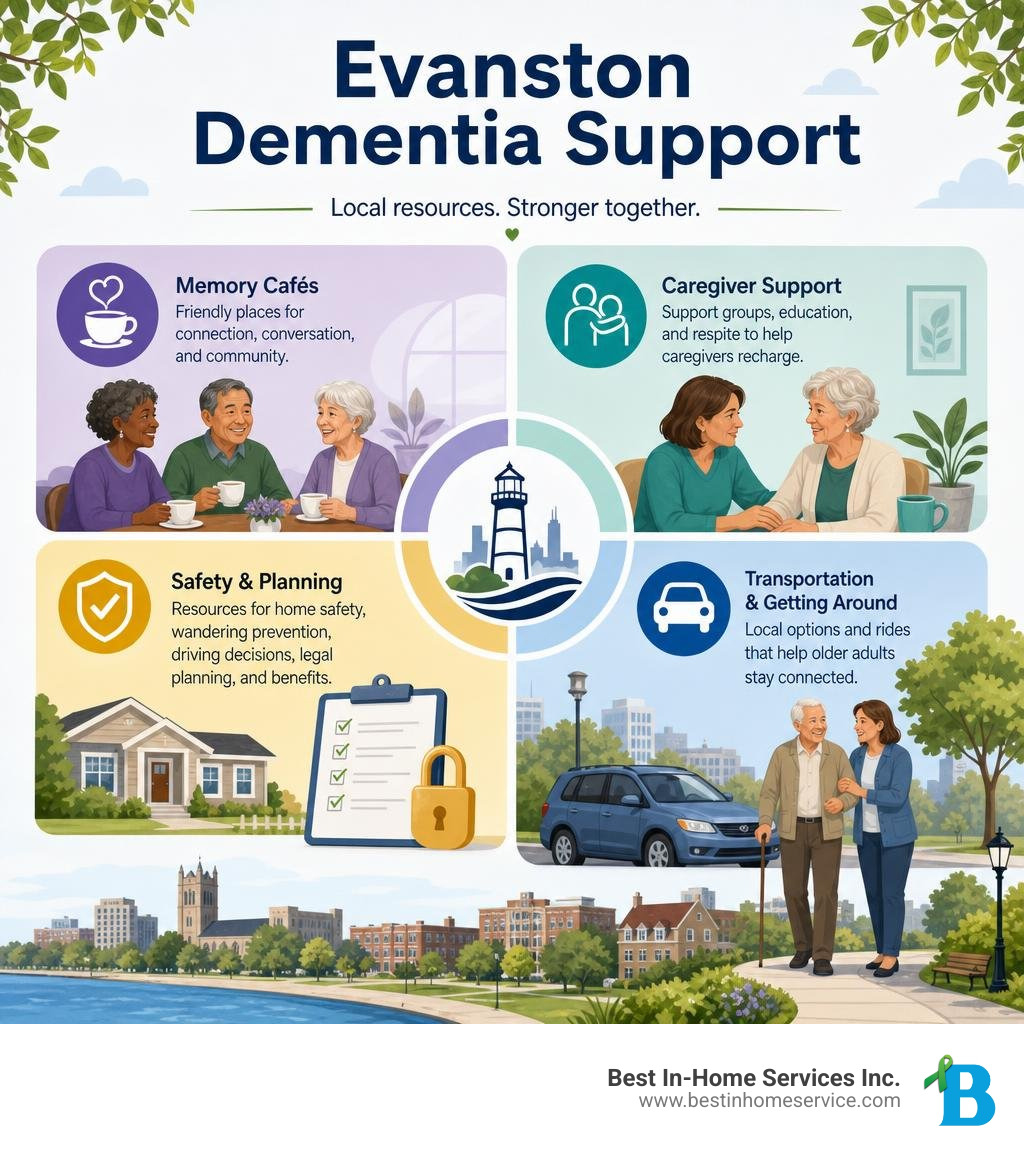
Simple guide to Evanston dementia support services:
The Dementia-Friendly Evanston Initiative (DFEI)
Evanston is dedicated to building an accessible, supportive environment for older adults through the Dementia-Friendly Evanston Initiative (DFEI). Developed as a key branch of the Age-Friendly Evanston Task Force, the initiative follows the World Health Organization (WHO) Age-friendly Cities Framework. By aligning with national and state networks such as Dementia Friendly America and the Illinois Cognitive Resources Network, Evanston integrates memory support directly into its civic infrastructure through the municipal Health and Human Services Department.
Mission and Vision of DFEI
The core mission of the Dementia-Friendly Evanston Initiative is to maximize the quality of life, community participation, and independence for Evanstonians living with dementia and their care partners through education, outreach, and advocacy.
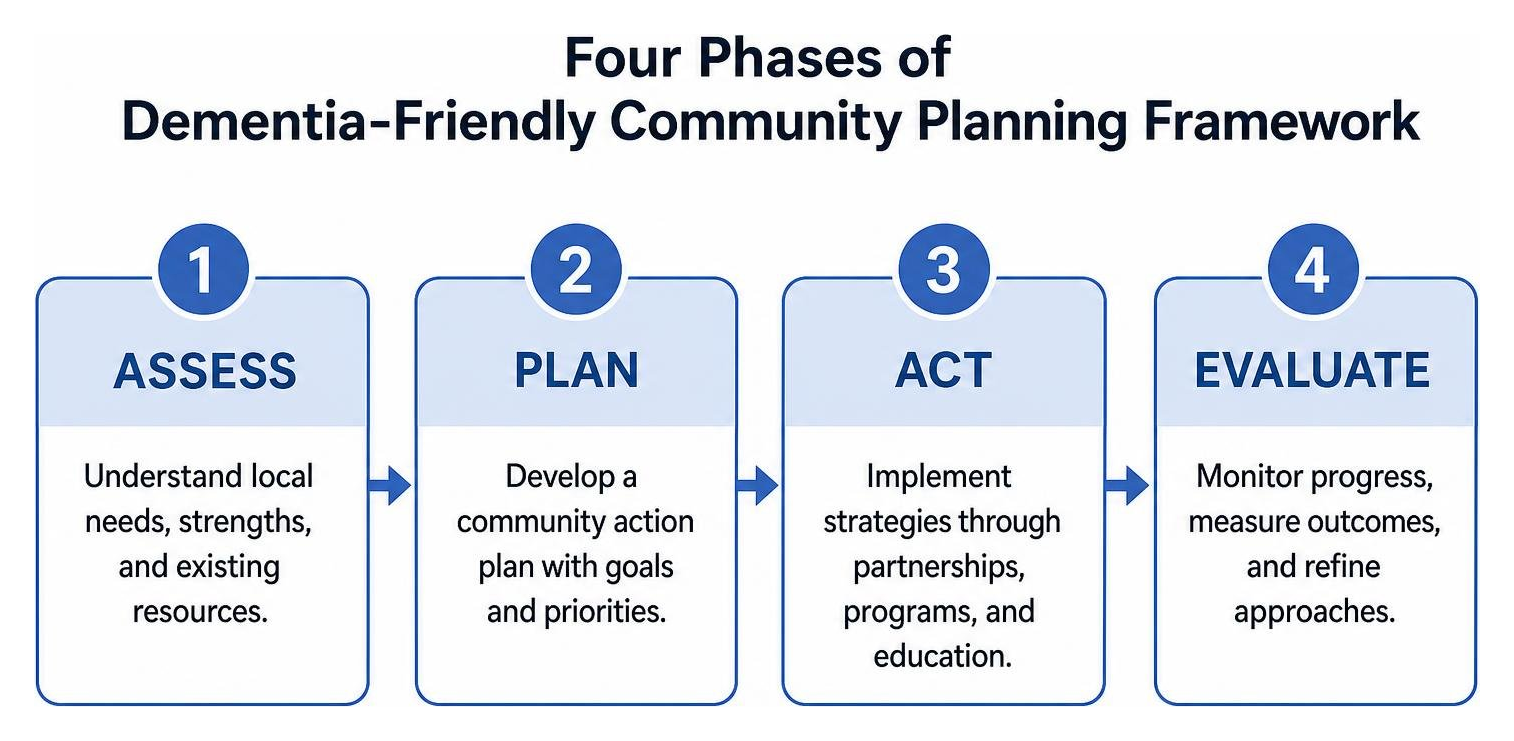
DFEI works to remove the stigma surrounding cognitive decline, ensuring that individuals experiencing memory loss can navigate public spaces, shop, worship, and socialize safely. Operating under the City’s Senior Services division, the initiative uses a structured four-phase community planning process:
- Convene: Bring together civic leaders, healthcare professionals, caregivers, and advocates to form an Action Team.
- Engage: Assess community strengths, physical barriers, and existing service gaps.
- Analyze: Examine municipal data and feedback from residents to set practical goals.
- Act: Implement programs, host events, and evaluate community progress over time.
Educational Tip Sheets and Outreach
Education is central to building a dementia-supportive community. DFEI collaborates with regional academic leaders, including the Mesulam Center for Cognitive Neurology and Alzheimer’s Disease at Northwestern University’s Feinberg School of Medicine, to create specialized resources for families.
The initiative distributes practical tip sheets addressing unique scenarios that families encounter throughout their care journeys. Topics include:
- Guiding conversations when talking with young children about a grandparent’s cognitive changes.
- Addressing the distinct needs of individuals diagnosed with younger-onset or early-onset dementia.
- Navigating support networks and inclusive care for LGBTQ+ older adults.
- Managing sensory overload during summertime outings, community events, and family holidays.
- Learning practical strategies when adapting to personality changes in loved ones.
Families can browse and borrow many of these materials at the dedicated Dementia Resource Center located within the Evanston Public Library, which maintains books, activity kits, and guides for family caregivers.
Navigating Evanston Dementia Support Services and Community Programs

Caring for someone with memory loss is rewarding, but it can also lead to caregiver burnout without consistent relief. Evanston offers a variety of local, non-clinical gatherings and support networks designed to keep both individuals with memory loss and their care partners connected.
Memory Cafés and Social Engagement
Memory cafés are welcoming, low-pressure social gatherings where individuals with memory loss and their family members can relax, enjoy music or art, and chat with peers without fear of judgment.
- The Evanston Virtual Memory Café: Hosted weekly on Thursdays from 2:00 p.m. to 3:00 p.m. via Zoom. It requires no formal registration, allowing families to drop in easily from home.
- The OAsis Memory Café: An in-person gathering held monthly on the third Saturday from 1:00 p.m. to 2:00 p.m. in Rooms B and C at the Robert Crown Community Center (1801 Main St, Evanston). It provides structured creative activities, social time, and light refreshments.
Caregiver Respite and Support Services
Family caregivers often need dedicated spaces to share concerns, learn coping strategies, and access respite care. Evanston residents can tap into several localized support channels:
- Virtual Dementia Family Support Groups: Offered regularly by regional partners like North Shore Senior Center’s House of Welcome and CJE SeniorLife to help families process the emotional challenges of caregiving.
- Adult Day Services: Structured day programs provide cognitive engagement, music therapy, and supervised activities for seniors while giving family caregivers time to work, run errands, or rest.
- Family Caregiver Support Programs: Administered in partnership with the Illinois Department on Aging, these programs connect families with care coordination, training workshops, and temporary respite assistance grants.
How Community Groups Enhance Evanston Dementia Support Services
Creating an inclusive city requires participation beyond municipal offices. DFEI regularly hosts Dementia Friends information sessions, teaching community members how dementia affects daily life and how small actions can help neighbors experiencing cognitive loss.
Local businesses participate in the Age-Friendly Business Initiative, training customer-facing staff at grocery stores, banks, and community centers to communicate patiently and assist customers who may seem confused. Faith communities, library staff, and volunteer Champions work together across Evanston to ensure that individuals with cognitive challenges remain respected members of civic life.
Safety, Transportation, and Municipal Assistance in Evanston
As cognitive impairment progresses, maintaining everyday safety and mobility requires thoughtful adjustments. Evanston provides dedicated programs to help families manage safety at home, transit around town, and long-term planning.
Wandering Prevention, Driving Safety, and Legal Planning
Safety planning works best when families address potential challenges before emergencies happen:
- Wandering & Home Safety: Installing discreet door alarms, securing medication, improving indoor lighting, and removing trip hazards helps prevent falls and unattended wandering. Many local families also coordinate with first responders to ensure safety profiles are on file.
- Driving Transitions: Having compassionate, proactive conversations about driving cessation is vital. Families can use structured driving assessments and transportation alternatives to help older adults transition away from driving while preserving their dignity.
- Legal and Advanced Planning: Establishing durable power of attorney for healthcare and finances, organizing advance directives, and discussing palliative care preferences early ensures that your loved one’s wishes guide future care decisions.
Evanston Transit and Benefit Programs
To help seniors attend medical appointments, run errands, and participate in social programs, the City of Evanston and the State of Illinois offer several transit and financial assistance options:
- Access Evanston Program: Provides subsidized transit options, taxi vouchers, and reduced-fare municipal services for eligible older adults and residents with disabilities.
- Subsidized Transportation Program: Administered through the Levy Senior Center and municipal partners, offering scheduled local rides for essential shopping, medical visits, and community programs.
- Illinois Benefit Access Program: Offers transit card discounts and license plate fee reductions for qualifying seniors and individuals with disabilities.
- Accessible Voting Assistance: DFEI and civic partners provide guidance and accessibility accommodations so individuals living with cognitive changes can exercise their right to vote.
In-Home Memory Care and Support Options
While community centers and public programs provide excellent supplemental engagement, many families reach a point where they need direct, hands-on assistance at home. Personalized in-home care allows individuals with Alzheimer’s disease or other forms of dementia to remain in familiar surroundings while receiving custom daily support.
| Care Level | Typical Schedule | Core Support Provided | Best Suited For |
|---|---|---|---|
| Companionship & Respite | 4–12 hours per week | Social engagement, meal preparation, light housekeeping, family caregiver breaks | Early-stage dementia; family caregivers needing temporary relief |
| Personal Care & Daily Support | 4–8 hours per day | Assistance with bathing, dressing, hygiene, medication reminders, mobility support | Moderate dementia; individuals needing hands-on help with daily routines |
| Full-Day & Live-In Care | 12–24 hours per day | Continuous supervision, transfer assistance, nighttime monitoring, structured routines | Moderate-to-advanced dementia; high risk of wandering or nighttime confusion |
| Around-the-Clock Team Care | 24/7 continuous awake shifts | Constant alert supervision, full incontinence care, behavioral support, end-of-life care | Advanced dementia; complex medical support needs and high fall risk |
Understanding In-Home Memory Care Services
When exploring care options, families often weigh residential facilities against personalized home support. Residential memory care facilities in the Evanston area provide dedicated staffing and secure environments, with monthly costs averaging around $6,307, though rates can exceed $9,000 depending on the level of clinical care and private accommodations required.
In contrast, in-home memory care delivers one-on-one attention directly in the comfort of home. Professional caregivers provide:
- Personalized Daily Schedules: Consistent routines for waking, meals, and activities to reduce confusion and anxiety.
- Medication Management Reminders: Ensuring prescriptions are taken safely and on time.
- Safety and Fall Prevention: Constant monitoring to manage exit-seeking behaviors and prevent accidents without taking away personal freedom.
- Nutritional Support: Preparing meals tailored to specific dietary needs and hydration goals.
To learn more about how memory care frameworks operate, explore our comprehensive guide to understanding memory care.
Long-Term Planning and In-Home Evanston Dementia Support Services
Aging in place allows individuals with dementia to maintain their personal routines in the home they cherish. At Best In-Home Services Inc., our certified care teams work closely with families across Cook County, Lake County, and the North Shore to design flexible care plans tailored to each stage of memory loss.
Whether your family needs a few hours of help each week or continuous dementia care in your own home, our caregivers assist with all activities of daily living (ADLs). For individuals requiring constant oversight to manage sleep disruptions or wandering risks, our 24/7 dementia home care plans offer around-the-clock safety and companionship.
Families living in Evanston can connect with our local team through our dedicated Evanston home care program or explore our specialized Alzheimers care services to schedule an in-home assessment.
Frequently Asked Questions About Dementia Care in Evanston
When and where are memory cafés held in Evanston?
Evanston hosts both virtual and in-person memory cafés. The Evanston Virtual Memory Café meets weekly on Thursdays from 2:00 p.m. to 3:00 p.m. via Zoom, with no advance registration needed. The OAsis Memory Café meets in person on the third Saturday of every month from 1:00 p.m. to 2:00 p.m. at the Robert Crown Community Center (Rooms B & C).
What are the costs associated with in-home dementia care in Evanston?
In-home dementia care costs depend on the level and frequency of support required. Hourly rates typically range based on whether a family needs companion care, hands-on personal hygiene assistance, or continuous overnight monitoring. Unlike fixed-cost residential memory facilities, in-home care allows families to customize support schedules to fit their budget, scaling hours up or down as care needs evolve. Programs such as long-term care insurance and the VA Aid and Attendance benefit can help eligible families offset care costs.
How can residents volunteer with the Dementia-Friendly Evanston Initiative?
Residents can get involved by attending a one-hour Dementia Friends information session, volunteering as a Dementia Champion to train others, or joining DFEI committees. Virtual committee meetings are held every other month on the second Tuesday at 1:00 p.m. To learn more or join an Action Team, contact the City of Evanston’s Senior Services division at 847-866-2919 or email [email protected].
Conclusion
Navigating a dementia diagnosis can feel overwhelming, but no family in Evanston has to walk this path alone. From the community connections at local memory cafés and educational programs at the Evanston Public Library to municipal transit assistance, Evanston offers a strong foundation of support for both individuals experiencing cognitive decline and their dedicated caregivers.
When your family needs reliable, compassionate care at home, Best In-Home Services Inc. is here to support you. Our certified, professional caregivers deliver personalized assistance that preserves dignity, promotes independence, and provides peace of mind 24 hours a day, 7 days a week.
To discover how we can help your family build a sustainable care plan, explore our comprehensive home care services or contact our local care team today.


 1-224-636-5200
 1-224-636-5210
  425 Huehl Rd 13B Northbrook IL 60062