
When Family Care Isn’t Enough: What You Need to Know About 24 Hour Home Care Services
24 hour home care services provide professional, around-the-clock support for seniors and individuals who need continuous assistance at home — day and night, every day of the week.
Here’s a quick overview of what to expect:
| What You Need to Know | Key Details |
|---|---|
| What it is | Non-medical care provided by rotating caregivers in shifts, 24 hours a day |
| Who it’s for | Seniors with dementia, mobility issues, chronic illness, or post-surgery recovery needs |
| How it works | Typically 2–3 caregivers rotate in 8–12 hour shifts so someone is always awake and present |
| Best In-Home Service standard hourly rates | Companion/homemaker $35/hr · Personal care & respite $37/hr · Overnight $40/hr · Dementia/Alzheimer’s $42/hr 3-hour minimum |
| How to pay | Private pay, long-term care insurance, veterans benefits, or Medicaid |
| How fast care starts | Often within 24–48 hours of an initial consultation |
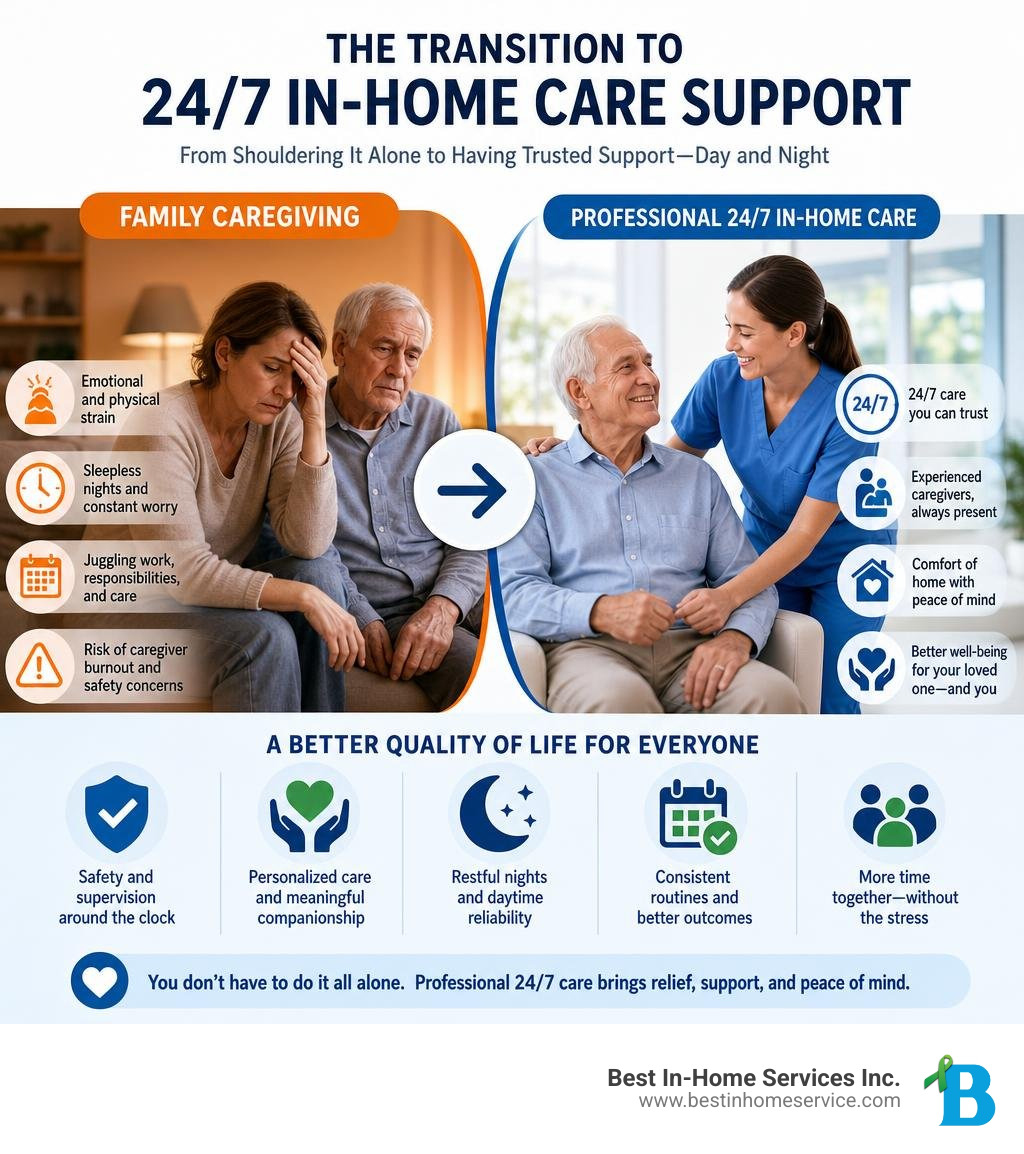
Watching a loved one struggle — whether from dementia, a recent fall, or simply the slow loss of independence — is one of the hardest things a family can face. Many families start by filling the gaps themselves. Early mornings. Late nights. Skipped work. Missed sleep. But there comes a point when the needs are too great, too constant, and too complex for family alone to manage safely.
That’s exactly where professional 24-hour home care makes a real difference.
I’m Lily Harrison, General Manager at Best In-Home Services Inc., where I’ve spent years coordinating 24 hour home care services for families across Chicago and Illinois — including seniors living with dementia, memory issues, and complex daily care needs. In this guide, I’ll walk you through everything you need to make a confident, informed decision for your loved one.
Understanding 24 Hour Home Care Services: Definitions and Key Differences
When families first begin researching round-the-clock options, the terminology can feel like a foreign language. You will hear terms like “24-hour care,” “live-in care,” and “hourly care” thrown around interchangeably. However, they represent entirely different service models, staffing structures, and price points.

To understand what is best for your family, let’s break down how these models compare:
24-Hour Shift-Based Care
With true 24 hour home care services, an agency schedules multiple caregivers to cover the day in rotating shifts (typically two 12-hour shifts or three 8-hour shifts).
- The Key Advantage: The caregivers are awake, alert, and actively monitoring your loved one at all hours. Because the caregivers go home at the end of their shifts, they do not require sleeping quarters, meals, or private living space.
- Who It’s For: This is the gold standard for seniors who wander during the night, experience severe sundowning from dementia, require frequent repositioning to prevent bedsores, or need help using the restroom multiple times a night.
Live-In Care
Live-in care involves a single caregiver who resides in the senior’s home for several consecutive days.
- The Catch: By law, live-in caregivers must be provided with a private bedroom, meals, and a mandatory, uninterrupted sleep period (typically 8 hours, with at least 5 hours uninterrupted). If your loved one wakes up frequently or requires active monitoring overnight, the caregiver’s sleep is disrupted.
- The Legal Reality: Labor laws in 2026 mandate strict overtime pay rules if a caregiver is interrupted during their sleeping hours. If the caregiver cannot get a full night’s rest, the arrangement must legally transition to a shift-based 24-hour care model.
Standard Hourly Care
Standard home care is designed for seniors who only need a helping hand during specific times of the day. A caregiver might visit for 4 to 8 hours to help with morning routines, meal preparation, light housekeeping, and errands, leaving the senior independent overnight.
To help you visualize the differences, we have put together this comparison table:
| Feature | 24-Hour Shift Care | Live-In Care | Standard Hourly Care |
|---|---|---|---|
| Caregiver Sleep Status | Always awake and alert | Entitled to 8 hours of sleep | N/A (Caregiver leaves) |
| Number of Caregivers | 2 to 3 rotating daily | 1 primary (plus a weekend relief) | Typically 1 |
| Accommodations Needed | None | Private bedroom and meals | None |
| Best Suited For | Active nighttime needs, high fall risks, advanced dementia | Low nighttime needs, companionship, light daily help | Independent seniors needing part-time help |
Choosing between these options requires a deep look at your loved one’s specific routines. If you are still trying to map out what level of support is appropriate, you can read more about navigating home health care to understand how medical and non-medical services coordinate.
When is Round-the-Clock Care Necessary?
It is incredibly common for families to wait too long to implement 24-hour care. Often, it takes a crisis — a midnight fall, a kitchen fire, or a wandering episode — to make the necessity clear.

Recognizing the warning signs early can prevent these dangerous emergencies and preserve your loved one’s quality of life. Ask yourself if your family member is experiencing any of the following:
- Frequent Falls or Balance Issues: If your loved one has suffered multiple falls or struggles to stand up safely without assistance, they are a high-risk candidate for a serious injury.
- Wandering and Sundowning: Seniors with advanced cognitive decline may become increasingly confused, anxious, or active late in the day (sundowning). They may attempt to leave the house, putting themselves in immediate physical danger.
- Incontinence Challenges: If a senior struggles to manage toileting independently, they may try to rush to the bathroom in the dark, which is a primary cause of overnight hip fractures.
- Difficulty with Activities of Daily Living (ADLs): When basic tasks like bathing, dressing, eating, and drinking water become impossible to manage alone, continuous support is needed.
- Caregiver Burnout: If you or other family members are physically exhausted, emotionally drained, or missing work to provide care, it is a clear sign that professional reinforcement is required.
Sometimes, the need for round-the-clock support is temporary. For example, a senior returning home after a joint replacement or a stroke may require intensive assistance for only a few weeks. If you are looking at short-term recovery options in Illinois, you can learn more about 24-hour care for recovery in Illinois.
Who Benefits Most from 24 Hour Home Care Services?
While any senior struggling with independence can benefit, certain diagnoses make 24-hour care particularly essential:
- Seniors with Advanced Dementia or Alzheimer’s: Continuous supervision keeps seniors safe from wandering and provides a comforting, familiar presence when confusion peaks. For a deeper look at managing these specific cognitive behaviors, read our comprehensive 24-7 dementia home care guide.
- Individuals with Progressive Neurological Conditions: Diseases like Parkinson’s or ALS present severe mobility challenges and swallowing difficulties, requiring expert physical transfers and meal preparation.
- Post-Stroke Survivors: Stroke recovery often involves retraining the brain and body. Caregivers provide vital physical therapy exercise reminders, mobility support, and speech encouragement.
- Hospice and Palliative Patients: During end-of-life care, 24-hour support allows the family to focus on being present as loved ones, while professional caregivers manage physical comfort, positioning, and personal hygiene.
Services, Costs, and Payment Options for 24-Hour Care
Understanding the logistics of 24-hour care means looking closely at what services are provided, what it costs, and how your family can fund it.
At its core, non-medical 24-hour home care covers a comprehensive array of daily living supports:
- Personal Care: Dignified assistance with bathing, showering, grooming, dressing, and oral hygiene.
- Toileting and Incontinence Support: Helping seniors safely navigate the bathroom, manage incontinence products, and maintain skin integrity.
- Mobility and Safe Transfers: Utilizing proper transfer techniques (and assistive devices like Hoyer lifts or gait belts) to move seniors safely from bed to wheelchair or recliner.
- Medication Reminders: Ensuring your loved one takes the correct dosages of their medications at the right times.
- Nutritional Support: Planning, cooking, and serving balanced meals, alongside monitoring hydration levels.
- Light Housekeeping and Laundry: Keeping the living environment clean, sanitary, and free of tripping hazards.
- Companionship and Cognitive Engagement: Providing conversation, reading together, playing games, and encouraging social interaction to fight isolation.
The Real Cost of 24-Hour Care in 2026
There is no sugarcoating it: round-the-clock home care is a premium service because of the intense, continuous labor involved.
At Best In-Home Service, Inc., 24-hour care is quoted at a customized rate, because the staffing arrangement, schedule, and level of supervision differ substantially from one client to another. Families receive an individualized quote before services begin.
Our standard non-medical rates are $35 per hour for companion and homemaker care, $37 per hour for personal care assistance and respite care, $40 per hour for overnight care, and $42 per hour for dementia or Alzheimer’s care. A 3-hour minimum applies per visit. When transportation or accompaniment is provided, mileage is billed separately at $0.75 per mile.
For perspective, national market estimates place assisted living at approximately $5,419 per month. Assisted living looks cheaper on paper, but it does not provide one-on-one, dedicated care — a small team of aides is responsible for dozens of residents. If your loved one needs continuous individualized supervision, 24-hour home care remains the safest option.
Families should also plan for duration: the average length of an in-home care arrangement is typically 15 to 20 months, as many use this level of support during transitional or late-stage periods.
Additionally, the average duration for in-home care services is typically 15 to 20 months, as many families utilize this intensive support during transitional periods or late-stage care.
Several factors can influence your final pricing structure:
- Geographic Location: Rates in major metro areas like Chicago may vary slightly based on local labor pools.
- Level of Acuity: If your loved one requires specialized care techniques (such as advanced memory care or physical transfers), rates may adjust.
- Type of Staffing: Shift-based care with awake caregivers is billed hourly. Continuous 24-hour arrangements are quoted individually based on the schedule and supervision required.
To evaluate whether staying home or moving to a facility makes the most sense for your budget and care needs, explore our detailed guide on home care vs assisted living: which is right for your family?.
Payment Methods and Financial Assistance
Because Medicare does not cover long-term, non-medical custodial care, families must look to alternative funding sources. Here are the most common ways families pay for 24 hour home care services:
- Private Pay (Out-of-Pocket): Many families utilize personal savings, retirement funds, home equity loans, or reverse mortgages to cover care costs.
- Long-Term Care Insurance (LTCI): If your loved one purchased an LTCI policy years ago, it will likely cover a significant portion of in-home care. Most policies require proof that the senior needs help with at least two ADLs.
- Veterans Benefits: Veterans and their surviving spouses may qualify for the VA Aid and Attendance pension, which provides monthly tax-free payments that can be used directly for home care.
- Medicaid and State Programs: Medicaid programs vary wildly by state. In Illinois, the Community Care Program (administered by the Illinois Department on Aging) helps eligible seniors age in place. You can explore these state-specific programs directly via the Illinois Department on Aging In-Home Care resources.
Selecting and Transitioning to a Care Provider
Choosing an agency to care for your loved one 24 hours a day is a deeply personal decision. You are inviting caregivers into the sanctuary of your home, and you need to know they are trustworthy, competent, and compassionate.
At Best In-Home Services Inc., we hold a 4.9/5 rating on Google based on 47 verified family reviews, reflecting our commitment to elite care standards in Chicago and the surrounding suburbs. We believe that high-quality care starts with how an agency treats and trains its staff.
When interviewing potential agencies, make sure to ask:
- Are your caregivers W-2 employees or independent contractors? Reputable agencies hire caregivers as W-2 employees, meaning the agency handles all background checks, payroll taxes, liability insurance, and workers’ compensation. This protects your family from legal and financial liability.
- What training do your caregivers receive? Look for agencies that provide continuous education. For example, our team undergoes specialized dementia and fall-prevention training to handle complex behaviors with patience and skill.
- How do you handle caregiver call-offs or emergencies? A professional agency will always have an on-call coordinator and backup caregivers ready to step in so your loved one is never left alone.
- Is there clinical oversight? Having a Registered Nurse (RN) supervise care plans and perform regular quality assurance assessments ensures your loved one’s changing medical needs are identified early.
If you are currently looking for a provider in the Chicagoland area, you can read our list of the best home care agencies in Chicago or simplify your search with our home care agency in Chicago: the no-stress shortlist.
How to Choose the Right 24 Hour Home Care Services Provider
To ensure a smooth transition, we recommend following these actionable steps:
- Request an In-Home Assessment: A clinical coordinator should visit your loved one’s home to assess their physical environment, routines, and care needs.
- Prioritize Personality Matching: Home care is intimate. The agency should match caregivers based not only on clinical skills but also on personality, language, and shared interests.
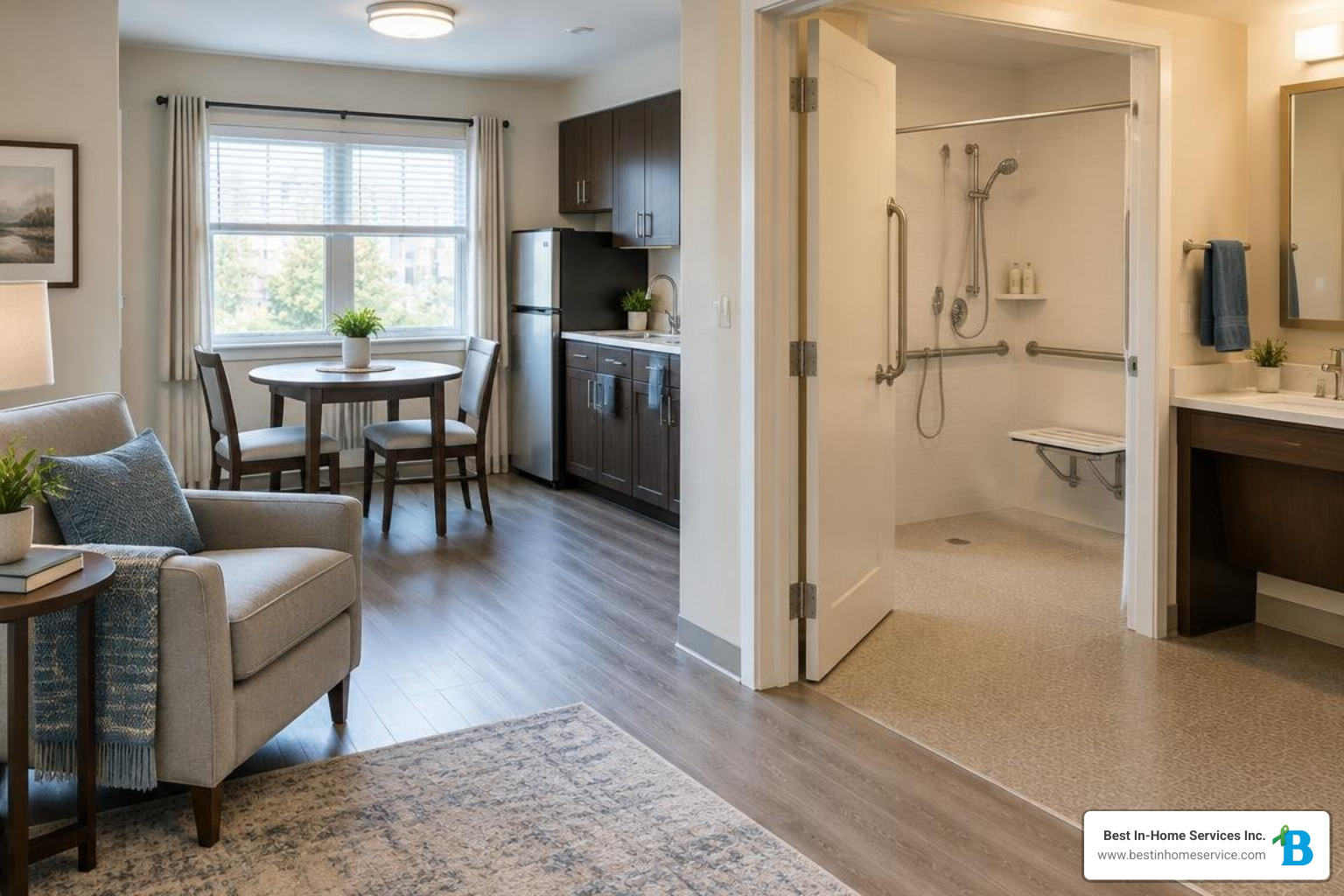
- Prepare the Home: Ensure the home is safe by removing clutter, improving lighting, and installing grab bars. If you are utilizing live-in care, prepare a comfortable, private bedroom for the caregiver.
- Start Gradually If Possible: If your loved one is resistant to care, start with a few hours a day to let them build trust with the caregiver before transitioning to full 24-hour support.
If you’re seeking private-duty nursing or specialized medical care at home, check out our guide to private home health care: finding the best help for your home.
Frequently Asked Questions about 24-Hour Care
Over the years, we have heard almost every question imaginable from worried family members. Here are the answers to the most common concerns:
What is the difference between 24-hour care and live-in care?
As outlined earlier, 24-hour care uses a team of caregivers working in rotating shifts (usually 8 or 12 hours). They remain awake and alert throughout the entire night. Live-in care uses one caregiver who stays in the home for 24 hours but requires a private room and a full night of sleep. 24-hour shift care is safer for active night needs but is generally more expensive due to hourly labor laws.
How much does 24-hour home care cost in Chicago?
Best In-Home Service, Inc. quotes 24-hour care at a customized rate based on the client’s schedule and level of supervision.
Our standard hourly rates are $35 for companion and homemaker care, $37 for personal care assistance and respite care, $40 for overnight care, and $42 for dementia or Alzheimer’s care, with a 3-hour minimum per visit.
How do agencies ensure caregiver consistency with multiple shifts?
To prevent your loved one from feeling overwhelmed by a revolving door of strangers, we build a dedicated care team of 2 to 3 consistent caregivers who rotate on a regular schedule. We utilize detailed digital logs and structured shift handoffs to ensure that routines, medication schedules, and personal preferences are seamlessly communicated from one caregiver to the next.
Can 24-hour home care be set up on a temporary basis?
Absolutely. Many families utilize 24-hour care temporarily during hospice, after a hospital discharge, or while a primary family caregiver takes a much-needed vacation (respite care). We can easily adjust the schedule as your loved one recovers or as their needs evolve over time.
Conclusion
At the end of the day, choosing 24 hour home care services is about restoring peace of mind to your family and dignity to your loved one. It allows your aging parent or spouse to stay in the place they love most — their home — while receiving the elite, round-the-clock support they deserve.
At Best In-Home Services Inc., we provide customized, compassionate care across Chicago, Downers Grove, Winnetka, Naperville, and the surrounding collar counties. If you are ready to explore how we can support your family, explore our comprehensive home services to get started today. We are here for you, day or night.






 1-224-636-5200
 1-224-636-5210
  425 Huehl Rd 13B Northbrook IL 60062