
When Family Caregiving Becomes Too Much: What You Need to Know
Respite care for seniors is temporary, short-term support provided to an older adult so that their primary family caregiver can take a much-needed break — whether for a few hours, a few days, or longer.
Here is a quick overview of what it involves:
- What it is: Temporary care provided by a professional or trained volunteer while the family caregiver steps away
- Who it helps: Family caregivers experiencing burnout, and seniors with chronic illness, dementia, or post-hospital recovery needs
- Where it happens: At home, at an adult day center, or in a short-term residential facility
- How long it lasts: Anywhere from a couple of hours to several weeks
- Who pays: Out-of-pocket, long-term care insurance, VA benefits, Medicaid waivers, or Medicare (limited to hospice situations)
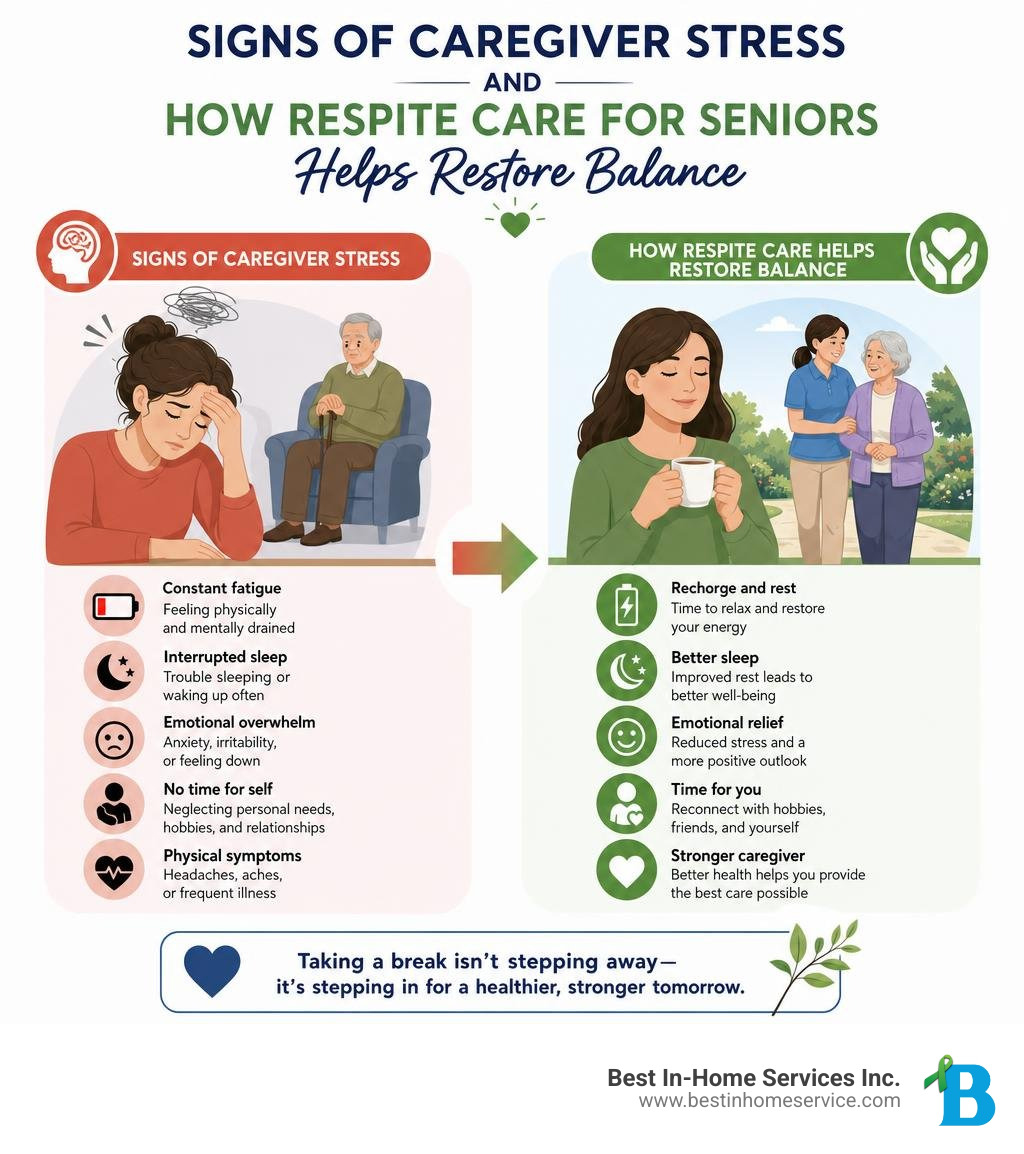
Caring for an aging parent or spouse is one of the most meaningful things a person can do. But it is also one of the most demanding. Roughly 20% of family caregivers suffer from depression — and that number is likely an undercount. The physical exhaustion, interrupted sleep, and emotional weight add up fast.
The hard truth is that a caregiver who is running on empty cannot provide the level of care their loved one deserves. That is exactly why respite care exists — not as a luxury, but as a practical tool that keeps the whole caregiving relationship sustainable.
I’m Lily Harrison, General Manager at Best In-Home Services Inc., where I help Chicago-area families navigate respite care for seniors and coordinate compassionate, certified in-home support tailored to each individual’s needs. In the sections below, I’ll walk you through everything you need to know — from types of respite care to costs, financial assistance, and how to find the right provider.
More about respite care for seniors:
What is Respite Care for Seniors and How Does It Work?
At its core, respite care is the temporary transfer of primary caregiving responsibilities to another qualified individual. This transfer allows the family caregiver to step away with complete peace of mind, knowing their senior loved one is in safe, capable hands.
Unlike permanent transitions to assisted living or nursing homes, respite care is inherently flexible and short-term. It is designed to fit around your existing life, rather than requiring you to dismantle your daily routines. Whether you need a few hours on a Tuesday afternoon to attend your own medical appointments, or a two-week block to recover from an illness or take a family vacation, respite care adapts to your schedule.
During a respite care engagement, the substitute caregiver steps into your shoes to provide essential support. This includes assistance with Activities of Daily Living (ADLs) such as:
- Bathing, grooming, and dressing
- Safe mobility and transfer assistance
- Meal preparation and nutrition tracking
- Medication reminders and vital sign monitoring
- Light housekeeping and laundry
- Cognitive engagement and companionship
By bringing in professional support, you are not “giving up” on your caregiving duties. Instead, you are introducing a sustainable rhythm that protects your own physical and mental health. For families living in Cook, DuPage, or Lake County, securing professional respite home health care in Chicago and suburbs ensures that your loved one receives high-quality, personalized attention right in the comfort of their familiar home environment.
Who Benefits Most from Short-Term Relief?
Respite care is not designed for just one specific scenario; it serves a diverse group of families, each dealing with unique caregiving dynamics. Primary family caregivers are, of course, the immediate beneficiaries. When you consider that a significant portion of caregivers meet the clinical criteria for depression and chronic fatigue, having a reliable “timeout” can be a literal lifesaver. Taking time for self-care—whether that means sleeping, exercising, socializing, or simply sitting in silence—restores the emotional reserves required to be an effective caregiver.
Seniors themselves also benefit immensely from these short-term arrangements. Introducing a new, friendly face can break up the monotony of daily routines and offer fresh social stimulation. Additionally, respite care is highly suited for:
- Post-Hospital Recovery: Returning home after a surgery, injury, or acute illness can be incredibly challenging. Respite care provides professional eyes and ears to monitor recovery, prevent falls, and assist with physical therapy exercises.
- Chronic Illness Management: Conditions like Parkinson’s, advanced diabetes, or respiratory illnesses require continuous oversight. Respite caregivers can assist with specialized daily needs, giving family members a break from round-the-clock monitoring.
- Trial Stays: Some families use short-term respite care as a low-pressure way to test how a senior responds to professional caregiving before making a long-term commitment.

To explore how these different scenarios play out locally, you can read The Ultimate Guide to Respite Care Options in Chicago Area, which breaks down local resources and matching strategies for area families.
Special Considerations for Dementia and Alzheimer’s
Providing care for a loved one experiencing cognitive decline introduces a unique set of challenges. Seniors with dementia or Alzheimer’s frequently experience confusion, anxiety, and a phenomenon known as “sundowning,” where confusion worsens in the late afternoon and evening.
For these individuals, routine preservation is absolutely critical. A sudden change in environment can trigger severe distress, behavioral outbursts, or rapid cognitive regression. This is why in-home respite care is often the preferred choice for memory care. It allows the senior to remain in their familiar surroundings, surrounded by their own belongings and established comforts.
When arranging respite care for a senior with dementia, it is vital to ensure that the caregivers have specialized training. Certified memory care professionals understand how to:
- De-escalate moments of confusion or agitation using gentle redirection and validation techniques.
- Maintain strict safety measures to prevent wandering, which is a major concern for families.
- Keep the senior engaged through memory-stimulating activities, familiar music, and structured, low-stress routines.
- Adapt to the senior’s preferred communication style, ensuring they feel respected and understood at all times.
Main Types of Respite Care Available
Choosing the right setting for respite care depends entirely on your family’s daily schedule, your budget, and the level of medical or personal care your loved one requires. The table below outlines the primary options available to families:
| Type of Respite Care | Setting | Best Suited For | Key Services Included |
|---|---|---|---|
| In-Home Respite | Senior’s private home | Seniors who prefer familiar routines; those with advanced dementia or mobility issues | ADL assistance, companionship, light housekeeping, medication reminders |
| Adult Day Centers | Community-based facility | Active seniors who benefit from social interaction; daytime-only caregiver needs | Social activities, group meals, basic health monitoring, physical therapy |
| Short-Term Residential Stays | Assisted living or memory care facility | Overnight care; caregiver vacations; post-hospital transitional recovery | 24/7 monitoring, furnished private rooms, community dining, full activities calendar |
In-Home Respite Care for Seniors
For the vast majority of older adults, there is no place like home. In-home respite care allows your loved one to stay in their preferred environment while a professional caregiver visits on a schedule that you define. This option minimizes the disruption to their daily life, making it an excellent choice for seniors who are resistant to change or those living with cognitive impairments.
In-home care is highly customizable. It can range from a companion caregiver who visits for a few hours a week to share a meal and play cards, to a certified nursing assistant (CNA) who provides hands-on personal care, transfers, and medication management. Because the care is one-on-one, the caregiver can follow your exact instructions regarding meals, bedtime routines, and personal preferences.
This personalized approach is a cornerstone of maintaining independence. To understand why keeping your loved one in their own home is so beneficial, check out our guide on why senior care at home is the best choice for aging in place.
If you are looking for specialized support across our northern and western suburban service areas, we coordinate care throughout communities like Downers Grove, Winnetka, Chicago, Schaumburg, and Libertyville, ensuring your loved one receives high-quality, personalized attention close to home.
Understanding Community-Based Support Options
If your loved one is relatively mobile and enjoys being around other people, community-based respite options like adult day care centers are a fantastic alternative. These centers operate during standard business hours, providing a structured environment where seniors can participate in group exercises, art classes, musical therapy, and educational games.
These facilities offer a double benefit: they give you a full day to work or run errands, while providing your loved one with vital socialization that combats the epidemic of senior isolation. Most centers also provide nutritious, hot meals and have licensed nurses on staff to administer medications and monitor basic health metrics.
For overnight or extended breaks, families sometimes look to short-term residential stays at local assisted living communities. These “trial stays” allow the senior to live in a fully furnished apartment and enjoy all the community’s amenities, dining, and social outings for a period of several days to a month.
Deciding between these models requires weighing several factors. To help you evaluate the best path forward, read our comparison on home care vs assisted living.
Understanding the Costs and Financial Assistance Options
The cost of respite care varies widely depending on the type of service, the level of care required, and your geographic location. Across the United States, the demand for home health and personal care aides is projected to grow by 21% through 2033, which naturally influences local pricing. While states with massive senior populations like Florida (where the over-65 population is 21.8% and growing) face their own unique pricing pressures, families in the Chicago area can expect to navigate a range of local rates.
Generally, in-home care is billed hourly, adult day centers charge a flat daily rate, and residential facilities bill a daily or weekly rate. Because most private health insurance policies do not cover non-medical senior care, families often pay for these services out-of-pocket. However, several financial assistance programs can help offset these expenses:
- Medicare: Traditional Medicare does not cover long-term or hourly respite care. However, there is a major exception: Medicare will cover up to five consecutive days of respite care in an approved inpatient facility (such as a hospital or skilled nursing facility) for a senior who is currently enrolled in the Medicare hospice benefit. Some Medicare Advantage plans are also beginning to offer limited, supplemental in-home personal care benefits.
- Medicaid Waivers: In Illinois, Home and Community-Based Services (HCBS) waivers are designed to help seniors remain in their homes rather than transitioning to nursing facilities. If your loved one qualifies financially and medically, these waivers may cover in-home respite care.
- VA Benefits: If your loved one is a veteran or the surviving spouse of a veteran, they may qualify for the VA Aid and Attendance benefit, which provides a monthly pension to help pay for home care. Additionally, the VA offers eligible veterans up to 30 days of respite care per year in VA-contracted facilities or through in-home care agencies.
- Long-Term Care Insurance: If your loved one has a private long-term care insurance policy, review the terms carefully. Most modern policies include a daily benefit for home care or short-term facility stays once the elimination period has been met.
For localized public assistance and grant programs in Illinois, you can consult the Illinois Department of Human Services Respite Services, which offers support registries and funding resources. If you live in DuPage County, the DuPage County Community Services Programs provide excellent local options, including caregiver support grants and senior services designed to keep older adults safely in their communities.
How to Find and Prepare for Temporary Care
Handing over the care of a vulnerable loved one is a deeply emotional process. It is entirely natural to feel a sense of hesitation or even guilt. To alleviate these worries, it is crucial to partner with a highly professional agency that prioritizes safety, transparency, and personalized matching.
When evaluating potential providers, always ask the following screening questions:
- Are your caregivers direct employees, or are they independent contractors? (Direct employees are typically fully screened, bonded, insured, and covered by worker’s compensation).
- What does your background check process involve?
- Do you have a registered nurse (RN) who conducts the initial home safety assessment and oversees the ongoing care plan?
- How do you handle caregiver call-offs or emergencies?
- Can you accommodate specialized needs, such as advanced dementia care or mechanical transfer transfers?
At Best In-Home Services Inc., we provide 24/7 support with certified staff and custom care plans, ensuring that every caregiver matched with your family has been thoroughly vetted and trained to meet your loved one’s specific medical and emotional needs.
Choosing the Right Respite Care for Seniors
Beyond basic licensing and background checks, the best respite care comes down to the personal connection between the senior and the caregiver. A great agency doesn’t just send the first available person on the schedule; they take the time to assess the senior’s personality, hobbies, and communication style.
When interviewing agencies, ask how they match caregivers to clients. A caregiver who shares a senior’s love for classical music, gardening, or Chicago sports can transform a simple care visit into an enjoyable social event. Be sure to read local client reviews and ask if you can speak with families who have used the agency for similar respite needs.
Preparing Your Loved One for a Respite Stay
To ensure a seamless transition, take the time to prepare a comprehensive “Caregiver Guide” before the respite care begins. This is especially helpful for in-home care visits. Your guide should include:
- Detailed Routines: What time does your loved one like to wake up? What is their preferred breakfast? What is their exact bedtime routine?
- Medical History & Medications: A clear list of all prescriptions, dosages, and administration times, along with the contact info for their primary care physician.
- Likes and Dislikes: Note their favorite television shows, topics of conversation they enjoy, and things that might cause them distress or anxiety.
- Emergency Contacts: Include your phone number, a backup family contact, and instructions on what to do in case of a medical emergency.
- Home Logistical Info: Where are the extra linens kept? How do you operate the thermostat or the security system?
Having this information documented in writing gives the substitute caregiver a clear blueprint to follow, minimizing confusion and keeping your loved one’s day as normal and predictable as possible.
Frequently Asked Questions about Respite Care
How long can a respite care stay last?
Respite care is highly flexible. In-home care can be scheduled for as little as a two-hour companion visit, a full eight-hour day, or 24/7 overnight care. For residential facilities, stays typically range from a minimum of three to five days up to a maximum of 30 days.
Does Medicare cover respite care for seniors?
Generally, no. Original Medicare does not pay for hourly or short-term respite care for non-medical reasons. The only exception is under the Medicare hospice benefit, which covers up to five consecutive days of inpatient respite care at an approved facility to give the primary hospice caregiver a break.
How does in-home respite care help with routine preservation?
By keeping your loved one in their own home, they can sleep in their own bed, eat their preferred meals at their usual times, and stick to their familiar environment. This consistency is incredibly important for seniors with dementia, as it prevents the confusion and anxiety that often accompany a move to an unfamiliar facility.
Conclusion
Caring for an aging family member is a beautiful journey, but you cannot walk it alone without occasionally stopping to catch your breath. Taking a break is not a sign of weakness or a betrayal of your responsibilities; it is an act of love that ensures you have the physical strength and emotional resilience to continue providing the best possible care.

If you are feeling overwhelmed, exhausted, or simply need a few hours to tend to your own life, we are here to help. At Best In-Home Services Inc., we provide compassionate, professional, and fully customized personalized senior care services across Chicago and its surrounding suburbs. Contact us today to schedule a free in-home consultation, and let us give you the peace of mind and the well-deserved timeout you need.







 1-224-636-5200
 1-224-636-5210
  425 Huehl Rd 13B Northbrook IL 60062