
What Families Need to Know About Rehab for Elderly After Hospital Stay
Rehab for elderly after hospital stay is specialized care that helps seniors regain strength, mobility, and independence after a medical event like surgery, stroke, or serious illness.
Here are the most common options at a glance:
| Care Setting | Best For | Key Feature |
|---|---|---|
| Inpatient Rehab / Skilled Nursing Facility | Complex medical needs, 24/7 supervision | Intensive daily therapy with nursing care |
| Short-Term Rehab Center | Post-surgery recovery (e.g., hip/knee replacement) | Focused programs bridging hospital and home |
| Outpatient Rehab | Stable seniors who can safely return home | Scheduled therapy visits while living at home |
| In-Home Rehab | Seniors who prefer familiar surroundings | Licensed therapists visit the home |
Most recovery actually happens after hospital discharge — which is why choosing the right rehab setting matters so much. For families in Chicago and across Illinois, understanding the available options can mean the difference between a smooth recovery and a difficult setback.
The stakes are real. Research shows that approximately 33% of elderly patients experience significant functional decline by the time they leave the hospital compared to how they were before admission. For those over 90, that number climbs to 63%. Yet the right rehabilitation program — started early and continued consistently — can reverse much of that decline and help seniors return home safely.
Families often have only 48 hours’ notice before a loved one is discharged from a facility, making it critical to understand the landscape before a health crisis hits.
I’m Lily Harrison, General Manager at Best In-Home Services Inc., where I’ve spent years helping Chicago-area families navigate rehab for elderly after hospital stay and coordinate compassionate in-home care for seniors transitioning out of hospitals and care facilities. In the sections below, I’ll walk you through everything you need to make a confident, informed decision for your loved one.
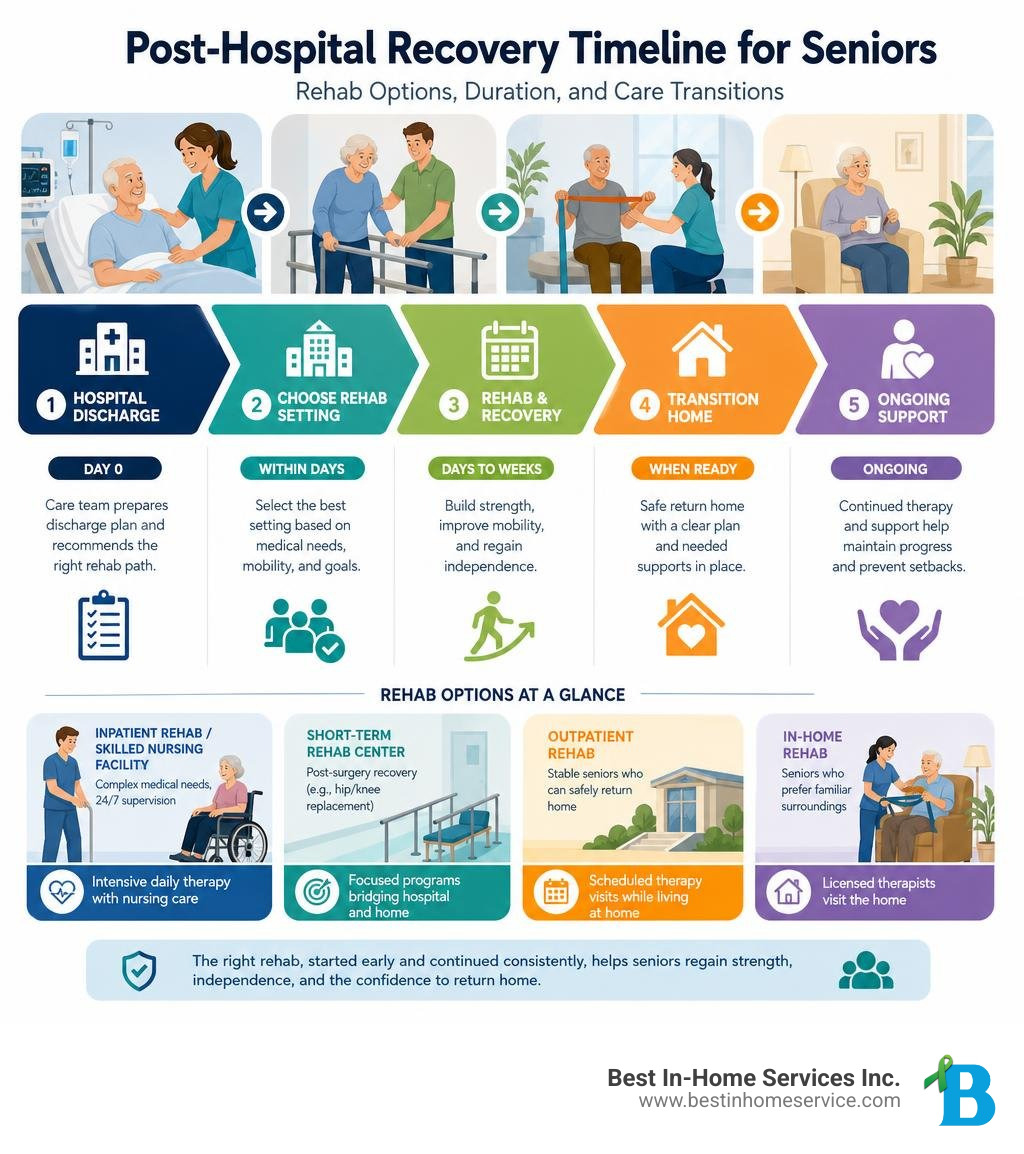
Understanding Rehab for Elderly After Hospital Stay
When an older adult is admitted to the hospital, the immediate focus is on stabilizing their acute medical condition. However, once the emergency has passed, a secondary crisis often emerges: functional decline.
The human body is incredibly adaptive, but for seniors, prolonged bed rest is a silent thief of physical capability. According to a landmark Effectiveness and feasibility of early physical rehabilitation programs for geriatric hospitalized patients: a systematic review | BMC Geriatrics | Springer Nature Link, healthy older adults can lose between 12% and 14% of their aerobic capacity (VO2 max) and lower-extremity muscle strength after just 10 days of complete bed rest. For a frail senior, that sudden loss of strength can mean the difference between walking independently and becoming wheelchair-bound.
This rapid muscle loss makes a structured program of rehab for elderly after hospital stay absolutely essential. Whether your loved one is recovering from a stroke, a planned joint replacement (like a hip or knee surgery), a severe infection like pneumonia, or a cardiac event, rehabilitation is the bridge that leads back to autonomy.
Without targeted intervention, the risk of permanent disability, frequent falls, and rapid re-hospitalization skyrockets. In our work supporting families across Chicagoland, from Naperville to Lake Forest, we consistently find that proactive rehabilitation is the single most effective tool for helping seniors reclaim their quality of life. For a deeper look at what this recovery journey looks like, you can read our comprehensive A Guide to Post Hospitalisation Care and Recovery.
Core Therapies Offered in Senior Rehabilitation
Senior rehabilitation is not a one-size-fits-all solution. It is a highly coordinated, multidisciplinary effort involving several specialized therapeutic disciplines. Depending on your loved one’s specific medical event, their recovery plan will likely include a combination of the following core therapies:
- Physical Therapy (PT): PT focuses primarily on large motor skills, mobility, strength, balance, and pain management. If a senior is struggling to walk, stand up from a chair, or navigate stairs after a hospital stay, physical therapists design targeted exercises to rebuild lower-body strength and improve gait stability.
- Occupational Therapy (OT): While PT helps patients move, OT helps them live. Occupational therapists focus on the activities of daily living (ADLs). They work with seniors to rebuild the fine motor skills and cognitive strategies needed to bathe, dress, cook, brush teeth, and safely manage household tasks. They also evaluate the need for assistive devices like reachers, shoehorns, or shower chairs.
- Speech-Language Pathology (SLP) / Speech Therapy: Vital for seniors recovering from strokes or neurological conditions, SLP addresses communication challenges, cognitive-linguistic deficits, and swallowing disorders (dysphagia). Ensuring a senior can swallow safely is a critical defense against aspiration pneumonia.
- Respiratory Therapy: Often required after severe bouts of pneumonia, COPD flare-ups, or prolonged ventilator use, this therapy helps seniors rebuild lung capacity and manage breathing exercises.
- Nutritional Therapy: Proper healing requires fuel. Registered dietitians evaluate a senior’s nutritional status, customize meal plans to support tissue repair, and manage dietary restrictions related to chronic conditions like diabetes or kidney disease.
Clinical research highlights the importance of combining these therapies systematically. A comprehensive review on the Effect of inpatient rehabilitation indicates that specific “treatment ingredients”—such as early intervention, progressive endurance exercise, repeated practice of daily activities, and goal-oriented planning—significantly increase the likelihood that a senior will be able to return home safely.
If your loved one is currently struggling with basic mobility, we encourage you to explore our practical guide: Can’t Walk After a Hospital Stay? Here’s How to Get Back on Your Feet.
Inpatient vs. Outpatient Care Settings
Choosing where your loved one will receive rehabilitation is one of the most significant decisions you will make during the discharge planning process. The right choice depends on the intensity of medical supervision required, the senior’s physical stamina, and the level of support available at home.
| Feature | Inpatient Rehabilitation | Outpatient Rehabilitation | In-Home Rehabilitation |
|---|---|---|---|
| Living Arrangement | Resides at a specialized facility or skilled nursing facility (SNF). | Lives at home; travels to a clinic for scheduled appointments. | Lives at home; licensed therapists visit the house. |
| Therapy Intensity | Typically 3 hours of therapy per day, 5 to 6 days a week. | 1 to 2 hours of therapy per session, 2 to 3 times a week. | 1 hour of therapy per session, 2 to 3 times a week. |
| Medical Supervision | 24/7 skilled nursing care and daily physician oversight. | No daily medical oversight; managed by primary care doctor. | Supported by visiting nurses and home care aides. |
| Best For | Seniors with complex medical needs, high fall risk, or severe weakness. | Highly motivated, mobile seniors with reliable transportation. | Seniors who are homebound but stable enough to recover safely at home. |
The transition from acute hospital care to subacute rehabilitation can be challenging. Data from the Rehabilitative subacute inpatient care—Optimizing posthospital care for geriatric patients with rehabilitation needs: results of the REKUP study – PMC reveals a startling gap in traditional care: approximately 40% of geriatric subacute patients have clear rehabilitation potential but initially lack the physical stamina or capability to participate in high-intensity programs. Furthermore, about 35% of seniors with rehabilitation needs in standard short-term care receive no therapeutic interventions at all.
This underscores the need for families to be active advocates. If you are exploring local options in Cook County or DuPage County, consulting regional health directories or highly rated local providers can help you find excellent inpatient pathways.
Inpatient Rehab for Elderly After Hospital Stay
Inpatient rehabilitation facilities (IRFs) and skilled nursing facilities (SNFs) provide a highly structured environment. Here, seniors receive round-the-clock nursing care alongside intensive, daily therapy sessions. This setting is ideal for individuals recovering from major surgeries or severe strokes who cannot safely perform basic movements without professional assistance.
When evaluating inpatient options, it is helpful to look at clinical predictors of recovery. A study on the Impact of age on functional recovery following hospital-based rehabilitation in older adults | Internal and Emergency Medicine | Springer Nature Link demonstrated that a senior’s frailty index—not their chronological age—is the single strongest predictor of how well they will recover functional independence. Older age alone should never bar a senior from accessing high-quality rehab.
Families should look for specialized short-term programs in the Chicago area that are designed to accommodate these varying levels of frailty and provide personalized, goal-oriented care.
Outpatient Rehab for Elderly After Hospital Stay
For seniors who are medically stable and have a strong support system at home, outpatient rehabilitation offers a flexible alternative. The senior continues to live in their own comfortable, familiar environment and travels to a local clinic for therapy sessions a few times each week.
Alternatively, many families choose in-home rehabilitation, where licensed physical, occupational, and speech therapists travel directly to the senior’s home in Chicago, Skokie, or Wilmette. This eliminates the stress and physical exhaustion of transportation.
To ensure safety between therapy visits, families often pair in-home rehab with professional personal care. You can learn more about structuring this balanced approach in our guide to Post Hospital Care: Your Guide to After Hospital Care at Home.
Determining the Duration of Senior Rehab

One of the most frequent questions we hear from families is: “How long will my loved one need to stay in rehab?”
The honest answer is that there is no fixed timeline. The duration of rehab for elderly after hospital stay is highly individualized and depends on several factors:
- The Severity of the Medical Event: A senior recovering from a straightforward knee replacement may only require 2 to 3 weeks of rehabilitation. Conversely, an individual recovering from a severe stroke or a complex cardiac event may need 2 to 3 months of intensive support.
- The Senior’s Overall Health and Frailty: As established by clinical research, a patient’s baseline frailty and cognitive status directly impact their recovery speed.
- Insurance and Medicare Guidelines: Insurance companies and Medicare regularly review clinical progress notes to determine if continued stay in a facility is “medically necessary.” If progress plateaus, insurance coverage may end, even if the family feels more time is needed.
To optimize these timelines, modern transitional care models are shifting toward highly focused, short-term restorative programs. For instance, a study on the Effectiveness of the Sub-Acute Care for Frail Elderly (SAFE) Transitional Care Unit on Short-Term Functional Independence in Frail Older Patients Discharged from Hospital showed that a dedicated, 30-day transitional care program based in a restorative environment reduced the risk of long-term nursing home placement by an impressive 55%, while also significantly reducing the number of home care service days required after discharge.
By focusing on rapid, intensive rehabilitation milestones, seniors can regain their independence faster and avoid the risks associated with prolonged institutionalization.
Planning Care Transitions and Hospital Discharge
The transition from the hospital to a rehabilitation facility—or directly back home—is a vulnerable period for seniors. Medication errors, missed follow-up appointments, and unsafe home environments are primary drivers of hospital readmissions.
To ensure a seamless transition, families must actively participate in the hospital’s discharge planning process. Do not wait for the hospital staff to initiate this conversation; start planning on day one of your loved one’s admission.
Here is a practical checklist of steps to take before discharge:
- Request a Detailed Medication Reconciliation: Ensure you receive a printed list of all medications, noting any new prescriptions, discontinued drugs, and potential side effects.
- Arrange for Necessary Medical Equipment: Coordinate with the discharge planner to have walkers, wheelchairs, oxygen concentrators, or hospital beds delivered to the home before the senior arrives.
- Perform Home Safety Modifications: Install grab bars in the bathroom, secure loose rugs, improve lighting in hallways, and set up a temporary first-floor living space if stairs are currently unmanageable.
- Secure Professional Care Support: If you cannot be present 24/7, arrange for a professional home care agency to assist with meal preparation, medication reminders, personal hygiene, and companionship.
For a step-by-step roadmap to managing this critical window, please read our detailed guide: Post-Hospital Discharge: Essential Tips for a Smooth Transition Home.
For additional perspectives on navigating discharge protocols, you may also consult the official Medicare Hospital Discharge Planning Checklist to ensure no critical steps are missed.
Navigating Costs and Medicare Coverage
Understanding how to fund rehabilitation is essential for avoiding unexpected, stressful financial burdens.
Medicare Part A covers inpatient care in a Medicare-certified Skilled Nursing Facility (SNF) under very specific conditions:
- The senior must have a qualifying hospital stay, which means being admitted as an inpatient for at least 3 consecutive days (not including the day of discharge). Note: Time spent under “observation status” does not count toward this 3-day requirement.
- The senior must enter the SNF within 30 days of leaving the hospital.
- A physician must certify that the senior requires daily, skilled rehabilitative care or nursing services.
When these criteria are met, Medicare coverage is structured as follows (using 2026 cost schedules):
- Days 1 to 20: Medicare covers 100% of the approved costs, including therapy, semi-private room, meals, and medications.
- Days 21 to 100: The patient is responsible for a daily co-insurance payment (which is $217 per day in 2026, adjusted from previous years).
- Days 101 and beyond: The patient is responsible for all costs out-of-pocket.
In 2025, the national median monthly cost for a skilled nursing facility was approximately $9,277 for a semi-private room and $10,646 for a private room. Because facility care is highly expensive, researchers are actively looking for alternative solutions.
A fascinating Pilot study finds promise in skilled nursing facility care at home | EurekAlert! demonstrated that delivering SNF-level rehabilitation services directly in the patient’s home—using a combination of daily in-person visits, remote biometric monitoring, and virtual therapy—showed strong trends toward lower costs, better functional outcomes, and significantly higher patient satisfaction compared to traditional facility stays.
Frequently Asked Questions About Post-Hospital Rehab
What is the average length of stay in a senior rehab facility?
There is no single “average” stay, as recovery is highly dependent on individual progress. However, most short-term rehabilitation stays last between 2 to 4 weeks. During this time, the care team constantly monitors functional milestones to determine when it is safe for the patient to return home.
Does Medicare cover 100% of post-hospital rehabilitation?
No, Medicare does not cover 100% of the entire stay. While Medicare Part A covers 100% of the costs for the first 20 days in an approved skilled nursing facility, patients must pay a daily co-insurance copayment for days 21 through 100. Beyond day 100, Medicare provides no coverage for room and board.
What happens if a senior cannot safely return home after rehab?
If a senior has reached their rehabilitation potential but still cannot safely live independently at home, families have several options. You can explore long-term care placement in an assisted living community or a skilled nursing home.
Alternatively, many families choose to bring their loved one home by utilizing around-the-clock professional support. To understand how this works, read our guide on 24 Hour In-Home Care in Illinois: Essential Support for Recovery.
Conclusion
Navigating rehab for elderly after hospital stay can feel overwhelming, but you do not have to walk this path alone. The decisions you make today will shape your loved one’s safety, comfort, and independence for years to come.
At Best In-Home Services Inc., we specialize in providing personalized, compassionate in-home care to support seniors throughout Chicago and the surrounding Illinois suburbs. Whether your loved one is transitioning directly home from the hospital or moving back home after a stay in a rehabilitation facility, our certified caregivers are here to provide the 24/7 support, medication reminders, mobility assistance, and peace of mind your family deserves.
If you are ready to explore how we can support your loved one’s recovery in the comfort of their own home, we invite you to schedule a Free Assessment with our care team today.
For more information on what to expect as you plan this transition, please read our guide to Post Hospital Care Throughout Illinois: What to Expect from Home Care After Surgery. We are here to help your family every step of the way.



 1-224-636-5200
 1-224-636-5210
  425 Huehl Rd 13B Northbrook IL 60062