
Why So Many People Experience Leg Weakness After a Hospital Stay
Leg weakness after a hospital stay is one of the most common — and most surprising — challenges patients face when they return home.
Here’s a quick summary of what you need to know:
| Question | Quick Answer |
|---|---|
| Is leg weakness after discharge normal? | Yes, it affects 30–60% of hospitalized older adults |
| What causes it? | Muscle loss from bed rest, medications, poor nutrition, and systemic stress |
| How fast does muscle loss happen? | As quickly as 5 days of inactivity; up to 2% per day in the ICU |
| How long does recovery take? | Weeks to months, depending on age, health, and rehab quality |
| What helps most? | Physical therapy, protein-rich nutrition, hydration, and consistent movement |
| When to call a doctor? | If weakness worsens, or you notice leg swelling, chest pain, or shortness of breath |
You get home from the hospital and expect to feel better. But instead, your legs feel heavy, unsteady, or unreliable. Why does this happen?
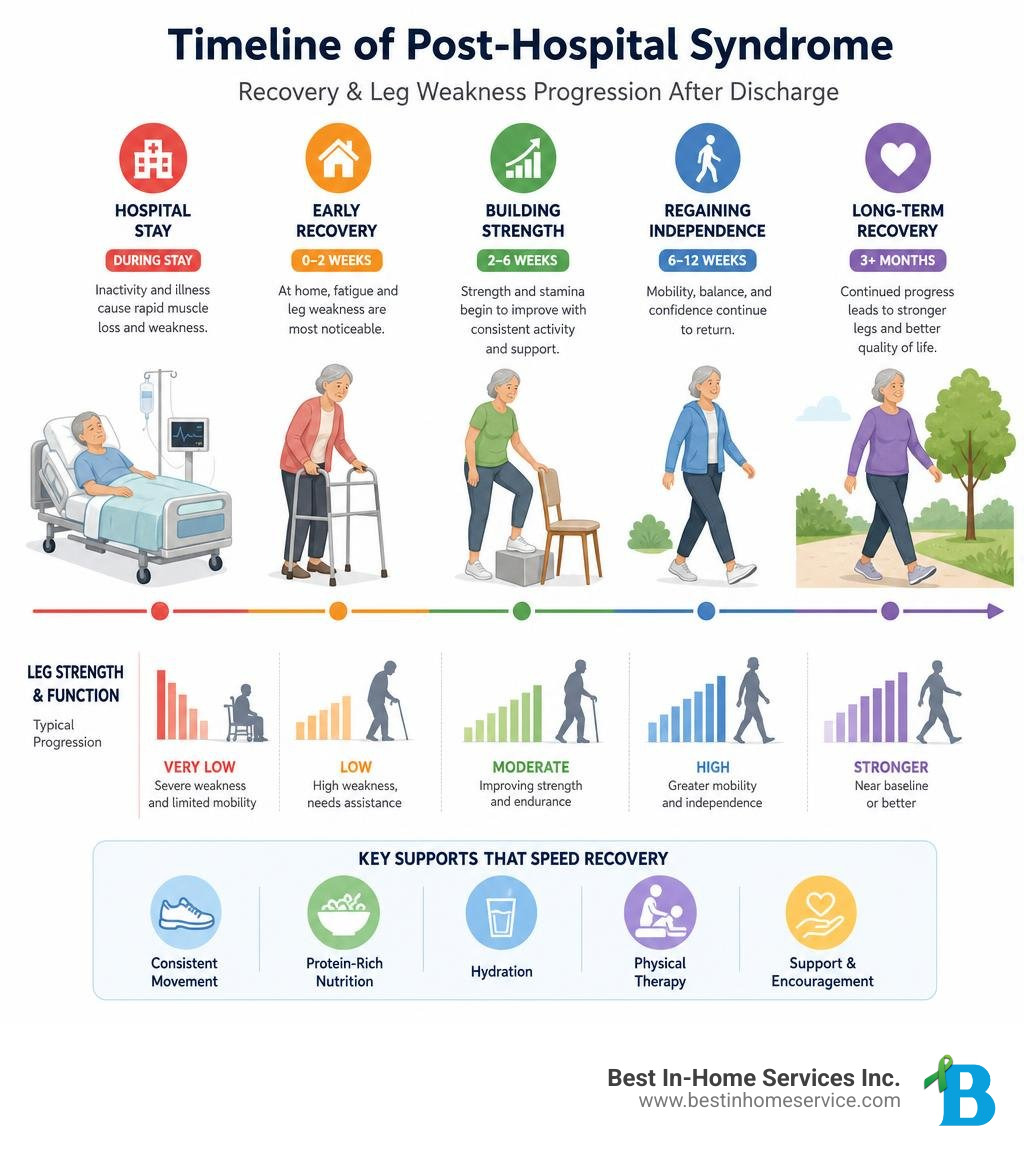
The answer comes down to what hospitalization does to your body — even in a short stay. Muscles shrink from inactivity. Sleep gets disrupted. Stress hormones flood your system. Nutrition often suffers. The result is a period of physical vulnerability that researchers call post-hospital syndrome, which can last up to seven weeks after discharge and significantly increase the risk of rehospitalization.
This isn’t a rare edge case. Between 30% and 60% of older adults experience functional decline after an acute hospital stay, according to research on post-hospitalization recovery. For those who spent time in the ICU, the numbers are even more striking — nearly half of previously independent ICU survivors lose that independence within six months.
The good news? This kind of weakness is predictable, well-understood, and treatable.
I’m Lily Harrison, General Manager at Best In-Home Services Inc., where I help coordinate post-hospital recovery care for seniors and families across Chicago and Illinois — including many who come to us specifically struggling with leg weakness after a hospital stay. In my experience working alongside certified caregivers and care teams, the patients who recover fastest are the ones who get consistent, structured support at home right from the start.
Understanding Leg Weakness After Hospital Stay: Causes and Mechanisms
When you leave the hospital, you might expect your primary challenge to be healing from the specific illness or surgery that brought you there. However, many people find that the most limiting symptom is a profound, shaky unsteadiness in their lower limbs.
To understand why your legs feel like jelly, we have to look at how the body adapts to the clinical environment.

During a serious illness, the body undergoes a massive physiological shift. If you spent time in an Intensive Care Unit (ICU), you may be dealing with a specific condition known as Intensive Care Unit-acquired weakness (ICU-AW). This is a broad term that encompasses critical illness myopathy (CIM), which directly damages muscle tissue, and critical illness polyneuropathy (CIP), which affects the nerves supplying those muscles.
According to a comprehensive BMJ clinical review on ICU-acquired weakness, this condition affects approximately 50% of critically ill adults. It is associated with prolonged mechanical ventilation, longer hospital stays, and a higher risk of long-term disability.
When your nerve pathways and muscle fibers are disrupted by systemic inflammation, your brain’s signals to “step forward” or “stand up” simply do not translate into the strong, coordinated movements you are used to.
Why Leg Weakness After Hospital Stay Occurs: The Role of Muscle Atrophy
The human body is incredibly efficient — if it thinks you don’t need a muscle, it stops maintaining it. This is the core principle of muscle atrophy.
Skeletal muscle loss happens with terrifying speed when you are confined to a hospital bed. In fact, research shows that patients can lose up to 2% of their muscle mass per day during the first week of a critical ICU stay. Even for a standard, non-ICU hospitalization, significant muscle loss occurs in as little as five days.
The large, weight-bearing muscles of your lower body — specifically your quadriceps — bear the brunt of this decline. A clinical study tracking muscle changes found that quadriceps muscle thickness can decrease by nearly 36% within just nine days of acute illness and immobility.
The biological drivers behind this rapid wasting include:
- An imbalance in protein metabolism: The body rapidly degrades muscle protein while slowing down the synthesis of new muscle tissue.
- Mitochondrial dysfunction: The energy-producing powerhouses of your muscle cells stop functioning efficiently, leading to rapid fatigue and a dramatic drop in force generation, as detailed in recent research on ICU-acquired weakness mechanisms.
- Impaired satellite cell regeneration: The stem cells responsible for repairing and rebuilding muscle tissue become sluggish, making recovery a slow, uphill battle.
Post-Hospital Syndrome and Systemic Vulnerability
The physical decline you experience is not just limited to your muscles. It is part of a broader, systemic state of vulnerability known as post-hospital syndrome.
Coined by medical researchers to describe the fragile seven-week window after discharge, post-hospital syndrome is caused by the collective stress of the hospital experience itself. Think about what happens during a typical stay:
- Sleep deprivation: Alarms beeping, vitals checked at 3:00 AM, and bright hallway lights disrupt your natural circadian rhythm. More than 60% of ICU survivors suffer from persistent sleep disorders for months after discharge.
- Elevated stress hormones: The psychological anxiety of being hospitalized, combined with physical pain, floods your system with cortisol and adrenaline. These hormones are highly catabolic, meaning they actively break down muscle tissue and suppress your immune system.
- Nutritional disruptions: Being ordered to fast (NPO) for tests, receiving intravenous fluids instead of solid food, or simply having a poor appetite due to illness can leave you severely malnourished.
This combination of sleep loss, metabolic stress, and poor nutrition leaves your entire nervous system fatigued, compounding the physical leg weakness after hospital stay and making daily tasks feel monumental. To navigate this period safely, it helps to understand the tips for a smooth transition home to minimize these systemic stressors.
Key Factors Driving Muscle Loss and Post-Hospital Fatigue
Rebuilding your strength requires identifying the specific culprits that drained it in the first place. Some of these factors are things we can actively change (modifiable), while others are fixed aspects of your health history (non-modifiable).
| Modifiable Risk Factors | Non-Modifiable Risk Factors |
|---|---|
| Prolonged bed rest and immobility | Advanced age |
| Hyperglycemia (high blood sugar) | Pre-existing sarcopenia (prior muscle wasting) |
| Malnutrition and low protein intake | Biological sex (women face a higher risk of ICU-AW) |
| High doses of corticosteroids or neuromuscular blockers | Severity of the initial illness or sepsis |
| Poor sleep hygiene and high stress levels | Duration of mechanical ventilation |
The Impact of Prolonged Immobility and Bed Rest
The old medical advice to “get plenty of bed rest” can actually be quite dangerous when taken to an extreme. Hospitalized older adults spend an estimated 83% of their day completely in bed.
This extreme inactivity causes a cascade of cardiovascular and muscular problems:
- Reduced blood flow: Lying flat reduces the workload on your cardiovascular system, causing your heart and blood vessels to become deconditioned. When you finally stand up, blood pools in your legs, making you feel dizzy and weak.
- Joint contractures: When joints are not moved through their full range of motion, the surrounding connective tissues shorten and stiffen. Joint contractures affect over one-third of ICU survivors at discharge, making it physically difficult to straighten the knees or flex the ankles.
- Deep Vein Thrombosis (DVT): Immobility slows down blood circulation, dramatically increasing the risk of blood clots. More than one-third of all venous thromboembolism (VTE) cases are directly linked to a recent hospital stay.
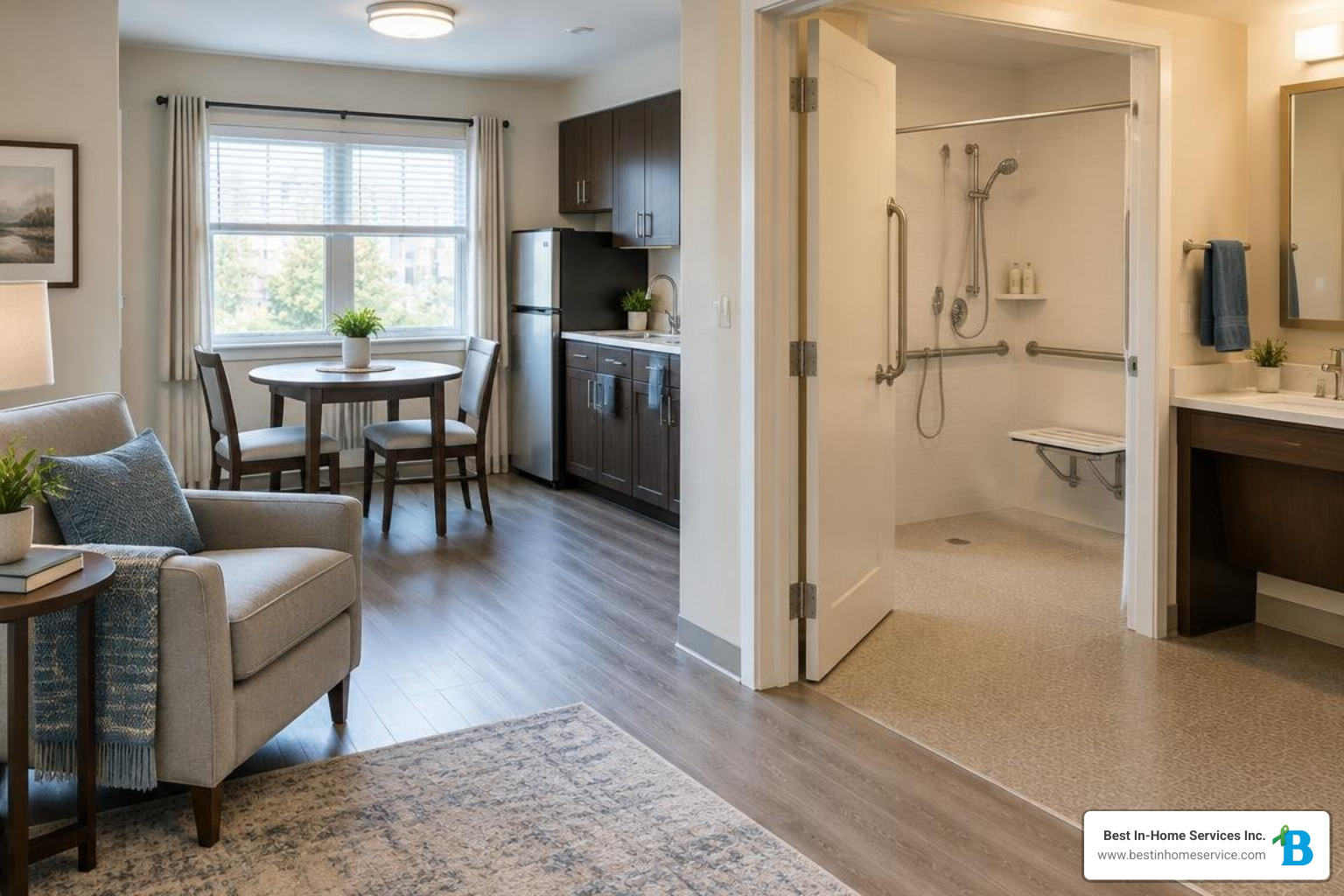
To combat these risks, incorporating structured, low-impact activities to maximize mobility is one of the most effective steps you can take once you return home to Cook County, DuPage County, or Lake County.
Nutritional Deficiencies and Metabolic Stress
Your muscles cannot rebuild without raw materials. Unfortunately, the hospital environment is notorious for causing or worsening malnutrition.
When your body is fighting off an infection, healing from surgery, or recovering from trauma, it enters a hypermetabolic state. It burns through calories and protein at an accelerated rate. If your dietary intake doesn’t match this demand, your body begins digesting its own skeletal muscle to access vital amino acids.
A notable case study on severe ICU-acquired weakness recovery highlighted that a patient’s muscle recovery stalled completely until targeted nutritional support — specifically rich in branched-chain amino acids (BCAAs) — was introduced alongside physical therapy. BCAAs, particularly leucine, act as a molecular switch to turn on muscle protein synthesis, helping to reverse the muscle-wasting effects of prolonged bed rest.
Evidence-Based Strategies to Rebuild Strength and Mobility
Recovering from leg weakness after hospital stay is not about pushing yourself to the limit or trying to lift heavy weights right away. It requires a patient, phased, and scientifically backed approach.
A landmark study known as the Hospital-ADL study, published in PLOS One, demonstrated that muscle strength is the single most important longitudinal predictor of mobility recovery for older adults after acute hospitalization. The study showed that while mobility improves most rapidly during the first month post-discharge, it often plateaus by month three.
To break through this plateau and regain your independence, you must implement active, progressive strength training.
Gradual Physical Rehabilitation and Safe Exercise
Before you start any exercise routine, ensure you have been cleared by your medical team. Once cleared, the goal is to transition from passive movement to active resistance training gradually.
- In-Bed Exercises (Early Phase):
- Ankle Circles: Rotate your ankles clockwise and counterclockwise to improve circulation and prevent blood clots.
- Heel Slides: While lying flat, slowly slide your heel up toward your buttocks, bending your knee, then slide it back down. This gently wakes up the quadriceps and hamstrings.
- Seated Exercises (Intermediate Phase):
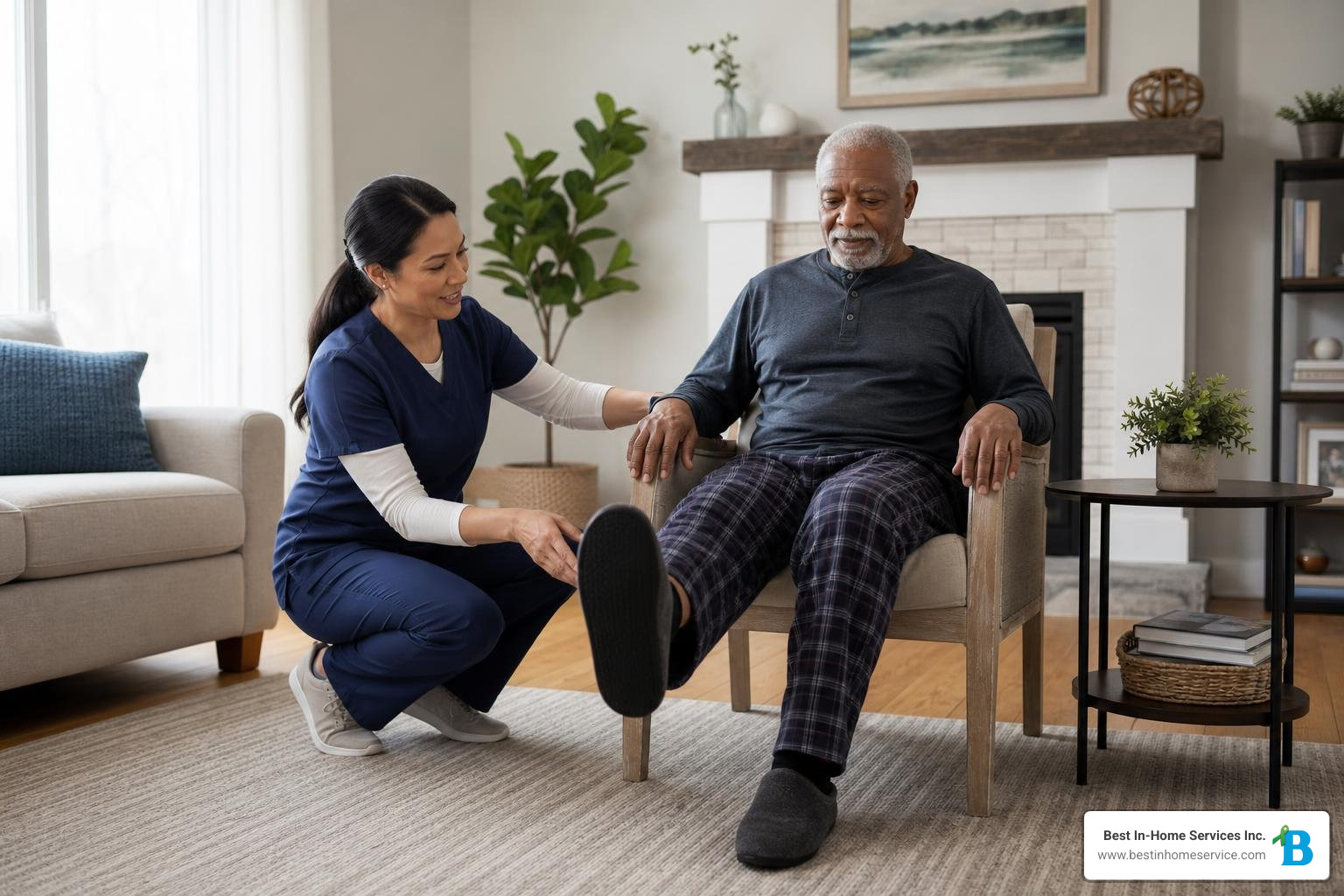
- Seated Leg Extensions: Sit upright in a sturdy chair. Slowly straighten one leg out in front of you, hold for two seconds, and lower it. Repeat 10 times on each side.
- Seated Marching: Lift your knees alternatingly toward the ceiling as if marching in place while seated. This builds hip flexor strength.
- Standing and Walking (Advanced Phase):
- Sit-to-Stands: Practice standing up from a chair without using your hands (or using them only for balance). This is the ultimate functional exercise for building thigh and glute strength.
- Short, Frequent Walks: Aim for short 5-to-10-minute walks around your home several times a day, rather than one long, exhausting walk.
For a comprehensive look at setting up a safe environment and structuring these routines, refer to our detailed Guide to Post Hospitalisation Care and Recovery.
Nutritional and Hydration Support for Muscle Recovery
To fuel your exercises and rebuild lost tissue, your diet needs to be highly deliberate:
- Prioritize Protein: Aim for high-quality protein sources at every meal. Lean meats, fish, eggs, Greek yogurt, tofu, and legumes are excellent choices. Older adults recovering from illness often require 1.2 to 1.5 grams of protein per kilogram of body weight daily to overcome anabolic resistance.
- Stay Hydrated: Dehydration reduces blood volume, worsening feelings of weakness and fatigue. Keep a water bottle nearby and monitor for signs of dehydration like dark urine or dry mouth. Incorporate hydrating foods like cucumbers (95% water) or oranges (86% water).
- Consider Supplements: Under a doctor’s guidance, supplements like BCAAs or Vitamin D can help accelerate muscle repair.
- Optimize Sleep Hygiene: Rebuilding muscle happens when you sleep. Keep your bedroom cool (around 65°F), limit caffeine in the afternoon, and try to maintain a consistent sleep schedule to help normalize your cortisol levels.
Minimizing Rehospitalization Risks with Professional Support
The first 14 days after leaving the hospital are the most dangerous for falls and complications. When your legs are weak, simple tasks like getting out of bed, using the bathroom, or navigating a rug can lead to devastating falls.
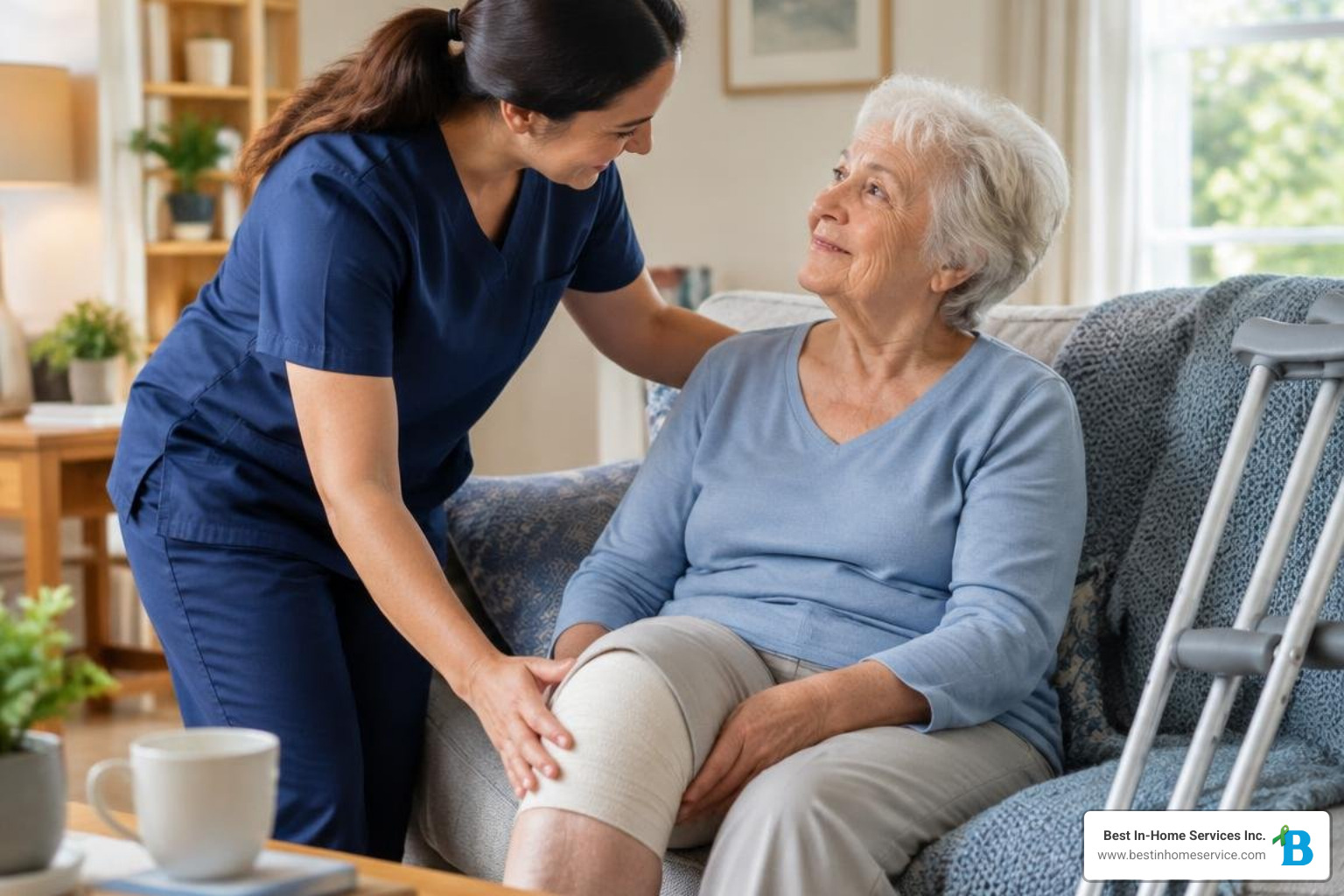
This is where professional, in-home care becomes invaluable. Having a certified caregiver at home can help:
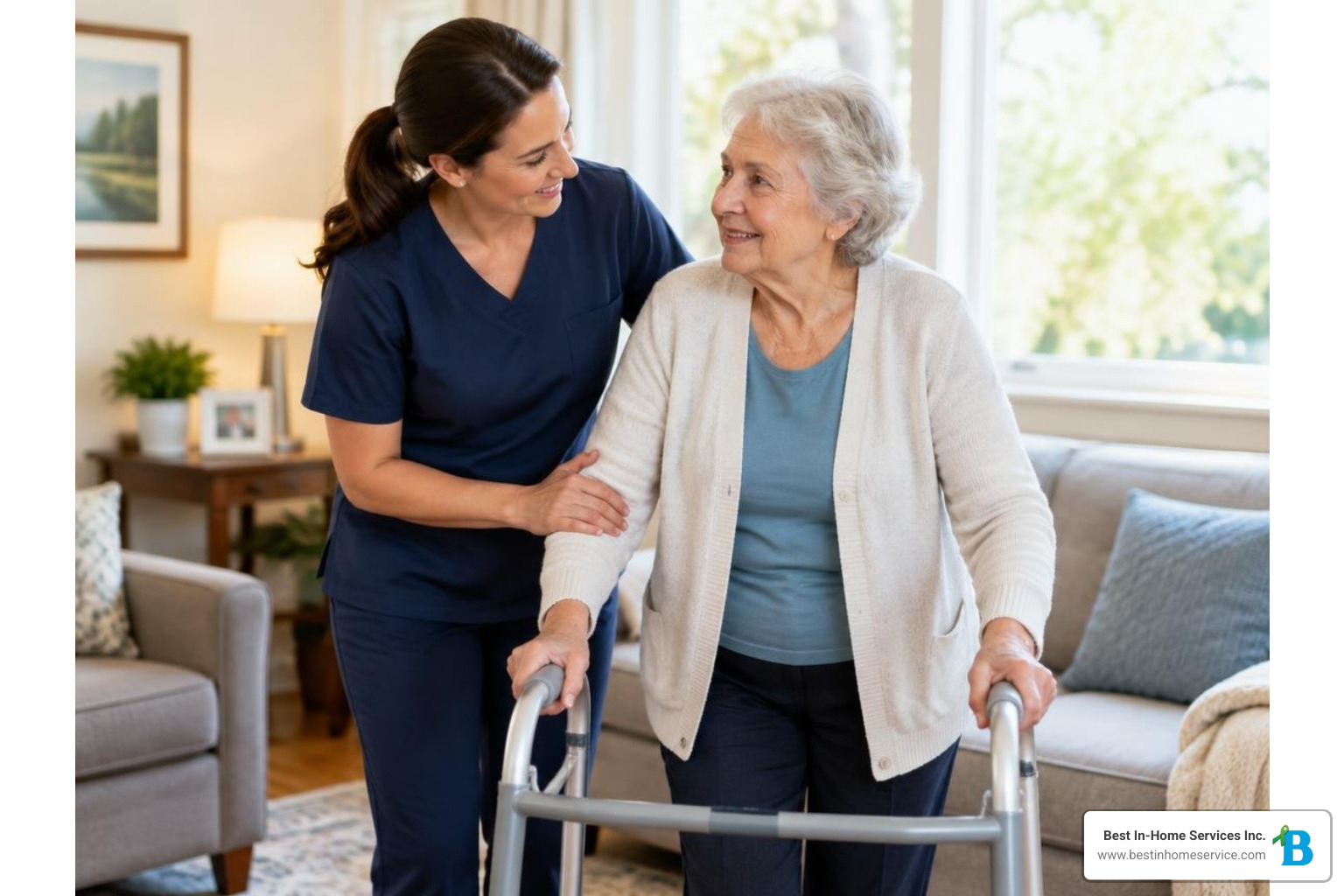
- Provide Fall Prevention Support: Assisting with transfers, guiding you during walks, and identifying trip hazards in your home.
- Manage Complex Medication Schedules: Ensuring you take the right doses at the right times, reducing the risk of side effects like dizziness or drowsiness that contribute to leg weakness.
- Assist with Nutrition and Hydration: Preparing protein-rich meals and keeping water within arm’s reach.
If you or a loved one is returning home to Chicago, Naperville, Downers Grove, or the surrounding suburbs, securing professional 24-hour in-home care in Illinois provides the continuous, expert supervision needed to ensure a safe, smooth, and successful recovery.
Frequently Asked Questions About Post-Hospital Recovery
How long does it take to regain leg strength after a hospital stay?
The recovery timeline is highly individual. For a brief hospital stay with mild deconditioning, you may regain your normal strength within two to four weeks. However, for severe illnesses, sepsis, or extended ICU stays, full recovery typically takes three to six months, and in some cases up to a year.
Your recovery speed is heavily influenced by your pre-hospital health status, your nutritional intake, and the consistency of your physical rehabilitation.
Why are my legs so weak and shaky after being discharged?
The shakiness you feel is a combination of muscle deconditioning and nervous system fatigue. Because your muscles have lost mass and their energy-producing mitochondria are temporarily impaired, they have to work twice as hard to perform basic movements.
Additionally, medications like sedatives, muscle relaxants, or heavy pain relievers can linger in your system, affecting your balance and motor coordination.
When to Seek Medical Attention for Leg Weakness After Hospital Stay
While mild weakness and fatigue are expected, certain “red flag” symptoms require immediate medical evaluation:
- Sudden, asymmetrical leg swelling or warmth: If one leg becomes swollen, red, warm, or painful to the touch, this could indicate a Deep Vein Thrombosis (DVT).
- Sudden shortness of breath or chest pain: These are classic signs of a pulmonary embolism (PE), a life-threatening condition where a blood clot travels to the lungs.
- Rapidly worsening weakness: If you suddenly lose the ability to stand or walk, or if the weakness spreads to your arms or face, seek emergency medical care immediately.
Conclusion
Experiencing leg weakness after a hospital stay can feel incredibly frustrating and scary. But remember: your body has just survived a major physical ordeal, and it is entirely normal for your muscles to need time, patience, and deliberate care to rebuild. By combining gradual, safe physical exercises with protein-rich nutrition, proper hydration, and a supportive environment, you can steadily reclaim your strength and mobility.
You don’t have to navigate this challenging journey alone. At Best In-Home Services Inc., we provide personalized, compassionate home care throughout Chicago, Northbrook, Hinsdale, Oak Brook, and the surrounding Illinois communities. Whether you need 24/7 support, help with daily exercises, or assistance with meal preparation and medication management, our certified staff is here to design a custom care plan tailored to your unique recovery needs.
To learn more about what to expect and how to set up a safe recovery environment, explore our comprehensive guide on Post-Hospital Care Throughout Illinois or reach out to us today to schedule a consultation. Let us help you take those first confident steps back to your vibrant, independent self.



 1-224-636-5200
 1-224-636-5210
  425 Huehl Rd 13B Northbrook IL 60062