
Why Finding the Right Senior Citizen Support Matters
Senior citizen support covers a wide range of services that help older adults stay safe, healthy, and independent — whether at home or in the community.
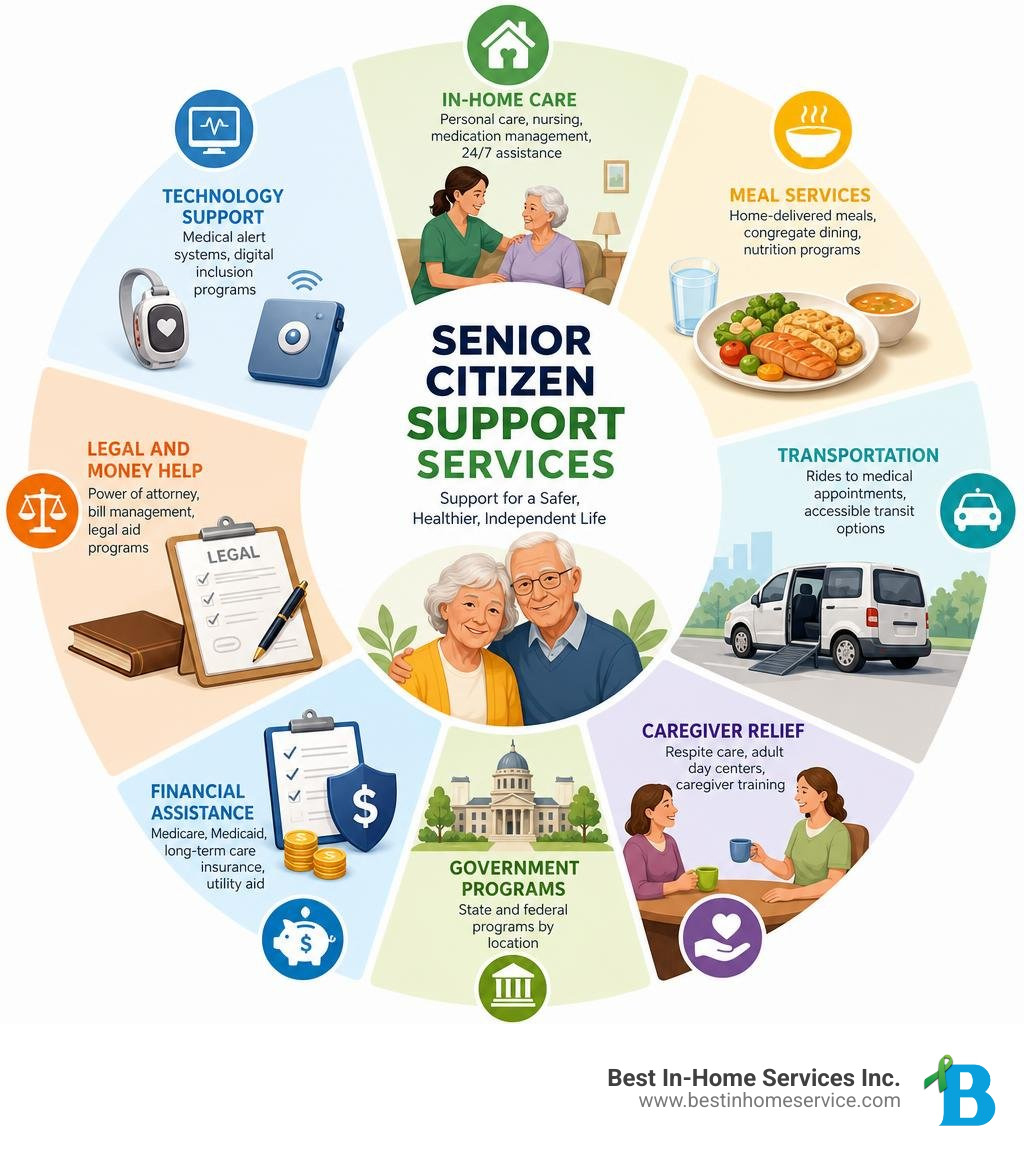
Here’s a quick overview of the main types of support available:
| Type of Support | What It Includes |
|---|---|
| In-Home Care | Personal care, nursing, medication management, 24/7 assistance |
| Meal Services | Home-delivered meals, congregate dining, nutrition programs |
| Transportation | Rides to medical appointments, accessible transit options |
| Caregiver Relief | Respite care, adult day centers, caregiver training |
| Financial Assistance | Medicare, Medicaid, long-term care insurance, utility aid |
| Legal and Money Help | Power of attorney, bill management, legal aid programs |
| Technology Support | Medical alert systems, digital inclusion programs |
| Government Programs | State and federal programs by location (Illinois, California, Florida, and more) |
Millions of families across the United States are navigating these choices right now. And it’s not simple. Programs vary by state, eligibility rules can be confusing, and finding trustworthy providers takes real effort.
For families in Chicago dealing with dementia, memory loss, or daily care needs, the stakes feel even higher. You want someone qualified, compassionate, and available — not just a name from a list.
I’m Lily Harrison, General Manager at Best In-Home Services Inc., where I’ve spent years coordinating personalized senior citizen support for families across Chicago and Illinois, with a focus on certified caregivers, dementia and memory care, and 24/7 in-home assistance. This guide walks you through everything you need to know to find the right support for your loved one.
More about senior support:
Essential In-Home Senior Citizen Support Services
When we talk about helping our loved ones age gracefully, most seniors express a strong desire to stay right where they feel most comfortable: in their own homes. This preference is why understanding the vast ecosystem of in-home senior citizen support is so vital. Keeping an older adult safe and thriving at home requires a combination of clinical care, daily lifestyle assistance, nutritional support, and reliable transportation.
First, let’s look at home health care. This type of support typically involves clinical services ordered by a physician, often following a hospital stay. It includes wound care, physical therapy, in-home nursing, and medication management. If you are exploring why this model works so well, you can read more about Why Senior Care at Home is the Best Choice for Aging in Place.
Nutrition is another cornerstone of healthy aging. Many older adults struggle to cook balanced meals, which can lead to rapid physical decline. Programs like Meals on Wheels provide home-delivered meals tailored to specific dietary needs, while local community centers offer congregate dining settings that double as social outings. To understand how diet impacts health, explore The Importance of Nutrition and Meal Planning in Senior Care.
Finally, we cannot overlook physical movement and mobility. Safe, assisted exercises help seniors maintain their balance and prevent dangerous falls. For practical tips on keeping your loved one moving safely, check out Maximize Mobility: Essential Activities to Keep Seniors Active and Thriving at Home. To begin exploring the national network of community resources designed to connect you to these services, you can visit the federal Elder Care | Home portal.
Personal Care and Household Help
While clinical care is crucial, the vast majority of daily senior citizen support involves non-medical help. This is where personal care and household assistance make all the difference. Personal care services assist seniors with activities of daily living (ADLs), such as bathing, dressing, grooming, and safely transferring from a bed to a chair.
Household help, on the other hand, keeps the living environment safe and hygienic. This includes light housekeeping, laundry, running errands, and preparing fresh meals. You can learn more about how these services alleviate daily stress by reading Household Help for Seniors: More Than Just Chores, It’s Peace of Mind.
Beyond physical chores, companionship is perhaps the most underrated form of support. Social isolation is a silent epidemic among older adults, often contributing to cognitive decline and depression. Companion care ensures your loved one has someone to talk to, play board games with, or accompany them on walks. For a deeper look at emotional support, read The Ultimate Guide to Companionship for Elderly Loved Ones.
Integrating Technology with In-Home Care
In June 2026, technology is no longer just for the tech-savvy youth; it has become an indispensable tool for senior safety and connectivity. Integrating modern tech with traditional in-home care allows us to build a more robust safety net for our aging parents.
- Emergency Medical Alert Systems: Modern wearable devices go far beyond the classic “I’ve fallen and I can’t get up” buttons. Today’s systems feature automatic fall detection, GPS tracking, and instant cellular connection to emergency dispatchers.
- Digital Inclusion Programs: Staying connected with family via video calls, managing online prescriptions, and accessing telehealth appointments are vital skills. Digital inclusion initiatives help seniors learn to navigate smartphones and tablets safely.
- Smart Home Assistive Devices: Smart plugs, automatic stove shut-off sensors, and voice-activated assistants (like Amazon Alexa or Google Home) allow seniors to control their environment easily and prompt them to take medications on time.
When combined with companion care, technology ensures that even when a professional caregiver is not physically in the room, your loved one remains connected, monitored, and safe.
Navigating Government Programs and Financial Assistance
Figuring out how to pay for senior citizen support can feel like trying to solve a Rubik’s Cube blindfolded. Between Medicare, Medicaid, and private insurance, the rules can be incredibly dense. Let’s break down the primary funding sources so you can make informed financial decisions.
To help you navigate these options, the Congressional Research Service provides an excellent guide on Connecting Older Adults to Information on Benefits and Services .
Here is a comparison of the three primary financial pillars for senior care:
| Financial Option | What It Covers | Who Is Eligible | Key Cost Details |
|---|---|---|---|
| Medicare | Short-term skilled nursing, physical therapy, limited post-hospital home health. Does not cover long-term personal care. | Adults aged 65+ and individuals with certain disabilities. | Generally free Part A; monthly premiums for Part B and D; copays apply. |
| Medicaid | Long-term in-home personal care, skilled nursing home placement, and community-based waiver programs. | Low-income seniors meeting strict asset and income limits. | Very low to no cost for those who qualify. |
| Long-Term Care Insurance | In-home personal care, assisted living, memory care, and nursing home care. | Individuals who purchased policies prior to needing care. | Monthly premiums vary widely based on age and health at purchase. |
Financial and Legal Preparation for Elder Care
We always tell families that the best time to plan for elder care was yesterday; the second best time is today. Waiting for a medical emergency to establish legal protections and financial structures can lead to costly court battles and unnecessary stress.
First, establishing a Power of Attorney (POA) for Healthcare and a Power of Attorney for Property is essential. These documents designate a trusted family member to make medical and financial decisions if your loved one becomes incapacitated.
Second, long-term care planning should involve a clear assessment of assets. Working with an elder law attorney or a certified financial planner can help you structure assets to qualify for Medicaid down the road without sacrificing your family’s financial security. Managing care costs proactively ensures that your loved one’s savings are utilized efficiently, maximizing their quality of life.
State-Level Senior Citizen Support Initiatives
Depending on where you live, state and municipal programs offer highly localized relief. For families in our service areas, Illinois has robust systems in place.
At the state level, the Illinois Community Care Program (CCP) helps seniors who might otherwise need nursing home care to remain in their own homes. To explore how this fits into the broader landscape, read about Care Options for Seniors in Chicago Area.
If you live in the city, the Senior Services – City of Chicago department offers excellent local resources, including information on congregate meals, home modifications, and information assistance.
For those residing in the surrounding suburbs and counties, excellent localized support programs exist:
- Downers Grove: See the Senior Services – Downers Grove Township page for local township programs, including transportation assistance and property tax filing help.
- Northfield and North Shore: The Business Directory • North Shore Senior Center – Northfield, IL connects families to counseling, social activities, and dementia care support.
- Schaumburg & Hanover Park: Local resources are detailed on the Schaumburg Township Older Adult Resources | Hanover Park, IL page.
- Lake County: For volunteer-based medical transport and shopping assistance, visit ElderCARE Lake County .
- Cook County: The Senior Services | Cook County Sheriff’s Office provides safety programs and elder abuse prevention support.
- DuPage County: Explore utility assistance and home weatherization programs through the Community Services Programs | DuPage Co, IL portal.
Resources and Relief for Family Caregivers
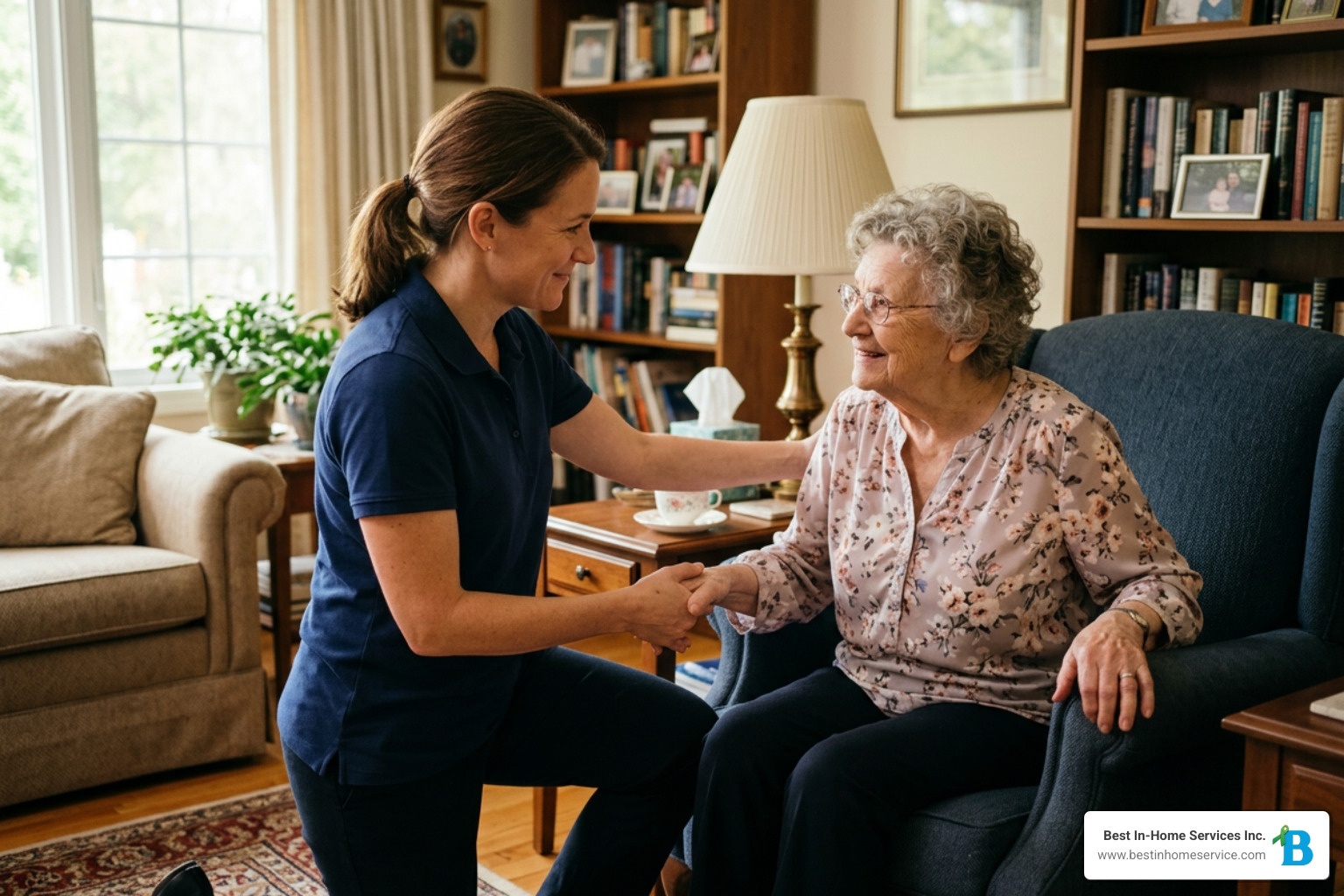
Caring for an aging parent is a beautiful act of love, but let’s be honest: it can also be exhausting. Caregiver burnout is incredibly common. It manifests as physical exhaustion, anxiety, and guilt. To stay healthy enough to care for others, family caregivers must have access to support networks, training programs, and professional relief.
Many local organizations offer caregiver support groups where you can share experiences and advice. Training programs are also available to teach you safe transferring techniques, dementia communication strategies, and stress-management skills. Taking advantage of these resources is not a sign of weakness; it is a vital part of being a responsible caregiver.
Respite Care and In-Home Support Options
Respite care is designed to give primary family caregivers a much-needed break. Whether you need to attend your own doctor’s appointment, go on a weekend trip, or simply sleep for eight uninterrupted hours, respite care steps in to fill the gap.
Respite care can take several forms:
- In-Home Respite: A professional caregiver comes to your home for a few hours or days to care for your loved one, ensuring they remain in a familiar environment.
- Adult Day Centers: Safe, social facilities where seniors can spend the day participating in activities while you work or rest. (For instance, the Council on Aging contracts with 11 adult day care centers serving more than 350 individuals annually, showcasing how popular this model is).
- Institutional Respite: Under certain circumstances, Medicare covers most of the cost for up to five consecutive days of respite care in a hospital or skilled nursing facility for hospice patients.
Utilizing respite care ensures your loved one receives high-quality social engagement and professional monitoring, while you get the time you need to recharge your own batteries.
How to Evaluate and Choose Reputable Care Providers
When you decide to bring professional help into your loved one’s home, the process of choosing an agency can feel overwhelming. You are, after all, trusting strangers with the safety and well-being of your parent.
To start, you should understand the different paths available. Some families hire independent caregivers, while others work with licensed home care agencies. To weigh these choices, read How to Navigate Home Care Help for Your Aging Parents.
If you are looking specifically within the local market, you can review our curated list of the 5 Best Home Care Options for Seniors in Chicago Area. Finally, if you are still trying to decide between keeping your parent at home or moving them to a facility, our guide on Home Care vs Assisted Living: Which is Right for Your Family provides a balanced comparison.
Key Steps for Vetting Home Care Agencies
To ensure you are hiring a reputable agency, you must do your homework. This means looking beyond slick brochures and asking hard questions about licensing, staff training, and safety protocols. For a breakdown of cost-effective strategies, see our article on Affordable Home Care for Seniors in Chicago.
When interviewing potential agencies, use this checklist of essential vetting questions:
- Are your caregivers W-2 employees or independent contractors? (W-2 employees are fully bonded, insured, and supervised by the agency, which protects you from liability).
- What background checks and screening processes do you perform? (Look for agencies that conduct rigorous criminal background checks, drug screenings, and reference verifications).
- How do you train your staff, especially for specialized needs like dementia or memory care? (Ensure caregivers receive ongoing, certified training).
- How do you handle caregiver call-offs or emergencies? (A reputable agency should always have a backup plan and 24/7 support staff available).
- Do you create customized care plans overseen by a clinical professional? (Care plans should be tailored to your loved one’s specific physical and cognitive needs).
Frequently Asked Questions About Senior Care
What is the difference between Medicare and Medicaid for senior care?
Medicare is a federal health insurance program primarily based on age (65+) or disability, regardless of income. It covers medical services like doctor visits, hospitalizations, and short-term rehabilitation, but it does not cover long-term, non-medical in-home care or assisted living. Medicaid, on the other hand, is a joint federal and state program for low-income individuals. It covers long-term care services, including in-home personal care and nursing home care, but has strict financial eligibility limits that vary by state.
What financial assistance programs are available for senior care in Illinois?
In Illinois, the primary state program is the Community Care Program (CCP), which is managed by the Illinois Department on Aging. It helps seniors aged 60 and older who meet specific asset limits to receive free or heavily subsidized in-home care, adult day services, and emergency home response systems. Additionally, Cook, DuPage, and Lake counties offer various localized senior grants, utility assistance programs, and property tax relief options.
What resources are available for preventing falls at home?
Falls are a leading cause of injury among seniors, but they are highly preventable. Families can access professional home safety assessments through local home care agencies or occupational therapists. Additionally, local township offices in Cook and DuPage counties often provide resources or grants for installing grab bars, ramp installations, and improving home lighting to reduce fall risks.
Conclusion
Finding the right senior citizen support for your family is a journey that requires patience, research, and a clear understanding of your loved one’s unique needs. Whether you are navigating government programs, arranging home-delivered meals, or bringing professional caregivers into the home, you do not have to do it alone.
At Best In-Home Services Inc., we provide personalized, compassionate in-home care services across Chicago and its surrounding suburbs, including Downers Grove, Winnetka, Schaumburg, and the North Shore. We specialize in custom dementia and memory care, offering 24/7 support delivered by our highly trained, certified staff.
If you are ready to build a safe, supportive environment for your aging parent, we are here to help. Explore Our Professional Senior Care Services today to learn how we can bring peace of mind to your family.







 1-224-636-5200
 1-224-636-5210
  425 Huehl Rd 13B Northbrook IL 60062