
What You Need to Know About Respite Assisted Living
Respite assisted living is a short-term stay at an assisted living community that gives family caregivers a temporary break while their loved one receives professional care in a safe, supportive environment.
Here’s a quick overview of what it involves:
- What it is: A temporary residential stay (typically a few days to 30+ days) at an assisted living community
- Who it’s for: Family caregivers needing relief, seniors recovering from surgery or hospitalization, or families exploring long-term care options
- What’s included: Meals, 24/7 staff support, medication management, social activities, and personal care assistance
- What it costs: A median of $173 per day in 2026, with some coverage available through Medicare, Medicaid, VA benefits, or long-term care insurance
- How to find it: Contact assisted living communities directly, ask about minimum stay requirements, and schedule a tour
Deciding whether a loved one needs temporary or long-term care is one of the hardest things a family faces. Many caregivers push through exhaustion for months — or years — before realizing that taking a break isn’t giving up. It’s actually one of the most important things you can do for both yourself and the person you’re caring for.
This guide will walk you through everything: what respite care in an assisted living setting actually looks like, how much it costs, how to pay for it, and how to find the right fit for your family in the Chicago area.
I’m Lily Harrison, General Manager at Best In-Home Services Inc., where I help Chicago-area families navigate care decisions — including when respite assisted living is the right short-term solution and when in-home care is a better long-term fit. In the sections below, I’ll break down your options clearly so you can make a confident, informed decision for your loved one.
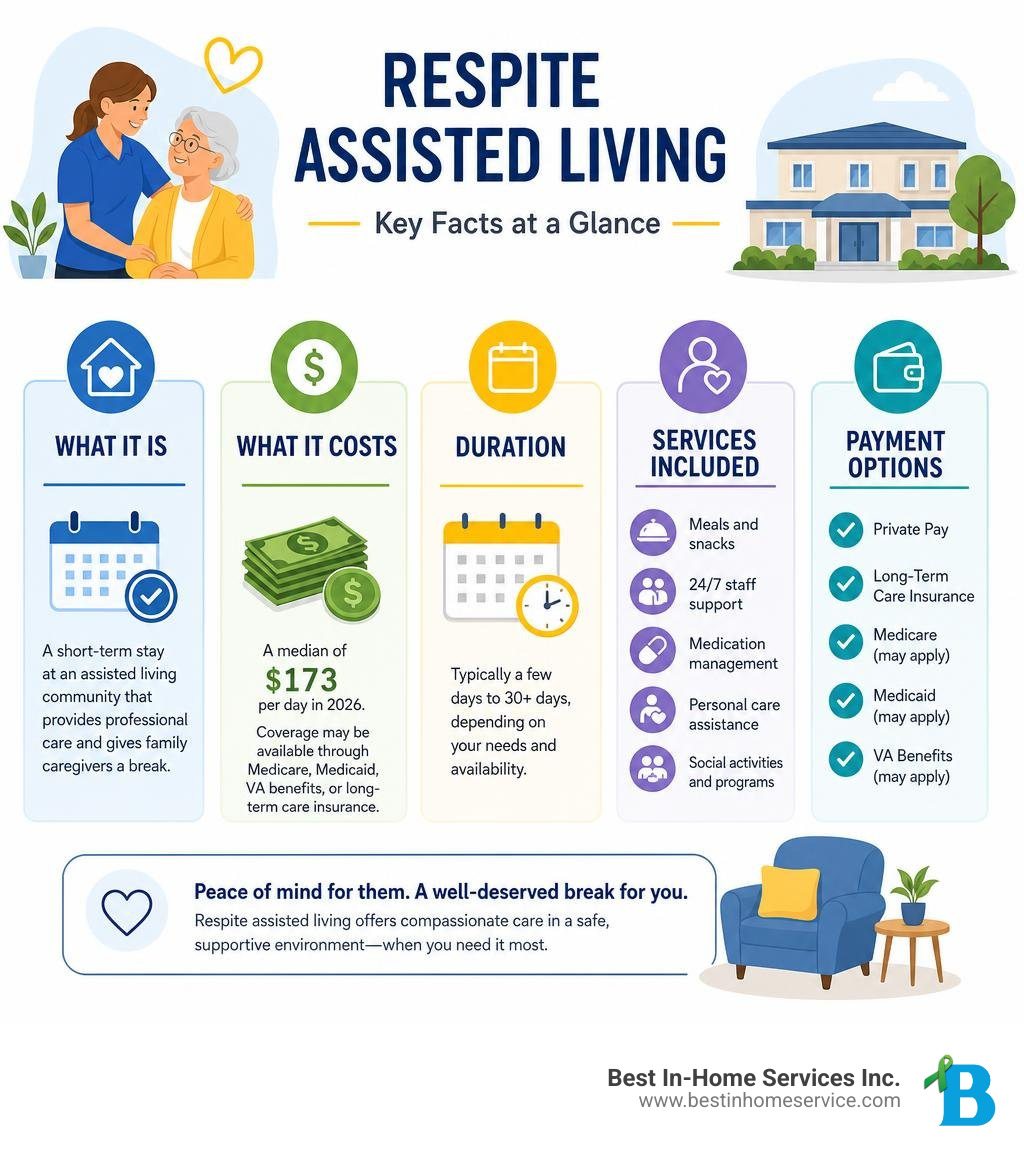
Respite assisted living terms to know:
What is Respite Assisted Living?
At its core, respite assisted living is a short-term residential stay designed to give primary caregivers a much-needed break while ensuring their loved ones receive attentive, professional care in a warm, engaging environment. Think of it as a temporary bridge.
When you utilize respite care within a senior living community, your loved one moves into a fully furnished apartment or suite for a set period. During this time, they are fully integrated into community life rather than being treated as temporary visitors. They receive professional assistance with activities of daily living (ADLs)—such as bathing, dressing, grooming, and eating—alongside professional medication management and full-time oversight.
Caregiver stress is a very real, scientifically documented challenge. Providing daily care for an aging parent or spouse can lead to physical and emotional burnout, which ultimately impacts the quality of care you can provide. Utilizing a short-term stay at an assisted living facility allows you to step back, rest, attend to your own health, or take a vacation, knowing your loved one is safe and supported.
To explore how these temporary programs fit into the broader landscape of support in our region, read The Ultimate Guide to Respite Care Options in Chicago Area.
How Respite Assisted Living Differs from In-Home Care
When evaluating temporary care, families often weigh the differences between moving a loved one to a residential facility temporarily versus hiring professional care to come to the house. Both options have distinct benefits, but they serve different needs.
The primary difference lies in the environment and structure:
- Residential Setting vs. Home Environment: Respite assisted living takes place entirely within a senior living community. This means your loved one has immediate, 24/7 access to on-site staff, specialized safety features (like grab bars, secure exits, and emergency call systems), and structured community dining. In contrast, in-home care allows your loved one to remain in the comfort of their own home, maintaining their exact personal routines without the disruption of moving.
- Social Activities & Engagement: In a senior living facility, respite residents have access to a calendar of daily group activities, fitness classes, and communal dining. This is highly beneficial for seniors who may be experiencing seasonal or holiday isolation. On the flip side, home care offers highly personalized, one-on-one companionship, focusing entirely on your loved one’s unique preferences without the noise or overwhelming nature of a large community.
- Cost and Flexibility: In-home care can be scheduled for just a few hours a day or structured around the clock, offering maximum flexibility. Assisted living respite stays typically require a minimum length of stay (often 14 to 30 days) and involve a flat daily rate.
Understanding these structural differences is key to choosing the right path. For a deeper, side-by-side comparison of these two paths, take a look at our guide on Home Care vs Assisted Living: Which is Right for Your Family?.
Who Benefits Most from Respite Assisted Living?
While any caregiver needing a break can benefit from these programs, there are specific situations where a short-term assisted living stay is particularly advantageous:
- Caregivers Facing Burnout: If you are feeling overwhelmed, chronically exhausted, or find your own physical health declining, taking a planned break is essential. It restores your energy and strengthens your caregiving relationship over the long run.
- Post-Hospital or Post-Surgery Recovery: After a hospital discharge or major surgery, seniors often need a higher level of daily monitoring and physical assistance than a family member can safely provide at home. A temporary stay provides professional nursing oversight, on-site therapy services, and help with mobility while they regain their strength.
- Dementia and Memory Care Needs: Caring for a loved one with cognitive impairment requires immense patience and round-the-clock vigilance. Social involvement and structured daily routines have been shown to improve the quality of life for seniors with cognitive decline by reducing anxiety and providing comforting structure. Many communities offer specialized memory care respite stays in secure environments.
- Families Exploring Long-Term Options: If you are considering a permanent move to assisted living but feel hesitant, a short-term stay acts as a low-commitment trial run.
For families navigating the recovery process after a medical event, our article on 24 Hour In-Home Care in Illinois: Essential Support for Recovery provides additional insights on how to coordinate safe transitions.
Services, Amenities, and Typical Length of Stay

When a senior checks in for a respite stay, they aren’t just renting a room—they are gaining access to the community’s entire suite of services and amenities. A typical respite program is designed to make the temporary resident feel at home immediately.
Standard inclusions generally feature:
- Furnished Accommodations: Private suites or apartments complete with basic furniture, utilities, safety features, and emergency call systems.
- Nutritious Dining: Three chef-prepared, restaurant-style meals daily, along with healthy snacks, often tailored to specific dietary needs.
- Personalized Care Plans: Assistance with bathing, grooming, dressing, and mobility, tailored to the individual’s level of independence.
- Medication Management: Staff members ensure medications are taken correctly and on schedule.
- Therapeutic and Social Activities: Access to all daily events, which may include cognitive games, music therapy, art classes, fitness programs, and seasonal gardening.
- On-Site Therapy: Many communities offer physical, occupational, or speech therapy services on-site to help seniors recovering from surgery.
The duration of these stays varies based on family needs and community policies. While a typical respite stay can last anywhere from a few days to several weeks, many assisted living communities enforce a minimum stay requirement of 30 days (though some facilities offer a 14-day minimum).
This minimum stay is designed to help the senior fully settle in, adjust to the daily routine, and truly experience the benefits of community life. Under special circumstances, or during off-peak seasons, some communities may consider shorter stays at their discretion.
If you are looking for specific regional providers in the northern suburbs or Cook County, resources like the Find Respite Care Services in Cook County, Illinois – ECDOL and Find Respite Care Services in Lake County, Illinois – ECDOL directories can help you locate local facilities that fit these criteria.
The Cost of Respite Care and Payment Options
Understanding the financial side of respite care is crucial for realistic planning. Because respite stays include housing, 24/7 care, meals, and activities, they are billed at a daily rate that is typically slightly higher than the daily breakdown of a permanent monthly contract.
To help you visualize how these costs compare to other senior care settings, consider the median daily rates across the industry:
| Care Setting | Median Daily Cost (Approx. 2026 Trends) | Key Details |
|---|---|---|
| Adult Day Health Care | $100 / day | Daytime supervision, no overnight stay |
| Respite Assisted Living | $173 / day | Furnished room, 24/7 support, meals, activities |
| In-Home Care (24-Hour) | $264 / day | One-on-one professional care in the home |
| Skilled Nursing Facility | $305 / day | High-level medical care and clinical oversight |
Note: Costs can vary widely based on the specific community, the level of personal care required, and geographic location within the Chicago suburbs.
When it comes to paying for a short-term stay, families typically rely on a mix of private funds and specialized benefits:
- Medicare: Generally, traditional Medicare does not cover residential respite care if it is solely for caregiving relief. However, there is a major exception: for seniors enrolled in the Medicare Hospice Benefit, Medicare will cover up to five consecutive days of inpatient respite care at a time in an approved facility to give the primary caregiver a break.
- Medicaid: In Illinois, Medicaid waiver programs may cover a portion of respite care costs in approved supportive living facilities. In some approved cases, Medicaid can cover up to 100% of respite care costs for the first five days.
- Veterans Benefits (VA): Eligible veterans or their surviving spouses may qualify for Aid and Attendance benefits, which can be used to pay for temporary residential care. Additionally, the VA itself sometimes coordinates and covers short-term respite stays for veterans enrolled in their health system.
- Long-Term Care Insurance: Many modern long-term care insurance policies include a provision for respite care. Be sure to review your policy to see if it covers short-term residential stays and what the eligibility triggers are.
For families residing in the western suburbs, local government support systems can also provide guidance. The Community Services Programs | DuPage Co, IL portal offers valuable local resources and advice on navigating senior aid programs.
Additionally, to understand the local clinical criteria for these services, you can review the helpful breakdown on Do you qualify for respite care? – Oak Trace.
How to Use a Respite Stay as a “Test Drive”
One of the most strategic ways to use respite assisted living is as a “test drive” for a potential long-term move. Moving a parent or spouse into senior living is a major life transition, often accompanied by anxiety, guilt, and uncertainty. A short-term stay removes the high stakes of a permanent move, allowing both the senior and their family to evaluate the community with zero long-term commitment.
During a trial stay of two to four weeks, your loved one can:
- Experience the Daily Culture: They can participate in meals, attend social events, and see if the general rhythm of the community matches their personality and preferred daily schedule.
- Assess Social Compatibility: Meeting current residents and participating in group activities (like music classes or gardening) helps seniors see if they can envision making genuine connections there.
- Evaluate the Care and Staff: Families can observe staff-to-resident interactions firsthand. Are the caregivers patient, warm, and responsive? Do they respect the resident’s dignity and independence?
- Ease the Emotional Transition: Knowing that the stay has a pre-determined end date reduces the feeling of permanence, helping seniors adjust to the environment at their own pace.
If you are exploring local options for this type of trial run in the Chicago area, communities like Senior Respite Care in Chicago, IL | St. Joseph Village of Chicago or Senior Respite Care in Lemont, Illinois | Franciscan Village provide structured short-term programs specifically designed to integrate temporary residents into their active community lifestyles.
Questions to Ask During a Respite Tour
To make the most of your search, you should tour several communities before booking. Here is a checklist of essential questions to ask the community directors:
- [ ] Licensing and Inspections: Is the community licensed by the state of Illinois, and are their recent inspection reports available for review?
- [ ] Staffing Ratios: What is the staff-to-resident ratio during the day, in the evening, and overnight?
- [ ] Medication Policies: How are medications managed, stored, and administered during a short-term stay?
- [ ] Care Assessments: How do you determine the level of care my loved one needs prior to their arrival?
- [ ] Inclusion of Services: Is the daily respite rate truly all-inclusive, or are there additional fees for physical assistance, incontinence care, or therapy?
- [ ] Activity Customization: Do residents have the freedom to keep their preferred daily schedules, or are they expected to follow strict community timelines?
- [ ] Family Communication: How are families kept informed about their loved one’s physical health and emotional well-being during the stay?
Frequently Asked Questions about Respite Care
How long can a senior stay in respite care?
The length of a respite stay is highly flexible but is governed by community policies. While some facilities can accommodate very brief stays of a few days, many assisted living communities have a minimum stay requirement of 14 to 30 days. The maximum stay is typically around 60 to 90 days; beyond that, the stay is usually transitioned into a permanent residency agreement.
Does Medicare cover respite assisted living?
Under normal circumstances, Medicare does not cover the room, board, or daily personal care costs of an assisted living respite stay. However, if a senior is receiving Medicare-certified hospice care, Medicare will cover up to five consecutive days of inpatient respite care in an approved facility to provide relief for the primary family caregiver.
How do we prepare a senior for a temporary stay?
Preparation is key to a smooth transition. Start by having open, honest conversations about the temporary nature of the stay, framing it as a positive “vacation” or recovery period.
When packing, bring familiar items to make the space feel like home—such as favorite photos, a familiar blanket, and preferred toiletries. Finally, ensure the facility receives a complete medical history, an updated list of medications, and a detailed breakdown of your loved one’s daily habits and preferences during the pre-arrival assessment.
Conclusion
Navigating senior care is a deeply personal journey. Whether you choose to utilize a short-term stay in a respite assisted living community as a caregiver break, a post-hospital recovery period, or a trial run for the future, taking proactive steps ensures your loved one receives the highest quality of care.
However, we also know that many seniors thrive best when they can remain in the comfortable, familiar surroundings of their own homes. For many families in the Chicago area, personalized, 24/7 home care is the ideal, sustainable solution for aging in place.
At Best In-Home Services Inc., we provide custom, compassionate care—including specialized dementia, memory, and elder care—across Chicago, Cook County, DuPage County, Lake County, and surrounding suburbs like Naperville, Downers Grove, Winnetka, and Evanston. Our certified staff is available round-the-clock to support your family’s unique needs.
To learn more about how home care can support your family’s long-term goals, read our guide on Why Senior Care at Home is the Best Choice for Aging in Place.
Ready to explore your options? Contact us today to learn more about our personalized Best In-Home Services Inc. Care Services and let us help you find the peace of mind you deserve.







 1-224-636-5200
 1-224-636-5210
  425 Huehl Rd 13B Northbrook IL 60062