
Why Companionship Care at Home Matters More Than You Think
Companionship care at home is a type of non-medical in-home support that helps seniors stay safe, socially connected, and independent — without moving to a facility.
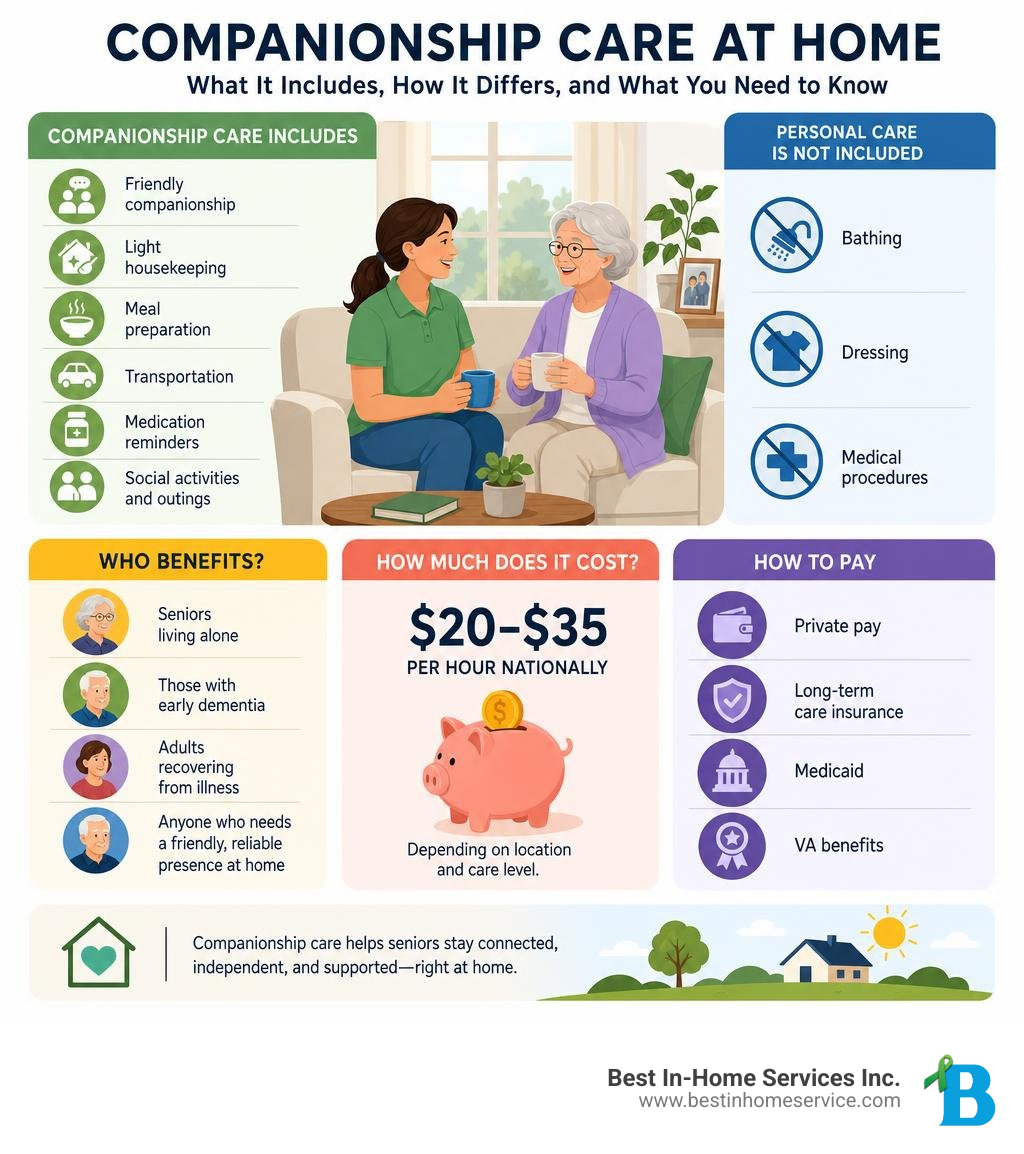
Here is a quick overview of what it covers:
- What it is: Regular visits from a trained caregiver who provides conversation, help with daily tasks, and emotional support
- Who it’s for: Seniors living alone, those with early dementia, adults recovering from illness, or anyone who needs a friendly, reliable presence at home
- What it includes: Light housekeeping, meal prep, transportation, medication reminders, and social activities
- What it does NOT include: Bathing, dressing, or any medical procedures — those fall under personal care or home health aide services
- How much it costs: Market rates for companion care run roughly $27 to $35 per hour in the Chicago area. Best In-Home Service charges $35 per hour for companion and homemaker care, with a 3-hour minimum per visit.
- How to pay: Private pay, long-term care insurance, Medicaid, or VA benefits
Nearly 25% of adults age 65 and older are socially isolated. That kind of loneliness is not just uncomfortable — it raises the risk of heart disease, stroke, dementia, and depression. For many Chicago-area families, the question is not whether their loved one needs more support, but what kind — and where to start.
Companion care is often that first step. It is more affordable than personal care, easier to start, and can make a real difference in a senior’s daily quality of life.
I’m Lily Harrison, General Manager at Best In-Home Services Inc., where I help Chicago-area families navigate in-home care options — including companionship care at home — for seniors facing dementia, memory loss, or everyday challenges with independence. In my work coordinating personalized care plans with certified caregivers across Illinois, I have seen how the right companion can change everything for a senior living alone.
What is Companionship Care at Home?
At its core, companionship care at home is about relationship-building and practical daily assistance. Unlike clinical nursing care, companion care focuses on the emotional, social, and logistical aspects of a senior’s life. It is designed to bridge the gap for older adults who do not necessarily need hands-on medical intervention but can no longer manage everything on their own without feeling overwhelmed or isolated.
We often find that seniors who are hesitant to accept “care” are incredibly receptive to companionship. It feels less like a clinical service and more like having a helpful friend or a dedicated neighbor stop by. This friendly approach is a fantastic entry point to in-home support, allowing seniors to maintain control of their schedules and environments. To dive deeper into how these relationships develop, check out The Ultimate Guide to Companionship for Elderly Loved Ones.
Defining Companion Care vs. Personal Care
It is very common for families to confuse companion care with personal care. The simplest way to understand the difference is the “hands-on” versus “hands-off” rule:
- Companion Care (Hands-Off): The caregiver assists with cognitive, emotional, and household tasks. They do not physically touch the client to assist with bodily functions.
- Personal Care (Hands-On): The caregiver provides direct physical assistance. This includes “Activities of Daily Living” (ADLs) such as bathing, grooming, toileting, dressing, and transferring from a bed to a wheelchair.
If your loved one is still physically independent but struggles with loneliness, cognitive decline, or basic household management, companion care is the perfect fit. If they require help in the bathroom or shower, they will need personal care.
| Feature | Companion Care | Personal Care / Home Health |
|---|---|---|
| Primary Focus | Socialization, emotional support, household help | Physical assistance, hygiene, mobility |
| Hands-On Physical Help | No | Yes (Bathing, dressing, toileting) |
| Medical Training Required | No | Often yes (CNA, HHA, or PCA licenses) |
| Key Activities | Conversation, hobbies, meal prep, light chores | Grooming, transferring, feeding, continence care |
| Cost | Generally lower | Generally higher |
Key Services Included in Companionship Care at Home
What does a companion actually do during a visit? The beauty of this service is its flexibility. A typical visit can include a variety of non-medical tasks tailored to the senior’s preferences:
- Friendly Conversation and Socialization: Sharing stories, discussing current events, playing cards, or working on crafts.
- Meal Preparation: Planning nutritious meals, grocery shopping, cooking, and cleaning up afterward.
- Light Housekeeping: Dusting, vacuuming, washing dishes, and handling laundry to keep the living environment safe and tidy. For more tips on managing household chores, read about More info about household help.
- Transportation and Errands: Driving to doctor appointments, beauty salon visits, or local community events.
- Medication Reminders: Helping seniors stay on track with their prescribed medications (though companions cannot physically administer or dose the medicine).
Whether you need companion care services in Chicago, IL or are looking for support in Naperville, IL, these services are designed to adapt to your family’s unique routine.
The Benefits of Companion Care for Aging in Place
Aging in place is the preferred choice for the vast majority of seniors. Staying in a familiar home surrounded by decades of memories provides a sense of comfort and identity that senior living facilities often struggle to replicate. However, safety and isolation are the two biggest hurdles to successful independent living.
Companion care directly addresses these challenges, acting as a supportive safety net. To learn more about why staying home is so beneficial, read Why Senior Care at Home is the Best Choice for Aging in Place.
Combating Loneliness and Social Isolation
Social isolation is a quiet crisis among older adults. When a spouse passes away, friends move, or driving becomes impossible, a senior’s social circle shrinks dramatically. This isolation is directly linked to cognitive decline, depression, and high blood pressure.
A companion caregiver breaks this cycle of isolation. By scheduling regular visits, seniors have a meaningful relationship to look forward to. For those in Illinois, programs like the Senior Companion Program – Illinois Department on Aging highlight how community-based companionship keeps older adults engaged, active, and emotionally healthy.
Supporting Cognitive Health and Safety
For seniors living with mild cognitive impairment, early-stage Alzheimer’s, or dementia, mental stimulation is vital. Companions keep the brain active through puzzles, reading, storytelling, and memory games.

Beyond mental workouts, companions act as an essential set of eyes and ears. They help prevent falls by clearing cluttered pathways, ensuring the senior eats regularly, and reporting any subtle changes in behavior or physical health to the family before a minor issue turns into a medical emergency.
Identifying the Need for In-Home Support
It can be difficult for family members to recognize when a senior has crossed the line from “doing fine” to “needing help.” Often, seniors will hide their struggles because they fear losing their independence.
Signs Your Loved One Needs Companionship Care at Home
If you notice any of the following warning signs during your visits or phone calls, it may be time to consider bringing in a companion:
- Changes in Behavior: Becoming uncharacteristically quiet, withdrawn, or anxious about leaving the house.
- Neglected Home Environment: Mail piling up, expired food in the fridge, or a home that is noticeably less clean than it used to be.
- Poor Nutrition: Sudden weight loss, or a diet consisting entirely of frozen meals and snacks because cooking has become too difficult.
- Missed Appointments: Forgetting doctor visits, hair appointments, or social gatherings.
- Unexplained Bruises: A sign of minor slips or mobility struggles that they haven’t told you about.
Who Benefits Most from Companion Services?
Companion care is highly versatile, but it is especially beneficial for:
- Widowed Seniors: Those adjusting to living alone after the loss of a partner.
- Independent Seniors Who No Longer Drive: Older adults who are physically well but need a reliable way to get out into the community.
- Adults with Physical Disabilities: Individuals who need light assistance to maintain their daily routine.
- Post-Surgery Patients: Anyone recovering from a hospital stay who needs temporary help with meals and chores while they regain their strength.
Understanding the Costs and Payment Options
Talking about finances can be stressful, but understanding the financial landscape of home care is the first step toward building a sustainable care plan.
Average Costs of Companion Care
The cost of companion care varies by provider, location, and the level of support required. National figures can be useful for gCompanion care pricing depends largely on whether you hire independently or through a licensed agency.
Independent / private hire: Advertised rates are often lower, sometimes in the $20–$25 per hour range. That figure is misleading, because as a direct employer the family becomes responsible for payroll taxes, workers’ compensation, liability coverage, background screening, and finding replacement coverage when the caregiver is sick or unavailable. The true all-in cost is meaningfully higher than the hourly rate suggests.
Licensed agency: Market rates for agency companion care in the Chicago area generally fall between $30 and $35 per hour. The rate includes employment taxes, insurance, screening, supervision, and guaranteed backup coverage.
Best In-Home Service, Inc. charges $35 per hour for companion and homemaker care, with a 3-hour minimum per visit. If your loved one also needs hands-on assistance with bathing, dressing, or mobility, personal care assistance is $37 per hour. Memory support is $42 per hour. Overnight and weekend care are $40 per hour, and holiday care is $45 per hour. When a caregiver drives your loved one to appointments, errands, or activities, mileage is billed at $0.75 per milein addition to the hourly rate.
As a planning reference, a typical companion care schedule of three visits per week at four hours each comes to roughly $1,820 per month at our companion rate. Actual cost depends entirely on the schedule you choose — a customized quote is provided before services begin.
How Families Can Pay for In-Home Care
Because companion care is non-medical, traditional health insurance and standard Medicare do not cover it. However, families have several viable payment options:
- Private Pay: Paying out-of-pocket using personal savings, retirement funds, or home equity.
- Long-Term Care Insurance (LTCI): Many LTCI policies cover non-medical home care. We recommend reviewing your policy early to understand the elimination period and daily benefit limits.
- Veterans Benefits (VA Aid and Attendance): Eligible veterans and surviving spouses may qualify for pension upgrades to help cover the cost of in-home companion care.
- Medicaid: In Illinois, certain Medicaid waiver programs may assist low-income seniors with home care costs to prevent premature nursing home placement.
How to Choose the Right Companion Care Provider
Finding the right caregiver is about more than just matching schedules; it is about matching personalities. A companion will be spending quality time in your loved one’s personal space, so trust and chemistry are paramount. For a deeper look at this process, check out our guide on Finding the Perfect Match Among Professional Caregivers for Seniors.
Caregiver Qualifications, Screening, and Training
When evaluating home care agencies, always ask about their hiring and training practices. A reputable agency should provide:
- Comprehensive Background Checks: National criminal background checks, driving record reviews, and reference verifications.
- Drug Screening and Health Exams: Regular screening to ensure safety and reliability.
- Ongoing Training: Specialized education in dementia care, fall prevention, and emergency protocols.
- RN Supervision: Even for non-medical care, having a Registered Nurse oversee the care plan and conduct regular assessments ensures the highest standard of safety.
Scheduling Flexibility and Care Plan Adjustments
Your loved one’s needs will change over time, and your care provider should be able to change with them. Look for providers that do not lock you into rigid, long-term contracts.

Whether you need a companion for just four hours a week to run groceries, or require 24/7 support as a cognitive condition progresses, the care plan should be highly customizable and reviewed regularly by a care coordinator.
Frequently Asked Questions About Companion Care
Does Medicare pay for companion care?
No. Medicare is designed to pay for clinical, medically necessary care (such as physical therapy or wound care after a stroke). It does not cover non-medical companion care, light housekeeping, or meal preparation.
Can a companion caregiver administer medications?
No. In the state of Illinois, non-medical companion caregivers cannot legally administer medications (such as opening pill bottles, sorting pills, or putting eye drops in). However, they can provide highly effective medication reminders, prompting the senior to take their pre-sorted medications at the correct times.
How quickly can companion care services start?
In most cases, services can begin within 3 to 5 business days after an initial in-home assessment. In urgent situations—such as a sudden hospital discharge—some agencies can expedite the process and match a caregiver within 24 to 48 hours.
Conclusion
At Best In-Home Services Inc., we believe that growing older shouldn’t mean growing lonely. Our goal is to help seniors throughout Chicago and the surrounding suburbs—from Winnetka to Downers Grove—live vibrant, independent lives in the comfort of their own homes.
By matching your family with a certified, compassionate caregiver under the professional oversight of our care team, we provide the perfect balance of safety, connection, and peace of mind.
If you are ready to explore how a customized care plan can support your family, Schedule a consultation for companion care services with us today.







 1-224-636-5200
 1-224-636-5210
  425 Huehl Rd 13B Northbrook IL 60062