
What Is Respite Care — and Why Every Caregiver Needs It
Respite care is short-term, temporary relief for family caregivers — giving them a planned break while their loved one continues to receive safe, quality care.
Quick answer:
- What it is: A service that temporarily takes over caregiving duties so the primary caregiver can rest, run errands, travel, or simply recharge
- How long it lasts: A few hours to several weeks
- Where it happens: At home, an adult day center, or a residential facility
- Who provides it: Family, friends, volunteers, or paid professionals
- Who pays: Often out-of-pocket, but Medicare, Medicaid, VA benefits, and some nonprofits can help cover costs
Caregiving is one of the most demanding roles a person can take on. The physical and emotional weight of supporting a loved one every day — especially one living with dementia or a serious health condition — can wear down even the most devoted family member.
The numbers reflect this reality. Roughly 20% of caregivers suffer from depression. That’s not a small problem — it’s a quiet crisis affecting millions of families across the country.
Yet many caregivers feel guilty about stepping back, even briefly. They worry about reliability, cost, or whether anyone else can truly understand their loved one’s needs.
This guide is here to help you cut through that uncertainty — with clear, practical information on your options, what things cost, and how to find trustworthy support.
I’m Lily Harrison, General Manager at Best In-Home Services Inc., where I’ve spent years helping Chicago-area families navigate exactly these decisions — from arranging short-term respite care to building long-term care plans for seniors living with dementia or other daily support needs. I’ll walk you through everything you need to know so you can make a confident, informed choice for your family.
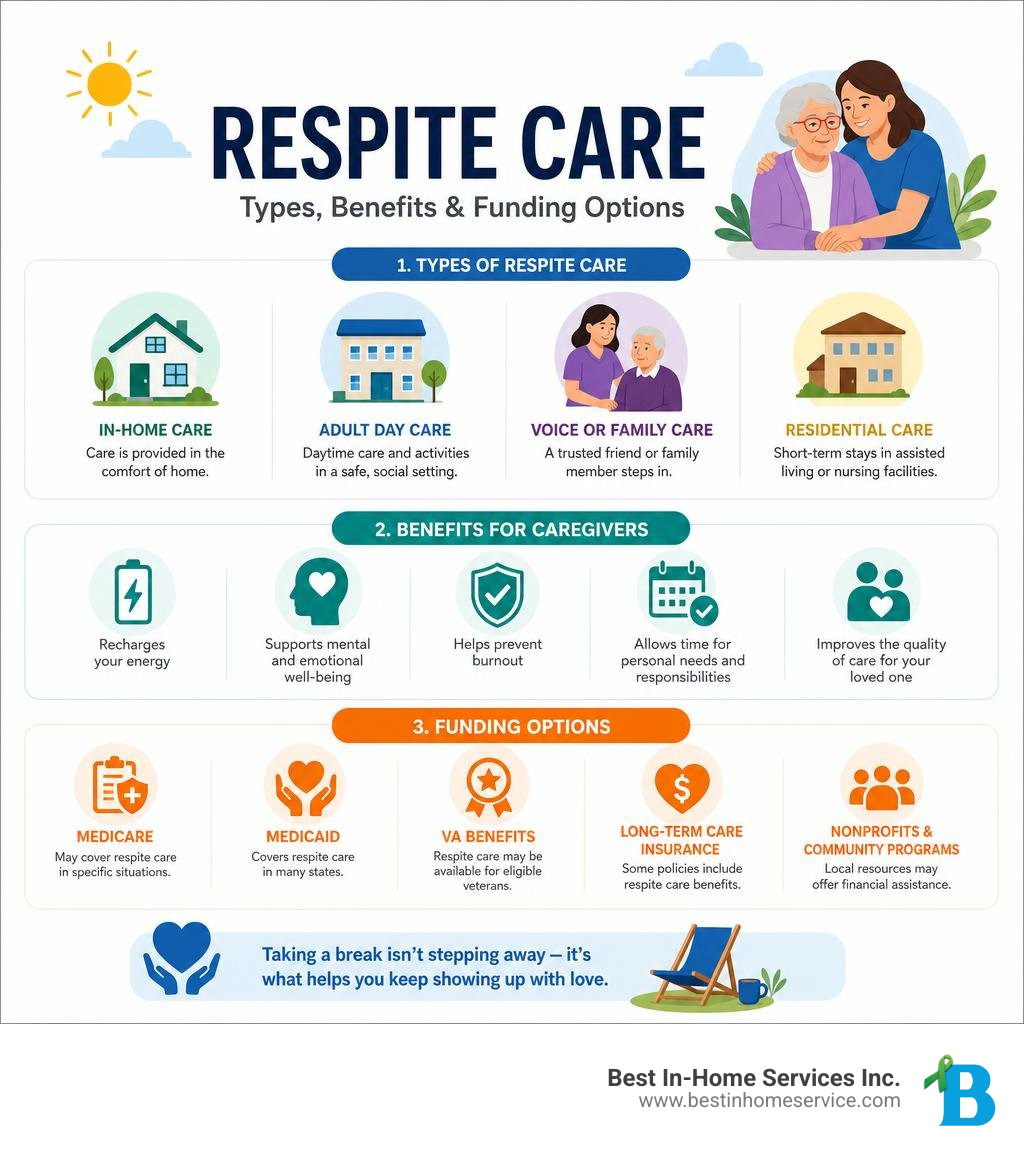
Understanding Respite Care and Its Importance
When we step into the role of a primary caregiver, we often do so out of deep love and commitment. But as the weeks turn into months and years, the constant demands of caregiving can take a heavy toll. Caregiver burnout is a very real, medically recognized state of physical, emotional, and mental exhaustion.
According to the National Institute on Aging, taking regular breaks is not a luxury; it is a fundamental requirement for maintaining your own health. You can read more about these foundations in this overview on What Is Respite Care? | National Institute on Aging .
When a caregiver is exhausted, the risk of depression, anxiety, and physical illness spikes. This doesn’t just harm the caregiver; it also directly impacts the quality of care their loved one receives. By utilizing respite care, we protect both our own well-being and the safety of the person we care for. It allows us to step away, take a deep breath, and return with renewed energy and focus. For families looking at long-term arrangements, understanding how temporary relief fits into a broader plan is key, as detailed in our guide on Why Senior Care at Home is the Best Choice for Aging in Place.
To keep yourself grounded, we recommend practicing these essential caregiver self-care tips:
- Establish a support network: Do not try to do everything alone. Keep a list of friends, family members, or professional agencies you can call.
- Schedule “me time” weekly: Set aside at least a few hours every week that are strictly yours—whether for a hobby, a walk, or catching up on sleep.
- Track your health: Stay on top of your own doctor appointments, eat balanced meals, and try to get regular exercise.
- Acknowledge your limits: Recognize when you are reaching your breaking point and proactively seek temporary relief before burnout sets in.
Exploring the Different Types of Temporary Relief

Temporary care is not a one-size-fits-all service. Depending on your schedule, budget, and your loved one’s unique medical or cognitive needs, different care settings can offer the right balance of support.
In-Home Respite Care Services
For many seniors, staying in a familiar environment is the most comfortable option. In-home respite care allows your loved one to remain in their own home while a professional caregiver steps in to help.
This care can range from companion care (socialization, light meal prep, and basic supervision) to more hands-on personal care (assistance with bathing, dressing, and mobility). If your loved one needs support with daily household management during your absence, you can learn more about how these services work in our article on Household Help for Seniors: More Than Just Chores, It’s Peace of Mind. Professional caregivers can also lead customized activities to keep your loved one physically and mentally engaged, which we discuss in Maximize Mobility: Essential Activities to Keep Seniors Active and Thriving at Home.
The need for these skilled professionals is growing rapidly. Demand for home health and personal care aides is expected to grow by 21% through 2033, reflecting an aging population that heavily prefers in-home options.
Depending on your specific location in the Chicago suburbs, there are various local options available to help. Whether you are searching for support near the North Shore (such as Winnetka), in the western suburbs (like Downers Grove), or in the northwestern suburbs (like Schaumburg), professional in-home care agencies can provide the customized support your family needs.
Adult Day Care Centers
If your loved one thrives in social settings, adult day care centers are an excellent option. These centers operate during daytime business hours and provide structured social activities, exercise programs, meals, and sometimes basic medical monitoring.
This setup is highly beneficial for seniors who may feel isolated at home, giving them a chance to make new friends and participate in group outings. It also gives the primary caregiver a reliable, full-day block of time to work, run errands, or rest. When evaluating these programs, it is always a good idea to ask about their meal programs, as proper nutrition is vital for older adults. You can read about the impact of dietary planning in The Importance of Nutrition and Meal Planning in Senior Care.
Residential and Facility-Based Respite Care
For situations where you need to travel for several days, attend an out-of-town event, or recover from your own medical procedure, residential facility-based care is a secure choice. Many assisted living communities, memory care facilities, and nursing homes offer short-term overnight stays.
During their stay, your loved one will have access to 24/7 professional supervision, structured meals, and group activities. This is also a helpful way to “test drive” a residential community if you are considering a transition to long-term facility care in the future.
Emergency and Unplanned Care
Life is unpredictable. A primary caregiver might suddenly fall ill, face a family emergency, or need to travel unexpectedly. Having a crisis plan in place before these situations arise is crucial.
In Illinois, there are state-supported resources designed to assist in urgent situations. The Illinois Department of Human Services (IDHS) provides support through programs detailed on Respite Services – IDHS. Additionally, local county programs, such as the Community Services Programs | DuPage Co, IL , can point families toward local emergency funding and rapid-response care services.
The Costs of Temporary Care and Financial Assistance Options
One of the most common concerns caregivers face is the cost of temporary care. Because these services are highly customized, pricing varies depending on the type of care, frequency, and location.
While many families pay out-of-pocket, there are several public and private financial assistance programs available to help offset these costs.
| Care Type | Average Cost Structure | Potential Funding Sources |
|---|---|---|
| In-Home Care | Hourly rates (typically $30–$45/hour – market range) | Private pay, VA Benefits, Medicaid Waivers, Long-Term Care Insurance |
| Adult Day Care | Daily rates ($80–$150/day) | Medicaid Waivers, State-funded senior programs, Private pay |
| Residential Facility | Nightly rates ($150–$300+/night) | Private pay, VA Benefits (up to 30 days/year), Long-Term Care Insurance |
| Hospice Respite | Fully covered (up to 5 consecutive days) | Medicare Hospice Benefit, Medicaid |
The figures above are general market ranges, not Best In-Home Service rates.
At Best In-Home Service, Inc., respite care is $37 per hour, with a 3-hour minimum per visit. If your loved one needs mainly companionship and household support while you are away, companion and homemaker care is $35 per hour. For memory support, dementia and Alzheimer’s care is $42 per hour. Overnight and weekend respite is $40 per hour, and holiday coverage is $45 per hour.
Extended or continuous respite — a week away, or recovery from your own medical procedure — is quoted at a customized rate. A customized quote is provided before services begin, and mileage for transportation is billed separately at $0.75 per mile.
For military veterans, the Department of Veterans Affairs offers robust support. Eligible veterans can receive up to 30 days of temporary care per calendar year, which can be provided in-home or at a VA-approved community residential facility. You can review eligibility criteria and application steps at Respite Care – Geriatrics and Extended Care.
How to Overcome Caregiver Guilt and Choose a Provider

Stepping away is often easier said than done. Many caregivers experience a deep sense of guilt, feeling as though they are “abandoning” their loved one or that no one else can care for them properly.
To overcome these emotional barriers, it helps to reframe how you view temporary relief. Taking a break is not selfish; it is an active investment in your ability to be a patient, loving caregiver. Furthermore, introducing a professional caregiver can provide valuable socialization and mental stimulation for your loved one.
When choosing a care provider, thorough vetting is essential to building peace of mind. We recommend taking the following steps:
- Conduct background checks: Ensure the agency performs comprehensive criminal background checks and reference verifications on all staff.
- Verify specialized training: If your loved one has dementia or physical mobility limitations, verify that the caregiver has specific training in these areas. The Respite Care | Alzheimer’s Association offers excellent checklists on what to ask memory care providers.
- Plan a gradual transition: Start with a short, two-hour session while you remain in the home. This allows your loved one to get comfortable with the new caregiver while you are nearby to answer questions.
- Align on post-recovery needs: If the temporary care is needed following a medical event, make sure the provider is equipped to manage recovery protocols. Our resource, A Guide to Post Hospitalisation Care and Recovery, outlines how to coordinate these transitions smoothly.
Frequently Asked Questions
How long can a senior stay in temporary care?
The duration depends entirely on the setting and your funding source. In-home care can be scheduled for as little as a few hours a week or up to 24/7 care. For residential facility stays, seniors can typically stay anywhere from a single weekend to several weeks, though public funding sources (like the VA or Medicare) often have strict annual limits, such as a 30-day maximum per year.
Does Medicare pay for temporary caregiver relief?
Generally, original Medicare does not cover temporary care. However, there is a major exception: if your loved one is currently receiving the Medicare hospice benefit, Medicare will cover up to five consecutive days of inpatient temporary care at an approved facility (such as a hospital or nursing home) to give the primary caregiver a break.
What qualifications should a professional caregiver have?
At a minimum, professional caregivers should have clean background checks, up-to-date CPR and First Aid certifications, and hands-on training in transfer techniques and infection control. For seniors recovering from major medical events or living with advanced cognitive decline, look for agencies that employ Certified Nursing Assistants (CNAs) or caregivers with specialized dementia care certifications. For more intensive care needs, you can read about our specialized standards in 24 Hour In-Home Care in Illinois: Essential Support for Recovery.
Conclusion
At the end of the day, caregiving is a marathon, not a sprint. To cross the finish line successfully, you must give yourself permission to rest, recover, and accept help along the way.
At Best In-Home Services Inc., we provide personalized, compassionate in-home care services across the Chicago area, including specialized memory, dementia, and elder care. With our 24/7 support, certified staff, and custom-tailored care plans, we are here to give you the peace of mind you deserve while ensuring your loved one receives exceptional care in the comfort of home.
If you are ready to explore your options or simply have questions about how to get started, we invite you to view our complete list of Services or schedule a Free Assessment with our team today. We are here to support your family every step of the way.







 1-224-636-5200
 1-224-636-5210
  425 Huehl Rd 13B Northbrook IL 60062