
Comparing Memory Care Chicago Housing and Residential Care Options
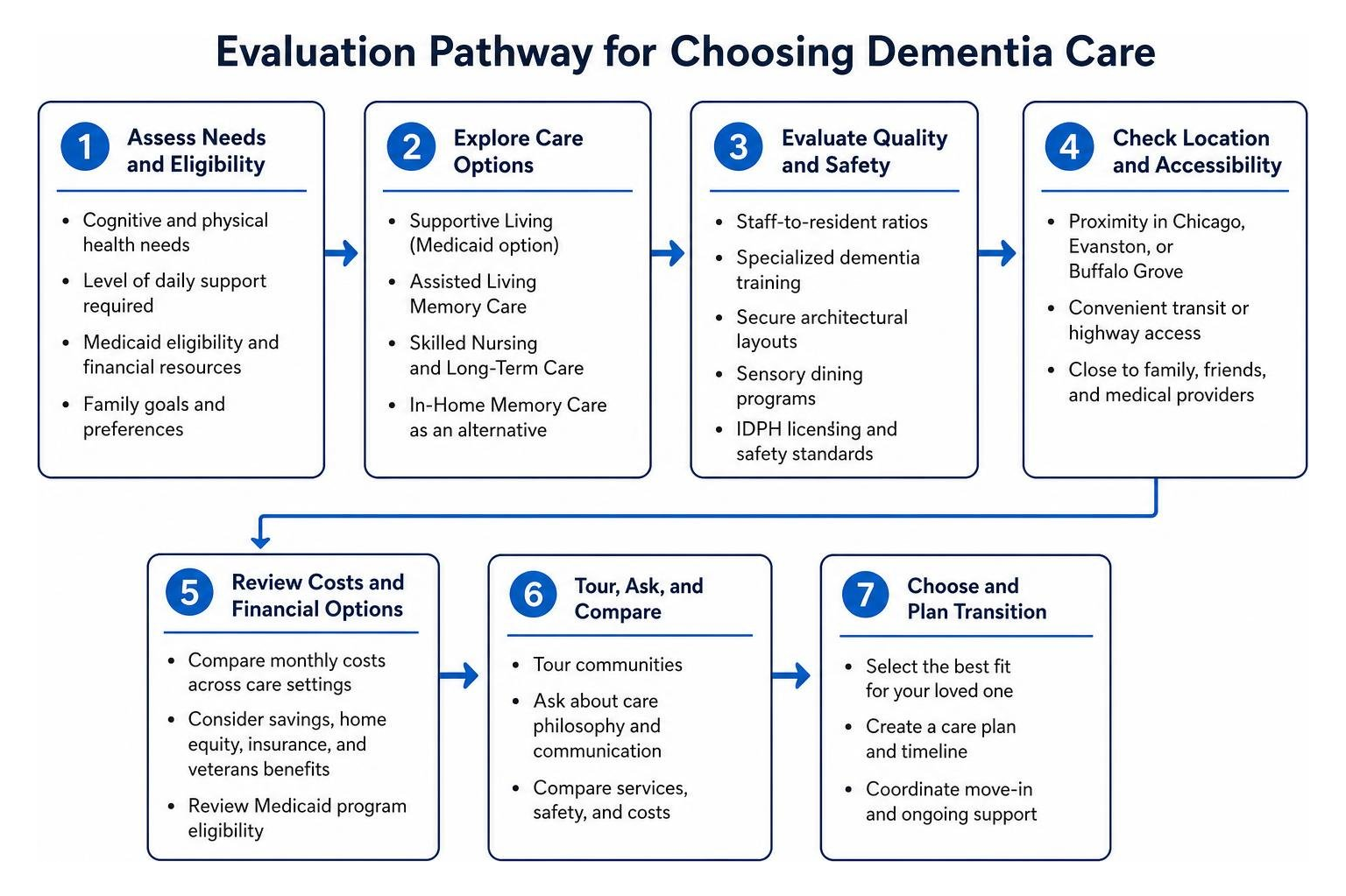
Finding the ideal balance between independence and structured medical supervision is a central goal for families exploring dementia support. In Cook County, residential options generally fall into distinct regulatory categories designed to match progressive stages of cognitive decline. Each housing level provides varying degrees of clinical oversight, personal assistance, and structured engagement.
| Care Setting | Primary Funding Model | Level of Clinical Oversight | Best Suited For |
|---|---|---|---|
| Assisted Living | Private Pay / Long-Term Care Insurance | Nursing oversight with non-clinical daily assistance | Early to moderate dementia requiring daily living help |
| Supportive Living | Medicaid / Private Pay | Personal care attendants with intermittent nursing | Low-income seniors seeking apartment living with care |
| Skilled Nursing | Medicaid / Medicare / Private Pay | Continuous, physician-supervised clinical care | Advanced dementia with complex medical requirements |
Navigating these differences is easier when understanding memory care terminology and how each model structures its daily routines. As cognitive conditions progress, care needs shift from simple companionship and cueing toward comprehensive medical supervision and constant personal assistance.
Assisted Living and Shared Housing for Dementia
Assisted living communities operating under Illinois licensure provide private residential suites coupled with dedicated assistance for activities of daily living, such as bathing, dressing, meal preparation, and medication reminders. When evaluating the best dementia care options in Chicago, families often appreciate the domestic, social feel of assisted living environments. These residences strive to create a warm setting that feels like home rather than an institutional clinical facility.
These communities follow strict state safety guidelines, incorporating secure perimeters, structured life-enrichment programs, and round-the-clock staffing to prevent wandering while preserving autonomy. Because they operate predominantly on a private-pay model, assisted living allows for extensive customization of personal routines, meal preferences, and specialized therapeutic recreational schedules.
Supportive Living Facilities for Medicaid Beneficiaries
Illinois established the Supportive Living Program to offer an alternative to traditional nursing facility placement for low-income older adults. Administered by the Department of Healthcare and Family Services, the Cook County Supportive Living Program allows Medicaid-eligible seniors to reside in private, apartment-style settings while receiving supportive personal care, housekeeping, medication administration, and social activities.
This model ensures that financial constraints do not prevent individuals from accessing dignified, residential dementia supervision within our local neighborhoods. Residents enjoy private living spaces with lockable doors, personal bathrooms, and kitchenette areas, creating an atmosphere of privacy and independence while maintaining necessary safety measures.
Skilled Nursing Facilities and Long-Term Care
When cognitive impairment progresses alongside complex physical illnesses, skilled nursing facilities deliver necessary continuous medical oversight. Unlike assisted living, nursing homes provide physician-supervised clinical plans, licensed practical nurses on duty around the clock, physical therapy, and comprehensive wound or medical device management. Families seeking top memory care communities often turn to skilled nursing when a loved one requires extensive physical transfer support, advanced clinical intervention, or specialized end-of-life care.
Key Standards for Evaluating Memory Care Chicago Facilities
Selecting a residential memory setting requires evaluating safety features, architectural design, and caregiving philosophy. A quality memory care environment is intentionally designed to reduce anxiety, promote orientation, and prevent elopement. When visiting facilities across Cook County and DuPage County, families should observe interactions between staff and residents to gauge warmth and patience.
Key operational standards to look for include:
- Staff-to-resident ratios: ensuring adequate hands-on attention during peak morning and evening routines
- Specialized dementia training: staff education in de-escalation, validation therapy, and redirecting behavioral symptoms
- Secure architectural layouts: circular walking paths, keypad-controlled entryways, and enclosed courtyard gardens
- Sensory dining programs: adaptive utensils, visual meal menus, and soothing acoustic environments to support nutrition
- Cognitive stimulation therapies: structured memory cafes, music therapy, reminiscing exercises, and sensory integration rooms
Licensing and Safety Standards in Cook County
Residential dementia providers across Chicago must strictly follow guidelines enforced by the Illinois Department of Public Health. These regulations govern everything from physical building codes and fire safety readiness to mandatory background checks for all personnel. IDPH conducts regular surveys to monitor medication dispensing accuracy, resident abuse prevention protocols, and clean environment maintenance. Facilities are required by law to honor resident rights, ensuring dignified treatment and individualized care planning.
Regional Accessibility Across Chicago, Evanston, and Buffalo Grove
Location plays a critical role in maintaining close family ties. Choosing a community with convenient transit or highway access ensures family members can visit frequently without long travel times. Families living in northern Cook County and Lake County often explore Evanston dementia support services or Buffalo Grove dementia care resources to keep their loved ones close to lifelong social networks and local medical specialists. Lily Harrison, General Manager at Best In-Home Services Inc., a trusted home health care provider, emphasizes that maintaining ongoing social connection with family is one of the most effective ways to support emotional stability for seniors experiencing cognitive decline.
Financial Planning and Alternatives to Memory Care Chicago Facilities
Funding long-term cognitive care requires proactive financial planning. Families regularly combine personal savings, home equity, long-term care insurance policies, and Veterans Aid and Attendance benefits to meet monthly expenses. When exploring alternatives, finding peace of mind with dementia care services often begins with comparing the complete financial scope of facility living against flexible in-home care solutions.
Residential Facility Costs vs. In-Home Memory Care
A common question families ask is: how much does senior home care cost at Chicago, IL compared to residential facilities? While residential facilities charge bundled monthly rates for housing, food, and base care, costs can increase significantly as care tiers advance. Add-on charges for higher levels of cognitive support, incontinence supplies, and specialized medication management can quickly expand the overall financial obligation.
In contrast, personalized home care provides flexible, scalable support tailored entirely to specific hourly or daily needs. For individuals who prefer aging in place in familiar neighborhoods like Skokie, Naperville, or Hinsdale, 24/7 dementia home care options and dedicated live-in dementia care deliver one-on-one oversight without the emotional stress of moving to an unfamiliar facility.

In-Home Support and Respite for Caregiver Relief
Family caregiving is rewarding, but managing chronic cognitive decline without support often leads to physical and emotional burnout. Utilizing respite services allows primary family caregivers to rest, work, and attend to personal matters while trained professionals step in. Choosing dementia care in your own home preserves familiar comfort, consistent routines, and personal freedom for as long as possible.
City Resources, Safety Hotlines, and Advocacy in Chicago
Chicago and the surrounding suburbs provide civic programs and regulatory agencies to guide families through care transitions:
- Chicago Department of Family and Support Services: coordinates regional Senior Centers and localized aging resources across city neighborhoods (reach their main administrative line at 312-744-4016)
- City of Chicago 311 Service: provides non-emergency navigation to direct residents to local elder services and community wellbeing checks
- Illinois Long-Term Care Ombudsman Program: advocates for resident rights, assisting families with grievance resolutions and facility transitions
Reporting Facility Concerns, Abuse, and Neglect
When care quality falters in a licensed facility, families must act swiftly. The Illinois Department of Public Health operates a 24-hour Nursing Home Abuse Hotline at 1-800-252-4343. This line handles urgent reports regarding physical neglect, verbal abuse, unsafe living conditions, medication errors, and theft. Reports trigger official state investigations to enforce compliance and protect vulnerable seniors.
Family Support Groups and Memory Navigation
Navigating Alzheimer’s disease or related dementias is an evolving journey. Local memory cafes, hospital-sponsored support groups, and community workshops throughout Cook County offer education and emotional support. Connecting with 24/7 home health and memory care guidance helps families make informed decisions about care transitions, safety modifications, and home wellness routines.
Frequently Asked Questions About Dementia Support in Illinois
What is the difference between supportive living and assisted living in Chicago?
Assisted living communities operate primarily on a private-pay basis and can adjust their pricing based on private service tiers. Supportive living communities are certified by the state to accept Medicaid reimbursements, making apartment-style community living accessible to income-qualified older adults without sacrificing personal assistance or safety monitoring.
How do I file a formal complaint against a Cook County care facility?
You can file a formal complaint by contacting the Illinois Department of Public Health 24-hour hotline at 1-800-252-4343. You may submit details anonymously or provide contact information for follow-up communications. The department assigns state investigators to conduct on-site inspections and evaluate regulatory adherence.
Can low-income older adults access memory care in Chicago?
Yes. Low-income older adults can access supportive living facilities through the Illinois Supportive Living Program, which accepts Medicaid to cover personal care and housing services. Additionally, home and community-based services waivers help fund personal care attendants, adult day service programs, and in-home respite support for eligible individuals.
Conclusion
Finding the best care path for a family member living with dementia requires understanding their physical requirements, cognitive stage, and personal desires. Whether you choose private assisted living, a supportive living community, or one-on-one assistance at home, maintaining your loved one’s safety, dignity, and comfort is paramount.
At Best In-Home Services Inc., our certified caregivers provide compassionate, personalized support throughout Chicago, Evanston, Schaumburg, Oak Brook, and surrounding communities. If your family is exploring tailored options for aging comfortably in place, connect with us to learn about our specialized Alzheimer’s and memory care support programs designed around your family’s needs.






 1-224-636-5200
 1-224-636-5210
  425 Huehl Rd 13B Northbrook IL 60062