
How to Arrange Emergency Respite Care for an Older Adult
If a family caregiver suddenly cannot provide care, first make sure the older adult is safe. Call a licensed home care agency to ask about urgent in-home help, and contact your local Area Agency on Aging about public support. Keep a medication list, care routine, and emergency contacts ready. If the person needs immediate medical help, call 911.
Emergency respite for elderly family members is short-term care arranged after an unexpected gap, such as a caregiver’s illness or hospitalization. Unlike a planned break, the first decision is what support can safely cover the next few hours or days.
Lily Harrison, General Manager at Best In-Home Service Inc., a Northbrook-based, Illinois-licensed non-medical home care provider (License #3000758), coordinates in-home support for older adults with dementia and daily care needs.
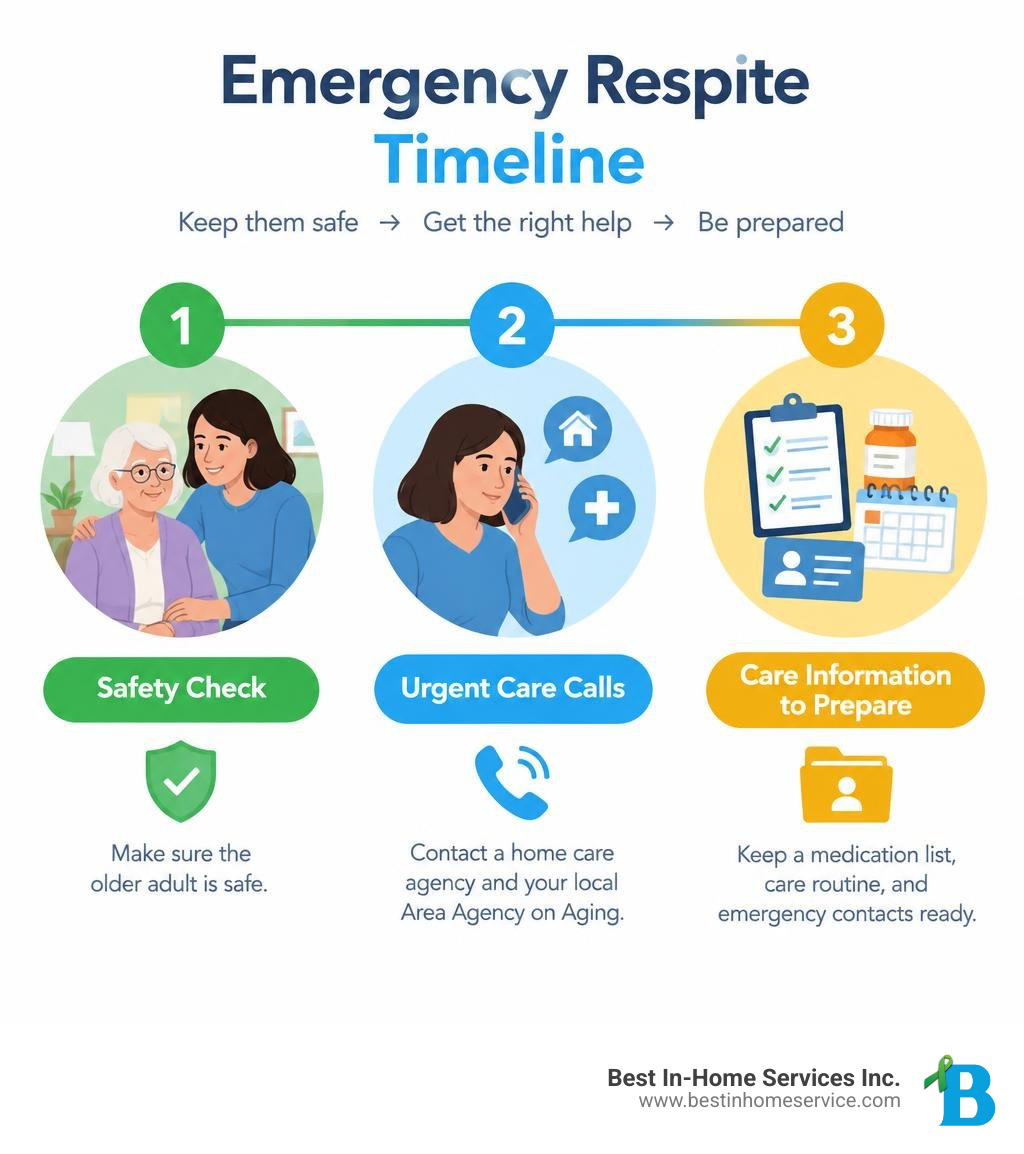
When exploring options for emergency respite for elderly family members, families often compare in-home respite care arrangements, including dedicated respite home health care that allows a loved one to remain in familiar surroundings.
Understanding Emergency Respite for Elderly: Triggers and Key Differences
Caring for an aging family member is a demanding responsibility. While planned respite allows caregivers to schedule vacations or personal appointments weeks in advance, unexpected emergencies require rapid action. According to industry data from the National Council on Aging, approximately 68% of senior placements involve some degree of urgency.
When a primary caregiver faces a sudden crisis, securing immediate backup care helps support the senior’s safety without disrupting essential routines. Understanding what is short-term respite care and how do you pay for it can help families evaluate immediate care options versus longer-term solutions.
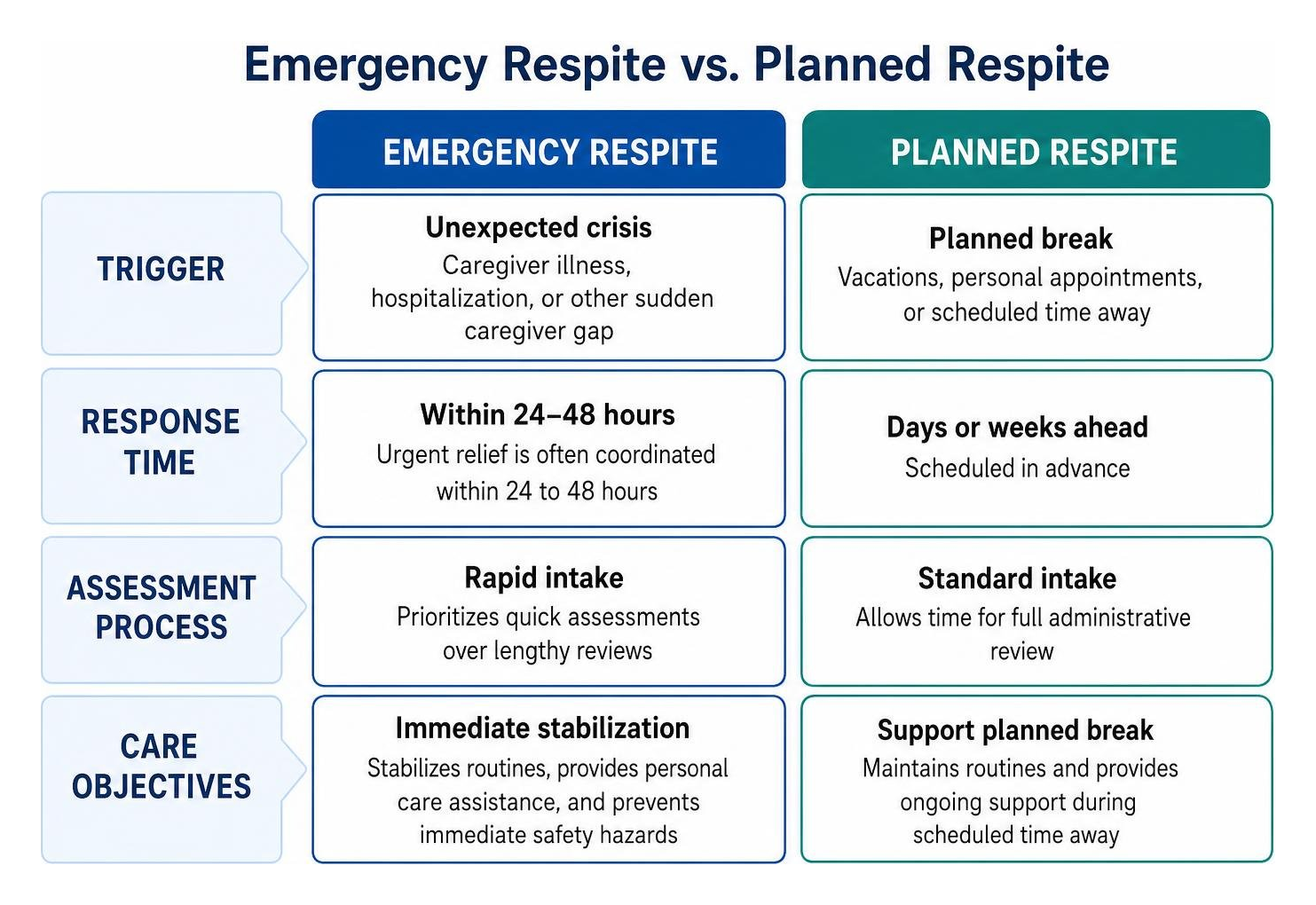
Key differences between planned and emergency care include:
- Response Time: Planned care is scheduled days or weeks ahead, whereas urgent relief is often coordinated within 24 to 48 hours.
- Assessment Process: Emergency setups prioritize rapid intake assessments over lengthy administrative reviews.
- Care Objectives: Urgent care helps stabilize daily living routines, provides personal care assistance, and helps reduce immediate safety risks.
- Flexibility: Care schedules can be adjusted day-to-day as the family’s situation evolves.
Common Crises Requiring Immediate Support
Sudden changes in family circumstances can leave an older adult without necessary daily living assistance. Recognizing these triggers early helps families mobilize backup support quickly:
- Caregiver Illness or Injury: A sudden medical event, injury, or unexpected hospitalization can prevent a family caregiver from providing care.
- Acute Caregiver Burnout: Emotional and physical exhaustion can compromise a caregiver’s health, making respite care for seniors necessary to step back and recover.
- Hospital Discharge Deadlines: Seniors being discharged from hospitals or rehabilitation centers often face strict 24-to-72-hour discharge timelines that require immediate home support.
- Sudden Cognitive or Behavioral Changes: Rapid changes in cognitive status or nighttime wandering can require immediate supervision to help maintain a secure environment.
- Unsafe Home Situations: Environmental disruptions, heating failures, or abrupt family emergencies may require temporary support.
Types of Urgent Relief: In-Home Emergency Respite Options
When an unexpected care gap occurs, families can choose from several non-medical home care arrangements based on the level of assistance required. Non-medical home care providers deliver direct support with activities of daily living (ADLs), including bathing, dressing, meal preparation, mobility support, and medication reminders.
The following table outlines standard in-home respite schedules:
| Respite Care Option | Typical Schedule | Best Suited For | Key Services Included |
|---|---|---|---|
| Short-Shift Respite | 3 to 6 hours per visit | Daytime appointments, caregiver errands, short breaks | Companionship, meal preparation, light housekeeping, mobility support |
| Extended Day / Evening | 8 to 12 hours per day | Working family members, post-hospital transition days | Personal care assistance, bathing, dressing, meal prep, medication reminders |
| Overnight Care | 8 to 12 hours (nighttime) | Seniors who wake frequently or present nighttime wandering risks | Bedtime routines, nighttime supervision, transfer assistance, morning prep |
| Continuous In-Home Care | 24 hours (shifts or live-in) | High-level non-medical support, constant supervision needs | Round-the-clock monitoring, continuous ADL support, homemaking, meal routines |
When intensive daily assistance is required, understanding when 24-hour elderly care is the best choice for your family helps ensure the right level of coverage.
Choosing In-Home Emergency Respite for Elderly

Arranging in-home support allows older adults to remain in their familiar surroundings, reducing the disorientation and anxiety that often accompany sudden moves to unfamiliar facilities. Maintaining familiar rooms, furniture, and daily routines is especially beneficial for individuals living with Alzheimer’s disease or related dementias.
Families across Cook, Lake, and DuPage counties – including communities such as Evanston, Skokie, Des Plaines, Schaumburg, Glenview, Highland Park, Naperville, and Oak Brook – can explore options detailed in the ultimate guide to respite care options in Chicago area. Non-medical home care agencies provide trained caregivers who can assist with daily tasks, transportation to local medical appointments, grocery shopping, and light housekeeping.
How to Secure Support: State Programs, Private Care, and Preparation
Securing emergency care quickly requires knowing which resources to contact. Both public programs and private agencies offer pathways for short-term support, depending on eligibility and urgency.
Public programs provide structured assistance, though intake timelines vary:
- State Supportive Programs: Families can consult the IDHS: Respite Services page for details on state-administered family relief programs.
- County-Level Assistance: Regional programs, such as Community Services Programs | DuPage Co, IL, offer access to local case managers and supportive resources.
- Community Care Program (CCP): Administered through the Illinois Department on Aging, this program provides non-medical supportive services for eligible older adults.
- Private In-Home Agencies: For immediate needs requiring placement within 24 to 48 hours, private-duty home care agencies provide fast turnaround times without lengthy public application backlogs.
Key Steps to Arrange Emergency Respite for Elderly in a Crisis
When an emergency occurs, following a structured action plan helps expedite the intake process:
- Verify Immediate Safety: If there is an acute medical crisis, call 911 immediately. Non-medical home care does not replace emergency medical personnel.
- Gather Critical Information: Collect essential documents to share with care coordinators:
- Current medication reminder schedules and dosages
- Primary care physician contact details and emergency contacts
- Baseline cognitive status, mobility needs, and fall risk details
- Daily routines, dietary preferences, and personal habits
- Legal documents, such as Healthcare Power of Attorney (POA)
- Contact a Licensed Home Care Agency: Reach out to an Illinois-licensed agency to request an expedited intake consultation.
- Conduct a Care Assessment: Agency staff will review non-medical care requirements to match an appropriately trained caregiver.
- Establish the Care Schedule: Set specific hours – subject to standard 3-hour visit minimums – and outline daily support tasks.
Families seeking rapid, personalized support can learn more about respite home health care in Chicago and suburbs to arrange practical backup care.
Funding Streams, Out-of-Pocket Costs, and Benefit Protections
The cost of in-home care in Chicago and surrounding suburbs varies depending on the level of assistance required, the number of scheduled hours, the care schedule, and whether specialized dementia care, overnight supervision, or transportation support is needed. Private non-medical agencies typically require a 3-hour minimum per visit, with separate mileage billing for caregiver-provided transportation.
Funding and cost-mitigation options include:
- Private Pay / Self-Funding: Direct payment offers the fastest route to securing same-day or next-day care.
- Long-Term Care Insurance (LTCI): Many LTCI policies cover non-medical in-home respite services once elimination periods and eligibility criteria are satisfied.
- State and Regional Grants: The Illinois Department on Aging and local Area Agencies on Aging periodically administer Title III-E Family Caregiver Support grants to offset respite costs.
- Home Services Program (HSP): Administered by the Illinois Department of Human Services, this program assists eligible individuals with disabilities who need personal care support.
- Benefit Protection: Using short-term respite services does not jeopardize state caregiving benefits, provided all standard reporting thresholds and documentation requirements are maintained.
Frequently Asked Questions About Emergency Respite Care
How quickly can emergency respite care be put in place?
Private non-medical home care agencies can often arrange support within 24 to 48 hours following an initial assessment. While public assistance programs may require longer application and eligibility processes, private-duty providers can quickly match qualified staff for urgent situations.
What documents do I need ready for an urgent respite placement?
To ensure a smooth transition, gather:
- A complete list of current medications and schedule for medication reminders
- Emergency contacts, including family members, neighbors, and physicians
- A summary of daily living routines, dietary needs, and mobility assistance levels
- Relevant legal directives, such as Power of Attorney for Healthcare
Will taking emergency respite affect my caregiving benefits?
Using temporary respite services generally does not impact government caregiving benefits or assistance programs. Most state and federal programs recognize that family caregivers require temporary relief during emergencies. However, you should notify your program coordinator or case manager of any extended changes in care arrangements to maintain regulatory compliance.
What factors affect the cost of in-home emergency respite care?
Costs depend on the level of personal care assistance needed, total weekly hours, whether care involves daytime, overnight, or weekend shifts, and any required errand transportation. Requesting a direct consultation provides an accurate estimate tailored to your schedule.
Conclusion
Facing a sudden disruption in caregiving can feel overwhelming, but structured emergency respite options ensure your loved one receives consistent, supportive attention in their own home. Having emergency documentation organized and knowing which resources to call allows families to navigate unexpected crises with confidence.
At Best In-Home Services Inc., our team provides Illinois-licensed non-medical care across Cook County, Lake County, and DuPage County – including Northbrook, Winnetka, Glenview, Highland Park, Buffalo Grove, Schaumburg, Downers Grove, and Naperville. We are licensed by the Illinois Department of Public Health (IDPH License #3000758), approved by the Illinois Department on Aging under the Community Care Program, and recognized by the Illinois Department of Human Services / Rehabilitation Services for the Home Service Program.
Whether you need urgent caregiver relief, help establishing a backup plan, or a free assessment to evaluate your family’s needs, we are here to help. Contact our Northbrook team today at 224-636-5200 or explore our complete range of in-home senior care services to discuss a flexible care schedule.







 1-224-636-5200

 1-224-636-5210
 425 Huehl Rd 13B Northbrook IL 60062