
Knee Surgery Home Care Starts With a Safe Daily Routine
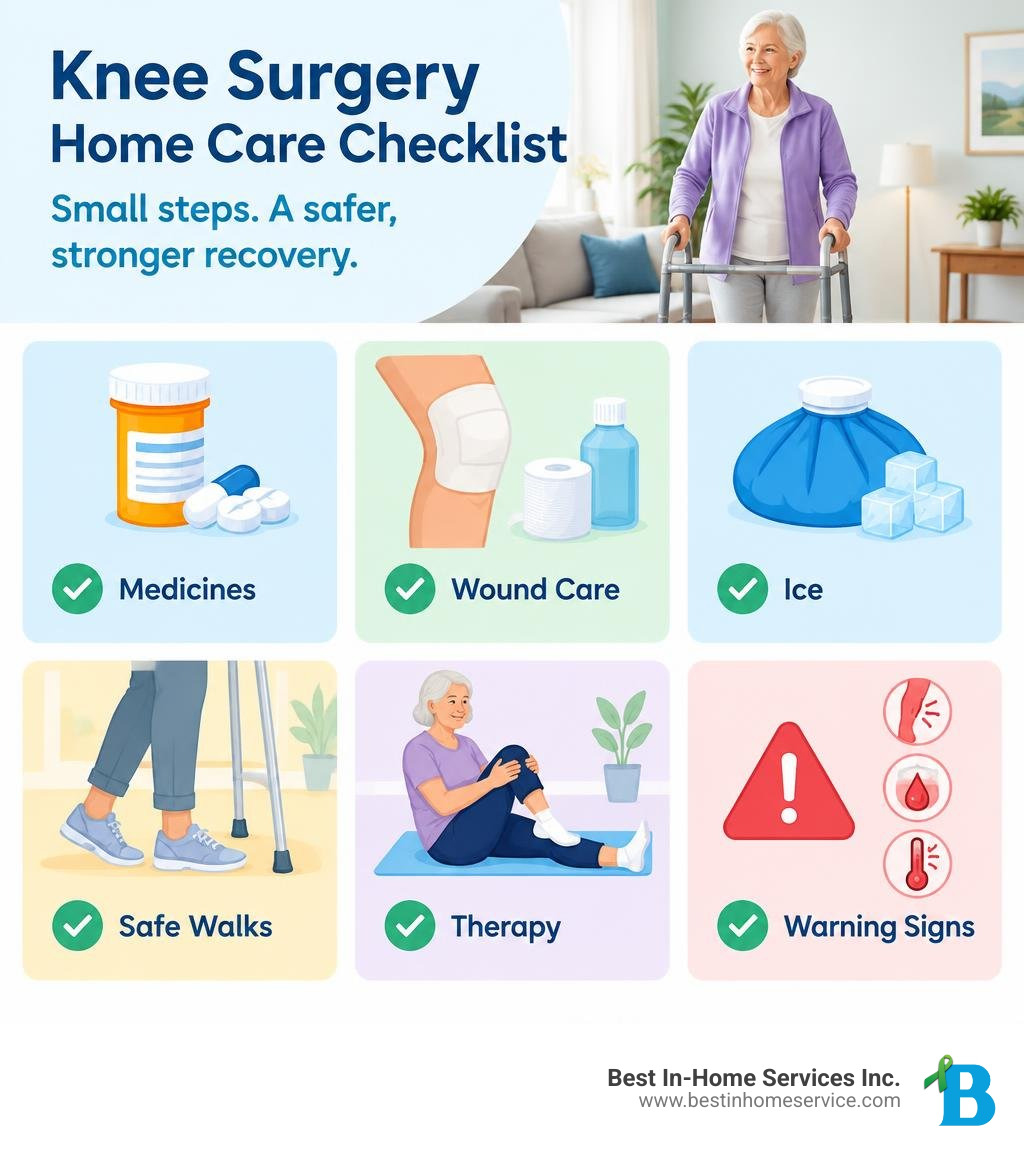
After knee replacement, follow your surgeon’s discharge plan: take medicines as prescribed, keep your dressing clean and dry, and use ice and elevation to ease swelling. Take short walks with your prescribed walking aid and do your physical therapy exercises. Clear paths through your home, and arrange help with meals, bathing, and rides to appointments. Call your surgeon about new calf pain, worsening wound redness or drainage, or a fever. Seek emergency care for chest pain or trouble breathing.
I’m Lily Harrison, General Manager at Best In-Home Service Inc., a Northbrook-based provider of non-medical home care in Illinois (License #3000758). I help coordinate daily support for older adults and families, including the practical help that can make knee surgery home care safer and less stressful.
More about post-surgery home care:
Preparing Your Living Space for Knee Surgery Home Care
Returning home after total knee arthroplasty marks the beginning of an exciting recovery phase, but a successful return depends heavily on environmental preparation. Hospital stays for joint replacement typically last between 1 and 4 days, meaning the vast majority of your healing journey occurs within your own four walls.
Before leaving the hospital, careful environmental adjustments reduce fall risks and unnecessary joint strain. Proper planning ensures you are not navigating obstacles while using assistive mobility devices. A smooth transition involves removing tripping hazards, widening walking pathways, and securing durable medical equipment ahead of time. Learning the fundamentals of transitioning home after hospital discharge allows you to focus your energy on rest, rehabilitation exercises, and regaining mobility.
Essential Home Modifications and Mobility Equipment
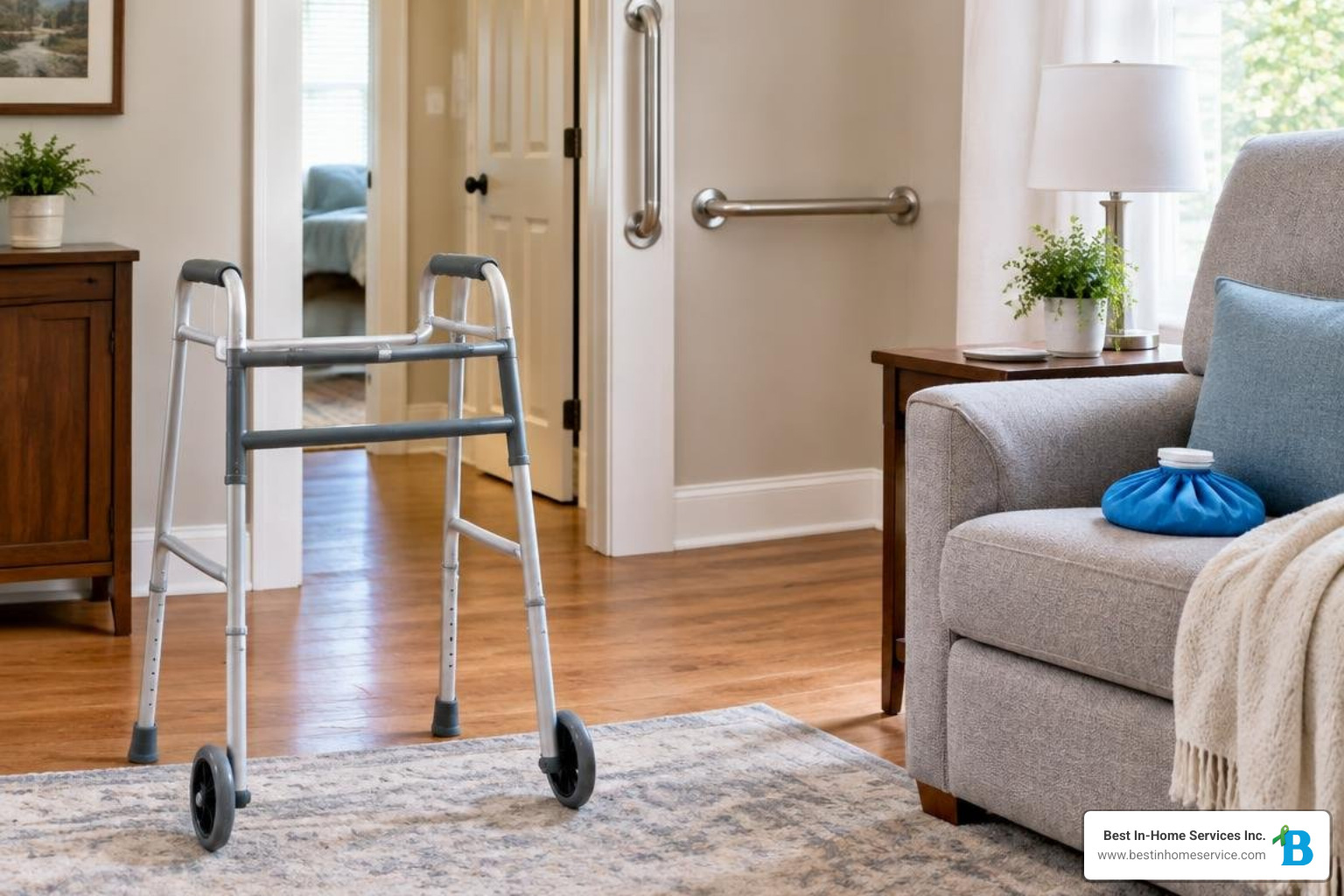
Setting up the right equipment before surgery prevents sudden scrambles after discharge. Standard medical recommendations outlined in MedlinePlus discharge guidelines suggest arranging the following assistive devices and safety modifications:
- Front-Wheeled Walker or Crutches: Essential for offloading joint weight and maintaining balance during the initial weeks.
- Shower Bench and Handheld Showerhead: Enables safe seated bathing without putting excessive pressure on the operated knee or risking slips on wet surfaces.
- Raised Toilet Seat with Safety Rails: Minimizes deep knee flexion when sitting down and standing up in the restroom.
- Slip-Proof Mats and Grab Bars: Securely installed inside the shower stall and beside the toilet to ensure steady footing.
- Low Bed Height: Ensuring your mattress is at a height where your feet touch the floor comfortably when seated at the edge.
- Removal of Household Hazards: Clearing away loose throw rugs, electrical cords, and floor clutter throughout all primary walking paths.
Setting Up a Single-Level Recovery Center
Navigating stairs immediately after surgery can be exhausting and risky. Whenever possible, set up a primary recovery area on the main floor of your home. This setup keeps your bedroom, bathroom, and resting area on a single level to eliminate frequent stair climbing during the first two to three weeks.
In your main living space, place a firm-backed chair with sturdy armrests. Soft, low couches can make standing up difficult and place undue stress on your surgical joint. Keep a reacher tool nearby to pick up items from the floor without bending or twisting your knee. Additionally, create a bedside or chairside “recovery station” stocked with essentials: a hydration tumbler, non-perishable snacks, reading materials, remote controls, a phone charger, and a list of emergency contact numbers. Ensure all hallways and rooms are well-lit, utilizing motion-sensor nightlights to illuminate paths to the bathroom after dark.
Managing Pain, Swelling, and Medication Safely at Home
Controlling pain and localized swelling is the foundation of early knee rehabilitation. When swelling and discomfort are managed effectively, performing prescribed physical therapy exercises becomes much more achievable. Managing comfort requires combining physical modalities with structured medication routines. If family members are unavailable to assist with daily household routines during this initial phase, hiring a post-surgery caregiver can provide non-medical relief by managing light housekeeping and meal routines while you focus on recovery.
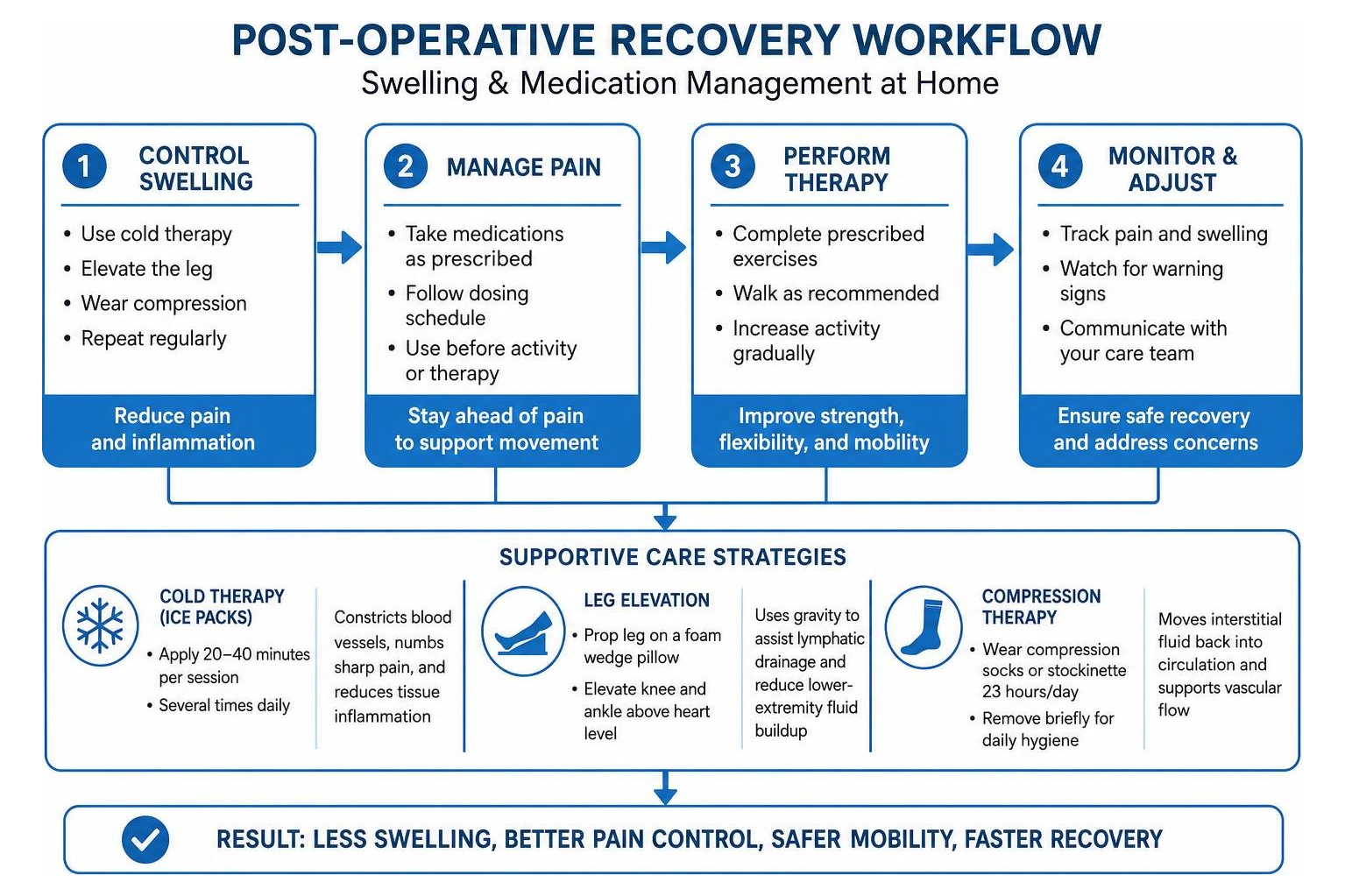
| Technique | Protocol | Key Benefit | Important Precaution |
|---|---|---|---|
| Cold Therapy (Ice Packs) | Apply for 20 to 40 minutes per session, several times daily | Constricts blood vessels, numbs sharp pain, reduces tissue inflammation | Always place a thin cloth barrier between the ice pack and skin to prevent frostbite |
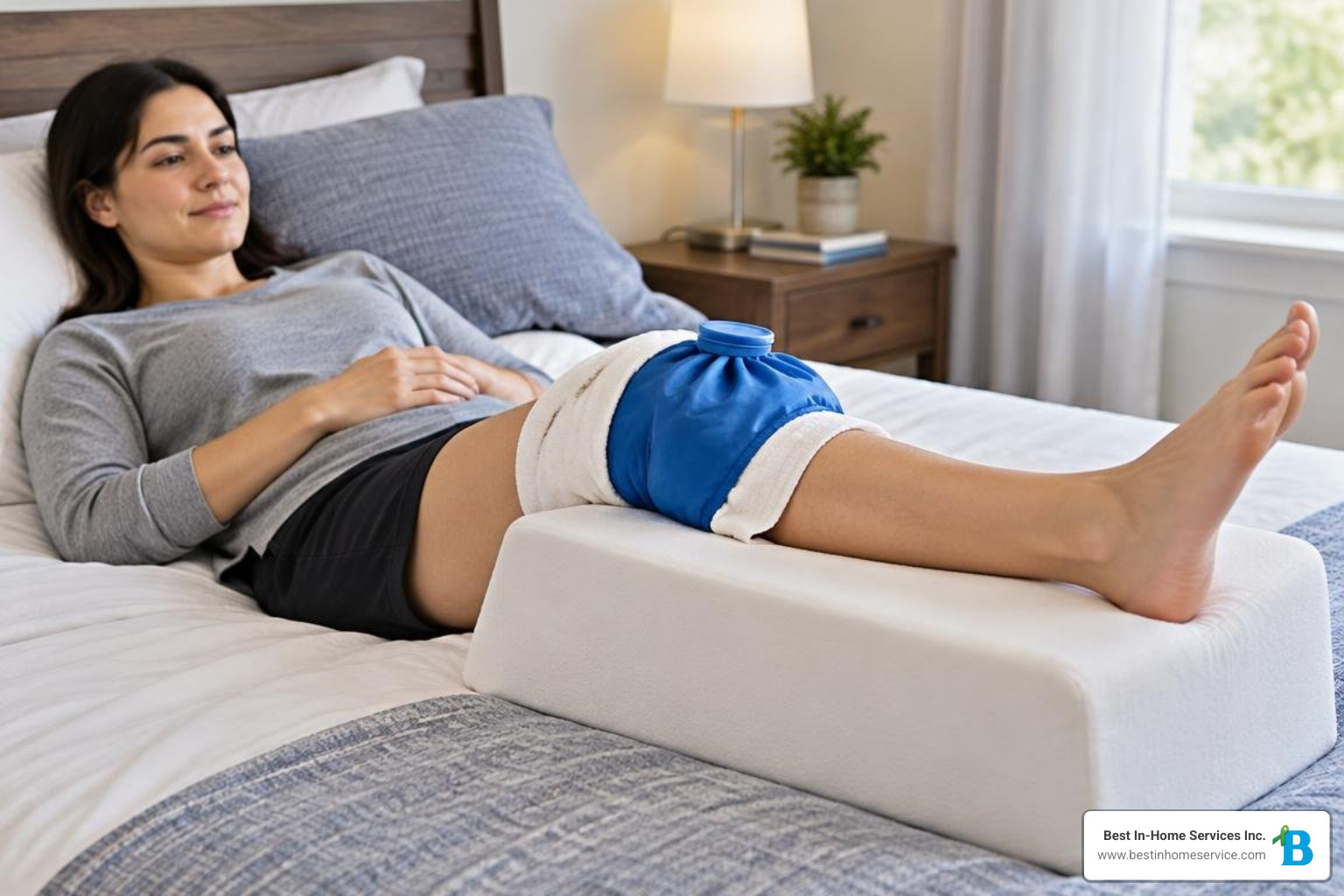
| Leg Elevation | Prop leg on a foam wedge pillow, elevating knee and ankle above heart level | Uses gravity to assist lymphatic drainage and reduce lower-extremity fluid buildup | Never place pillows directly behind the knee joint; keep the leg straight |
| Compression Therapy | Wear EdemaWear stockinette or compression socks 23 hours/day | Actively moves interstitial fluid back into circulation and supports vascular flow | Remove briefly for daily hygiene and check skin for pressure points |
R.I.C.E. Protocols and Swelling Reduction Strategies
Mild to moderate swelling can persist for 3 to 6 months following joint replacement surgery. To keep this fluid under control during the initial weeks at home, strict adherence to rest, ice, compression, and elevation (R.I.C.E.) is critical.
During the first two weeks, clinical protocols often suggest icing and elevating the knee with light compression for up to 40 minutes every hour while awake, or using standard 20-minute on, 20-minute off cycles. When elevating, keep your leg elevated above heart level using a supportive foam wedge pillow. It is vital to position support under the calf and heel rather than directly behind the knee, as keeping the knee extended helps prevent flexion contractures and aids in regaining full extension. Compression stockinettes, such as EdemaWear or standard 15–20 mmHg compression wraps, help draw fluid back into circulation when worn consistently.
Navigating Post-Operative Medications and Blood Clot Prevention
Orthopedic surgeons employ a multimodal approach to manage discomfort, which targets pain pathways while minimizing reliance on strong narcotics. Most patients transition off prescription opioid painkillers within 1 to 2 weeks post-surgery, moving toward over-the-counter analgesics such as acetaminophen or approved non-steroidal anti-inflammatory drugs (NSAIDs).
Because opioid medications frequently slow gastrointestinal motility, staying hydrated and taking recommended stool softeners or osmotic laxatives prevents post-operative constipation.
Preventing deep vein thrombosis (DVT) is another vital component of knee surgery home care. Standard blood clot prevention regimens typically include:
- Aspirin Therapy: Taking low-dose Aspirin (81 mg) twice daily for 2 to 6 weeks, or taking alternative prescribed anticoagulants.
- Compression Stockings: Wearing graduated compression stockings on the legs for approximately 6 weeks, maintained for 23 out of 24 hours daily.
- Circulation Exercises: Performing active ankle pumps (10 pumps every hour while awake) to keep venous blood moving through the calves.
Wound Care and Infection Prevention Guidelines
Protecting your surgical incision from moisture and bacteria prevents complications that could delay your overall recovery timeline. Surgical closures are typically secured with staples, dissolvable sutures, or waterproof skin adhesives. When external sutures or metal staples are used, they are generally removed by your surgical team between 10 and 14 days after surgery.
Daily Incision Care and Dressing Management
Your surgical team will apply a sterile, waterproof protective dressing over the incision prior to discharge. In many cases, this specialized dressing remains intact until your initial post-operative follow-up appointment. Follow these standard rules for daily wound care:
- Hand Hygiene: Wash your hands thoroughly with soap and warm water for at least 20 seconds before touching near your knee or dressing.
- Showering Protocols: If approved by your surgeon, you may shower with running water over the waterproof dressing, but never aim the water stream directly at the incision. Pat the area dry gently with a clean towel.
- No Soaking: Avoid submerging the surgical leg in bathtubs, hot tubs, pools, or standing water for at least 6 weeks post-op, or until fully cleared by your surgeon.
- Avoid Ointments: Do not apply antibiotic creams, moisturizers, lotions, or scar oils over the incision line until the skin has completely closed and your doctor gives explicit approval.
Red-Flag Symptoms: Distinguishing Infection from Blood Clots
While minor bruising and warmth around the joint are normal components of the inflammatory healing response, certain symptoms demand immediate medical evaluation. Knowing how to distinguish between localized healing and systemic issues is critical.
Signs of a Potential Wound Infection:
- Persistent body temperature higher than 100.4°F (or a fever over 101°F).
- Increasing redness spreading outward from the incision margins.
- Thick, cloudy, foul-smelling, or persistent drainage oozing from the incision.
- Severe pain that progressively worsens despite taking prescribed pain medication.
Signs of a Potential Blood Clot (DVT) or Pulmonary Embolism (PE):
- New or worsening pain, tenderness, or tightness in the calf muscle unrelated to your incision.
- Significant new swelling in the lower leg, ankle, or foot that does not improve after elevating.
- Redness or localized heat along the back of the calf.
- Emergency Symptoms: Sudden shortness of breath, sharp chest pain, rapid pulse, or coughing up blood require immediate 911 emergency services.
Activity Progression and Safe Rehabilitation Routines
Regaining functional mobility after knee surgery requires a careful balance between rest and structured movement. Outpatient physical therapy or home-based physical therapy plays a pivotal role in restoring your range of motion and strengthening the quadriceps. For joint replacement patients, formal physical therapy typically commences by day 7 after surgery, continuing at a frequency of at least two sessions per week for 6 weeks.
Overcoming the initial fear of movement is a normal hurdle during early recovery. Understanding the structured pathways for regaining mobility after a hospital stay helps rebuild confidence in your physical capabilities. Adhering to established AAOS recovery and activity guidelines protects your new implant while progressively rebuilding strength.
Progressive Step Counts and Physical Therapy Milestones in Knee Surgery Home Care
Rather than walking excessively during the first few days, orthopedic protocols emphasize controlled, structured step progression. Pushing too hard too soon can aggravate tissue inflammation and set back your range-of-motion gains.
A standard weekly step-count framework often follows these guidelines:
- Week 1: Up to 750 steps per day spread across short, frequent intervals.
- Week 2: Up to 1,200 steps per day using your walker.
- Week 3: Up to 2,000 steps per day as stamina improves.
- Week 4: Up to 2,750 steps per day, transitioning toward a cane if approved.
- Week 5: Up to 3,500 steps per day.
- Week 6: Up to 4,500 steps per day.
Between walking intervals, perform your prescribed home exercise routine hourly while awake. Standard home movements include ankle pumps, seated knee bends, gentle straight-leg raises to re-engage the quadriceps, and heel hangs to encourage passive knee extension.
Daily Assistance: How Non-Medical Support Accelerates Knee Surgery Home Care
While physical therapists guide your exercise routine and orthopedic surgeons oversee clinical healing, managing daily life during the first few weeks requires practical, hands-on support. Daily tasks like preparing meals, standing to wash dishes, carrying laundry, and getting in and out of the shower can be difficult while balancing with a walker.
Non-medical in-home care bridges this gap safely. Professional caregivers assist with:
- Personal Care Assistance: Providing steady standby assistance while you transfer into the shower, dress, and groom without twisting the knee.
- Meal Preparation and Nutrition: Cooking nutrient-dense meals that support tissue healing and maintain proper hydration.
- Medication Reminders: Helping you stay on schedule with your multimodal pain medications, stool softeners, and blood thinners.
- Light Housekeeping and Laundry: Keeping walkways clean, washing bed linens, and handling chores so you avoid lifting heavy items (keeping objects under 5 to 10 pounds).
- Transportation and Accompaniment: Providing safe rides to physical therapy clinics and follow-up surgical consultations.
For individuals living throughout the Chicago area, coordinating specialized post-operative care in Chicago ensures all household logistical burdens are managed seamlessly. For those who live alone or need extra support through the night, scheduling around-the-clock recovery care offers reassurance and steady transfer assistance whenever you need to get up.
Returning to Normal Life: Driving, Work, and Long-Term Milestones
Resuming everyday activities is a gradual process that depends on joint strength, reflex recovery, and the physical demands of your routine.
- Driving Readiness: Most patients can resume driving between 4 and 6 weeks post-surgery. You must be completely off all prescription opioid medications, have discontinued daytime narcotic use, and demonstrate sufficient braking reflex speed and leg strength. If surgery was on your right leg, driving clearance may take slightly longer than for the left leg.
- Returning to Work: Individuals with sedentary or desk-based roles can often return to work within 4 to 6 weeks. Jobs involving prolonged standing, walking, or physical labor may require 8 to 12 weeks or adapted duties.
- Sports and Recreational Activities: Low-impact activities such as stationary bicycling, walking, swimming (once the wound is fully closed), and doubles tennis are encouraged for lifelong joint health. High-impact sports, contact sports, running, and heavy jumping should be avoided to protect the longevity of the artificial joint.
- Travel Considerations: Artificial joint components will typically trigger airport metal detectors. Inform security screeners about your implant before stepping through screening arches; carrying a joint implant card can be helpful, though security protocols remain standard.
Frequently Asked Questions About Knee Surgery Home Care
How long will I need walking aids after knee replacement?
Most individuals use a front-wheeled walker for the first 1 to 3 weeks, transitioning to a single-point cane as quad strength and balance improve. Some patients may utilize walking aids for up to 3 months when navigating uneven outdoor surfaces or during long community outings. Your physical therapist will evaluate your gait before clearing you to walk unassisted.
When is it safe to resume driving after surgery?
Safe driving typically resumes between 4 and 6 weeks post-operation. Before getting behind the wheel, you must have completely ceased all opioid pain medications and regained the physical strength, sensation, and reaction time necessary to execute an emergency brake stop without hesitation or pain.
How often should I ice and elevate my operated leg?
During the first two weeks, aim to ice and elevate your leg above heart level for 20 to 40 minutes every hour while awake. As acute swelling subsides over the subsequent weeks, continue icing for 20 to 30 minutes following physical therapy sessions, exercise routines, or extended walks to manage residual discomfort.
What factors influence the cost of non-medical recovery care in Illinois?
The cost of non-medical in-home care in Chicago and the surrounding suburbs varies based on the level of hands-on assistance required, the total scheduled hours per week, whether overnight or 24-hour support is selected, and whether specialized transportation support is needed. Care shifts are structured around a standard 3-hour visit minimum. Families can schedule a consultation to receive an individualized estimate tailored to their specific recovery schedule.
Conclusion
Recovering from knee replacement surgery requires patience, proactive symptom management, and a commitment to daily physical rehabilitation. By preparing your living space, managing swelling with ice and elevation, taking medications on schedule, and steadily building your daily step counts, you create the best environment for a complete recovery.
Practical, non-medical daily assistance can make a tremendous difference in keeping your home safe and stress-free while you focus on regaining your strength. Best In-Home Services Inc. is an Illinois-licensed home care agency (License #3000758) based in Northbrook, IL. We are licensed by the Illinois Department of Public Health, approved by the Illinois Department on Aging under the Community Care Program, and recognized by the Illinois Department of Human Services / Rehabilitation Services for the Home Service Program.
Our caregivers provide non-medical companion care, personal care assistance, mobility support, medication reminders, meal preparation, and transportation across Cook, Lake, and DuPage counties. To learn more about our post-hospital care throughout Illinois or to schedule a free in-home care assessment, call us at 224-636-5200. You can also visit our office at 425 Huehl Rd, Bldg 13B, Northbrook, IL 60062 to discuss a personalized care plan for your recovery.







 1-224-636-5200

 1-224-636-5210
 425 Huehl Rd 13B Northbrook IL 60062