
What Live-In Care for Dementia Actually Means (And Why It Matters)
Live-in care for dementia is a type of 24-hour home support where a trained caregiver lives with your loved one to help them stay safe, comfortable, and independent — without leaving the home they know.
Here’s a quick snapshot of what it involves:
| What It Is | What It Covers | Who It’s For |
|---|---|---|
| A caregiver living in the home full-time | Personal care, meals, medication reminders, safety monitoring | People with Alzheimer’s, Lewy body, vascular, or other dementias |
| 24/7 one-on-one support | Daily routines, companionship, mobility help | Early to late-stage dementia |
| Personalized, flexible care | Adapts as dementia progresses | Individuals who want to stay at home |
Dementia affects nearly 944,000 people in the UK, with numbers projected to hit 1.6 million by 2040. In the United States, millions of families are navigating the same reality — watching a loved one’s memory fade while trying to figure out the safest, most compassionate path forward.
Moving to a care facility isn’t the only option. For many families, keeping a loved one at home — surrounded by familiar faces, routines, and memories — makes a real difference in their quality of life.
But understanding how live-in care actually works, what it costs, and whether it’s the right fit? That part can feel overwhelming.
This guide breaks it all down clearly, so you can make a confident, informed decision.
I’m Lily Harrison, General Manager at Best In-Home Services Inc., where I’ve spent years helping Chicago-area families navigate live-in care for dementia and find the right support for their loved ones at home. I’ll walk you through everything you need to know — from how care is structured to what questions to ask a provider.
What is Live-In Care and How Does It Differ?
When families first start looking into options for cognitive decline, the terminology can feel like a foreign language. Let’s demystify exactly what live-in care is and how it stands apart from other care models.
What is Live-In Care for Dementia?
At its core, live-in care for dementia means a professional caregiver resides in your loved one’s home. This setup is designed to manage the unique challenges of memory loss, offering daily assistance with personal care, meal preparation, and companion services.
Unlike a standard home companion, a live-in caregiver is specifically trained to handle the behavioral changes, confusion, and safety concerns that come with cognitive decline. They learn your loved one’s personality, favorite memories, and personal triggers to make daily life run smoothly. For a deeper look at setting up this environment, see our guide on Dementia Care in Your Own Home: All You Need to Know.
Live-In Care vs. Hourly Visiting Care
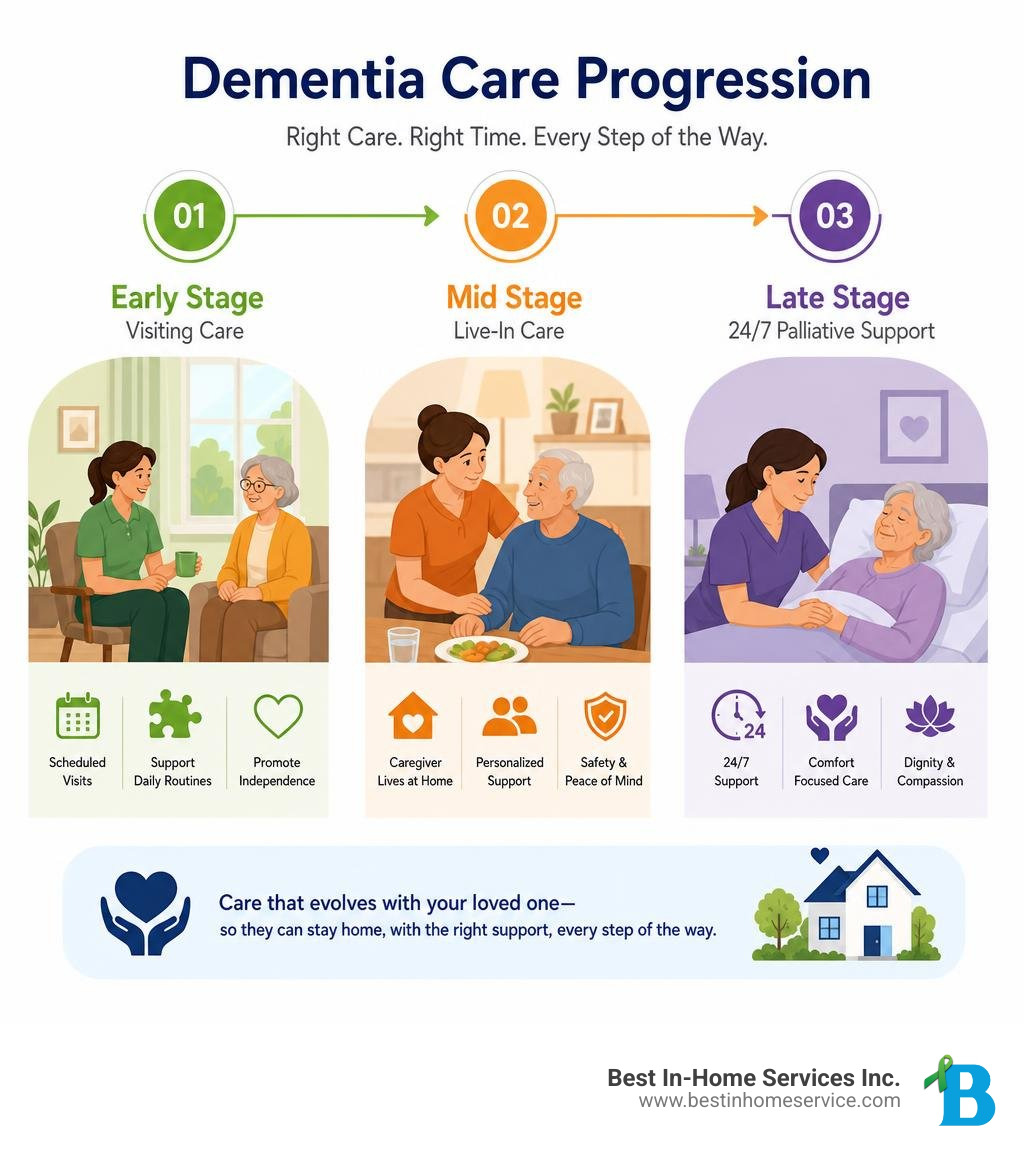
Hourly care is excellent for the early stages of cognitive decline, but as the condition progresses, gaps in coverage can create safety risks. If a loved one begins wandering at midnight or forgets to turn off the stove in the afternoon, hourly care may no longer be enough.
Live-in care provides a consistent, reassuring presence. Instead of a rotating roster of different faces arriving at different times, a dedicated caregiver (or a primary team of two rotating on multi-day shifts) becomes a familiar part of the household.
| Feature | Hourly Visiting Care | Live-In Care |
|---|---|---|
| Coverage | Scheduled blocks of hours (e.g., 4 to 8 hours/day) | 24-hour presence with a caregiver sleeping in the home |
| Consistency | Often multiple different caregivers per week | A primary caregiver or a tight 2-person rotating team |
| Overnight Support | Requires booking a separate “awake” night shift | Caregiver is on-site to help with occasional night needs |
| Best For | Early-stage support, companionship, and basic errands | Moderate to late-stage dementia where safety is a 24/7 concern |
To learn more about how these structures contrast with residential memory facilities, read our article on Understanding Memory Care.
The Key Benefits of Staying at Home with Dementia
For individuals experiencing memory loss, the physical environment acts as an anchor. Moving to an unfamiliar care facility can trigger sudden anxiety, confusion, and rapid cognitive decline because the brain loses its familiar reference points.
Remaining at home allows seniors to stay in familiar surroundings, which dramatically reduces anxiety. They can keep their beloved pets—which are proven to lower stress and combat loneliness—and maintain their connection to neighbors, gardens, and local communities. For a broader look at why staying home is so beneficial, read Why Senior Care at Home is the Best Choice for Aging in Place.
Maintaining Familiar Routines and Independence
People with dementia thrive on predictability. A live-in caregiver helps preserve daily habits—such as having coffee in the favorite blue mug at 8:00 AM or watching the news in the green armchair.
These small details are vital for cognitive preservation. Caregivers can also implement visual cues (like labeling drawers or placing pictures on doors) to help your loved one navigate their own home with confidence. Recognizing these needs early is key; you can read about the 10 Early Signs of Alzheimer’s and How Home Care Can Help to see how early routines build a foundation for long-term comfort.
One-on-One Support and Emotional Companionship
In a residential care home, staff must split their attention among dozens of residents. With live-in care, your loved one receives undivided, one-on-one attention.
This level of focus allows the caregiver to build deep trust, learn subtle behavioral triggers, and defuse agitation before it escalates. They can plan personalized activities—like listening to favorite big band records, baking family recipes, or taking short walks in the yard. This compassionate approach makes a world of difference when navigating behavioral changes. For real-life examples, explore Alzheimer’s Care: Real Stories of Families Adapting to Personality Changes in Loved Ones.
Understanding the Cost of Live-In Care for Dementia

Live-in and continuous care are structured differently from hourly billing, which is why Best In-Home Service, Inc. quotes these arrangements at a customized rate based on the schedule, overnight needs, and level of supervision required.
For scheduled dementia care, our rate is $42 per hour, with a 3-hour minimum per visit. Companion and homemaker care is $35 per hour, personal care assistance and respite care are $37 per hour, overnight and weekend care are $40 per hour, and holiday care is $45 per hour. Mileage for transportation or accompaniment is billed at $0.75 per mile in addition to the hourly rate.
Key Factors Influencing the Price of Care
Several factors will impact the final cost of a live-in program:
- Level of Care Needed: Advanced physical care or complex medical needs may require specialized certified nursing assistants (CNAs).
- Geographic Location: Rates vary by region. For families in our service areas—such as Chicago, Downers Grove, Winnetka, Schaumburg, or Lake County—local economic factors influence standard rates.
- Caregiver Training: Highly trained caregivers with specialized dementia certifications may command higher rates, but they provide invaluable peace of mind.
To understand how 24-hour schedules are structured and managed, check out 24-Hour In-Home Care in Illinois: Essential Support for Recovery.
Funding Options, Government Programs, and Insurance
Many families wonder how to fund long-term live-in care. It is important to note that traditional Medicare does not cover long-term, non-medical live-in care. It only covers short-term, doctor-ordered skilled nursing or therapy.
However, there are other avenues to explore:
- Long-Term Care Insurance: If your loved one has a policy, it will often cover a significant portion of licensed in-home care.
- Medicaid Waivers: For those who qualify financially, state waiver programs can help fund in-home services.
- Supportive Living Programs: In Illinois, specific programs help low-income seniors access subsidized care. You can research local options through the Cook County Supportive Living Program | HFS and the DuPage County Supportive Living Program | HFS.
How Live-In Care Supports Safety and Adapts to Progression
As dementia progresses, safety risks naturally rise. A live-in caregiver acts as a proactive safety net. They can help implement vital home safety modifications—such as securing rugs, installing grab bars, and setting up wandering prevention alarms. Having an experienced professional in the home significantly reduces the fall risk and ensures that emergency situations are handled immediately.
For more details on managing safety alongside chronic diagnoses, see Chronic Illness Home Care Throughout Illinois: How Caregivers Help Manage Ongoing Conditions.
When to Transition to Live-In Care for Dementia

Recognizing the right time to transition to full-time care is difficult. Many family caregivers wait until a crisis occurs—a fall, a wandering incident, or a medical emergency—before seeking help.
About 70% of family caregivers report that caring for someone with dementia is highly stressful. If you are experiencing physical exhaustion, constant anxiety, or your own health is beginning to decline, it is time to consider professional support.
Signs that your loved one needs live-in care include:
- Frequent confusion about the time of day (sundowning)
- Wandering outside or getting lost in familiar places
- Neglecting personal hygiene or forgetting to eat and drink
- Unexplained weight loss or frequent medication mistakes
Adapting to Late-Stage Dementia and End-of-Life Support
One of the greatest benefits of live-in care is its ability to scale. A dedicated caregiver can support a client for years—in fact, the average duration for a long-term live-in client with a dedicated care agency is 4.5 years.
As your loved one enters the later stages of dementia, the care plan transitions smoothly to include palliative techniques, physical transferring assistance, and seamless coordination with local hospice care providers. This ensures your loved one can remain in the comfort of their own home, surrounded by love, all the way through their journey. For guidance on navigating these emotional milestones in the Chicago area, read Finding Peace of Mind with Chicago Dementia Care Services.
Choosing the Right Provider and Caregiver Qualifications
Entrusting the care of a parent or spouse to someone else is a profound act of trust. To ensure peace of mind, it is crucial to work with a licensed, reputable agency that performs rigorous vetting, comprehensive background checks, and active care management.
Essential Training and Qualifications for Dementia Carers
A great dementia caregiver needs more than just a warm heart; they need specialized training. Look for providers whose staff are trained in:
- Dementia-Specific Communication: Learning how to enter a client’s reality rather than correcting or arguing with their confusion.
- Behavioral Management: Recognizing triggers for agitation or sundowning and redirecting focus gently.
- Emergency Preparedness: Active CPR and first aid certifications.
For a checklist of qualifications to look for, refer back to Dementia Care in Your Own Home: All You Need to Know.
Questions to Ask Potential Care Agencies
When interviewing agencies, don’t hesitate to ask detailed logistical questions:
- How do you handle backup coverage if the primary caregiver is sick or takes a vacation?
- How do you monitor and support the caregiver’s required sleep hours (typically 8 hours total, with at least 5 uninterrupted hours)?
- Is there active care manager oversight to regularly review and update the care plan?
To prepare for these conversations, read our advice on choosing providers in 24-Hour In-Home Care in Illinois: Essential Support for Recovery.
Frequently Asked Questions about Dementia Care
Does Medicare cover the cost of live-in care for dementia?
No, traditional Medicare does not cover the cost of long-term, non-medical live-in care. It only covers clinical home health services (like physical therapy or wound care) when ordered directly by a doctor for a homebound patient. Most families utilize private pay, long-term care insurance, or state-specific Medicaid waivers to fund live-in care.
How do live-in caregivers manage sleeping arrangements and privacy?
By law, a live-in caregiver must be provided with a private bedroom containing a proper bed and access to a bathroom. They are not “awake” staff; they require 8 hours of sleep per night (with at least 5 uninterrupted hours). To ensure consistency and prevent caregiver burnout, agencies typically use a rotation of two primary caregivers who alternate shifts every few days.
Can a live-in carer support a person with advanced dementia?
Yes. Live-in caregivers are trained to support individuals through all stages of dementia, including the late stages. They assist with total mobility transfer, non-verbal communication, incontinence care, and work hand-in-hand with hospice nurses to provide comfort and dignity at the end of life.
Conclusion
Navigating a dementia diagnosis is a deeply emotional journey, but you do not have to walk this path alone. Live-in care for dementia offers a compassionate, safe, and highly personalized alternative to moving your loved one into an institutional care facility. It preserves their dignity, honors their routines, and—most importantly—gives your family the invaluable gift of peace of mind.
At Best In-Home Services Inc., we are proud to provide certified, compassionate caregivers and custom-tailored care plans to families throughout Chicago and the surrounding suburbs.
If you would like to explore how we can support your family, please visit our services page to learn more or schedule an in-home care assessment today.







 1-224-636-5200
 1-224-636-5210
  425 Huehl Rd 13B Northbrook IL 60062