
When a Loved One With Dementia Needs Round-the-Clock Support
24/7 dementia home care means having a trained caregiver present in your loved one’s home at all times — day, night, and everything in between — so they stay safe, comfortable, and supported without leaving the place they know best.
Here’s what it covers at a glance:
- Who it’s for: People with Alzheimer’s or other dementias who need continuous supervision
- What it includes: Personal care, safety monitoring, medication reminders, meals, companionship, and behavior support
- How it works: Either a live-in caregiver (with required rest periods) or rotating 8-hour shifts so someone is always awake
- What it costs: Best In-Home Service charges $42/hour for dementia and Alzheimer’s care, with 24-hour arrangements quoted individually.
- Who pays: Mostly private pay or long-term care insurance — Medicare does not cover ongoing dementia home care
Dementia doesn’t follow a schedule. Confusion spikes at night. Wandering happens at 2 a.m. Sundowning turns a calm afternoon into a crisis. For families in Chicago trying to balance work, kids, and caregiving, that reality is exhausting — and often unsustainable alone.
About 77% of seniors want to stay in their own homes as they age, according to AARP. For many families, 24/7 home care makes that possible without sacrificing safety.
This guide walks you through everything: what this care looks like, when you need it, what it costs, and how to find the right provider in Illinois.
I’m Lily Harrison, General Manager at Best In-Home Services Inc., where I help Chicago-area families navigate the challenges of 24/7 dementia home care and connect their loved ones with certified, compassionate caregivers. With years of experience coordinating personalized in-home care plans for seniors with dementia and memory-related conditions, I’ll help you understand every option so you can make a confident, informed decision.
What 24/7 Dementia Home Care Is
When we talk about 24/7 dementia home care, we are describing a specialized support system designed to keep seniors in the familiar surroundings of their own homes while ensuring they are never truly alone. Unlike standard home care, which might only involve a few hours of help with groceries or light cleaning, this is a comprehensive safety net.
What “24/7 dementia home care” really means
At its core, this service provides continuous supervision. It means that whether it is 3:00 PM or 3:00 AM, a trained professional is there to manage the unique challenges of memory loss. This includes:
- Safety Monitoring: Preventing falls and ensuring the stove isn’t left on.
- ADL Support: Hands-on help with “Activities of Daily Living” like bathing, dressing, and toileting.
- Medication Reminders: Ensuring the right pills are taken at the right time.
- Behavioral Support: Using specialized techniques to de-escalate agitation or confusion.
How 24/7 dementia home care differs from hourly care and live-in care
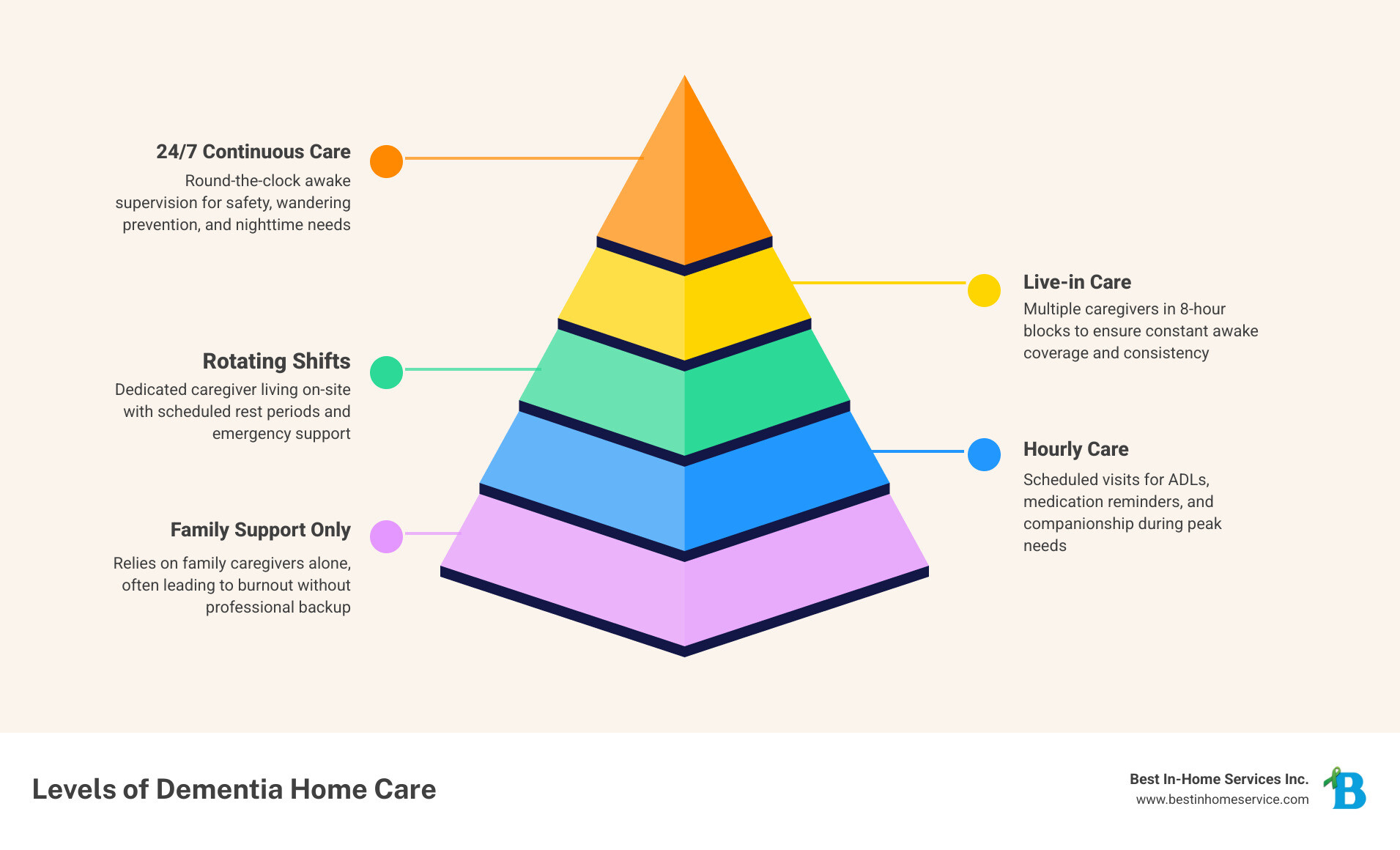
Many families start with hourly care — perhaps four hours a day to help with lunch and a bath. However, as dementia progresses, those “uncovered” hours become dangerous. There are two primary ways we structure round-the-clock support:
- Live-in Care: A caregiver stays in the home for several days at a time. They require a private room and an 8-hour sleep break. This is often the most cost-effective 24-hour option, but it only works if the senior sleeps through the night.
- Rotating 24-Hour Care: This involves two or three caregivers working 8- or 12-hour shifts. Because they are on a shift, they are always awake. This is the gold standard for seniors who wander at night or experience severe “sundowning.”
| Feature | Live-In Care | Rotating 24-Hour Care |
|---|---|---|
| Staffing | 1 caregiver for 3-4 days | 2-3 caregivers in 8/12hr shifts |
| Alertness | Caregiver sleeps at night | Caregiver stays awake 24/7 |
| Cost | Generally lower daily rate | Higher (hourly x 24) |
| Best For | Seniors who sleep at night | Seniors who wander or are active at night |
When home care is the better fit and when families may need a higher level of support
Research shows that dementia care in your own home can actually delay the need for a memory care facility by an average of 24 months. Staying at home preserves “sensory cues”—the smell of a familiar kitchen or the feel of a favorite chair—which helps anchor someone whose memory is fading.
However, if your loved one requires specialized medical equipment (like a ventilator) or has become aggressive to the point of physical danger, it may be time to look into Alzheimer’s care facilities. For most, though, the one-on-one attention of home care provides a level of personalization that a facility with a 10:1 staff ratio simply cannot match.
Signs a Loved One May Need 24/7 Dementia Home Care
Recognizing the “tipping point” is one of the hardest parts of the journey. Often, it isn’t one big event, but a series of small, scary moments that signal it’s time for 24/7 dementia home care.

Safety and behavior changes that point to round-the-clock support
We often hear from families in Chicago and the surrounding suburbs after a “near miss.” Look for these red flags:
- Wandering or Elopement: They’ve been found in the yard or down the street, confused about where they are.
- Kitchen Mishaps: Forgetting to turn off the burner or putting metal in the microwave.
- Medication Mix-ups: Taking double doses or forgetting them entirely.
- Frequent Falls: Decreased mobility and balance leading to bruises or hospital visits.
Nighttime symptoms and why they matter
Dementia often wreaks havoc on the internal clock. “Sundowning”—a state of increased confusion and anxiety that hits as the sun goes down—is a major trigger for 24/7 care. If your loved one is up at 2:00 AM trying to “go to work” or wandering into the bathroom and falling, they need an awake caregiver. Sleep reversal (staying awake all night and sleeping all day) is nearly impossible for family members to manage alone.
Family stress, work demands, and caregiver overload
Are you part of the “sandwich generation”? About 74% of caregivers are balancing a job while caring for both children and aging parents. If you find yourself constantly checking your phone, rushing over during lunch breaks, or feeling a sense of dread every time the phone rings at night, you are experiencing caregiver burnout.
Warning Signs You Need Help:
- You are missing work or falling behind on tasks.
- You feel irritable or resentful toward your loved one.
- Your own health is declining due to lack of sleep.
- You feel anxious about leaving your loved one alone for even ten minutes.
How 24/7 Dementia Home Care Works in Daily Life
At Best In-Home Services Inc., we don’t just “send a body” to the house. We build a structured environment. Finding peace of mind with Chicago dementia care services starts with a personalized care plan.
Live-in care vs rotating shift care
As mentioned, the choice between live-in and rotating shifts depends on the “night owl” factor.
- Live-in Structure: Usually involves two caregivers who split the week (one stays 4 days, the other 3). They become like family.
- Rotating Shift Care: This ensures a fresh, alert caregiver is always on duty. This is critical for high-risk patients who might try to leave the house in the middle of the night.
Services typically included in 24/7 dementia home care
A caregiver’s day is busy and focused on engagement. It’s not just about “watching” someone; it’s about helping them live.
- Personal Hygiene: Respectful help with bathing, dressing, and incontinence care.
- Nutritional Support: Preparing brain-healthy meals and ensuring constant hydration (dehydration often worsens confusion).
- Cognitive Engagement: Playing memory games, looking at old photos, or listening to music from their youth.
- Light Housekeeping: Keeping the environment clutter-free to prevent trips and falls.

Managing wandering, sundowning, agitation, and nighttime needs
Our caregivers use validation therapy. Instead of arguing with a senior who says they “need to go home to their mother,” we validate their feelings: “You must really miss your mom; tell me about her.” This de-escalates agitation.
To manage sundowning, we suggest:
- Environmental Tweaks: Closing curtains before dusk and keeping the home brightly lit.
- Noise Control: Reducing TV volume or chaotic sounds in the late afternoon.
- Structured Routines: Keeping dinner and bedtime at the exact same time every day.
What training and qualifications families should look for
Dementia care is a skill. When interviewing agencies, ask if their staff is trained specifically in memory care. At Best In-Home Services Inc., our staff is background-checked, bonded, and insured. They are trained in CPR, first aid, and—most importantly—dementia-specific communication. They know how to handle “refusal of care” (when a senior doesn’t want to bathe) with patience and redirection rather than force.
Costs of 24/7 In-Home Dementia Care and Ways to Pay
Let’s talk numbers. In 2026, the financial reality of 24/7 dementia home care in Chicago is significant. It is an investment in safety and the ability to age in place.
Typical hourly, monthly, and annual costs in 2026
Based on national market medians:
- Hourly rate: approximately $34 per hour
- Full-time (44 hours/week): ~$77,732 per year
- True 24/7 care (rotating shifts): ~$24,733 per month, roughly $296,796 annually
These are national market figures and are not Best In-Home Service rates.
Best In-Home Service, Inc. charges $42 per hour for dementia and Alzheimer’s care, with a 3-hour minimum per visit. Companion and homemaker care is $35 per hour, personal care assistance and respite care are $37 per hour, overnight and weekend care are $40 per hour, and holiday care is $45 per hour. Mileage for transportation or accompaniment is billed at $0.75 per mile in addition to the hourly rate.
Continuous 24-hour dementia care is quoted at a customized rate, because wandering risk, overnight supervision needs, and shift structure vary substantially between households. A customized quote is provided before services begin.
How costs compare with other long-term care choices
A memory care community in the Chicago area may have a median cost of around $6,690 to $8,000 per month. On paper, it looks cheaper. However, that facility cost often doesn’t include “level of care” add-ons, and the staff-to-resident ratio means your loved one is sharing a caregiver with 10 to 15 other people. With home care, the cost is higher because the attention is 100% focused on your family member.
Medicare, Medicaid, long-term care insurance, and tax options
This is the most common question we get: “Does Medicare pay for this?”
- Medicare: Generally, no. Medicare covers short-term, doctor-ordered “skilled” care (like physical therapy or wound care), but not long-term “custodial” care (help with bathing and supervision).
- Long-Term Care (LTC) Insurance: This is the primary way many families pay. Most policies have a “cognitive trigger” that pays out once a dementia diagnosis is confirmed.
- Medicaid: In Illinois, certain waivers may help, but eligibility is based on strict income and asset limits.
- Tax Deductions: The medical portion of home care (including help with ADLs) may be tax-deductible. Always consult a tax professional in Illinois.
For more details on navigating these options, you can find in-home care guidance from the Alzheimer’s Association.
Extra costs families often overlook
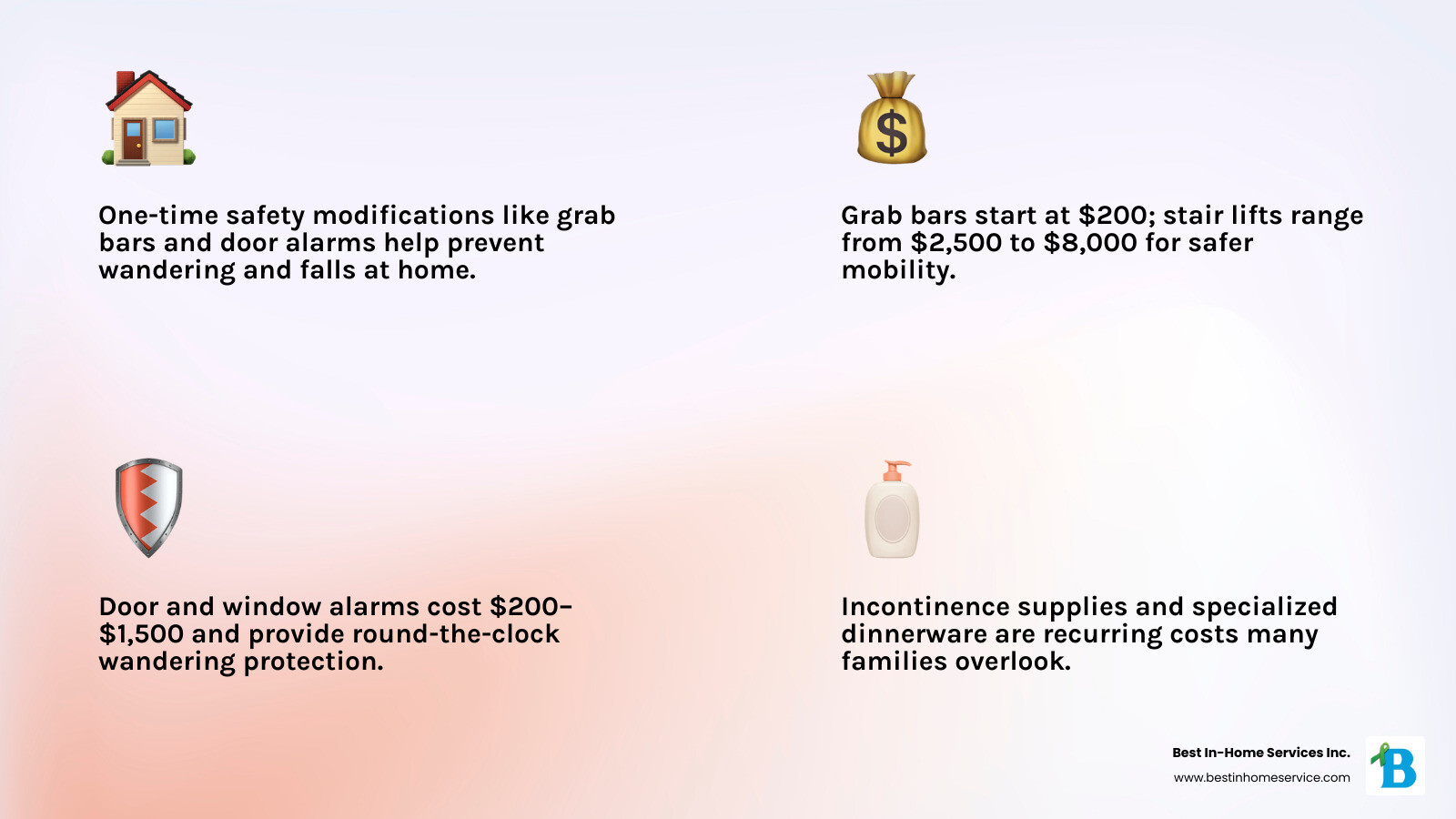
Beyond the caregiver’s salary, preparing a home for dementia care involves some one-time costs:
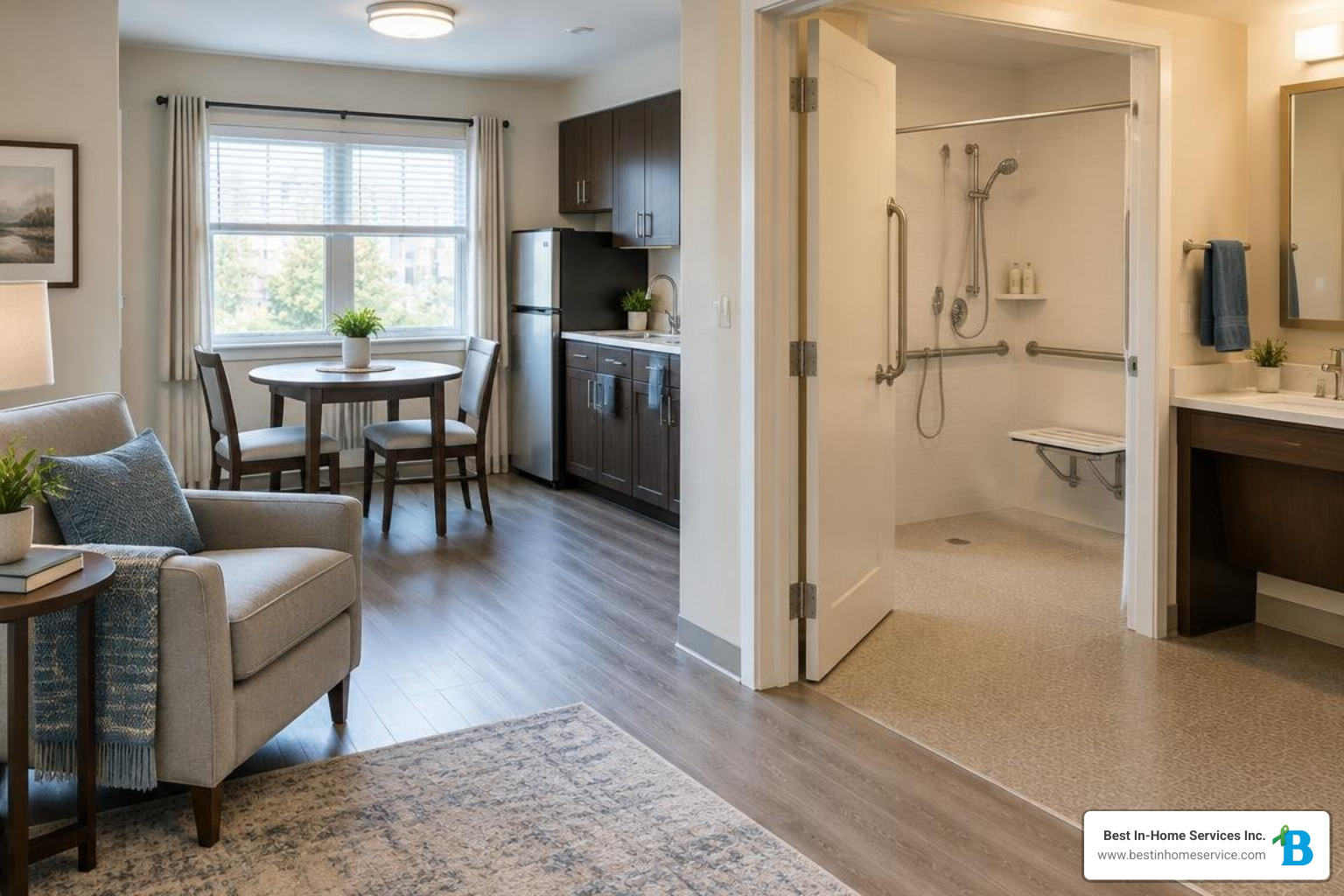
- Safety Mods: Grab bars ($200+), stair lifts ($2,500–$8,000), or walk-in showers.
- Monitoring: Door and window alarms ($200–$1,500) to prevent wandering.
- Supplies: Incontinence products and specialized dinnerware.
How to Choose the Right Provider for 24/7 Dementia Home Care
Not all agencies are equipped for the intensity of 24/7 memory support. You need a partner, not just a contractor.
Questions to ask before hiring
When you call an agency, don’t be afraid to grill them:
- “Do you have a specific training program for dementia?”
- “How do you handle a caregiver calling out sick at 2:00 AM? Who is the backup?”
- “Can we meet the caregivers before they start to ensure a personality match?”
- “How do you track care? Do I get daily notes or a digital portal?”
- “Are your caregivers employees of the agency, or are they independent contractors?” (Employees are generally better for your legal protection).
How to evaluate quality, safety, and reliability
Look for agencies with low caregiver turnover. In dementia care, consistency is everything. Every time a new face enters the home, it can trigger a “reset” of confusion for the senior. A reputable agency will perform a comprehensive initial assessment and update the care plan as the disease progresses.
How families in Illinois can start the search
If you are in Chicago, Naperville, or Lake County, start by talking to your loved one’s neurologist. You can also use the Illinois in-home care resources provided by the Department on Aging. For local support, check out our guide on Chicago dementia support.
When 24/7 Dementia Home Care is No Longer Enough
As much as we advocate for aging in place, there may come a day when the home environment is no longer the safest or most practical option.
Signs it may be time to move beyond home care
- Medical Complexity: If they require constant “skilled nursing” (like IVs or complex wound care) that a home health aide cannot provide.
- Physical Limitations: If the senior becomes completely bedbound and the home layout makes “two-person transfers” or the use of a Hoyer lift impossible.
- Unmanaged Aggression: If the senior becomes physically violent in a way that endangers the caregiver or themselves, despite professional intervention.
How to make the transition with less stress
If you decide to move to a facility, do it gradually. Bring familiar belongings—their favorite bedspread, family photos, and even their favorite chair—to the new room. This helps reduce “transfer trauma.”
Conclusion: Choosing Peace of Mind With the Right Level of Support
At Best In-Home Services Inc., we believe that a dementia diagnosis doesn’t have to mean the end of life at home. By implementing 24/7 dementia home care, you aren’t just hiring a “sitter”—you are reclaiming your role as a daughter, son, or spouse, rather than just a weary caregiver.
Whether you are in Winnetka, Schaumburg, or downtown Chicago, our team is here to provide the certified staff and custom care your family deserves. If you’re ready to see how we can help, explore more info about 24/7 home care services or view our full list of services.
You don’t have to do this alone. Peace of mind is possible, and it starts with a single conversation.






 1-224-636-5200
 1-224-636-5210
  425 Huehl Rd 13B Northbrook IL 60062