
Comprehensive Types of Living Assistance Services for Seniors
Finding reliable living assistance services involves assessing daily care needs, comparing in-home support with community residential options, verifying agency licensing and caregiver background checks, and consulting local Area Agencies on Aging. Choosing the right living assistance enables older adults to maintain dignity, safety, and self-reliance while receiving tailored help.
In-Home Personal Care and Daily Living Support
Staying at home provides familiarity and emotional comfort, but changes in physical strength or balance can make routine tasks challenging. Dedicated in-home living assistance focuses on supporting Activities of Daily Living (ADLs) so older adults can maintain their dignity and self-reliance.
- Bathing and personal hygiene: Gentle, hands-on help entering and exiting showers, washing, hair styling, and skin care routines.
- Dressing and grooming: Assisting with buttons, zippers, footwear, and daily wardrobe selection tailored to comfort and climate.
- Medication reminders: Providing prompts so prescribed medications are taken consistently and on schedule.
- Mobility and transfer assistance: Offering steady physical support during transfers between beds, chairs, and walkers to prevent falls.
- Meal preparation: Planning, cooking, and serving balanced meals aligned with specific dietary guidelines and preferences.
- Light housekeeping: Managing laundry, changing linens, washing dishes, and keeping walking pathways free from trip hazards.
When everyday routines become overwhelming, our dedicated personal care support ensures that seniors receive direct, respectful physical assistance from qualified caregivers. Pairing personal care with practical home services creates a clean, secure environment where older adults can thrive without the physical exhaustion of managing an entire household alone.
Specialized Living Assistance Services for Memory and Dementia Support
Cognitive decline, whether caused by Alzheimer’s disease or other forms of dementia, requires specialized techniques that prioritize emotional safety, familiarity, and patience. As cognitive changes progress, standard routines often need gentle adaptations.
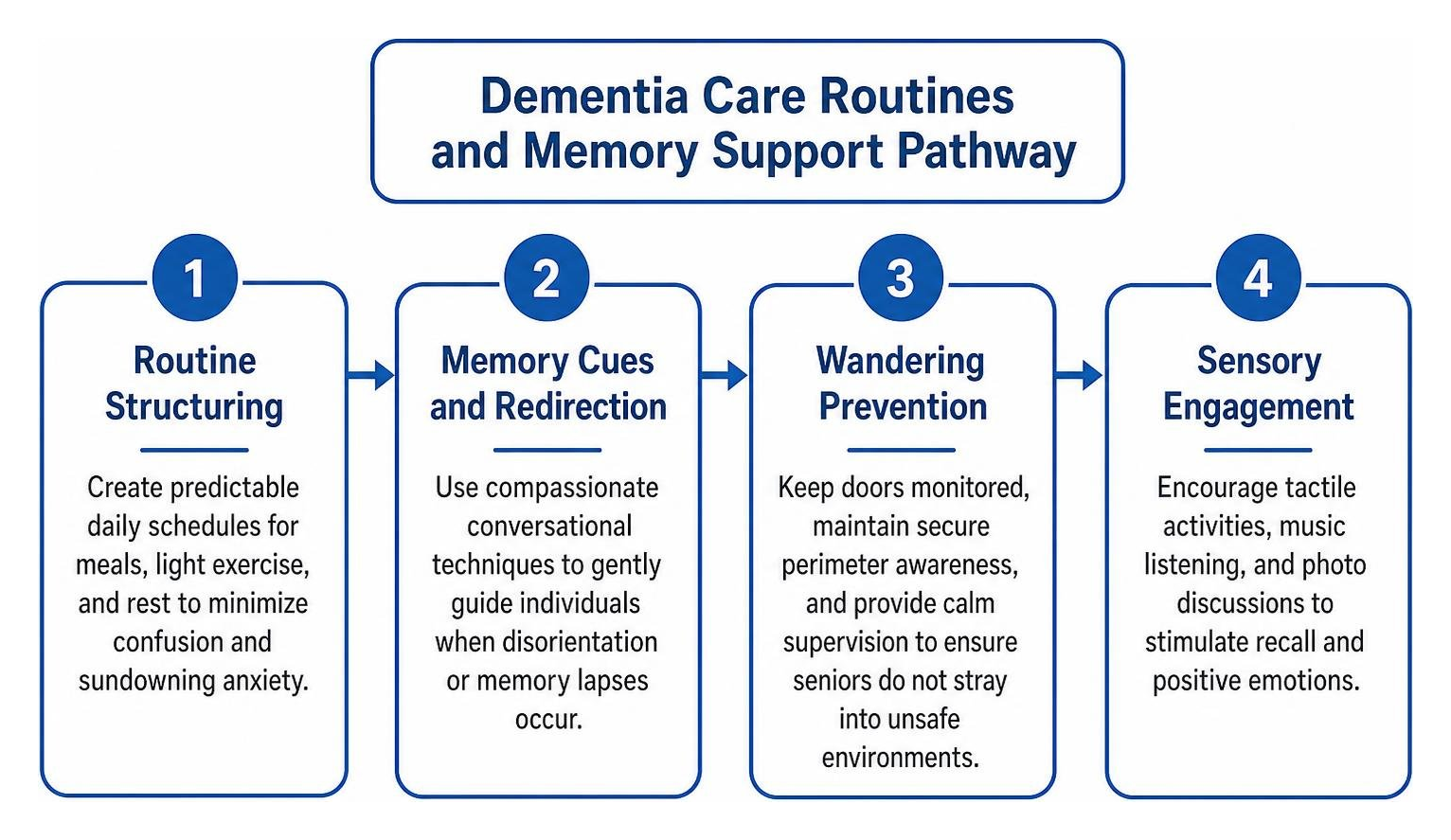
- Routine structuring: Creating predictable daily schedules for meals, light exercise, and rest to minimize confusion and sundowning anxiety.
- Memory cues and redirection: Using compassionate conversational techniques to gently guide individuals when disorientation or memory lapses occur.
- Wandering prevention: Keeping doors monitored, maintaining secure perimeter awareness, and providing calm supervision to ensure seniors do not stray into unsafe environments.
- Sensory engagement: Encouraging tactile activities, music listening, and photo discussions to stimulate recall and positive emotions.
For families navigating progressive cognitive conditions, specialized Alzheimer’s care provides reliable supervision from professionals trained in behavioral de-escalation and communication. Exploring dementia care in your own home helps families implement supportive changes within familiar surroundings, reducing the stress often associated with moving to an unfamiliar facility.
Community Nutrition and Home-Delivered Meal Programs
Maintaining proper nutrition is essential for energy, muscle strength, and chronic illness management. However, shopping for ingredients, standing for long cooking sessions, and managing cleanup can become burdensome for older adults.
- Home-delivered meals: Services like Meals on Wheels deliver freshly prepared, nutritious meals directly to homebound individuals, offering dietary nourishment alongside a warm daily safety check.
- Congregate dining programs: Local community centers host group lunches, allowing older adults to share meals while enjoying meaningful social interaction with neighbors.
- Seasonal fresh food programs: Initiatives like the Senior Farmers’ Market Nutrition Program provide eligible seniors with access to fresh, locally grown produce.
Understanding the importance of nutrition and meal planning in senior care helps families prevent unintended weight loss, dehydration, and nutritional deficiencies that could otherwise lead to preventable hospital visits.
Senior Transportation and Medical Appointment Assistance
Giving up the car keys is often one of the hardest transitions for an older adult, but reliable transportation ensures that healthcare, errands, and social activities remain fully accessible.
- Medical visits and therapies: Door-through-door transit to primary care physicians, physical therapy sessions, and specialist appointments.
- Prescription and grocery runs: Escorting seniors to local pharmacies and supermarkets or picking up essential supplies directly.
- Social outings and worship services: Providing dependable rides to family gatherings, religious services, and community events.
Arranging dedicated senior appointment assistance offers far more than a standard taxi ride. Caregivers provide hands-on assistance getting into vehicles, navigating clinic corridors, taking notes during appointments, and returning safely indoors.
Comparing Care Levels: Independent Living, Assisted Living, and In-Home Care
Independent Living vs. Light Assisted Living vs. Full Residential Care
Navigating modern senior care means choosing between aging in place and community-based residential environments. Each setting offers distinct balances of autonomy, care points, and social programming.
| Care Model | Primary Setting | Daily Care Level | Meals & Chores | Best Suited For |
|---|---|---|---|---|
| Independent Living | Private senior apartment community | None to minimal | Communal dining & housekeeping included | Active seniors seeking freedom from home maintenance and access to social clubs |
| Light Assisted Living | Residential community with flexible care points | Low to moderate on-demand help | Full dining, laundry, and daily chores managed | Seniors needing occasional medication reminders or minor physical help while maintaining privacy |
| Full Assisted Living | Licensed residential care facility | 24/7 staff oversight and scheduled ADLs | Complete dining, housekeeping, and hygiene care | Older adults requiring structured daily personal care, transfer help, and routine physical supervision |
| Private In-Home Care | The senior’s private residence | Fully customizable, from hourly to 24/7 | Tailored meal prep, customized cleaning, 1-on-1 support | Seniors who prefer remaining in familiar home surroundings with dedicated one-on-one attention |
Evaluating home care vs assisted living allows families to weigh whether staying in their cherished neighborhood or transitioning to a multi-resident campus best suits their emotional and daily needs.
24-Hour Home Care and Live-In Support
When safety risks or medical complexities require round-the-clock vigilance, families often look beyond basic visiting services to continuous home support models.
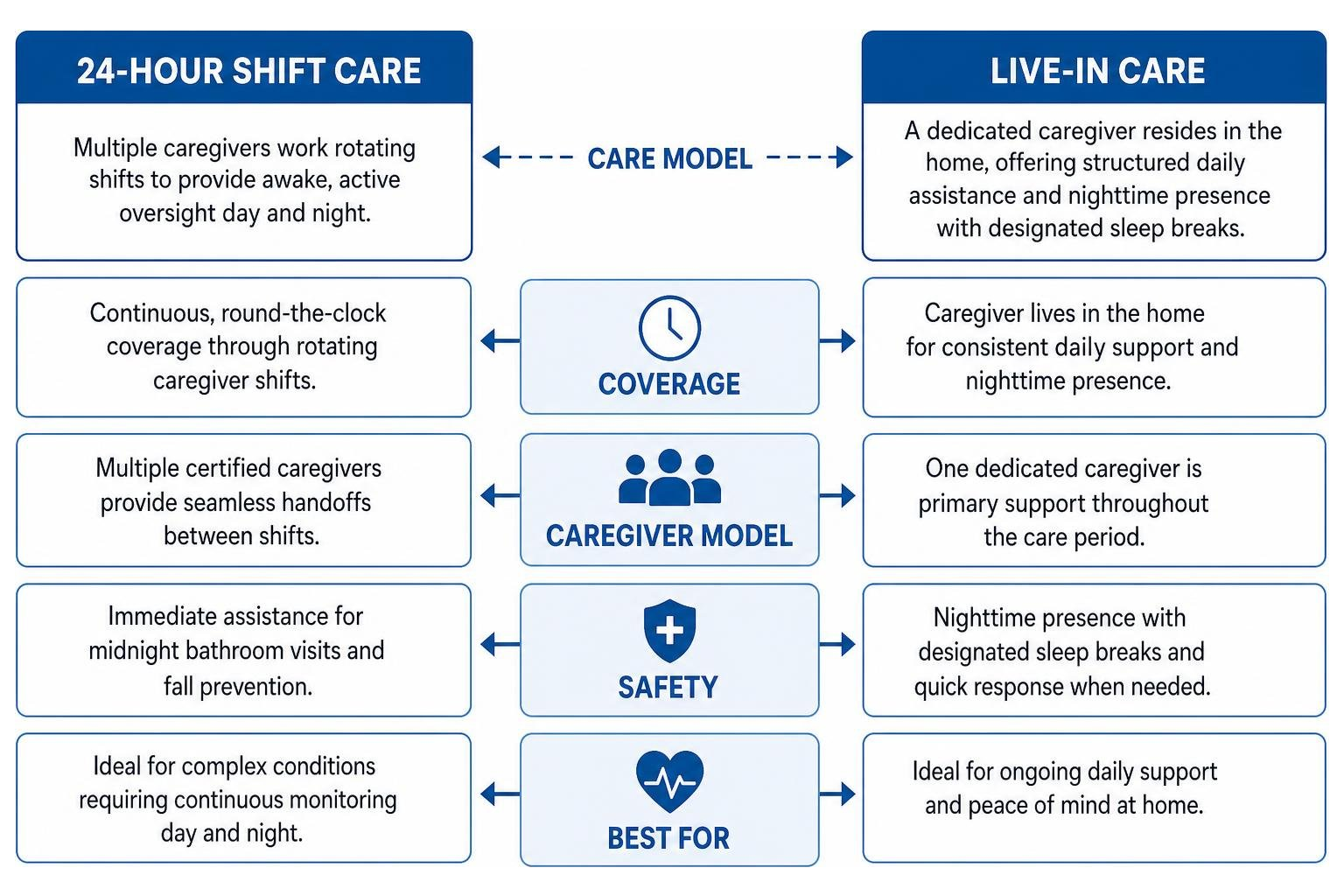
- Continuous shift care: Multiple certified caregivers work rotating shifts to provide awake, active oversight throughout the day and night.
- Live-in caregiver support: A dedicated caregiver resides in the home, offering structured daily assistance and nighttime presence with designated sleep breaks.
- Fall prevention and nighttime safety: Immediate assistance for midnight bathroom visits, preventing disorientation and dangerous slips.
- Complex condition monitoring: Ongoing oversight for stroke recovery, advanced Parkinson’s, or heart conditions.
Families seeking around-the-clock options can explore affordable live-in caregiver options to ensure predictable, personalized companionship. When urgent oversight is needed, locating reliable 24-hour care for elderly near me ensures that experienced professionals handle unexpected crises with calm expertise.
Essential Respite and Counseling Resources for Family Caregivers
Family caregiving is an act of deep love, but without adequate support, it can lead to physical exhaustion and emotional burnout. Utilizing respite services protects the well-being of both the caregiver and the senior.
- Scheduled hourly relief: Professional caregivers step in for a few hours each week so family members can attend to work, medical appointments, or personal rest.
- Adult day health programs: Community centers provide engaging daytime social programming and structured care while family caregivers work.
- Caregiver counseling and support groups: Educational sessions and peer groups that provide coping strategies, emotional validation, and practical caregiving techniques.
Arranging respite home health care provides family members with peace of mind, knowing their loved one is in capable hands while they take time to recharge.
Determining Eligibility and Funding Senior Support Services
Securing senior living assistance involves assessing functional needs and reviewing available payment structures. Because private out-of-pocket costs vary based on required hours and specialized care needs, understanding public programs and insurance benefits helps families build sustainable financial plans.
- Functional assessments: Professional evaluations measure specific ADLs (bathing, dressing, eating) and Instrumental Activities of Daily Living (IADLs, like managing finances, medication administration, and cooking) to establish care levels.
- Long-term care insurance: Comprehensive private policies designed specifically to cover non-medical in-home care, assisted living, or adult day services once benefit triggers are met.
- Medicaid waiver programs: State-specific initiatives, such as the Cook County Supportive Living Program, offer financial support for eligible older adults needing residential or community-based living assistance.
- Veterans Aid & Attendance benefits: Monthly pension enhancements available to qualifying wartime veterans and surviving spouses who require help with daily living activities.
- Local subsidized housing: Programs coordinated through regional authorities, such as the Housing Authority of Cook County or municipal offices managing Senior Housing Resources in Schaumburg, offering affordable residential alternatives.
Carefully evaluating the overall cost of in-home care allows families to create a balanced approach combining family contributions, private savings, and public assistance.
Finding Local Programs in Chicago and Surrounding Suburbs
Accessing Local Living Assistance Services in Cook and DuPage Counties
Locating reputable senior programs begins with tapping into local community networks and regional governmental resources. In Illinois, Area Agencies on Aging (AAAs) and community action partnerships provide comprehensive case management, benefits counseling, and direct service referrals.
- Regional resource coordination: Accessing initiatives through DuPage County Community Services connects families with home modifications, energy assistance, and nutritional programs.
- Metropolitan support networks: Families in Cook County can utilize municipal senior centers and community aging specialists to locate adult day care and support groups.
- Comprehensive local coverage: Whether you need dedicated Chicago senior support, suburban Naperville in-home care, or community-focused Schaumburg elder services, local providers offer customized assistance aligned with regional municipal programs.
Our teams also regularly assist families throughout neighboring communities, including Evanston, Skokie, Glenview, Des Plaines, Oak Brook, Hinsdale, Downers Grove, Woodridge, Western Springs, Buffalo Grove, Vernon Hills, Mundelein, Long Grove, Kildeer, Deerfield, Highland Park, Lake Forest, Northbrook, Glencoe, Winnetka, Kenilworth, Wilmette, Northfield, Riverwoods, Lincolnwood, Niles, Wheeling, Inverness, Barrington Hills, South Barrington, and Melrose Park.
Step-by-Step Guide to Evaluating Local Care Providers
Choosing a living assistance agency requires thoughtful vetting to ensure the safety, comfort, and compatibility of the care team.
- Licensing and certification: Verify that the agency is fully licensed by state health departments, bonded, and carries appropriate liability insurance.
- Caregiver screening and training: Inquire about criminal background checks, motor vehicle record reviews, reference verifications, and ongoing clinical skill training.
- Personalized care planning: Ensure the provider conducts comprehensive in-home assessments and creates customized care plans tailored to individual health requirements and daily routines.
- Supervision and clinical oversight: Confirm how often supervisors conduct unannounced quality visits and how changes in physical condition are monitored.
- Client reviews and reputation: Review authentic client testimonials and third-party ratings to evaluate reliability and customer communication.
Partnering with trusted local home care agencies ensures you receive responsive communication, continuous caregiver supervision, and adaptable schedules that fit your family’s dynamic.
Frequently Asked Questions About Living Assistance
How do I know when it is time to arrange living assistance for an aging parent?
Recognizing the need for support early helps prevent falls, medication errors, and severe caregiver exhaustion. Key signs include:
- Mobility changes: Unsteadiness when walking, difficulty rising from chairs, or unexplained bruises from minor balance losses.
- Household changes: Expired food accumulating in the refrigerator, unpaid bills piling up, or a decline in home cleanliness.
- Personal hygiene decline: Infrequent bathing, wearing unwashed clothes, or neglecting basic grooming habits.
- Memory concerns: Forgetting to take critical medications, missing scheduled appointments, or repeating questions frequently.
- Social withdrawal: Loss of interest in hobbies, skipping community events, and increasing signs of isolation.
Reviewing a comprehensive guide to reliable elder care provides practical checklists for families evaluating safety risks and care transitions.
Does Medicare pay for non-medical living assistance services?
Traditional Medicare is designed to cover acute, medically necessary healthcare, such as short-term skilled nursing, physical therapy, and occupational therapy following an illness or surgery. It does not cover ongoing non-medical custodial care, which includes bathing, dressing, meal preparation, and around-the-clock companionship.
Families typically fund ongoing living assistance through private savings, long-term care insurance policies, Veterans Aid & Attendance benefits, or specific state Medicaid waiver programs for qualifying low-income individuals.
How much does senior home care cost in Chicago, IL?
General pricing for home care in Chicago and the surrounding suburbs is determined by the total number of hours required, the level of hands-on physical support needed, and whether specialized dementia care is involved. Hourly services allow families to pay only for the care blocks they need, whereas live-in or 24-hour shift models provide comprehensive, continuous support. Exploring general local pricing dynamics and comparing private pay models against insurance coverage helps ensure families select a sustainable care schedule without unexpected financial strain.
How quickly can in-home living support be set up?

Living assistance can often be established rapidly, especially during urgent transitions such as hospital or rehabilitation discharges. In urgent situations, care can frequently begin within 24 to 48 hours following an initial evaluation.
The onboarding process typically involves:
- Initial safety evaluation: A registered nurse or care manager visits the residence to evaluate physical layouts, mobility needs, and daily routines.
- Care plan development: A detailed, personalized schedule is crafted covering hygiene, meal preparation, medication reminders, and safety protocols.
- Caregiver matching: A certified caregiver with matching personality traits and specialized skill sets is assigned to the client.
Booking a free assessment allows our team to review your family’s situation, conduct a home safety review, and recommend a personalized care plan tailored to your loved one’s needs.
Conclusion
Finding the right balance of support, safety, and independence is a meaningful journey for every family. Whether your loved one benefits from a few hours of weekly personal care, specialized memory support, or around-the-clock live-in oversight, tailored care plans empower seniors to age in place gracefully within the comfort of home.
At Best In-Home Services Inc., our certified staff and 24/7 dedicated support ensure your loved ones receive compassionate, individualized attention every step of the way. When you are ready to take the next step, explore our comprehensive living assistance services and discover how personalized in-home support can bring peace of mind to your entire family.





 1-224-636-5200

 1-224-636-5210
 425 Huehl Rd 13B Northbrook IL 60062