
What Senior Home Care Costs Depend On
Senior home care cost depends most on where you live, the help needed, and the number of hours scheduled. A 2025 national survey places non-medical home care at a median of $35 per hour. At 44 hours a week, that equals $80,080 a year. This is a national benchmark, not a quote for care in Chicago or elsewhere in Illinois.
To compare options fairly, count the care hours you expect to need and add costs such as home safety changes and supplies. Part-time assistance requires fewer scheduled hours than continuous supervision, while round-the-clock support represents a larger overall investment.
Best In-Home Services Inc. is a Northbrook-based, Illinois-licensed non-medical home care provider. The agency helps coordinate care plans for families in the Chicago area, where the right schedule is a key part of understanding senior home care cost.
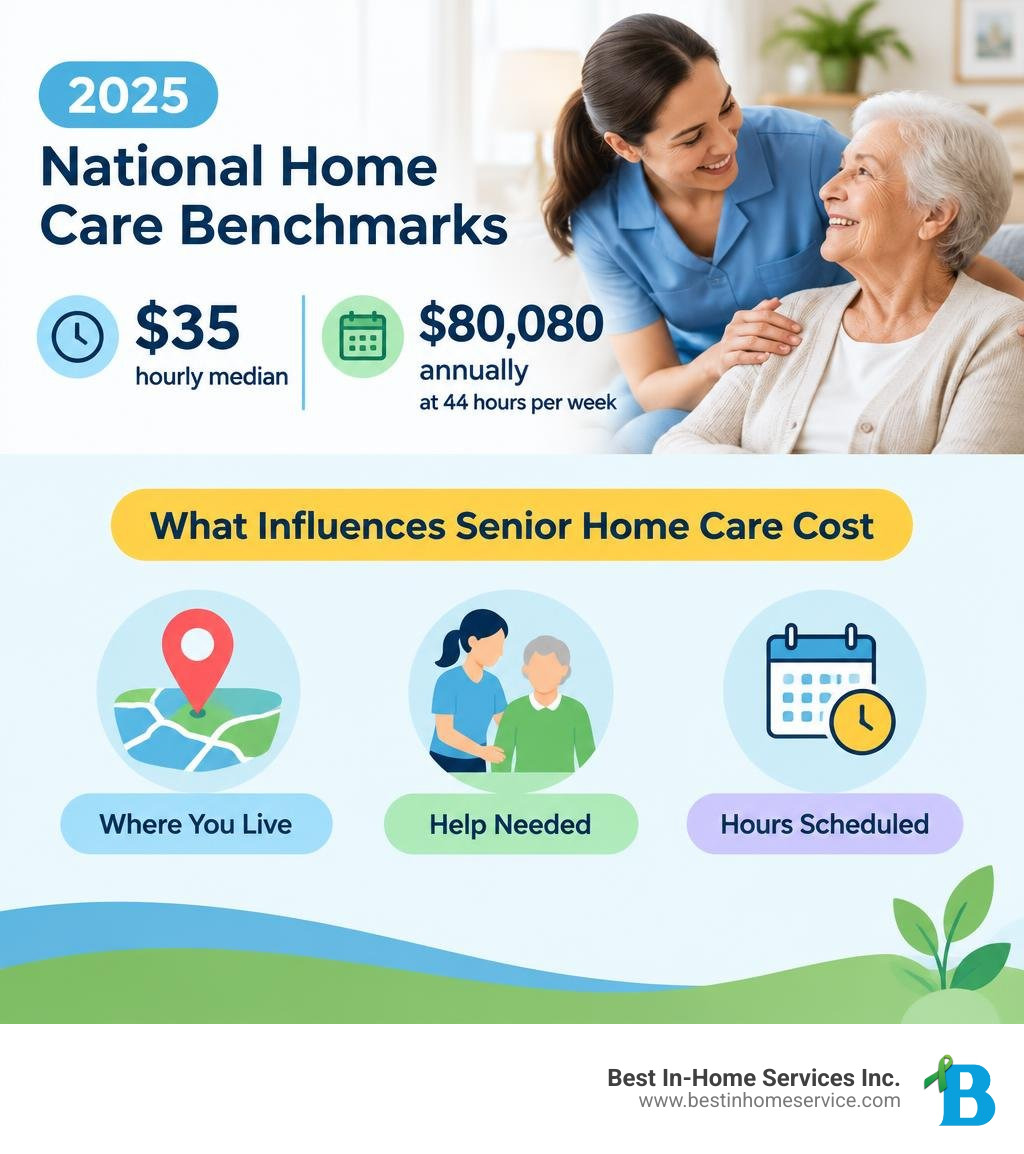
Understanding What Influences Senior Home Care Cost
When families begin evaluating options for an aging parent, calculating the true financial picture requires looking at several core components. No two households have the exact same routine, which means home care expenses reflect a personalized mix of schedule requirements, caregiver training, and household logistics.
Key Factors Shaping Hourly Rates
The broad range of rates across the country comes down to several structural factors:
- Geographic Region and Local Cost of Living: Pricing fluctuates significantly by metropolitan area. Labor markets, local licensing rules, and general economic conditions shape standard billing across different counties.
- Agency Staffing and Professional Oversight: Partnering with a licensed agency ensures caregivers are thoroughly vetted, background-checked, insured, and bonded, while professional administrative management handles scheduling, ongoing quality oversight, and reliable backup coverage when a primary aide is unavailable.
- Level of Specialized Experience: Caregivers assisting with basic companionship have different responsibilities than those supporting individuals with advanced memory loss or complex mobility requirements.
- Visit Minimums: Most professional agencies establish minimum shift lengths, such as a 3-hour visit minimum, to ensure staff can be scheduled efficiently and provide meaningful, focused assistance.
- Transportation and Travel Logistics: When a caregiver provides transportation using their own vehicle for grocery trips, pharmacy runs, or medical appointments in communities like Skokie or Evanston, separate mileage fees are standard practice.
How Hourly Care Needs Impact Senior Home Care Cost
The total expense of home care is fundamentally driven by the volume and timing of scheduled hours. Evaluating whether an aging relative needs intermittent check-ins versus continuous supervision will determine your baseline monthly budget.
Families often start with targeted assistance for morning routines, meal preparation, and light housekeeping. As physical stamina changes or cognitive conditions progress, schedules may expand to encompass full daytime coverage, dedicated overnight assistance, or continuous care. Understanding the cost of in-home care and how to cover it without breaking the bank starts with mapping out an honest assessment of daily support requirements.
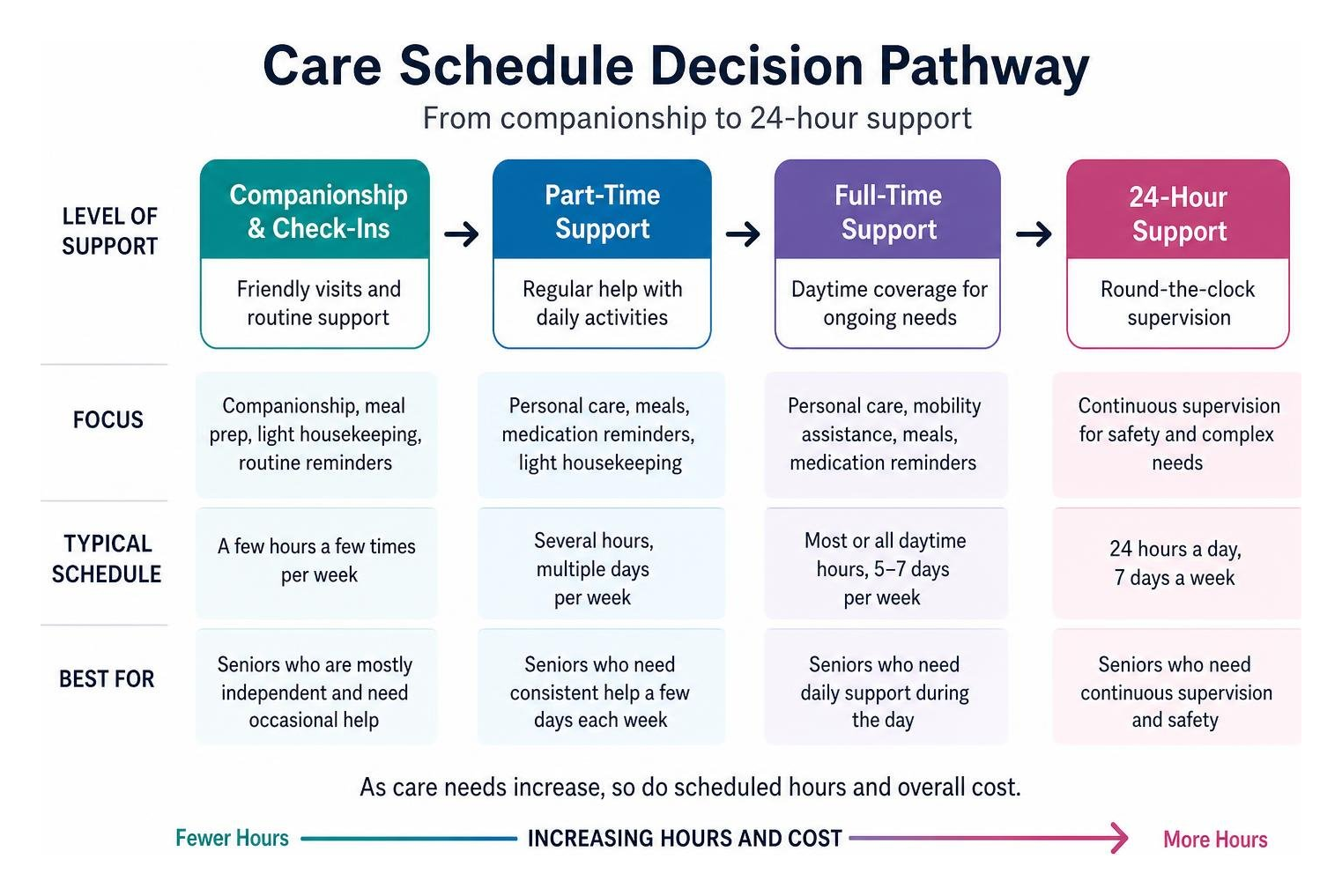
Comparing In-Home Care Schedules and Support Needs
Every family’s caregiving journey follows a distinct rhythm. Determining how many hours of help are necessary each week allows you to forecast financial commitments accurately and adjust as needs evolve.
Cost Breakdowns Across Home Care Schedules
To understand how scheduling affects overall financial commitments, consider the differences in hours across various models of care:
| Care Schedule Model | Typical Weekly Hours | Description of Routine Support | Primary Budget Considerations |
|---|---|---|---|
| Part-Time Respite / Companion | 10 – 20 hours | Morning/evening routines, companionship, meal prep, medication reminders | Highly cost-effective; fits easily alongside active family caregiving |
| Full-Time Day Support | 40 – 44 hours | Comprehensive daily living assistance, personal hygiene, errands, mobility support | Standard benchmark for working adult children needing full workday coverage |
| Overnight Care | 56 – 70 hours (8 – 10 hrs/night) | Assistance with evening settling, bathroom trips, and nighttime wandering | Priced based on whether the aide remains awake or active throughout the shift |
| 24/7 Continuous Care | 168 hours | Constant presence via rotating shifts or specialized live-in arrangements | Comprehensive coverage providing dedicated one-on-one support at home |
Full-time assistance nationwide sits at roughly $6,848 per month, though local figures adjust based on regional wage standards and the specific intensity of non-medical tasks required.
When In-Home Care Costs Vary by Care Needs
A common question for families is how in-home care costs evolve as daily needs change over time. The overall investment largely depends on the total weekly hours required to maintain safety and comfort at home.
When an older adult requires part-time assistance – such as 15 to 30 hours per week – remaining at home provides dedicated one-on-one attention, familiar surroundings, and sustained social connections within their local neighborhood. Care plans can be scheduled around specific routines, such as morning preparation, meal times, or evening settling.
As support requirements grow, families often evaluate how different care arrangements align with their long-term plans. Reviewing practical considerations for aging in place can provide valuable perspective when deciding how to structure comprehensive support and maintain one-on-one care at home.
Out-of-Pocket Expenses and Specialized Care Demands
While hourly rates represent the largest line item in a care plan, families must also prepare for out-of-pocket costs tied to chronic conditions and household adaptations.
Managing Out-of-Pocket Senior Home Care Cost for Dementia
Caring for a loved one with Alzheimer’s disease or other forms of dementia presents unique financial and emotional demands. Because cognitive conditions require vigilant oversight to manage safety risks such as wandering or disorientation, these households typically utilize significantly more care hours than those needing help solely for physical limitations.
Recent peer-reviewed research on out-of-pocket home care costs highlights that over 600,000 community-dwelling seniors pay out-of-pocket for home support annually, with 45% of these individuals living with dementia. The study revealed that among those paying out-of-pocket:
- 51% of seniors with dementia spent $1,000 or more per month on care services, compared to only 26% of peers without cognitive decline.
- The median individual with dementia paying out-of-pocket devoted 40% of their total monthly income to home care, compared to 14% for those without dementia.
- Nearly 46% of individuals with dementia paying out-of-pocket required full-time care (40+ hours per week), compared to 22% of non-dementia clients.
For families navigating memory care in towns like Glenview or Northbrook, these numbers reinforce the importance of long-range budget planning and structured caregiver scheduling.
Hidden and Ancillary Expenses to Factor In
Creating a safe environment for independent living often involves one-time and ongoing supplementary expenses:
- Home Safety Modifications: Installing grab bars in bathrooms, adding stair rails, improving hallway lighting, or constructing wheelchair ramps.
- Durable Medical Equipment (DME): Purchasing or renting transfer benches, walker accessories, specialized lift chairs, or hospital beds.
- Consumable Personal Care Supplies: Budgeting for incontinence products, disposable wipes, personal hygiene items, and nutritional supplements.
- Home Maintenance and Upkeep: Offsetting household tasks that the senior can no longer manage independently, such as lawn care, gutter cleaning, and snow removal.
Taking a comprehensive view of aging-in-place practical planning ensures these ancillary needs do not catch your family off guard.
Financial Assistance, Insurance, and Cost-Reduction Strategies
Very few families pay for long-term senior care entirely out of ongoing cash flow. Most combine private resources with public programs, insurance policies, and family contributions.

Public Benefits and Medicare Coverage Limits
A frequent misunderstanding among older adults is assuming that Medicare will pay for standard daily home care. It is crucial to understand the clear regulatory boundaries:
- Medicare Limitations: Traditional Medicare is designed for acute, clinical recovery. It covers short-term, intermittent skilled nursing, physical therapy, or speech therapy ordered by a physician following a qualifying medical event. Medicare does not pay for long-term, non-medical custodial care (help with bathing, dressing, meal preparation, or companionship).
- Medicaid and State Waiver Programs: Medicaid covers non-medical home care services for seniors who meet specific financial and functional eligibility thresholds. In Illinois, programs such as the Community Care Program (CCP) administered by the Illinois Department on Aging (IDoA) and the Home Services Program managed by the Illinois Department of Human Services (IDHS) help eligible seniors remain in their residences.
- Veterans Benefits: The Department of Veterans Affairs offers the Aid and Attendance pension benefit, which provides supplemental monthly income to eligible wartime veterans and surviving spouses who need assistance with daily living activities.
- Long-Term Care Insurance: Private policies specifically designed for long-term care typically cover non-medical home services once the policyholder meets policy triggers (usually needing assistance with two or more Activities of Daily Living).
Reviewing broader public long-term care funding options can help identify additional safety nets before drawing down personal savings.
Practical Ways to Lower Monthly Care Expenses
If your family is managing expenses privately, there are several effective methods to optimize your caregiving budget:
- Implement a Hybrid Care Model: Blend professional caregiver visits during peak morning or evening transition hours with family assistance during other parts of the day.
- Focus on Essential Support Windows: Structure shifts around key daily routines – such as morning preparation, meal times, and evening settling – rather than scheduling continuous daytime blocks when unassisted rest is common.
- Claim Caregiver Tax Deductions: If you claim an aging parent as a dependent and pay for their home care as a qualified medical expense, you may be eligible for significant federal tax deductions. Consult a tax professional to review your specific situation.
- Adjust Schedules Periodically: Regularly reassess care plans. If an older adult gains confidence after recovering from an illness, hours can be scaled back to match their actual daily baseline. Finding the best caregiving services near you on a budget is about targeted, strategic scheduling rather than purchasing more hours than necessary.
Frequently Asked Questions About In-Home Care Expenses
Does Medicare cover non-medical senior home care?
No. Medicare Part A and Part B do not cover non-medical custodial care, homemaker services, or personal care aides when that is the only type of assistance required. Medicare only covers home health care when a physician certifies that a patient is homebound and requires short-term, intermittent skilled care (such as physical therapy or wound management from a registered nurse).
What is the national average hourly rate for home care?
Nationally, non-medical home care averages between $30 and $35 per hour according to recent industry surveys. Hourly rates vary widely across state lines – ranging from roughly $21 per hour in lower-cost states to upwards of $50 per hour in higher-cost areas. Rates in major metropolitan areas, including the Chicago region, reflect local wages, overhead, and licensing requirements.
How do home care costs change with weekly care hours?
Because non-medical home care is billed primarily by the hour, your total monthly cost scales directly with your schedule. A part-time routine of 15 hours per week requires a relatively modest budget, whereas full-time day support (40+ hours per week) or 24/7 continuous supervision represents a substantial investment. Agencies also factor in shift minimums (such as 3-hour minimum visits) and potential travel fees when creating a customized estimate.
Conclusion
Navigating the financial aspects of elder care can feel daunting, but having a clear plan makes aging in place manageable and sustainable. By identifying specific daily living needs, evaluating shift schedules, and exploring available public and private funding resources, families can craft a dependable support system tailored to their budget.
Best In-Home Services Inc. is an Illinois-licensed home care agency (License #3000758) based in Northbrook, Illinois. We are approved by the Illinois Department on Aging under the Community Care Program and recognized by the Illinois Department of Human Services / Rehabilitation Services for the Home Service Program. We provide dedicated non-medical home care services – including companion care, personal care assistance, respite support, meal preparation, mobility assistance, medication reminders, and specialized Alzheimer’s and dementia care – throughout Cook, Lake, and DuPage counties.
Whether your family lives in Chicago, Naperville, Evanston, Schaumburg, or Lake Forest, we are here to help you design a care plan that fits your loved one’s lifestyle. If you are exploring whether around-the-clock support is feasible for your household, read our detailed guide on 24-Hour Care for Elderly Chicago Cost: Will It Break the Bank?.
To discuss scheduling options or request a personalized care assessment, contact our team today at 224-636-5200.
References
Shen K, Yang Y, Ornstein KA, Shih RA, Reckrey JM. “Paying for home care out-of-pocket is common and costly across the income spectrum among older adults..” Health affairs scholar, 2025. PMCID PMC11736716.







 1-224-636-5200

 1-224-636-5210
 425 Huehl Rd 13B Northbrook IL 60062