
When Home Becomes the Heart of Dementia Care
In-home memory care is specialized support provided to people with dementia or memory loss inside their own home — rather than in a facility.
Here’s a quick overview of what it includes and who it’s for:
- What it is: Personalized, one-on-one care from trained caregivers in a familiar home setting
- Who it’s for: Seniors with Alzheimer’s, dementia, or other forms of memory loss at any stage
- Core services: Help with daily tasks, medication reminders, cognitive activities, safety supervision, and companionship
- Cost range: From about $2,208/month (part-time) to $24,733/month (24/7 care), with a national median of $34/hour
- Key benefit: Research suggests people with dementia may experience slower cognitive decline and higher quality of life when cared for at home with proper support
A dementia diagnosis changes everything — not just for the person living with it, but for the whole family. Everyday routines become harder. Safety becomes a constant worry. And the emotional weight can feel overwhelming.
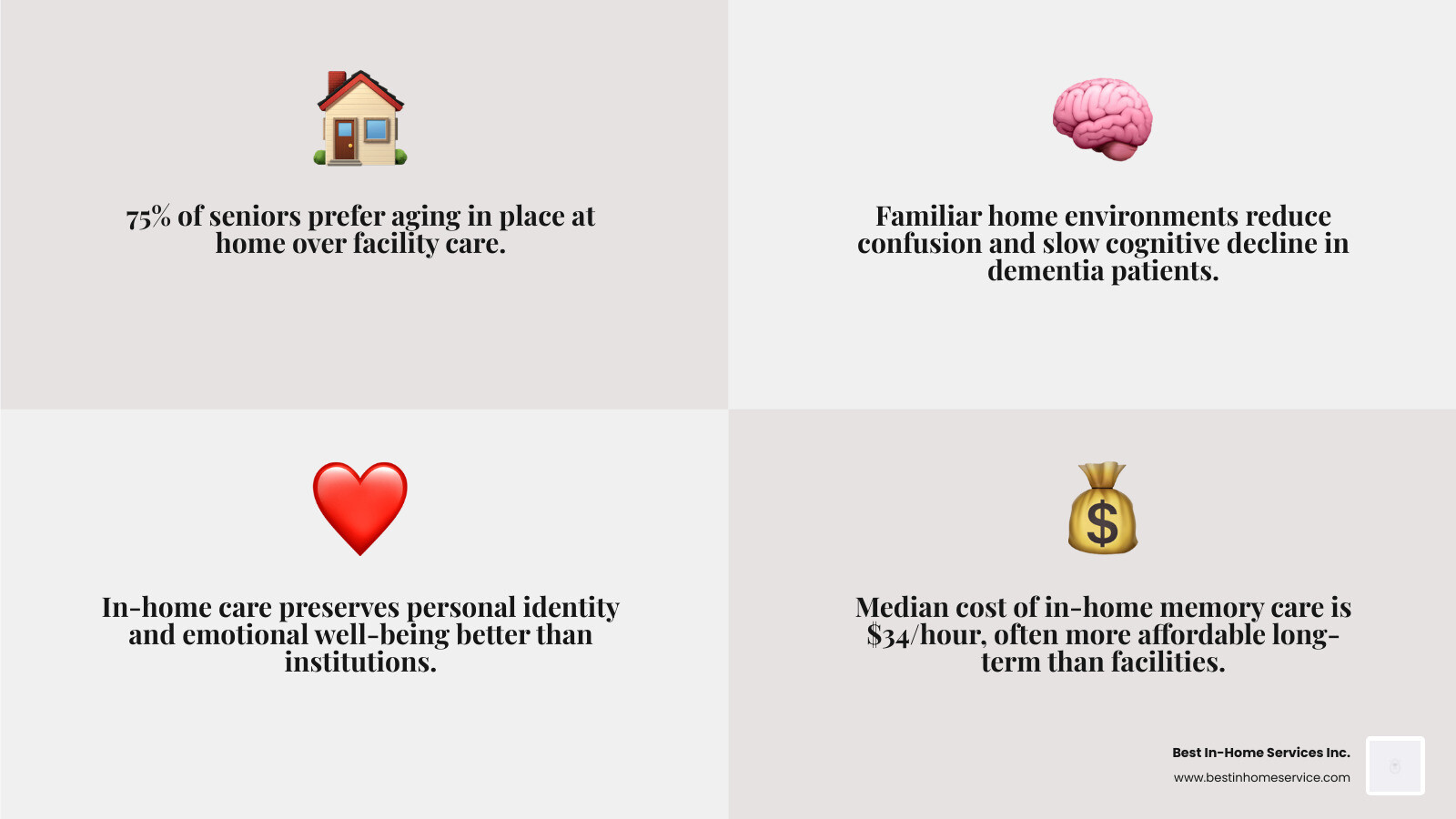
For many Chicago families, the first instinct is to keep a loved one at home, where they feel safe and known. That instinct is backed by both data and lived experience. According to AARP, about 75% of seniors say they want to age in their own homes. And familiar surroundings can genuinely help — reducing confusion, easing anxiety, and preserving a sense of identity that institutional settings can erode.
But managing memory loss at home without the right support is its own kind of crisis. That’s where in-home memory care comes in.
This guide walks through everything you need to know — from what services to expect, to what it costs, to how to find caregivers who are truly qualified to help.
Understanding In-Home Memory Care vs. Facility Care
When a loved one begins to experience significant memory loss, the big question usually is: “Should we move them to a facility or keep them at home?” It is a heavy decision, but understanding the differences can bring much-needed clarity.
The Power of Familiarity
For someone with dementia, the environment acts as a “silent caregiver.” In a facility, every hallway looks the same, and the sounds of a busy ward can lead to sensory overload. At home, the creak of a familiar floorboard or the view from a favorite chair provides an anchor. This Understanding Memory Care explains that familiarity reduces the “sundowning” effect—the agitation that often occurs in the late afternoon.
Personalized Support vs. Institutional Schedules
In a memory care community, staff members are often responsible for multiple residents at once. In-home care is strictly one-on-one. This means the caregiver can adapt to your loved one’s unique “rhythm.” If they want to eat breakfast at 10:00 AM or listen to big band music at midnight, a dedicated home caregiver can make that happen.
| Feature | In-Home Memory Care | Memory Care Facility |
|---|---|---|
| Environment | Familiar, comfortable, and stable | New, clinical, and potentially confusing |
| Care Ratio | 1:1 (Dedicated attention) | 1:5 to 1:10 (Shared attention) |
| Routine | Fully customized to the individual | Standardized facility schedule |
| Identity | Preserves personal history and belongings | Transition to a semi-private or small room |
| Independence | Higher; encourages participation in home life | Structured; focused on safety within limits |
Identity Preservation
Staying at home allows a person to maintain their identity as a homeowner, a neighbor, and a family member rather than just a “patient.” This sense of self is vital for emotional well-being. By maintaining existing routines—like getting the mail or sitting on the porch—seniors can hold onto their independence longer.
Essential Services and Cognitive Engagement Strategies
In-home memory care is much more than just “watching” a senior. It is an active, therapeutic approach designed to stimulate the brain and support the body.

Assistance with Daily Living (ADLs)
As dementia progresses, simple tasks like buttoning a shirt or remembering to brush teeth become complex puzzles. Our caregivers provide dignified assistance with bathing, dressing, and hygiene, ensuring that the individual feels clean and respected. We also focus on nutrition, preparing brain-healthy meals and providing gentle reminders to stay hydrated.
Specialized Cognitive Stimulation
Brain health is at the core of Alzheimer’s Care. We don’t just sit in front of the TV; we engage. Some of the strategies we use include:
- Reminiscence Therapy: Using old photo albums, yearbooks, or family videos to trigger long-term memories.
- Scent Stimulation: Using familiar aromas like freshly ground coffee or lavender to evoke positive emotions and memories.
- Music Therapy: Creating playlists of songs from the individual’s youth, which can often reach parts of the brain that words cannot.
- Tactile Activities: Simple tasks like sorting socks, light gardening, or handcrafts that provide a sense of accomplishment.
Wellness Monitoring and Medication Reminders
Medication management is critical. Missing a dose or taking too much can lead to rapid cognitive decline or physical illness. Caregivers provide timely reminders and monitor for side effects, acting as the “eyes and ears” for family members and physicians. This proactive wellness monitoring helps catch small issues before they become emergencies.
The Cost of In-Home Memory Care in 2026
Budgeting for care is one of the most stressful parts of the journey. In May 2026, the financial landscape for memory care reflects the growing demand for specialized services.
The Financial Strain on the “Sandwich Generation”
Nearly 74% of “sandwich generation” caregivers—those caring for both children and aging parents—are employed. For these families, the “cost” of care isn’t just the caregiver’s hourly rate; it’s also the lost wages and career strain of trying to do it all themselves. Professional in-home care can actually be a cost-saving measure by allowing family members to remain in the workforce.
Financial Assistance and Planning
Is in home memory care tax deductible? In many cases, yes. If the care is medically necessary, a portion of the expenses may be deductible as a medical expense. Other ways to manage costs include:
- Long-Term Care Insurance: Many policies cover in-home care if the individual needs help with at least two ADLs.
- Medicaid Waivers: In Illinois, programs like the Supportive Living Program or Home and Community-Based Services (HCBS) waivers may help cover costs for those who qualify.
- Veterans Benefits: Veterans and their surviving spouses may be eligible for the “Aid and Attendance” benefit to help pay for home care.
Creating a Safe Haven: Home Modifications and Safety
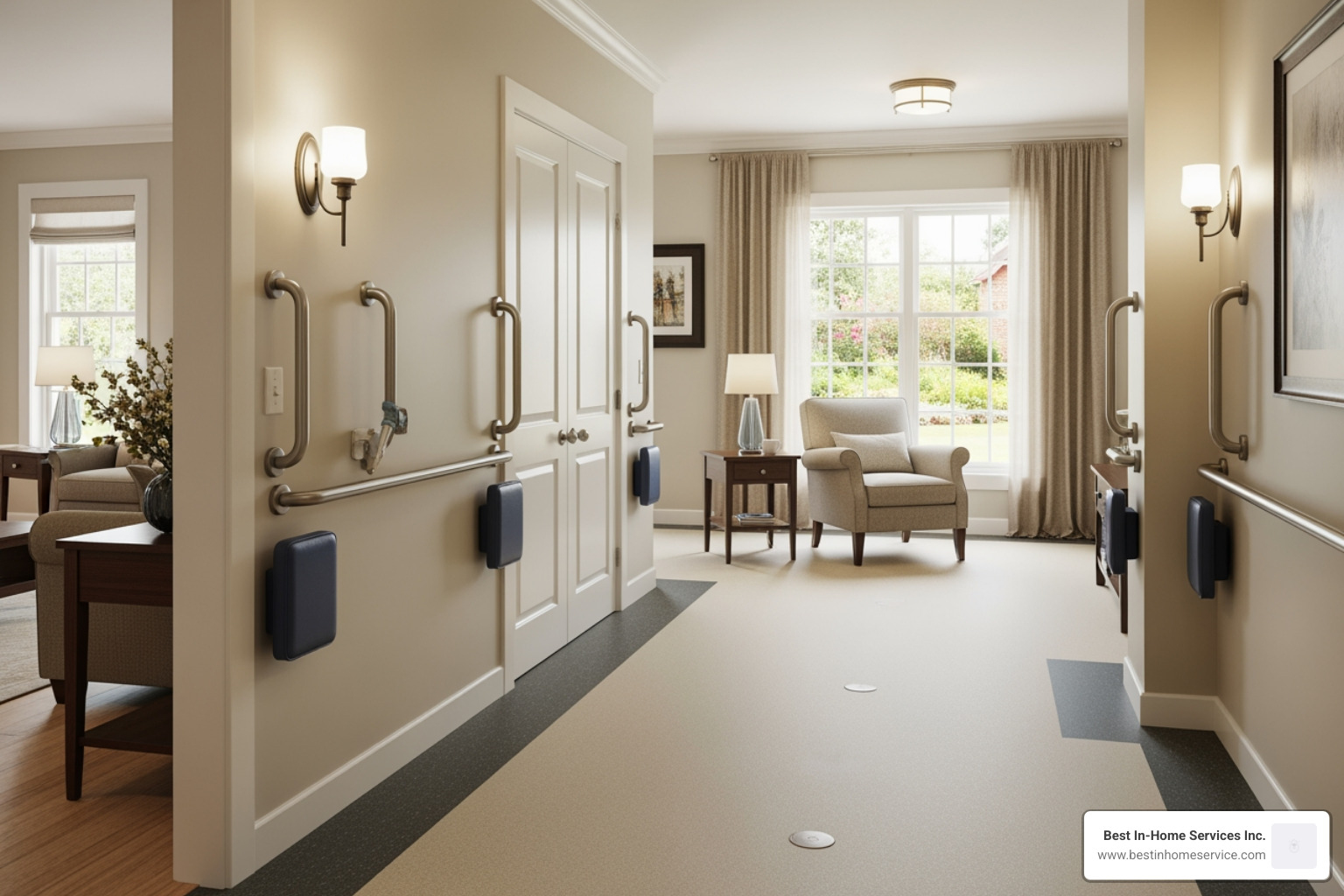
Safety is the number one reason families eventually look for professional help. A person with dementia perceives the world differently; a dark rug might look like a hole in the floor, and a mirror might look like a stranger in the house.
Preventing Wandering and Falls
Wandering is a major concern. We recommend installing alarmed exits or smart door sensors that notify caregivers the moment a door is opened. To prevent falls, we look at the “10 Early Signs” and adapt. This might include:
- Lighting Upgrades: Ensuring hallways and bathrooms are brightly lit 24/7 to prevent confusion during nighttime trips.
- Decluttering: Removing trip hazards like throw rugs, electrical cords, and low coffee tables.
- Bathroom Safety: Installing grab bars, non-slip mats, and raised toilet seats.
Kitchen and Fire Safety
The kitchen is often the most dangerous room. We suggest installing automatic stove shut-off devices or removing stove knobs if the senior is prone to forgetting they turned the burner on.
Professional Safety Assessments
At Best In-Home Services Inc., we provide professional safety assessments for homes across Chicago and the surrounding suburbs. We look for the subtle triggers that might cause agitation or accidents, transforming the home into a “safe haven” where the senior can move freely without constant “no’s” from family members. For more on spotting these needs early, see 10 Early Signs of Alzheimer’s and How Home Care Can Help.
Frequently Asked Questions about In-Home Dementia Support
Does Medicare cover in-home memory care?
This is one of the most common misconceptions. Medicare generally does not pay for long-term, non-medical in-home care. It will only cover home health care if the individual is “homebound” and requires “skilled” care (like physical therapy or wound care) prescribed by a doctor. For the daily supervision and help with ADLs that most dementia patients need, families typically rely on private pay, insurance, or Medicaid.
When is it time to transition from in-home memory care to a facility?
While our goal is to keep seniors at home as long as possible, there are signs that a higher level of clinical care may be needed:
- Caregiver Burnout: If the primary family caregiver is experiencing health issues, depression, or extreme stress.
- Aggressive Behaviors: If the individual becomes physically aggressive in a way that puts themselves or others at risk.
- Frequent Wandering: If the senior is escaping the home despite safety measures.
- 24/7 Medical Needs: If they require constant medical intervention that cannot be managed by a home caregiver.
For real-life perspectives on these challenges, read Alzheimer’s Care: Real Stories of Families Adapting to Personality Changes in Loved Ones.
What qualifications should a memory caregiver have?
You shouldn’t hire just anyone for in home memory care in Chicago. A qualified caregiver should have:
- Dementia-Specific Training: Understanding the stages of the disease and how to handle behavioral triggers.
- Redirection Techniques: The ability to steer a senior away from an upsetting thought or action without causing an argument.
- CPR and First Aid Certification: Essential for handling emergencies.
- Empathy and Patience: This is the most important “qualification.” Caring for someone with memory loss requires a heart for service and a thick skin.
Conclusion
At Best In-Home Services Inc., we believe that a diagnosis of dementia shouldn’t mean the end of a meaningful life at home. Whether you are in downtown Chicago, the North Shore, or the Western Suburbs like Naperville and Downers Grove, our mission is to provide the expert support your family needs to find peace of mind.
Our certified staff is available for 24/7 support, providing custom care plans that evolve as your loved one’s needs change. We aren’t just there to provide a service; we are there to be a partner in your caregiving journey, offering respite for family members and a high quality of life for seniors.
Don’t navigate this journey alone. We are here to help your loved one stay where they are most comfortable—at home.






 1-224-636-5200
 1-224-636-5210
  425 Huehl Rd 13B Northbrook IL 60062