
Meal Preparation Makes Healthy Meals Easier
Meal preparation means planning and getting food ready before you need it. To start, choose a few meals, make a grocery list, and cook flexible basics such as beans, brown rice, and roasted vegetables. Portion what you will eat within 3 to 4 days into containers and freeze the rest. This can make healthy choices easier, save time on busy days, and cut down on last-minute takeout.
For older adults, a simple plan can also make daily meals feel less rushed. Start with one or two meals you enjoy rather than trying to prepare an entire week at once.
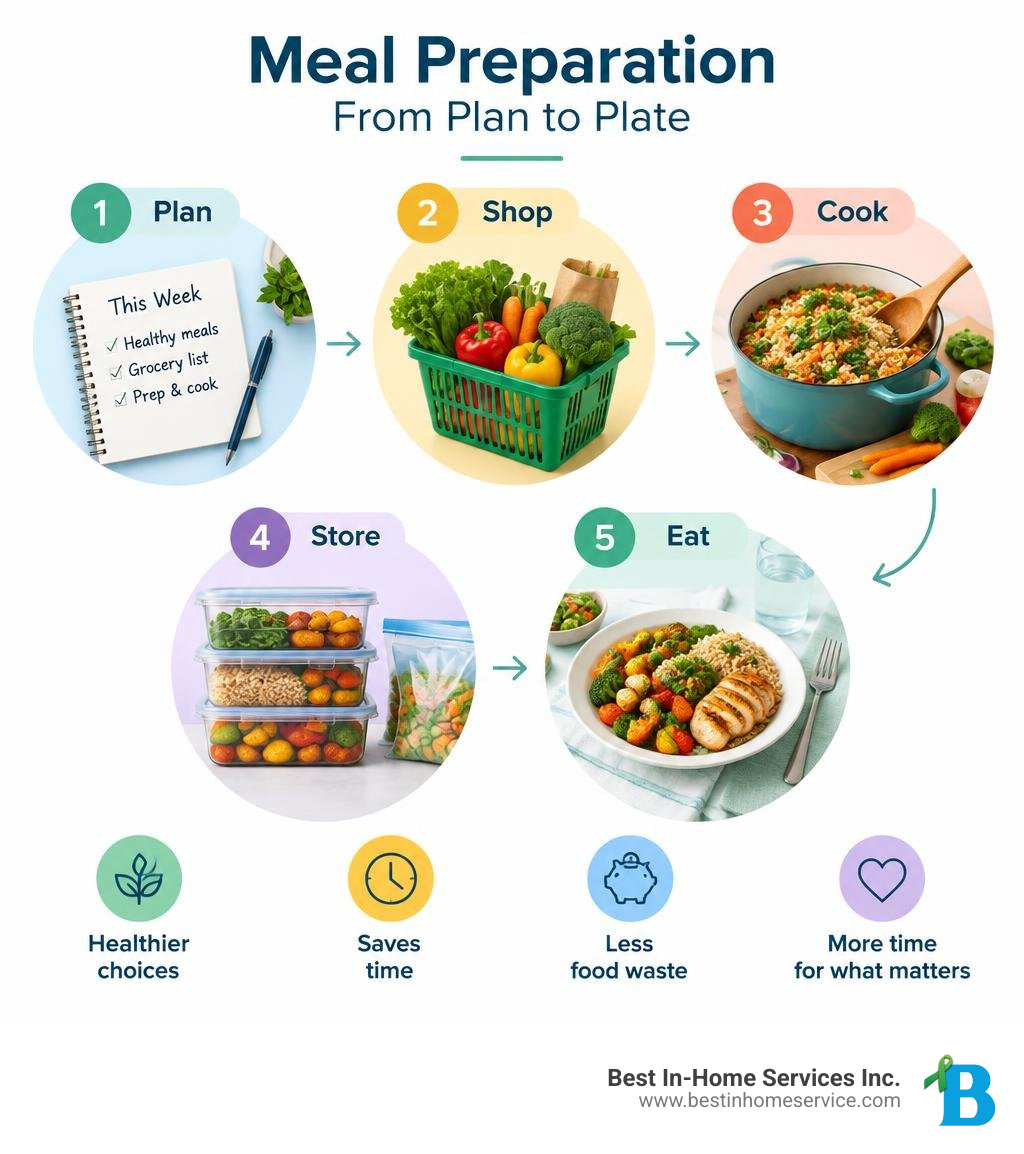
What Is Meal Preparation and Why Does It Matter for Health?
Meal preparation – often called meal prep – is the intentional routine of planning, batch cooking, and portioning food before a busy week begins. It takes the guesswork out of dinner, curbs impulsive takeout orders, and helps ensure our bodies receive consistent nutrition.
Cooking at home acts as a practical intervention for long-term health (Klein & Parks, 2020). Research demonstrates that individuals who regularly consume home-cooked meals have a significantly reduced risk of acquiring type 2 diabetes mellitus, hypertension, and other chronic conditions. When we prepare dishes from whole ingredients, we naturally avoid the ultra-processed items that dominate restaurant kitchens and commercial packaged goods. Diets high in ultra-processed foods are linked to elevated rates of cardiometabolic conditions and certain cancers. Following evidence-based guidelines on how to prepare healthy meals allows us to build balanced plates while avoiding the heavy markups of dining out, which typically carry an average food markup rate around 300%.
Health Benefits and Weight Management in Meal Preparation
A major advantage of advance cooking is steady weight management and sustained energy. When hunger peaks after a demanding workday, decision fatigue sets in. We often grab high-calorie, ultra-processed convenience foods that cause sharp blood sugar spikes.
By preparing balanced dishes in advance, you control:
- Portion Size: Pre-portioning proteins, complex carbs, and produce into individual containers prevents unintentional overeating.
- Nutrient Density: People who eat meals prepared at home consume significantly less added sugar and saturated fat while absorbing higher amounts of vital micronutrients like iron, calcium, and vitamin C.
- Fiber and Whole Grains: Incorporating at least three daily servings of whole grains (such as quinoa, farro, brown rice, or oats) is tied to measurable chronic disease risk reduction and improved metabolic function.
- Caloric Consistency: A structured 1,200-calorie meal prep plan can support intentional weight loss goals by creating a reliable, nutrient-dense baseline that removes daily calorie guesswork.
Navigating Drawbacks: Food Safety, Microplastics, and Burnout
While meal preparation provides immense physical and financial perks, it is important to avoid common pitfalls:
- Microbial Growth: Leaving cooked food on the counter too long or storing it past safe time limits invites foodborne bacteria. Always cool dishes quickly and consume refrigerated prepped items within safe windows.
- Container Chemistry: Heating foods in aged plastic containers can degrade polymers, releasing microplastics and nanoplastics into your dinner. Whenever possible, choose oven-safe, microwave-safe tempered glass with airtight lids.
- Recipe Fatigue and Rigidity: Prepping five identical chicken-and-broccoli containers can lead to mid-week burnout. Healthy eating should feel enjoyable, not like a mandatory chore. Focus on prepping versatile building blocks rather than rigid, monolithic dishes.
Essential Steps for Getting Started with Meal Prep

Starting your meal prep journey does not require professional culinary training or half your weekend. The key is setting up a repeatable, low-stress system. Following a clear four-step meal planning process – surveying what you already have, choosing simple recipes, creating a targeted grocery list, and prepping in sequence – sets you up for consistency.
Choosing Your Prep Style: Full Batch vs. Ingredient Prep
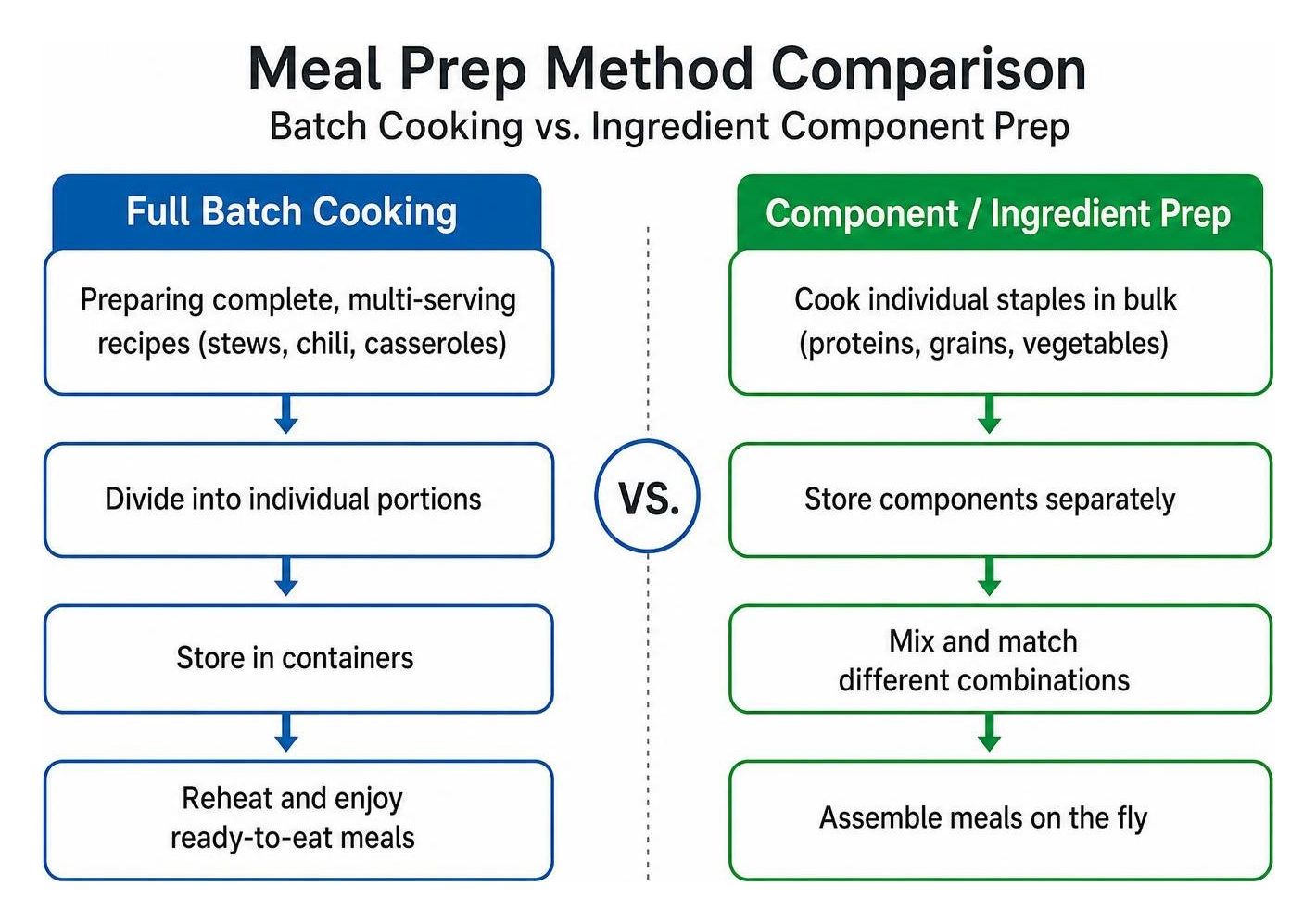
There is no single “correct” way to meal prep. Choose the framework that best matches your schedule and personality:
- Full Batch Cooking: Preparing complete, multi-serving recipes (like a large pot of red lentil vegetable stew, turkey chili, or baked casseroles) and dividing them into ready-to-reheat individual meals.
- Component / Ingredient Prep: Cooking individual staples in bulk – roasting two sheet pans of mixed vegetables, boiling a pot of quinoa, and grilling seasoned chicken thighs or pressing tofu – so you can assemble different combinations on the fly.
- Slow Cooker and Freezer Packs: Pre-assembling raw chopped ingredients, proteins, and seasonings into freezer bags. On busy mornings, empty the contents into your slow cooker for a warm, freshly cooked dinner by evening.
- Micro-Prep (15–25 Minutes): Pre-washing greens, chopping hardy root vegetables, hard-boiling eggs, or assembling morning overnight oats.
Step-by-Step Routine for a Calm Prep Day
To finish your cooking in 60 to 90 minutes without creating a kitchen disaster, try this streamlined workflow:
- Clear and Organize: Empty the dishwasher and wipe your counters before pulling out a single cutting board. Having clean prep surfaces keeps stress low.
- Harness Multiple Heat Sources: Fire up the oven, stovetop, and slow cooker simultaneously. While sweet potatoes and broccoli roast at 400°F, simmer wild rice on the back burner and brown your proteins on the front burner.
- Chop Produce in Batches: Wash and chop all aromatics (onions, garlic) and hardy vegetables at the same time rather than slicing them recipe by recipe.
- Cool Before Sealing: Let hot foods cool down slightly before snapping airtight lids shut. Trapping heavy steam inside creates excess moisture, resulting in soggy vegetables and shortened shelf life.
- Label and Rotate: Use a piece of masking tape and a marker to note the item name and date prepared.
Best Foods, Storage Rules, and Kitchen Safety
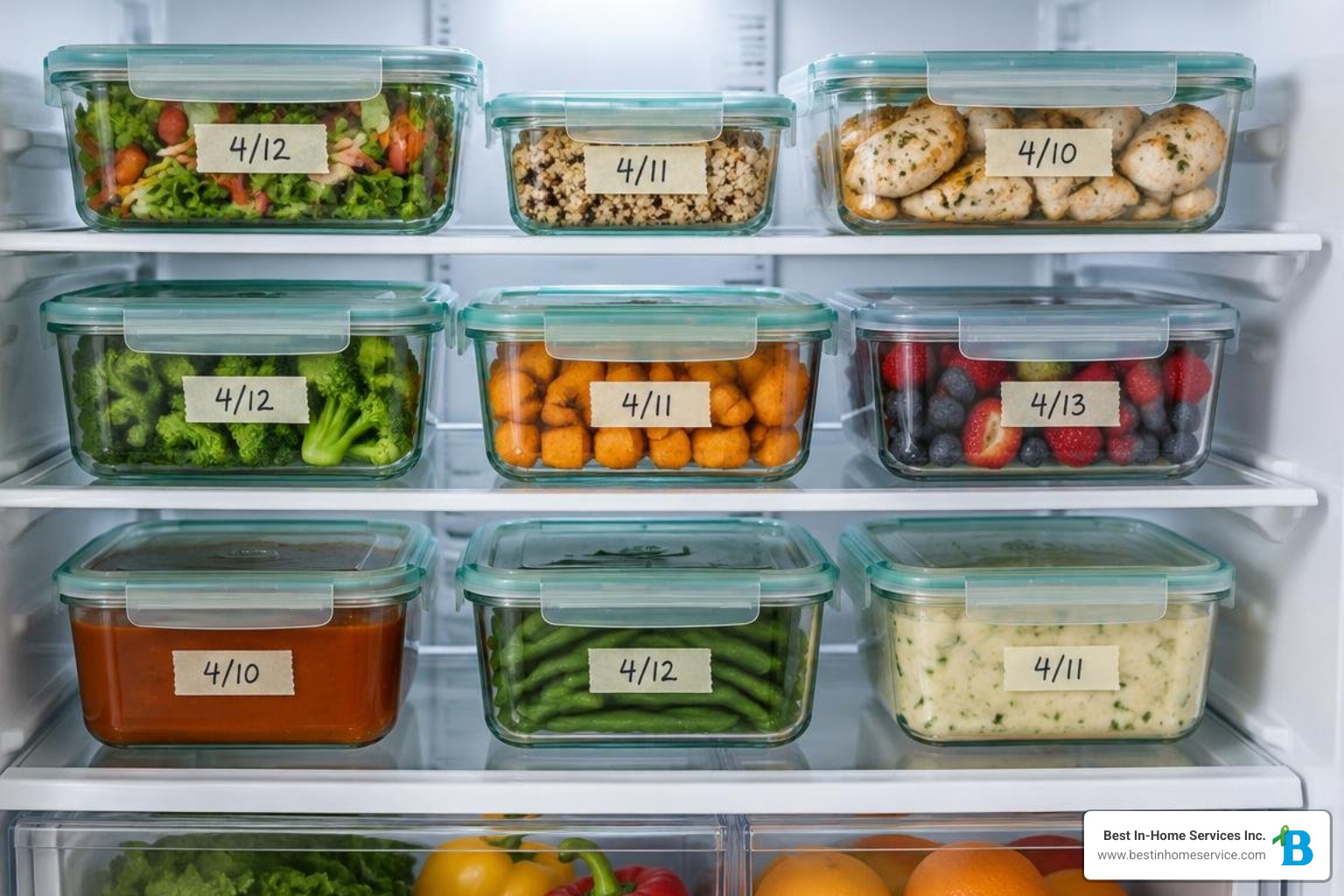
Proper storage preserves flavor, texture, and nutritional value while preventing foodborne illness. Maintaining extension safety standards for food preparation ensures your prepped items remain fresh and safe to eat.
Fridge and Freezer Guidelines for Safe Storage
Keep your refrigerator set at or below 40°F (4°C) and your freezer at 0°F (-18°C). Never leave cooked dishes in the “danger zone” (between 40°F and 140°F) for longer than two hours.
| Food Category | Refrigerator Shelf Life (≤40°F) | Freezer Shelf Life (0°F) | Storage Best Practice |
|---|---|---|---|
| Cooked Ground Poultry & Beef | 1 – 2 Days | 3 – 4 Months | Store in airtight glass containers; freeze leftovers promptly. |
| Cooked Whole Meats & Poultry | 3 – 4 Days | 3 – 6 Months | Slice after cooling to retain moisture before portioning. |
| Cooked Fish & Seafood | 3 – 4 Days | 2 – 3 Months | Best consumed within 48 hours for ideal texture and aroma. |
| Soups, Stews & Chili | 3 – 4 Days | 2 – 3 Months | Leave 1/2 inch of headspace in jars or containers for expansion. |
| Cooked Grains (Rice, Quinoa, Farro) | 3 – 4 Days | 1 – 2 Months | Spread on a sheet pan to cool quickly before refrigerating. |
| Cooked Beans & Legumes | 4 – 5 Days | 4 – 6 Months | Store with cooking liquid to prevent drying out. |
| Hard-Boiled Eggs | Up to 7 Days | Do not freeze | Keep in shell until ready to consume for maximum shelf life. |
| Blanched / Roasted Vegetables | 3 – 4 Days | 8 – 12 Months | Blanch briefly in boiling water before freezing to protect texture. |
Best Ingredients for Batch Cooking and Ingredient Repurposing
Certain whole foods handle cooling and reheating exceptionally well:
- Hearty Grains: Farro, wild rice, brown rice, and quinoa maintain an enjoyable chew all week long without turning mushy.
- Legumes: Lentils, black beans, chickpeas, and cannellini beans hold their structure beautifully in sauces and marinades.
- Sturdy Vegetables: Root vegetables (carrots, sweet potatoes, parsnips), winter squash, and crucifers (broccoli, Brussels sprouts, cauliflower) reheat well when slightly undercooked during initial roasting.
- Versatile Proteins: Braised chicken thighs, turkey meatballs, baked salmon, and extra-firm tofu absorb surrounding sauces without drying out.
Meal Prep vs. Meal Delivery: Cost, Convenience, and Daily Support
Balancing work, family, and personal care leaves many households weighing whether to cook everything from scratch, subscribe to commercial meal delivery kits, or arrange in-home homemaking assistance.
From a financial standpoint, cooking at home offers significant savings. The average consumer saved approximately $1,151 by eating out less and preparing food at home during recent measured periods. When we replace daily restaurant orders with bulk grocery purchases, our cost per meal drops substantially.
| Factor | DIY At-Home Meal Prep | Commercial Meal Delivery Kits | Non-Medical In-Home Care Support |
|---|---|---|---|
| Typical Cost Basis | Lowest overall; purchase bulk raw ingredients. | Moderate to high; subscription pricing plus shipping fees. | Predictable hourly care; tailored around broad daily living needs. |
| Customization | Complete control over sodium, sugar, allergens, and spices. | Limited to pre-set weekly menu selections and dietary tags. | Fully personalized; meals prepared to individual taste and dietary preferences. |
| Hands-On Effort | Requires shopping, chopping, cooking, and dishwashing. | Requires unpacking, cooking, and pan cleanup. | Caregiver assists with grocery lists, prep, cooking, and kitchen cleanup. |
| Ideal For | Independent adults and families with available weekend hours. | Busy professionals seeking variety without grocery shopping. | Seniors needing physical assistance, companionship, or routine household help. |
Repurposing Ingredients into Fast Weekday Meals
You do not have to eat the exact same meal every day. By batch-prepping four or five base ingredients, you can build a fresh dinner in under ten minutes:
- The Grain Bowl: Layer pre-cooked brown rice or farro with roasted sweet potatoes, black beans, and grilled chicken. Drizzle with a quick tahini or salsa dressing.
- The Weeknight Taco Kit: Warm pre-shredded salsa chicken or spiced black beans, fill warm corn tortillas, and top with pre-chopped cabbage and diced avocado.
- The Comfort Soup Base: Combine pre-cooked lentils and roasted vegetables with low-sodium vegetable stock in a small saucepan. Simmer for five minutes, stir in fresh baby spinach, and serve warm.
- The Breakfast Scramble or Burrito: Reheat roasted peppers, onions, and black beans in a skillet, pour over whisked eggs, and wrap inside a whole-wheat tortilla with a spoonful of salsa.
Supporting Seniors and Busy Families with Meal Preparation
For aging adults living at home, keeping up with consistent nutrition can present real hurdles. Physical limitations, joint stiffness, low vision, fatigue, and memory changes can make standing at the stove, lifting heavy pans, or navigating sharp knives difficult. As a result, older adults may skip meals or rely on high-sodium packaged snacks.
Understanding the importance of nutrition and meal planning in senior care helps families protect energy, maintain muscle mass, and manage chronic conditions like diabetes and high blood pressure. Pair this with reliable hands-on household help for seniors to ensure the fridge is stocked with fresh, wholesome, easily reheated meals that fit specific dietary needs.
Caregivers can assist with chopping fresh produce, safely packaging and dating glass containers, reminding seniors to stay hydrated, and keeping kitchen surfaces clean and clear of tripping hazards.
Frequently Asked Questions About Meal Preparation
How long do meal-prepped meals stay fresh in the refrigerator?
Most cooked proteins, whole grains, soups, and roasted vegetables stay fresh and safe for 3 to 4 days when stored in airtight containers at or below 40°F. If you prepare food on Sunday for the entire workweek, place meals intended for Thursday and Friday into the freezer on prep day. Transfer them to the refrigerator the night before you plan to eat them to thaw safely.
How can beginners start meal prepping without feeling overwhelmed?
Start small by adopting a micro-prep or two-protein formula. Instead of attempting to cook twenty-one meals over a single weekend, prep just two breakfast items (like overnight oats or egg muffin cups) and one versatile dinner anchor (such as a sheet pan of roasted chicken and root vegetables). Once this feels manageable, gradually expand your weekly menu.
What are the safest containers to use for reheating prepped meals?
Airtight, tempered glass containers with silicone-sealed lids are the gold standard for meal prep. Glass is non-porous, stain-resistant, dishwasher-safe, and will not warp or leach chemical compounds or microplastics into your food when heated. If using plastic containers, allow food to cool completely before storing, and transfer the meal onto a ceramic plate or glass dish before microwaving.
How much does senior meal preparation assistance cost in Illinois?
The cost of in-home meal preparation and companion care across Cook, Lake, and DuPage counties varies according to the overall level of assistance required, the total number of scheduled hours per week, the consistency of the care schedule, and whether specialized memory care, overnight, or weekend support is involved. Licensed home care agencies generally operate with a standard 3-hour visit minimum. Families interested in support can schedule a free in-home consultation to receive a clear, personalized assessment based on their specific needs.
Conclusion
Building a dependable meal preparation habit does not require complicated recipes or entire days spent by the stove. By learning simple batch-cooking techniques, focusing on nutrient-dense staples like whole grains and lean proteins, and using proper food storage practices, you can enjoy wholesome, home-cooked food all week while lowering daily stress.
When aging parents or loved ones in our local communities need an extra hand in the kitchen, professional support makes all the difference. Best In-Home Services Inc. is an Illinois-licensed non-medical home care provider based in Northbrook, serving families across Cook, Lake, and DuPage counties – including Chicago, Evanston, Skokie, Glenview, Highland Park, Schaumburg, and Naperville. We are licensed by the Illinois Department of Public Health (IDPH, License #3000758), approved under the Illinois Department on Aging (IDoA) Community Care Program, and recognized by the Illinois Department of Human Services (IDHS) Home Service Program.
Whether your family needs help with grocery shopping, gentle medication reminders, kitchen safety, light housekeeping, or daily living support, we are here to help. Contact us today at 224-636-5200 to discuss your family’s care schedule and learn more about our personalized non-medical in-home care support.
References
Klein L, Parks K. “Home Meal Preparation: A Powerful Medical Intervention..” American journal of lifestyle medicine, 2020. PMCID PMC7232892.





 1-224-636-5200

 1-224-636-5210
 425 Huehl Rd 13B Northbrook IL 60062