
Understanding Short-Term Respite Stays vs. Permanent Residential Placement
Caring for an aging relative is profoundly rewarding, yet over 40% of family caregivers rely on short-term care options to balance their everyday responsibilities and prevent severe burnout. A short-term respite stay provides temporary relief, giving family caregivers essential breathing room while their loved ones receive professional supervision, nutritious meals, and assistance with activities of daily living.
Unlike permanent residential placement, short-term stays are intentionally limited in time. They serve specific goals such as helping a senior recover after a medical event, providing transitional support between settings, or offering respite care for seniors while a family takes a necessary vacation or attends to personal health matters.
During a temporary stay, the resident retains their outside living arrangements and returns home once the scheduled timeframe concludes. Permanent admission, by contrast, involves establishing ongoing residency, transferring personal furnishings, and updating long-term legal and medical documentation.
How Respite Serves as a Trial Stay Before Long-Term Care
Many families find that booking a short respite stay serves as a gentle, low-risk trial period. Transitioning directly into long-term residential living can feel overwhelming for both the senior and their family. A scheduled stay allows an individual to experience life within a supportive community firsthand.
During a trial period, seniors interact with peers, enjoy communal dining, and take part in planned social events without the emotional weight of a final decision. Family members can observe how well the community responds to personal preferences, handles medication schedules, and supports daily routines. If the experience proves positive, transitioning into permanent residency becomes an easy, organic step rather than a jarring adjustment.
Comparing In-Home Respite Support and Facility-Based Options
When evaluating care options, families frequently weigh the differences between receiving support at home versus staying in a residential facility. Exploring home care vs assisted living helps clarify which environment best supports your loved one’s personality and clinical requirements.
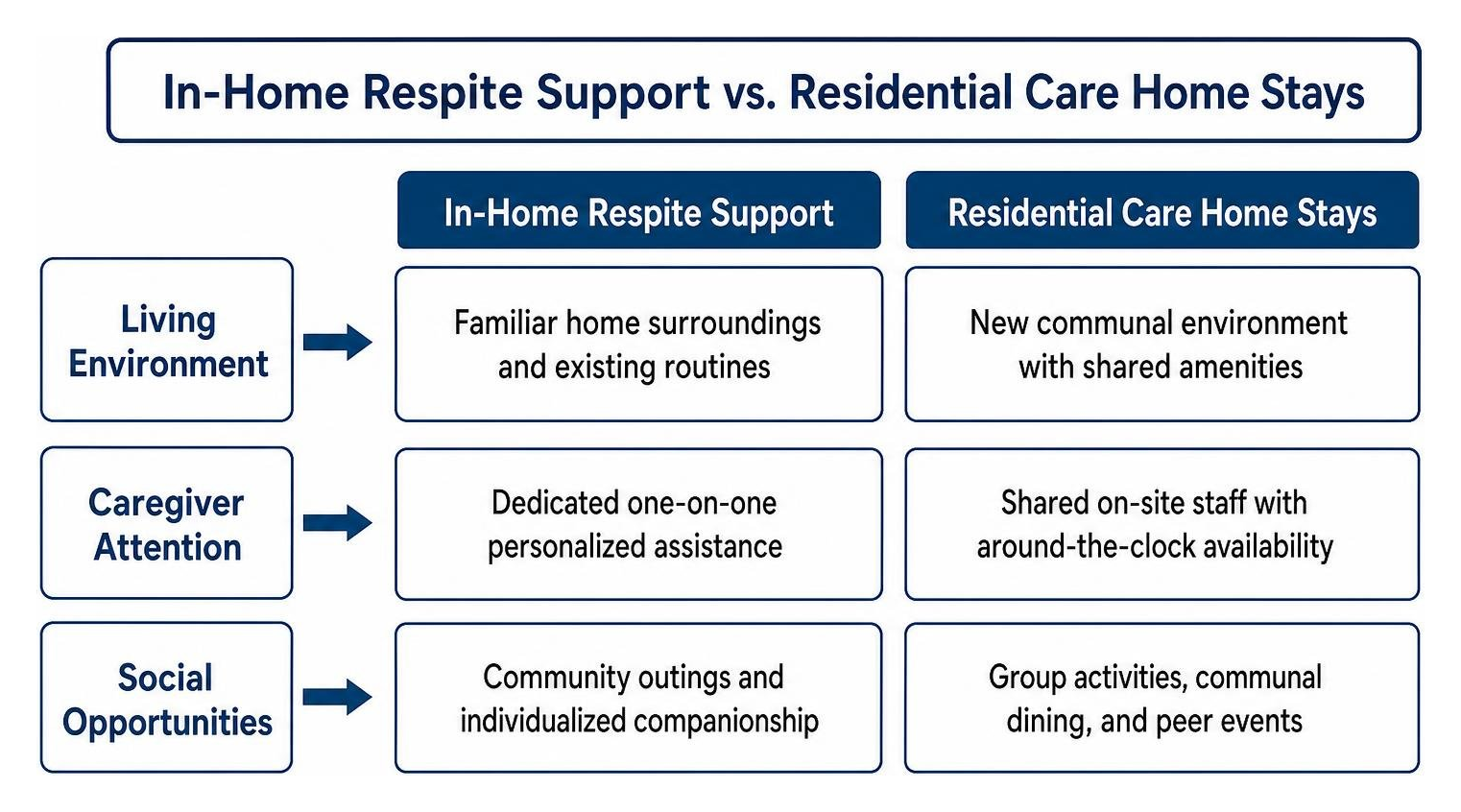
| Care Feature | In-Home Respite Support | Residential Care Home Stays |
|---|---|---|
| Living Environment | Familiar home surroundings and existing routines | New communal environment with shared amenities |
| Caregiver Attention | Dedicated one-on-one personalized assistance | Shared on-site staff with around-the-clock availability |
| Social Opportunities | Community outings and individualized companionship | Group activities, communal dining, and peer events |
| Daily Flexibility | Custom schedules tailored directly to the client | Structured community schedule and activity calendar |
| Caregiver Relief | Flexible hours from brief check-ins to overnight care | Complete round-the-clock coverage for consecutive days |
While residential care provides continuous campus amenities, in-home support allows older adults to remain in comforting surroundings with personalized care plans that maintain their established lifestyle.
Types of Facilities and Care Homes Offering Respite Care Near Me
Different care settings offer varying levels of medical supervision, personal assistance, and social enrichment. Identifying the correct environment ensures your family member receives appropriate support during your time away.
- Assisted Living Communities: These residential settings provide private or semi-private furnished apartments, three meals daily, medication reminders, and help with bathing and dressing, alongside vibrant social calendars.
- Skilled Nursing Facilities: Designed for individuals requiring high-level clinical oversight, wound management, physical rehabilitation, or continuous medical monitoring by licensed nurses.
- Memory Care Centers: Secure environments designed specifically for seniors living with Alzheimer’s disease or other forms of dementia, featuring specialized sensory engagement and structured routines.
- Adult Day Health Centers: Non-residential programs offering daytime supervision, meals, social activities, and basic therapy services, allowing seniors to return home each evening.
Families seeking comprehensive state-wide support networks can connect with State Respite Programs and Support Services to locate licensed providers and specialized caregiver relief programs across Illinois.
Finding Care Homes Offering Respite Care Near Me in Chicago and Suburbs
Navigating care resources across Cook County, Lake County, and DuPage County requires identifying providers equipped for your loved one’s specific needs. Whether you require respite home health care in Chicago and suburbs or short-term facility placement, regional agencies and registries provide valuable guidance.
Families in suburban communities can review options like Local Assisted Living Options in Downers Grove as well as communities located across Naperville, Schaumburg, Skokie, and Northbrook. Local Area Agencies on Aging and municipal senior services help match families with licensed care providers in Evanston, Des Plaines, Arlington Heights, and surrounding neighborhoods.
Dedicated Memory Care and Skilled Nursing Respite Stays
For seniors experiencing cognitive decline, specialized memory care respite is vital. These environments emphasize gentle guidance, structured sensory activities, and secure boundaries to prevent wandering.
Skilled nursing respite units provide continuous clinical supervision, handling complex needs such as catheter care, intravenous therapy, post-surgical dressing changes, and physical therapy. Having licensed nurses on duty around the clock ensures that health stability is maintained throughout the temporary stay.
Services, Amenities, and Typical Length of Respite Stays
A quality respite stay offers comprehensive amenities designed to make guests feel welcomed and comfortable from their first day. Most residential facilities provide fully furnished suites equipped with comfortable bedding, accessible private bathrooms, cable television, and emergency call systems.
Length of stay varies significantly based on individual circumstances and community policies. Some facilities accommodate short stays of several days, while others set a minimum booking period of one or two weeks. Stays can frequently be extended for several weeks or months if a caregiver is recovering from an extended medical condition or managing substantial life changes.
Daily Care Services, Dining, and Social Life Enrichment
Daily life during a short-term residential stay revolves around personal wellness and engaging social interaction. Residents receive balanced meals, tailored hydration plans, and customized assistance with personal hygiene and mobility.
Communities offer diverse life enrichment programming, including fitness classes, music therapy, creative art workshops, gardening, and spiritual gatherings. To ensure a comfortable stay, preparing essential personal belongings helps create an inviting, familiar setting:
- Comfortable Clothing: Several changes of loose-fitting, comfortable everyday outfits, sleepwear, and non-skid footwear.
- Personal Toiletries: Preferred shampoos, body wash, moisturizers, toothbrushes, and grooming tools.
- Medical Documentation: Up-to-date medication lists, physician instructions, insurance cards, and emergency contact details.
- Familiar Comfort Items: Framed family photographs, a favorite blanket, books, or personal hobby supplies to create a reassuring, home-like atmosphere.
Can I Book Care Homes Offering Respite Care Near Me for Short-Notice Emergencies?
Life is unpredictable, and caregivers occasionally face unexpected hospitalizations, family emergencies, or acute personal illness. Many facilities make every effort to accommodate urgent, short-notice respite requests when dedicated guest rooms are unoccupied.
To expedite emergency admissions, facilities typically require a recent medical history assessment, a validated list of active prescriptions, and completed consent documentation. Lily Harrison, General Manager at Best In-Home Services Inc., a trusted home health care provider, frequently assists families in planning ahead by gathering necessary health records in advance, ensuring swift support during sudden crises.
How to Pay for Respite Care: Insurance, Waivers, and Assistance
Understanding financial planning options simplifies the process of securing short-term elder care. While many families utilize private self-pay funds for short stays, multiple programs exist to help offset costs.
Reviewing what is short-term respite care and how to pay for it provides clarity on budgeting approaches. Families exploring publicly supported options can consult the State Department of Human Services Respite Framework to understand program standards and eligibility pathways.
- Long-Term Care Insurance: Certain comprehensive policies include short-term respite allowances or daily facility benefits, depending on policy terms.
- Medicaid Waivers: State-administered Home and Community-Based Services (HCBS) waivers often allocate funding for temporary caregiver relief.
- Veterans Benefits: Eligible veterans and their caregivers may access respite relief through dedicated VA caregiver programs and contracted community providers.
- Local Caregiver Vouchers: Non-profit organizations and Area Agencies on Aging occasionally award respite voucher grants to relieve family caregivers facing severe strain.
When families ask general questions such as how much does senior home care cost in Chicago, IL, pricing is typically structured around hourly rates for in-home care or daily all-inclusive rates for residential stays, with costs reflecting the specific level of care, medical complexity, and duration required.
Frequently Asked Questions About Local Respite Care Homes
What is the minimum and maximum duration for a respite care stay?
Minimum stay requirements vary depending on provider policy. Many assisted living communities establish a minimum duration ranging from several days to two weeks, ensuring the resident has sufficient time to settle into the daily rhythm. Maximum stays often extend up to several weeks or months, especially when supporting rehabilitation or extended family travel.
Is respite care covered by Medicare or state Medicaid waivers?
Standard Medicare does not typically cover residential respite care when used solely for caregiver relief. However, Medicare covers up to several consecutive days of inpatient respite support when a patient is actively receiving hospice care. State Medicaid waivers and community assistance programs can help offset costs for qualifying seniors based on clinical need and financial eligibility.
Are family visits allowed during a short-term respite stay?
Yes, reputable care homes maintain open, welcoming visitation policies during respite stays. Family members are encouraged to visit, join loved ones for meals, and participate in campus activities to ensure continuity of care and offer ongoing emotional reassurance.
Conclusion
Finding the right respite care solution gives family caregivers essential peace of mind while ensuring seniors receive attentive, compassionate assistance. Whether your family chooses a short-term stay in a residential facility or prefers personalized in-home support, taking time to recharge ultimately strengthens the care you provide.
At Best In-Home Services Inc., our certified caregivers provide compassionate, around-the-clock support customized to your family’s unique schedule and health requirements across Chicago and surrounding suburbs. Reach out to our dedicated team today to explore our comprehensive home care services and discover how we can support your caregiving journey.







 1-224-636-5200

 1-224-636-5210
 425 Huehl Rd 13B Northbrook IL 60062