
Easy Meal Prep Lunches That Still Taste Good Reheated
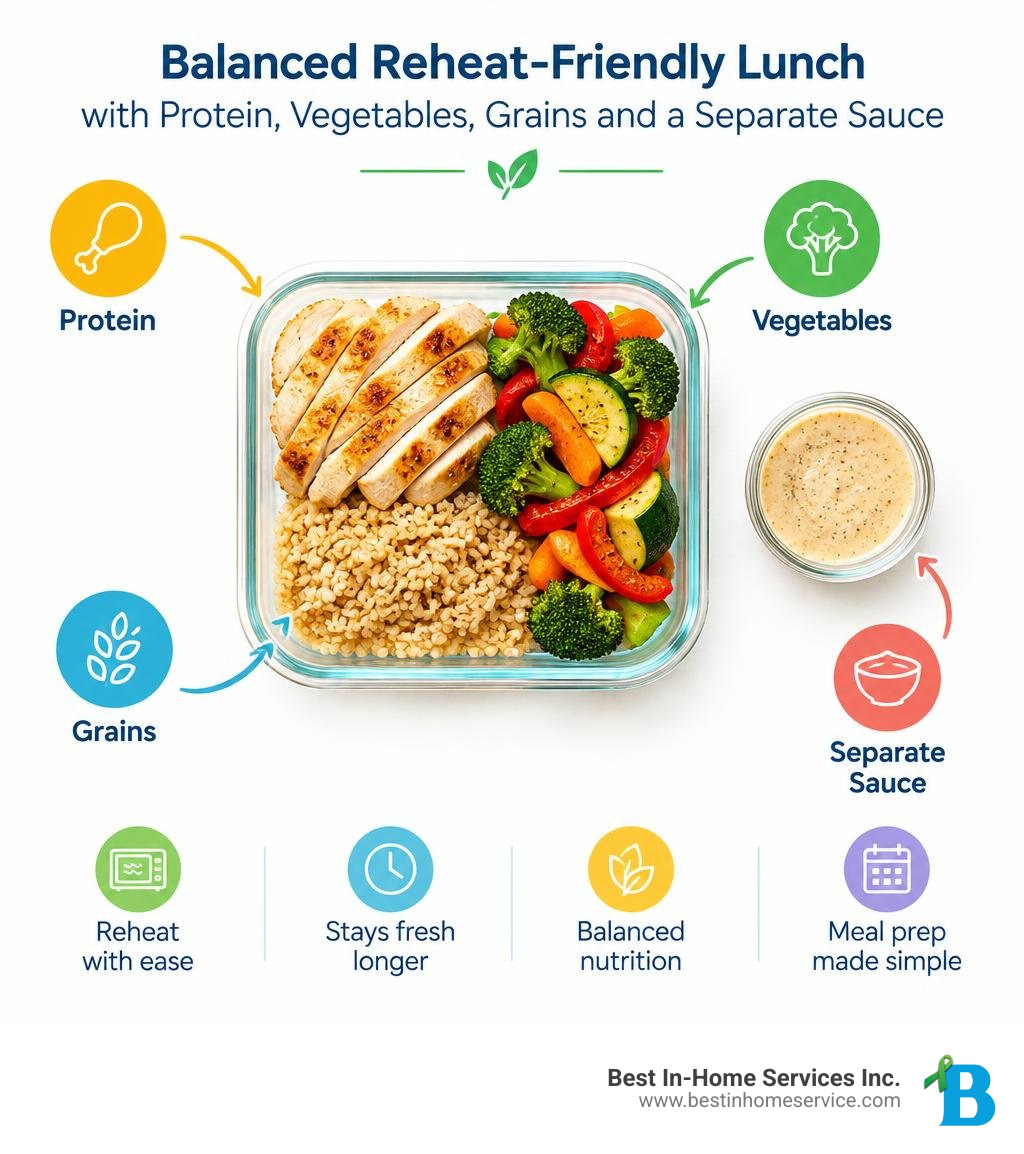
For easy meal prep lunches, start with meals that hold their texture: turkey and rice bowls, chicken with roasted vegetables, lentil soup, or white chicken chili. Make one batch, divide it into airtight containers, and keep sauces or crunchy toppings separate. Refrigerate lunches for up to four days and freeze portions you plan to eat later.
This guide is provided by Lily Harrison, General Manager at Best In-Home Service Inc., a Northbrook-based, Illinois-licensed non-medical home care provider (License #3000758). Its focus on practical, reheat-friendly lunches comes from the company’s experience coordinating daily support for older adults and families.
Related content about easy meal prep lunches:
The Secrets to Easy Meal Prep Lunches That Never Turn Soggy
The biggest frustration with make-ahead weekday lunches is the dreaded texture breakdown. A dish that looks vibrant on Sunday evening can easily turn into a watery, mushy disappointment by Wednesday noon. Understanding moisture control and food science is the key to building lunches that maintain their structural integrity and taste freshly prepared after reheating.
Different ingredients release moisture at varying rates during storage and reheating. High-water vegetables like zucchini, sliced tomatoes, or delicate baby spinach break down rapidly when exposed to steam inside a closed container. To keep your meals appealing, pair dense complex carbohydrates with lean proteins and sturdy, fiber-rich vegetables that benefit from gentle reheating. Following established food safety and storage guidelines ensures that your prepped dishes stay both safe and appetizing throughout the workweek.
| Ingredient Category | Fresh Prep Texture | Reheated Microwave Texture | Best Practice for Meal Prep |
|---|---|---|---|
| Sturdy Grains (Farro, Brown Rice, Quinoa) | Chewy, firm | Fluffy and tender | Add a teaspoon of water or broth before reheating |
| Cruciferous Veggies (Broccoli, Cabbage) | Crisp-tender | Soft-tender (not mushy) | Lightly undercook by 2 minutes during initial prep |
| Ground Meats (Turkey, Lean Beef) | Juicy, crumbly | Retains moisture well | Cook in a light tomato or broth-based sauce |
| Delicate Greens (Baby Spinach, Arugula) | Fresh, crisp | Watery and limp | Pack raw in a side container or stir in after reheating |
| Cream Sauces | Smooth, rich | Prone to separating | Use pureed squash, broth reductions, or Greek yogurt bases |
Optimal Containers and Airtight Storage Solutions
Your choice of storage container directly impacts the freshness and reheating quality of your lunches. High-quality borosilicate glass containers with snap-lock lids are the gold standard for meals intended for the microwave or toaster oven. Glass is non-porous, meaning it does not absorb odors, stain from tomato-based sauces, or leach chemicals when heated.
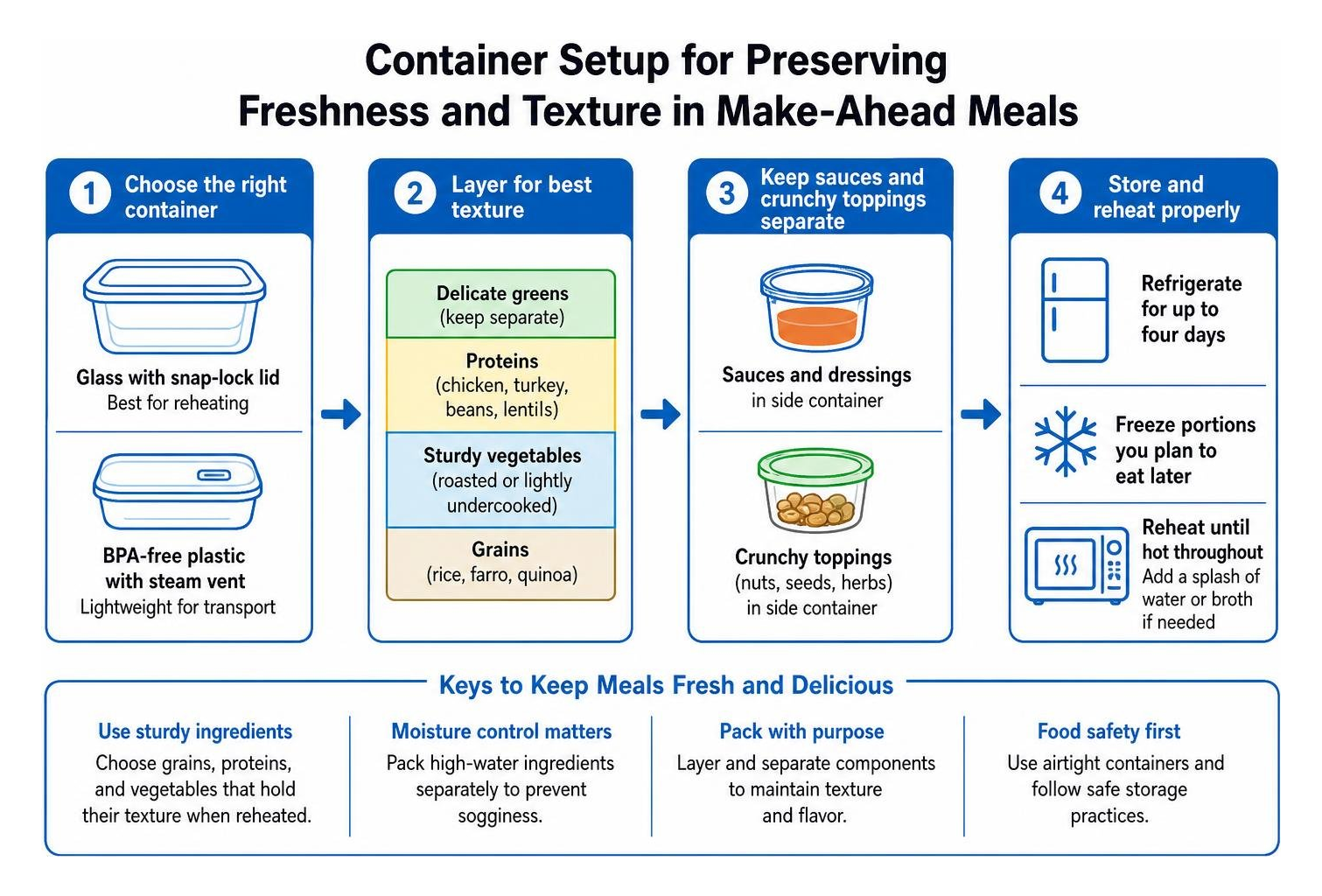
If you prefer lightweight BPA-free plastic for transport, choose containers with airtight silicone gaskets and built-in steam venting lids. Multi-compartment bento-style containers are particularly helpful when storing components that should remain dry – such as toasted nuts, seeds, or fresh herbs – until after the main dish has been warmed.
Ingredient Layering and Reheating Techniques
How you pack your food determines how evenly it reheats. Heat penetrates from the outside edges inward, which often leaves the center of a dense meal cold while the perimeter dries out.
To ensure even heating:
- Arrange denser starches and proteins along the outer ring of your container, leaving a slight hollow in the center.
- Keep delicate sauces in a small separate dressing cup rather than coating the entire dish days in advance.
- Add a splash of water, low-sodium broth, or a light drizzle of olive oil over grains before microwaving to generate gentle steam.
- Cover your dish with a microwave-safe plate or a damp paper towel to trap ambient humidity and prevent proteins from drying out.
- Reheat on 70% to 80% power for two minutes, stir thoroughly, and finish with a final 30 to 45 seconds of heating.
12 Make-Ahead Recipes That Reheat Exceptionally Well

Building a dependable repertoire of recipes transforms your weekly routine. These twelve balanced recipes focus on ingredients that either hold their texture or actually improve in flavor as spices meld over several days in the refrigerator.
High-Protein Grain and Power Bowls for Easy Meal Prep Lunches
1. Unstuffed Bell Pepper Bowls
Brown lean ground turkey or extra-lean ground beef with diced onions, garlic, riced cauliflower, and brown rice. Simmer with diced fire-roasted tomatoes, Italian seasoning, and chopped bell peppers. Because the peppers are cooked directly into the sauce, they retain a pleasant, tender bite that reheats without turning soggy.
2. Ginger Beef and Broccoli Quinoa Bowls
Sauté lean flank steak or ground sirloin with freshly grated ginger, garlic, low-sodium soy sauce, and a touch of sesame oil. Serve over cooked quinoa alongside broccoli florets that have been blanched for just two minutes. Quinoa holds its nutty bite far better than white rice during extended refrigeration.
3. Mediterranean Lemon-Herb Chicken Bowls
Marinate diced chicken breast in lemon juice, oregano, garlic, and olive oil before roasting on a sheet pan. Pair with farro, roasted zucchini disks, and kalamata olives. Keep a small side cup of tzatziki or hummus to dollop on top after heating.
4. Golden Turmeric Roasted Veggie and Chickpea Bowls
Toss canned chickpeas, cubed sweet potatoes, and cauliflower florets in olive oil, ground turmeric, and cumin. Roast until caramelized, then portion over a bed of mixed grains. For inspiration on bright, anti-inflammatory combinations, try these Chopped Veggie Grain Bowls with Turmeric Dressing.
Satisfying Skillets, Pastas, and Stir-Fries
5. Deconstructed Egg Roll in a Bowl
Sauté ground turkey or chicken with shredded green cabbage, matchstick carrots, green onions, and garlic. Season with coconut aminos, ginger, and a splash of rice vinegar. Cabbage holds up exceptionally well to reheating, maintaining bulk and fiber without breaking down into excess water. You can explore more healthy homemade stir-fry recipes to expand your weekly lineup with restaurant-inspired flavors made clean.
6. Whole-Grain Baked Ziti with Spinach and Turkey Sausage
Layer whole-grain or pulse-based penne with marinara sauce, browned sweet Italian turkey sausage, and frozen chopped spinach that has been thoroughly squeezed dry. Top with part-skim mozzarella. Baked pasta dishes naturally reheat well because the pasta absorbs the seasoned tomato sauce over time.
7. Sheet-Pan Honey Sriracha Cashew Chicken
Toss cubed chicken thighs, red bell peppers, snap peas, and whole raw cashews in a light glaze of honey, sriracha, and low-sodium tamari. Roast on a single sheet pan at 400°F for 20 minutes. Portion with brown jasmine rice for an energizing balance of protein and healthy fats.
8. Creamy Chicken Bacon Ranch Spaghetti Squash
Roast spaghetti squash halves until tender, shred the strands, and toss with shredded rotisserie chicken, crispy uncured turkey bacon bits, and a sauce made from Greek yogurt, garlic powder, onion powder, and fresh dill. Spaghetti squash retains its string-like bite when reheated over medium microwave power.
Hearty Soups, Chilis, and Slow-Cooker Stews
9. Five-Ingredient Slow-Cooker White Chicken Chili
Combine boneless chicken breasts, drained great northern beans, mild salsa verde, low-sodium chicken broth, and ground cumin in a slow cooker. Cook on low for six hours, shred the chicken, and portion into individual containers. Soups and chilis actually taste better after two days as the herbs and aromatics deepen.
10. Sweet Potato, Black Bean, and Turkey Sausage Hash
Brown diced turkey sausage with cubed sweet potatoes, black beans, and diced poblano peppers in a cast-iron skillet. The complex carbohydrates from sweet potatoes and black beans digest slowly, providing sustained physical and mental energy through long afternoons.
11. Slow-Cooker Barbacoa Beef Bowls
Simmer chuck roast or lean beef brisket in a blender sauce of chipotle peppers in adobo, lime juice, apple cider vinegar, cumin, and oregano. Shred the tender meat and pack over cilantro-lime brown rice and pinto beans. The natural braising juices keep the meat succulent across multiple days of storage.
12. Coconut Chickpea and Red Lentil Stew
Simmer dried red lentils, canned chickpeas, diced tomatoes, fresh ginger, and baby kale in light coconut milk and vegetable broth seasoned with yellow curry powder. Lentils break down into a thick, velvety stew that reheats quickly without separating.
Fast Kitchen Workflows and Ingredient Shortcuts
Planning and cooking your lunches should simplify your week, not consume your entire weekend. If you are new to the routine, reviewing a beginner guide to meal prep can help you build structured kitchen habits without feeling overwhelmed.
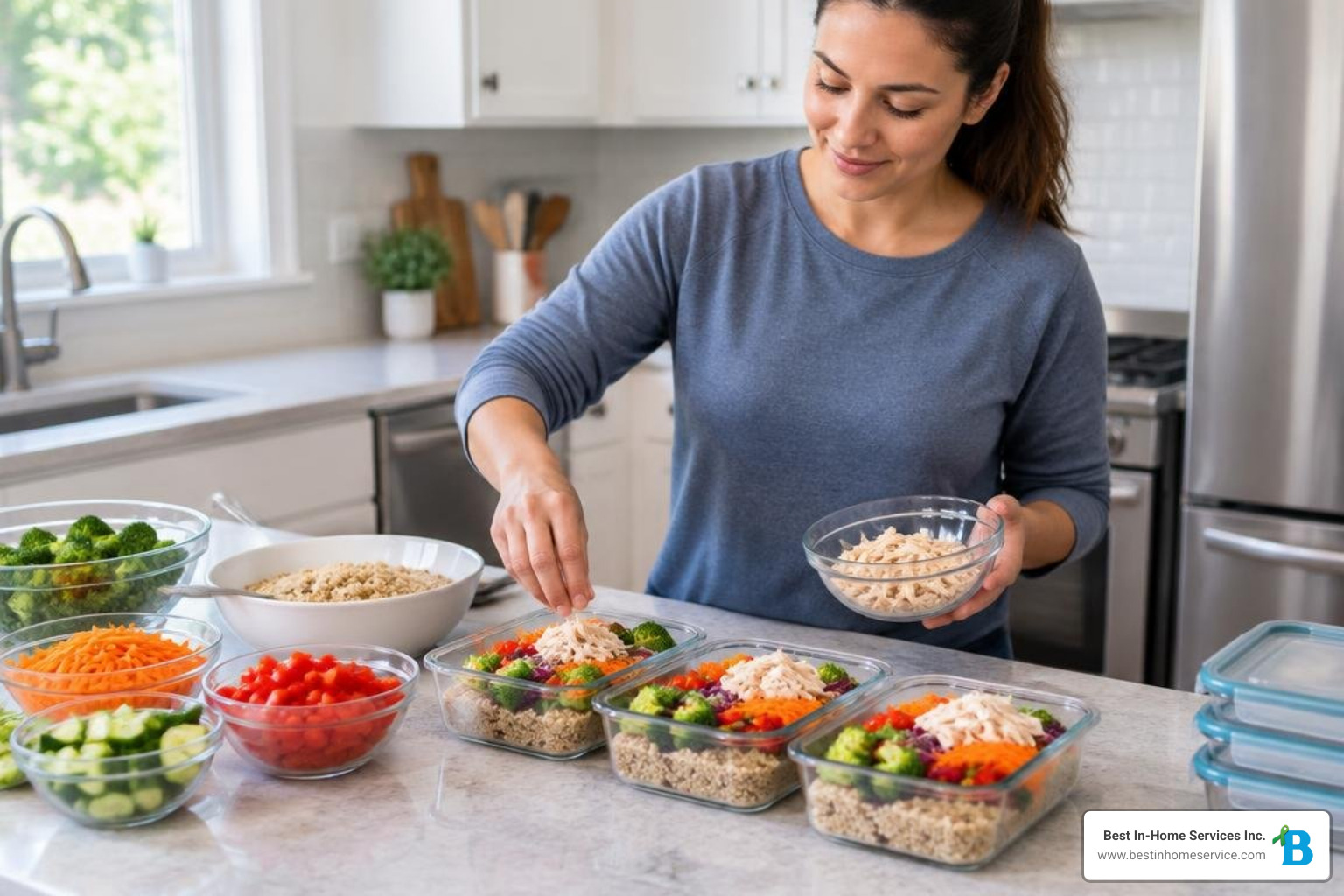
Smart supermarket shortcuts reduce active prep time by half without sacrificing nutritional value:
- Plain rotisserie chicken: Remove the skin and shred the breast meat for instant high-protein bowls, soups, or wraps.
- Frozen whole grains: Microwaveable steam-in-bag brown rice or quinoa blends eliminate the 45-minute pot-watching process.
- Pre-chopped mirepoix and slaw mixes: Bags of pre-shredded cabbage and broccoli slaw add crunchy volume to skillets without any knife work.
- Canned beans and lentils: Low-sodium canned beans provide an immediate boost of plant-based protein and soluble fiber with zero cooking required.
The 30-Minute Sunday Power Hour Workflow
You can prepare five days of hot, satisfying lunches in approximately 30 to 40 minutes by coordinating your oven, stovetop, and assembly line simultaneously:
- Minutes 0–5 (Oven Prep): Preheat your oven to 400°F. Line a large rimmed baking sheet with parchment paper. Toss your choice of chopped vegetables and chicken breast or tofu in olive oil and seasonings, spread evenly, and transfer to the oven for 20 minutes.
- Minutes 5–15 (Stovetop or Microwave Base): Start a pot of quick-cooking grains or warm frozen grain pouches. Simultaneously, brown ground turkey or lean beef in a nonstick skillet with your favorite spices.
- Minutes 15–20 (Assembly Station Setup): Lay out four or five glass storage containers on a clean counter. Open and drain any canned beans or chickpeas you plan to add.
- Minutes 20–28 (Portioning): Divide your cooked grains evenly across the containers. Add your skillet protein and roasted sheet-pan vegetables.
- Minutes 28–30 (Cooling and Storage): Let the containers sit uncovered for 10 minutes to allow steam to escape before locking the airtight lids. Label each lid with the date and store in the refrigerator.
Budget-Friendly Strategies for Easy Meal Prep Lunches
Cooking at home saves substantial money compared to ordering daily midday takeout. To keep grocery receipts manageable:
- Overlap versatile base ingredients: Buy bulk items that serve multiple recipes, such as a large bag of sweet potatoes used for both a skillet hash and roasted grain bowls.
- Embrace plant-forward proteins: Stretch meat budgets by combining ground turkey or beef with black beans or lentils in a 1:1 ratio. This cuts recipe costs while significantly boosting dietary fiber.
- Shop seasonal and frozen produce: Frozen broccoli, green beans, and cauliflower are flash-frozen at peak ripeness, making them cost-effective and nutritionally dense year-round.
Customizing for Dietary Needs and Flavor Variety
Eating make-ahead meals does not mean tolerating monotonous flavors. You can easily adapt your weekly batches for specific health goals and personal preferences:
- Gluten-Free Needs: Substitute whole wheat pasta with brown rice pasta, quinoa, or pulse-based noodles made from chickpeas or lentils.
- Heart-Healthy Approaches: Use low-sodium vegetable or bone broths, season with garlic and fresh citrus rather than table salt, and choose lean poultry and omega-3-rich proteins.
- Flavor Variety via Sauces: Keep individual lunch bowls neutral in seasoning, then rotate finishing sauces throughout the week – such as chimichurri on Monday, peanut dressing on Tuesday, and salsa verde on Wednesday.
For older adults living at home, managing daily cooking can sometimes become challenging. Exploring comprehensive senior nutrition and meal planning support offers helpful guidance on how balanced, nutrient-dense meal routines support physical vitality and everyday well-being.
Frequently Asked Questions About Meal Prep Lunches
How long can reheated meal prep lunches stay fresh in the fridge?
Most properly prepared and refrigerated cooked meals remain safe and fresh for three to four days when held at or below 40°F in airtight containers. If you are preparing lunches on Sunday for Thursday and Friday, place those end-of-week portions in the freezer on Sunday evening. Transfer frozen meals to your refrigerator 24 hours before you plan to reheat them to allow for safe, even thawing.
What is the best way to reheat chicken without drying it out?
Chicken breast frequently dries out in the microwave because high electromagnetic heat rapidly evaporates internal moisture. To keep pre-cooked poultry tender, slice or shred the chicken rather than reheating whole thick cutlets. Add one tablespoon of water, broth, or light sauce over the meat, cover the dish with a damp paper towel or vented lid, and warm at 70% power in short 60-second intervals until it reaches an internal temperature of 165°F.
How do I prevent prepped vegetables from turning mushy?
Vegetables turn mushy when they are overcooked during initial preparation and then subjected to secondary cooking during reheating. To prevent this, purposefully undercook sturdy vegetables like broccoli florets, asparagus, bell peppers, and green beans by two to three minutes when batch cooking. They should remain slightly crisp to the bite. When microwaved later, the trapped steam will gently finish cooking them to a crisp-tender consistency.
Conclusion
Establishing a streamlined lunch routine eliminates daily decision fatigue, supports consistent energy, and ensures wholesome nourishment is always within reach. Whether you prepare several high-protein power bowls on Sunday or batch-cook a comforting vegetable chili, using proper storage containers and gentle reheating methods makes healthy eating effortless.
At Best In-Home Service Inc., our licensed caregivers understand that consistent nutrition and a smooth home routine make a meaningful difference for older adults across Cook, Lake, and DuPage counties. As an Illinois-licensed non-medical home care provider based in Northbrook, we assist seniors throughout Chicago, Evanston, Skokie, Wilmette, Glenview, Highland Park, and surrounding communities with daily living support, including grocery shopping, kitchen assistance, and wholesome meal preparation.
To discuss personalized care schedules or arrange a free in-home consultation, contact our team at 224-636-5200 or visit Best In-Home Services to learn more about our home support options.






 1-224-636-5200

 1-224-636-5210
 425 Huehl Rd 13B Northbrook IL 60062