
Finding Companion Care for Veterans in Illinois
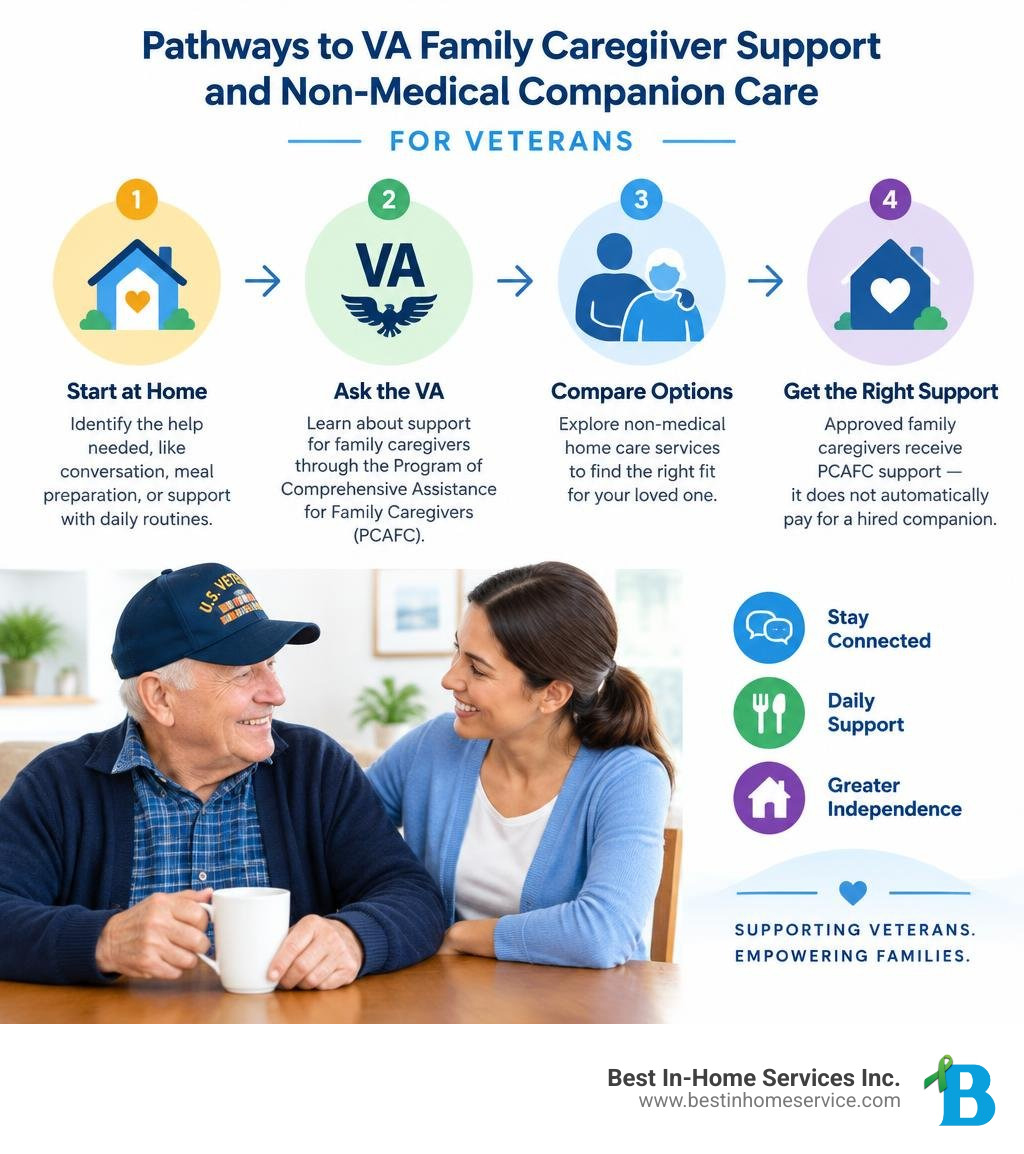
Looking for companion care for veterans? Start with the help needed at home, such as conversation, meal preparation, or support with daily routines. Then ask the VA about support for family caregivers and compare non-medical home care options. The VA’s Program of Comprehensive Assistance for Family Caregivers (PCAFC) supports approved family caregivers; it does not automatically pay for a hired companion.
Best In-Home Services Inc. provides non-medical home care from Northbrook, Illinois (License #3000758). It is licensed by the Illinois Department of Public Health, approved by the Illinois Department on Aging under the Community Care Program, and recognized by the Illinois Department of Human Services / Rehabilitation Services for the Home Service Program.
Lily Harrison, General Manager at Best In-Home Services Inc., coordinates in-home support for older adults across the Chicago area.
Understanding VA Support and Companion Care for Veterans

Navigating long-term support for a loved one who served in the military involves understanding both public benefits and private home services. Many families in the Chicago area seek ways to keep aging veterans safe, socially connected, and comfortable at home.
The U.S. Department of Veterans Affairs offers structured programs to support individuals caring for veterans with significant health or service-connected needs. However, navigating these benefits requires distinguishing between programs designed for designated family members and broader community-based non-medical care options.
| Feature | Program of Comprehensive Assistance for Family Caregivers (PCAFC) | Program of General Caregiver Support Services (PGCSS) |
|---|---|---|
| Disability Requirement | 70% or higher VA disability rating (single or combined) | Any disability rating or discharge status qualifying for VA health care |
| Care Requirement | Needs at least 6 continuous months of in-person personal care | Needs general assistance, monitoring, or caregiver support |
| Financial Stipend | Yes, monthly stipend paid directly to Primary Caregiver | No financial stipend |
| Health Insurance | CHAMPVA coverage available for eligible Primary Caregivers | No dedicated health insurance coverage |
| Respite Care | At least 30 days per year | Limited respite resources depending on local VA facility |
| Education & Coaching | Mandatory comprehensive training and counseling | Optional skills training, peer support, and education |
Eligibility Criteria for the Veteran and Family Caregivers
To qualify for the PCAFC, specific criteria must be met by both the veteran and the designated caregiver.
Requirements for the Veteran:
- Must have a service-connected disability rating of 70% or higher (either a single condition or combined rating).
- Must be enrolled in VA health care or actively applying for enrollment.
- Must require continuous in-person personal care services for at least six continuous months. This is typically due to an inability to perform activities of daily living (such as bathing, dressing, or mobility) or a need for supervision due to neurological impairment or cognitive challenges.
- It must be in the veteran’s best interest to receive care at home rather than in a residential or institutional facility.
Requirements for the Family Caregiver:
- Must be at least 18 years old.
- Must be a family member (spouse, child, parent, sibling, or extended relative) or an individual who resides with the veteran full-time (or agrees to reside with them upon approval).
- Must have the legal capacity to sign the application or be represented by an authorized representative with valid legal authority (such as a legal guardianship order or power of attorney).
- Must undergo an assessment to confirm their ability and willingness to provide personal care services.
PCAFC vs. Program of General Caregiver Support Services (PGCSS)
The PCAFC is designed for veterans with high clinical needs requiring substantial, daily hands-on care. Because of its stringent eligibility requirements, not all families qualify.
For those who do not meet the 70% disability threshold or the continuous care criteria, the Program of General Caregiver Support Services (PGCSS) offers vital resources. PGCSS provides family caregivers with:
- Skills-based caregiver education and instructional materials
- Peer support mentoring and caregiver support groups
- Access to the VA Caregiver Support Line (available Monday through Friday, 8:00 a.m. to 8:00 p.m. Eastern Time, TTY 711)
- Referrals to community resources and mental health support
While both VA programs support unpaid family members, families frequently choose to supplement these benefits by exploring companion care services through licensed agencies to alleviate daily demands and prevent burnout.
Structure and Benefits of the Program of Comprehensive Assistance for Family Caregivers (PCAFC)
The PCAFC provides financial, educational, and medical support directly to designated caregivers. This framework recognizes the physical and emotional investment involved in supporting veterans with complex care needs.
Roles of Primary and Secondary Family Caregivers
A qualifying veteran may appoint:
- One Primary Family Caregiver: The individual with primary responsibility for providing daily, hands-on personal care and routine oversight.
- Up to Two Secondary Family Caregivers: Trusted family members or household members who provide backup support, step in during emergencies, or assist when the primary caregiver needs temporary relief.
While secondary caregivers are integral to maintaining a strong support system, certain core financial and medical benefits are reserved exclusively for the primary caregiver. When daily tasks become too demanding for family members alone, arranging dedicated personal care services can ensure that physical routines – such as bathing assistance, mobility support, and dressing – are handled consistently.
Monthly Stipends, CHAMPVA Health Coverage, and Respite Care
The PCAFC includes several core benefits designed to stabilize the caregiving environment:
- Monthly Caregiver Stipend: The primary caregiver receives a monthly financial stipend paid directly to them via direct deposit. The stipend amount is calculated based on the VA’s clinical rating schedule and local geographic cost-of-labor indices.
- Health Care Benefits via CHAMPVA: If the primary family caregiver does not already have comprehensive health insurance coverage, they may become eligible for the Civilian Health and Medical Program of the Department of Veterans Affairs (CHAMPVA).
- Respite Care Support: To help prevent burnout, primary caregivers are entitled to at least 30 days of respite care per year. This allows another qualified caregiver or facility to provide temporary care while the primary caregiver rests or attends to personal needs.
- Mental Health and Well-being Services: Both primary and secondary caregivers have access to mental health counseling, specialized caregiver training programs, and telehealth therapy sessions.
- Additional Privileges: Primary caregivers receive access to military commissaries and exchange retail stores, as well as travel reimbursement when accompanying the veteran to authorized VA medical appointments.
How to Apply for PCAFC and What to Expect After Application
Applying for VA caregiver assistance requires coordinated paperwork, clinical evaluations, and specific administrative steps.
Submitting VA Form 10-10CG and Required Legal Documentation
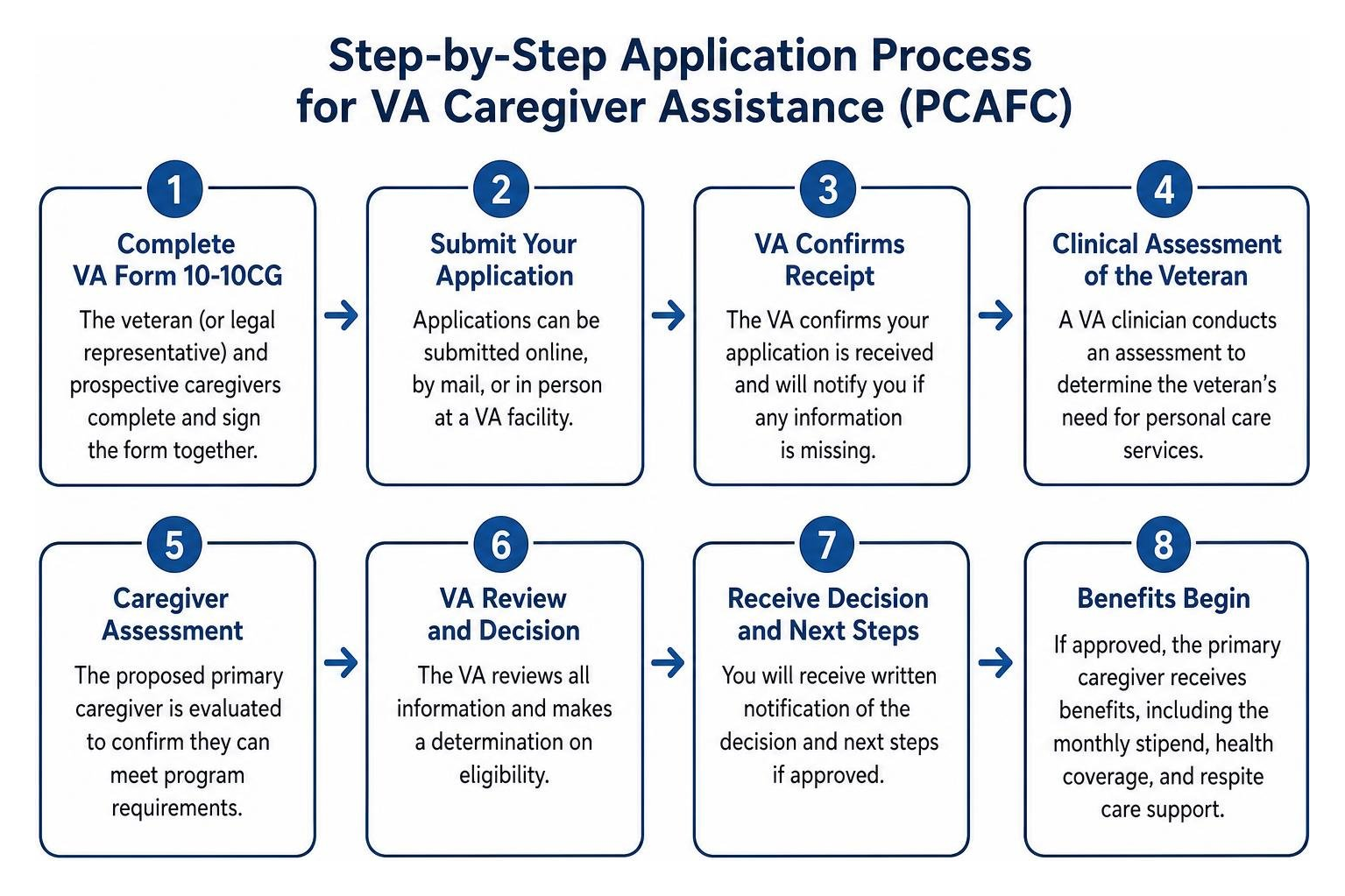
The application process begins by completing VA Form 10-10CG (Application for the Program of Comprehensive Assistance for Family Caregivers). Both the veteran (or their legal representative) and the prospective caregivers must complete and sign the form together.
Applications can be submitted through three primary channels:
- Online: Through the official VA.gov portal using secure digital verification.
- By Mail: By sending the completed paper form and supporting records to the Program Management Office.
- In Person: By visiting a local VA Medical Center and meeting with a Caregiver Support Coordinator.
If someone is applying on behalf of a veteran who lacks legal capacity, appropriate documentation – such as a durable power of attorney for healthcare or a state-certified legal guardianship order – must be submitted concurrently. To ensure seamless monthly payments upon approval, applicants should set up direct deposit through the VA Customer Engagement Portal.
Assessment Process, Mandatory Training, and Ongoing Wellness Contacts
Once the application is received, the review process generally moves forward within a 90-day window:
- Initial Clinical Intake: A member of the VA Caregiver Support Program contacts the family to review medical eligibility, daily living requirements, and care history.
- Caregiver Education and Training: Designated caregivers must complete required caregiver education modules covering topics like safe transfers, managing medications, emotional well-being, and infection control.
- Home Care Assessment: A clinical team conducts a comprehensive in-home assessment to evaluate the veteran’s environment, safety needs, and daily routine.
- Final Approval and Ongoing Wellness Contacts: Following formal designation, the VA maintains oversight through required wellness contacts conducted at least once every 120 days, alongside at least one comprehensive annual home visit. These visits ensure the care plan remains appropriate and the caregiver continues to receive necessary support.
Managing Life Changes, Appeals, and Local Illinois Veteran Resources
A veteran’s care needs and personal circumstances can shift over time. Understanding reporting protocols and local resources helps maintain continuity of support.
Reporting Changes to Avoid Overpayments and Navigating PCAFC Appeals
Caregivers must report major life events to their local Caregiver Support Coordinator within 30 days to prevent benefit interruptions or overpayments. Situations requiring prompt reporting include:
- A change of physical address or living arrangements
- Admission of the veteran to a hospital, nursing home, or rehabilitation facility for more than 30 consecutive days
- Temporary or permanent changes in the caregiver’s ability to provide assistance
- The passing of either the veteran or the caregiver
If an application for PCAFC is denied or a caregiver is discharged from the program, families have formal appeal rights under VA review structures. Options include requesting a Higher-Level Review, submitting a Supplemental Claim with new and relevant medical evidence, or filing an appeal directly with the Board of Veterans’ Appeals.
Local Support and Community Resources Across Cook, DuPage, and Lake Counties
Veterans residing in northeastern Illinois have access to specialized county-level assistance programs:
- Cook County: The Cook County Veterans Affairs office connects former service members in Chicago, Evanston, Skokie, Des Plaines, and surrounding communities with county benefits, advocacy programs, and local healthcare navigation.
- DuPage County: Residents in Naperville, Downers Grove, Hinsdale, and Oak Brook can access community assistance via DuPage County 211 Veteran Services, which offers direct links to food assistance, housing resources, and veteran advocacy.
- Lake County & North Shore: Veterans in communities like Highland Park, Lake Forest, Deerfield, Buffalo Grove, and Northbrook can coordinate with local Veterans Assistance Commissions for emergency relief, transportation coordination, and benefit guidance.
For families seeking a deeper understanding of community support models, reading our guide to companionship care at home in Chicago offers practical insights into combining local resources with professional in-home help.
Combining VA Benefits with In-Home Companion Services
While VA programs offer critical support, family caregivers often find that managing daily care on their own is demanding. Integrating professional companion care creates a balanced care plan that keeps veterans engaged while giving family members essential breathing room.
How Companion Care for Veterans Helps Prevent Social Isolation
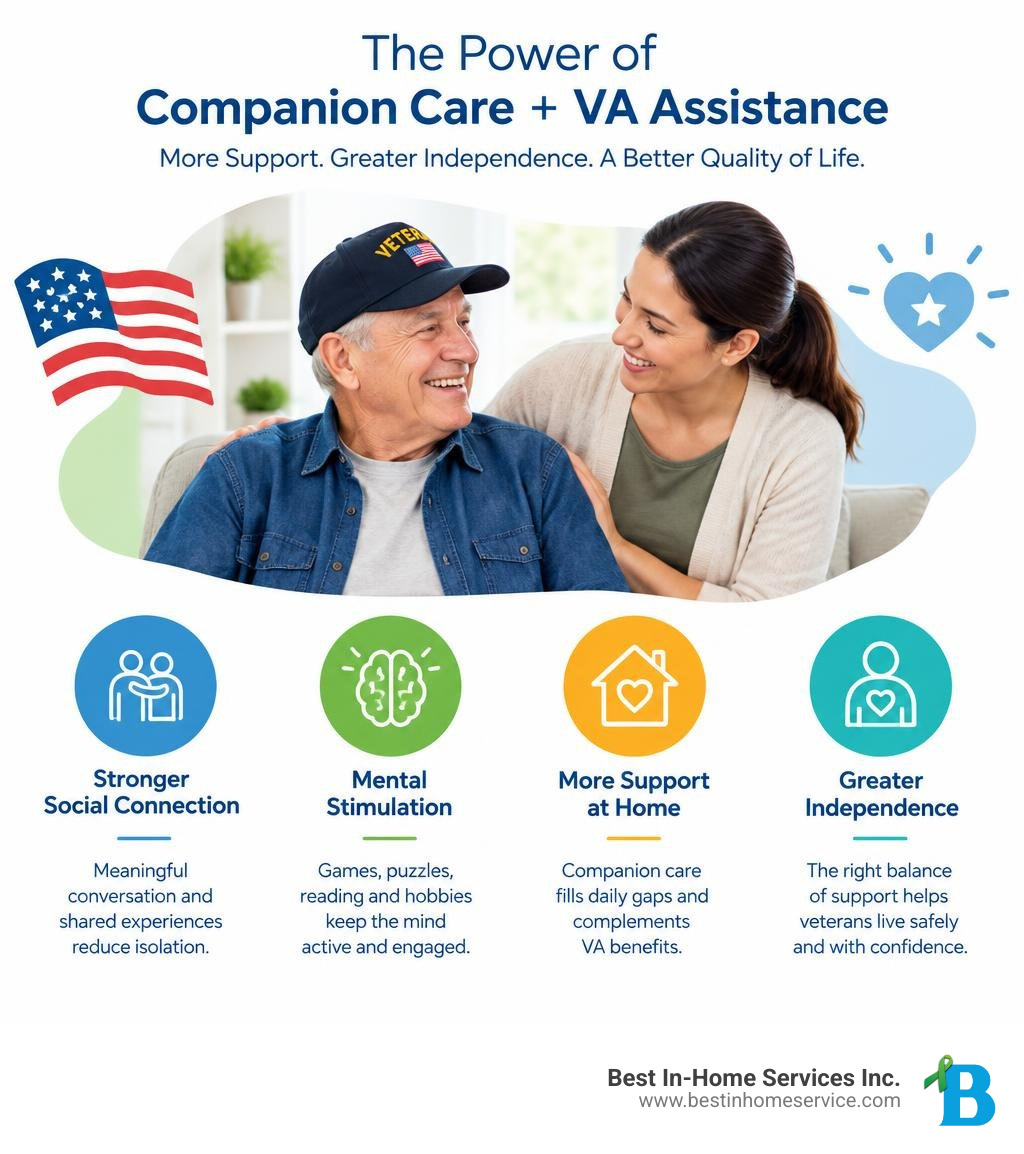
For many older veterans, physical limitations or memory changes can lead to unintended social withdrawal. Non-medical companion caregivers help veterans maintain social connection by providing:
- Meaningful, respectful conversation and shared storytelling
- Cognitive stimulation through games, puzzles, reading, and hobbies
- Support with meal planning and preparation to promote balanced nutrition
- Light housekeeping, organizing, and laundry assistance to maintain a tidy living space
- Prompt medication reminders to help maintain structured daily wellness routines
- Transportation and accompaniment for grocery shopping, community outings, and non-emergency medical visits
Maintaining regular social engagement supports emotional well-being and helps veterans remain connected to their communities.
Exploring Private Companion Care for Veterans Alongside VA Programs
Families searching for reliable home support often look for practical guidance on finding the best companion care for seniors near me. When choosing a private provider to complement VA resources, working with an Illinois-licensed agency offers clear advantages:
- Flexible Care Scheduling: Professional care visits can be scheduled for daytime hours, evenings, or weekends, helping cover gaps when family members work or attend to other duties.
- Trained and Screened Aides: Caregivers are thoroughly vetted, background-checked, and trained in non-medical support techniques, including dementia care and memory support.
- Seamless Respite Coordination: In-home companion aides can step in during the veteran’s 30-day VA respite periods or on a recurring weekly basis, ensuring reliable support.
Families can review our comprehensive home care services to explore customized care plans tailored to their specific household routines.
Understanding In-Home Care Costs in Illinois
When planning long-term companion care, cost is an important consideration. In Illinois, non-medical in-home care is typically billed on an hourly basis.
The overall cost of in-home care in Chicago and the surrounding suburbs varies depending on several key factors:
- The level of hands-on physical support required (such as personal care assistance versus standard companion care)
- The total number of hours scheduled per week
- The specific schedule needed (such as daytime visits, overnight care, or 24-hour continuous support)
- Whether specialized memory care support is required for conditions like Alzheimer’s or dementia
- Separate mileage billing when a caregiver provides transportation using their own vehicle
At Best In-Home Services Inc., non-medical care visits require a 3-hour minimum per visit. Because care needs vary widely, we recommend scheduling an individualized consultation to review care schedules and receive a personalized estimate.
Frequently Asked Questions About Veteran Care Programs
What is the minimum disability rating required for PCAFC?
To be eligible for the Program of Comprehensive Assistance for Family Caregivers (PCAFC), the veteran must have a VA service-connected disability rating of 70% or higher. This can be a single service-connected disability or a combined rating across multiple conditions. The veteran must also be enrolled in VA health care and require at least six continuous months of personal care.
How often do VA wellness contacts take place for caregivers?
Once a primary caregiver is approved under the PCAFC, the VA conducts formal wellness contacts at least once every 120 days. In addition, a clinician will complete at least one mandatory in-person home visit per year. These check-ins evaluate the veteran’s physical condition, review the caregiver’s well-being, and ensure safety within the home.
What caregiver support exists if a veteran does not qualify for PCAFC?
If a veteran does not meet the 70% disability requirement or the need for daily continuous hands-on care, the family can utilize the Program of General Caregiver Support Services (PGCSS). This program offers skills training, telephone coaching, peer mentorship, and access to local support groups. Families can also arrange private non-medical companion and personal care services through a licensed home care agency to assist with daily living activities.
Does PCAFC cover the cost of private home care agencies?
No. The PCAFC pays a monthly financial stipend directly to an approved, designated family caregiver. It is not an agency reimbursement program. However, families often use their household resources or VA Aid and Attendance pension benefits to hire private, non-medical companion caregivers to assist their loved one.
How does in-home care pricing work for veterans in Cook, Lake, and DuPage Counties?
Pricing for non-medical companion care is based on scheduled hours, visit frequency, and the level of care needed. Rates vary depending on whether the veteran needs companion support, overnight assistance, or hands-on personal care. Agencies maintain visit minimums (such as our 3-hour minimum per shift). For specific cost estimates, families can schedule an initial assessment to discuss their scheduling requirements.
Conclusion
Veterans who dedicated their lives to service deserve dependable, respectful support that allows them to age in place safely. Whether your family is applying for the VA’s Program of Comprehensive Assistance for Family Caregivers or looking for reliable day-to-day assistance, combining public resources with professional non-medical care provides a well-rounded foundation for long-term health and connection.
Best In-Home Services Inc. is an Illinois-licensed home care agency based in Northbrook (License #3000758). We provide non-medical companion care, personal care, dementia support, meal preparation, medication reminders, light housekeeping, and transportation assistance. We are licensed by the Illinois Department of Public Health, approved by the Illinois Department on Aging under the Community Care Program, and recognized by the Illinois Department of Human Services / Rehabilitation Services for the Home Service Program.
We proudly serve veterans and their families across Cook County (including Chicago, Evanston, Skokie, Wilmette, Kenilworth, Winnetka, Glencoe, Northbrook, Northfield, Glenview, Niles, Lincolnwood, Des Plaines, Wheeling, Melrose Park, Schaumburg, Inverness, South Barrington, Barrington Hills, and Western Springs), Lake County (including Deerfield, Highland Park, Lake Forest, Riverwoods, Buffalo Grove, Long Grove, Kildeer, Vernon Hills, and Mundelein), and DuPage County (including Naperville, Downers Grove, Woodridge, Oak Brook, and Hinsdale).
To discuss your family’s care schedule, explore companion care options, or request a personalized quote, visit Best In-Home Services or call our Northbrook team directly at 224-636-5200 to schedule a consultation.




 1-224-636-5200

 1-224-636-5210
 425 Huehl Rd 13B Northbrook IL 60062