
When a Loved One Has Dementia: What Chicago Families Need to Know
Dementia care for elderly loved ones is one of the most emotionally and practically challenging journeys a family can face — and you are not alone in navigating it.
Here is a quick overview of what dementia care involves:
| Care Need | What It Means |
|---|---|
| Daily support | Help with bathing, dressing, eating, and toileting |
| Safety adaptations | Home modifications to prevent falls and wandering |
| Behavioral management | Strategies for agitation, sundowning, and confusion |
| Professional care | Certified in-home aides or memory care specialists |
| Caregiver support | Respite care, legal planning, and emotional resources |
| Future planning | Advance directives, power of attorney, financial decisions |
Dementia is a progressive condition. Memory, thinking, and behavior challenges worsen over time — which means care needs today will look very different from care needs a year from now. According to research, approximately 70% of people with dementia live at home, supported by family members who often carry an enormous, largely invisible burden.
One thing is clear from both clinical research and real family experience: there is no single formula that works for everyone. Each person’s situation — their stage of dementia, their home environment, their family support network — is completely unique.
As millions of Americans age, the demand for thoughtful, personalized dementia care continues to grow. By 2050, one in five Americans will be over 65. The time to understand your options is now, before a crisis forces the decision.
I’m Lily Harrison, General Manager at Best In-Home Services Inc., where I coordinate dementia care for elderly seniors and their families across Chicago and Illinois every day. With years of experience building personalized, certified in-home care plans for those living with cognitive decline, I’ll walk you through everything you need to know to make confident, compassionate decisions for your loved one.
Understanding the Stages and Types of Cognitive Decline
When we talk about dementia, we are referring to an umbrella term for a decline in cognitive abilities—such as memory, problem-solving, and planning—that is severe enough to interfere with daily life.
Different types of dementia affect the brain in unique ways:
- Alzheimer’s Disease: The most common form of dementia, caused by abnormal protein deposits (plaques and tangles) that damage brain nerve cells.
- Vascular Dementia: Caused by reduced blood flow to the brain, often associated with a stroke or series of mini-strokes.
- Lewy Body Dementia: Characterized by the buildup of alpha-synuclein protein deposits in the brain, which can cause visual hallucinations, movement issues, and severe sleep disturbances.
Identifying cognitive decline in its earliest stages is vital for planning ahead. Recognizing the warning signs early allows families to access local support and establish routines. For a detailed breakdown of what to watch for, read our guide on 10 Early Signs of Alzheimers and How Home Care Can Help.
Understanding the Stages of Dementia Care for Elderly Patients
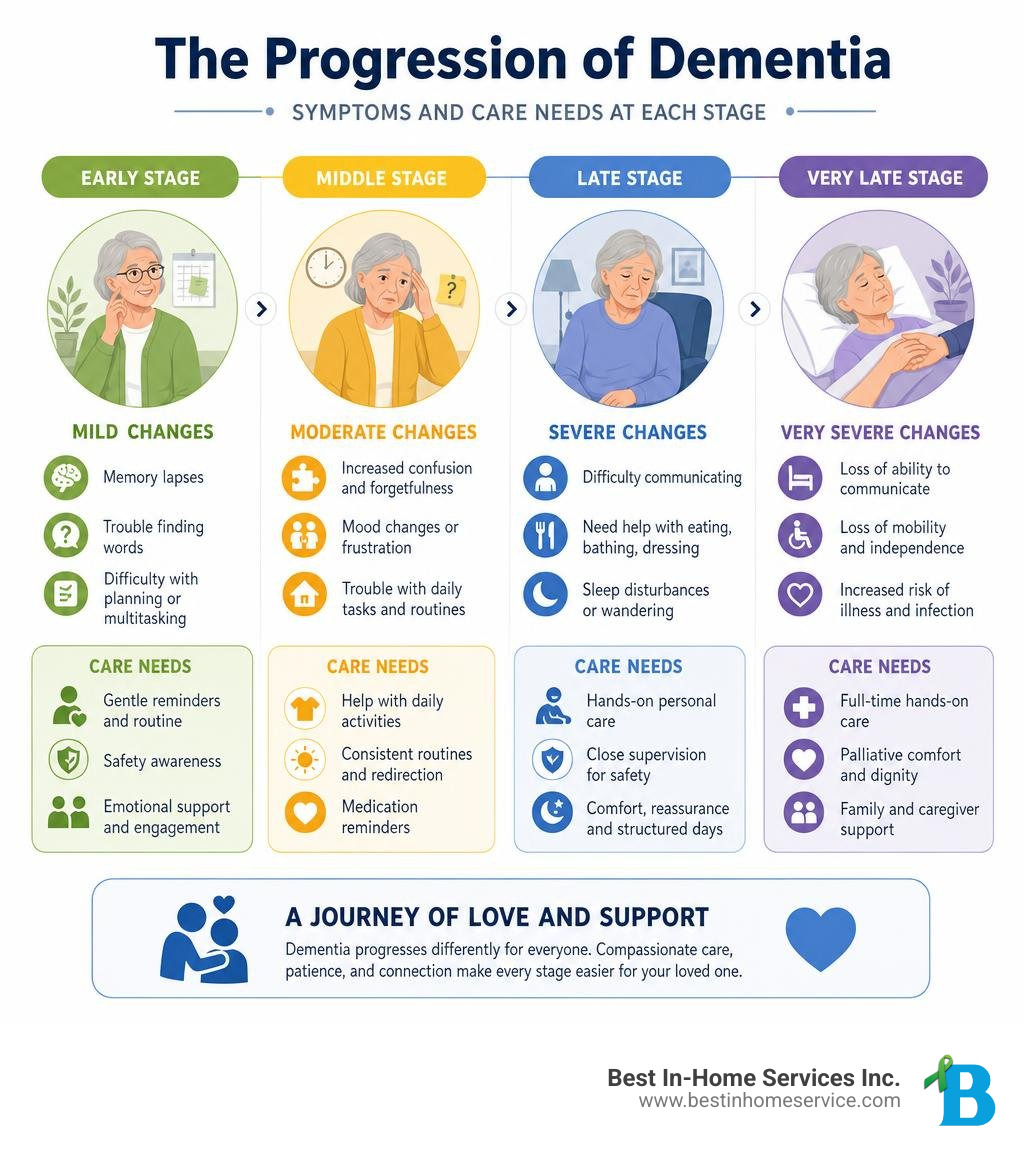
To provide the best possible dementia care for elderly family members, we must understand how care needs evolve across the three broad stages of the disease:
- Early-Stage (Mild): In this stage, individuals can often still live independently. They may function well but experience temporary lapses in memory, such as forgetting familiar words or misplacing everyday items. Care at this stage focuses on emotional support, establishing routines, and planning for the future while the individual can still actively participate in decision-making.
- Middle-Stage (Moderate): This is typically the longest stage. Damage to brain cells makes it difficult to perform routine tasks, express thoughts, or control impulses. You may notice your loved one repeating questions, showing signs of agitation, or experiencing changes in personality. Care shifts toward intensive daily assistance, structured routines, and managing behavioral changes.
- Late-Stage (Severe): In the final stage, individuals lose the ability to respond to their environment, carry on a conversation, or control movement. They require around-the-clock, hands-on assistance with all activities of daily living (ADLs), including eating, bathing, and sitting up. Care here is focused entirely on preserving dignity, managing physical comfort, and providing specialized palliative care.
For a deeper dive into evidence-based clinical practices and diagnostic recommendations across these stages, you can review the clinical guidelines on dementia progression. These guidelines highlight the importance of person-centered care and caution against the routine use of antipsychotics unless there is severe distress or immediate risk of harm.
Evaluating Options for Dementia Care for Elderly Seniors

When deciding on the best care setting for an elderly loved one, families in Chicago, Downers Grove, and Winnetka often find themselves weighing the pros and cons of home-based care versus residential facility placement.
To help you understand how professional in-home care compares to independent family caregiving, we have put together this comparison table:
| Care Dimension | Independent Family Caregiving | Professional In-Home Dementia Care |
|---|---|---|
| Primary Caregiver Burden | High risk of physical and emotional burnout. | Relieved by certified, trained professionals. |
| Customization of Care | Limited by the family’s schedule and medical knowledge. | Tailored 24/7 care plan adapted to the senior’s habits. |
| Familiarity of Setting | High (senior remains in their own home). | High (senior remains in their own home). |
| Cost Control | Unpaid, but can cause lost wages or career disruption. | Flexible packages ranging from hourly to live-in care. |
| Safety Supervision | Often fragmented due to work and family obligations. | Continuous monitoring for wandering and fall prevention. |
Choosing the right path is a deeply personal decision. For a comprehensive overview of how to structure home-based support, explore our guide on Dementia Care in Your Own Home: All You Need to Know.
The Benefits of Home-Based Care
For seniors living with dementia, a familiar environment is more than just comfortable—it is therapeutic. Cognitive decline makes navigating new spaces highly disorienting, which can trigger anxiety, agitation, and rapid cognitive decline. Staying at home allows seniors to maintain their daily rhythms in a space they have known for years.
Clinical research highlights several significant benefits of home-based care:
- Reduced Injury Risk: Academic studies have shown that institutional care is associated with a higher incidence of hip fractures among older adults with dementia compared to home care. The comfort of a familiar home layout reduces confusion and subsequent falls.
- Lower Hospitalization Rates: Programs like CAPABLE (Community Aging in Place, Advancing Better Living for Elders) demonstrate that combining home modifications with targeted care lowers the likelihood of inpatient hospital stays and reduces overall healthcare spending.
- A Custom-Tailored Environment: At home, we can make highly personalized safety adjustments without compromising the senior’s sense of independence.
To learn more about how continuous, around-the-clock care can be managed safely in a residential setting, check out our 24/7 Dementia Home Care Guide.
Understanding Specialized In-Home Memory Care
Specialized in-home memory care goes far beyond standard companion services. It involves certified caregivers who are specifically trained to understand the “language of behavior” associated with cognitive decline.
When we design a customized care plan at Best In-Home Services Inc., we focus on:
- Maintaining Predictable Routines: Keeping wake-up times, meals, and physical activities at the exact same time every day to minimize confusion and anxiety.
- Cognitive Stimulation: Engaging seniors in personalized activities like music therapy, reminiscence therapy, and simple puzzles to promote cognitive health.
- Preserving Self-Esteem: Doing tasks with the senior rather than for them, focusing on what they can still do rather than what they have lost.
To better understand what makes specialized memory care different from general senior care, read our article about Memory Care.
Managing Challenging Behaviors and Promoting Safety
Dementia changes the way a person experiences and interacts with the world. Often, what look like “difficult” or “challenging” behaviors are actually non-verbal attempts to communicate an unmet physical or emotional need, such as pain, hunger, thirst, or a full bladder.

When managing common behaviors like wandering, agitation, or sundowning (increased confusion and restlessness in the late afternoon), we recommend these practical steps:
- Validate and Redirect: Do not argue with or correct a loved one who is experiencing a delusion. If they insist they need to “go to work,” validate their feeling (“I know you have an important job”) and redirect them to a safe, familiar task like folding towels or sorting cards.
- Establish a Calming Evening Routine: To mitigate sundowning, minimize noise and bright lights in the late afternoon. Keep the home well-lit during the day to help regulate their internal body clock.
- Use Companion Cards: When out in public in Chicago, carry small cards that say, “My companion has dementia; thank you for your patience.” This allows you to communicate discreetly with waitstaff or store clerks without causing your loved one embarrassment.
For official, evidence-based strategies on managing these behaviors, download the National Institute on Aging’s resource on Practical tips for managing Alzheimer’s behaviors.
Adapting the Home Environment for Safety
Physical safety is a primary concern in dementia care for elderly seniors. Simple, proactive modifications to the home can prevent accidents and prolong independent living:
- Prevent Scalding: Set your water heater temperature to 120 degrees Fahrenheit to prevent accidental burns during handwashing or bathing.
- Kitchen Safety: Remove stove knobs or install a gas shutoff valve to prevent the stove from being left on unattended.
- Improve Depth Perception: Dementia affects visual processing. Place colored electrical tape on the edges of stairs to make steps clearly visible and prevent falls.
- Manage Mirrors: If your loved one no longer recognizes their own reflection, mirrors can cause distress or make them believe an intruder is in the house. Cover or remove mirrors if they cause agitation.
- Secure the Perimeter: Install smart doorbells or simple chimes that alert you when an exterior door is opened, preventing unnoticed wandering.
Practical Daily Living Support in Dementia Care for Elderly Seniors
Assisting with activities of daily living requires patience, sensitivity, and a focus on maintaining the senior’s dignity.
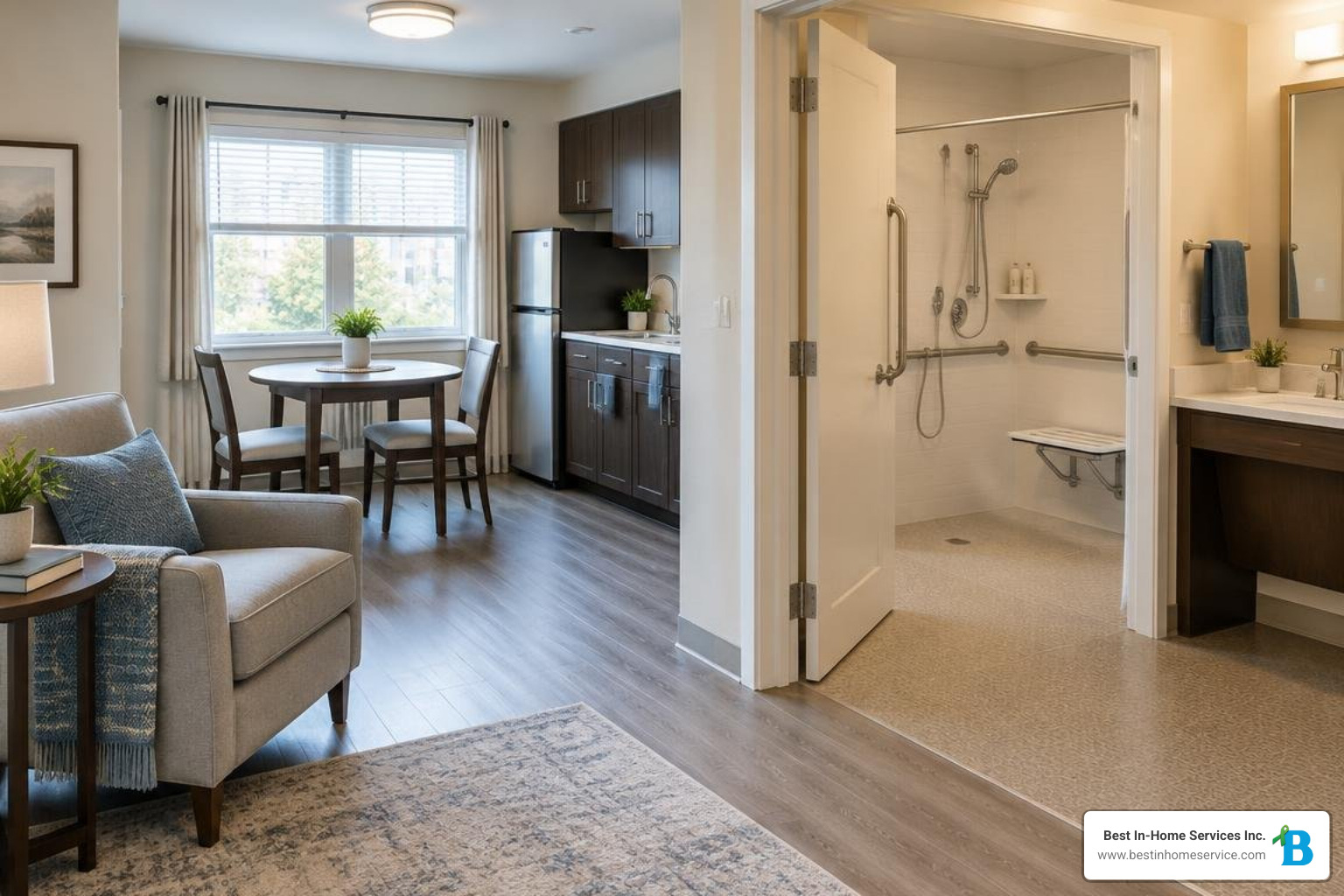
- Bathing: Bathing can cause intense anxiety. Prepare the bathroom ahead of time by warming the room, starting the water, and keeping towels nearby. Use a secure bath seat and a handheld showerhead to reduce the fear of falling.
- Dressing: Simplify choices by laying out only one or two outfits. Choose clothes with elastic waistbands and Velcro closures instead of complicated buttons or zippers.
- Nutrition and Hydration: Dehydration is a common risk because seniors with dementia often lose the sensation of thirst, which can lead to urinary tract infections (UTIs) and increased confusion. Serve water in brightly colored cups that stand out against the table. If they struggle with utensils, offer nutritious finger foods like chicken tenders, cheese cubes, or fruit slices.
- Managing Dysphagia: Difficulty swallowing (dysphagia) is a major predictor of unexpected hospitalizations in elderly patients. Monitor for coughing, clearing of the throat, or “pocketing” food in the cheeks during meals.
For more practical, day-to-day tips on personal hygiene and nutrition, consult the NHS guide on looking after someone with dementia.
Planning for the Future and Caregiver Support
Caring for a loved one with dementia is not a solo task; it requires a coordinated team. One of the most loving things you can do is plan for the future early, while your loved one can still voice their preferences.
An effective advance care plan should include these essential legal and financial documents:
- Durable Power of Attorney for Healthcare: Designates a trusted person to make medical decisions if the senior becomes unable to do so.
- Durable Power of Attorney for Finances: Authorizes a representative to manage bank accounts, bills, and property.
- Living Will: Outlines specific preferences for end-of-life medical treatments, such as mechanical ventilation or feeding tubes.
- Do Not Resuscitate (DNR) Order: A medical order instructing healthcare providers not to perform CPR if the senior’s breathing or heartbeat stops.
For a complete roadmap on coordinating complex, long-term care needs, refer to our guide on Live-In Care for Dementia: A Complete Guide for Families.
Preventing Caregiver Burnout
Unpaid family caregivers are the backbone of community-based dementia care, but the physical and emotional toll is immense. In Illinois alone, thousands of family members provide millions of hours of unpaid care, often sacrificing their own physical and mental health.
To prevent burnout, caregivers must prioritize their own well-being:
- Utilize Respite Care: Taking a break is not a luxury; it is a necessity that strengthens your ability to be a compassionate caregiver. Respite care allows a professional to step in while you rest, attend to your own health, or take a weekend trip.
- Leverage Support Programs: Programs like the National Family Caregiver Support Program, administered through local Area Agencies on Aging in Illinois (such as the DuPage County Community Services or the Illinois Department on Aging), offer resources, training, and financial assistance.
- Build a Care Team: Delegate small tasks—like grocery shopping, lawn care, or picking up prescriptions—to friends, neighbors, and family members.
To review clinical recommendations on supporting family caregivers and reducing stress, read the Alzheimer’s Association Practice Recommendations.
Frequently Asked Questions about Dementia Care

What is the difference between dementia and Alzheimer’s?
Dementia is an overall term (a syndrome) used to describe a wide range of symptoms associated with a decline in memory or other thinking skills. Alzheimer’s disease is a specific, progressive brain disease and the most common cause of dementia, accounting for 60% to 80% of all cases. In short, dementia is the symptom, and Alzheimer’s is the specific disease causing it.
How can I pay for dementia care in Illinois?
Several options can help offset the cost of dementia care for elderly loved ones in the Chicago area:
- Long-Term Care Insurance: Depending on the policy, this can cover in-home care, assisted living, or memory care services.
- Veterans Benefits: Veterans and their surviving spouses may qualify for the Aid and Attendance benefit, which helps pay for daily in-home care.
- Illinois State Programs: The Illinois Department on Aging offers programs like the Community Care Program (CCP) to help eligible seniors age in place.
- Private Pay: Many families utilize personal savings, retirement funds, or home equity to pay for customized, private-duty home care.
When is it time to transition to 24/7 care?
It may be time to consider around-the-clock care if you observe:
- Safety Concerns: Your loved one is wandering outside, leaving the stove on, or falling frequently.
- Caregiver Burnout: The primary caregiver is experiencing physical illness, severe anxiety, or depression due to the constant demands of care.
- Late-Stage Symptoms: The senior requires physical assistance with all basic movements, experiences difficulty swallowing, or needs constant incontinence management.
Conclusion
At Best In-Home Services Inc., we understand that navigating dementia care for elderly loved ones is a journey filled with complex emotions, unique challenges, and quiet triumphs. Our mission is to bring peace of mind to families across Chicago, Downers Grove, Winnetka, Schaumburg, Lake County, and the surrounding suburbs by providing certified, compassionate, and highly customized in-home care.
You do not have to carry this responsibility alone. We are here to support your entire family with professional memory care tailored to your loved one’s unique history, routine, and needs.
To learn more about how we can help your loved one remain safe, comfortable, and respected in their own home, Schedule a consultation for professional Alzheimer’s care with our dedicated team today.




 1-224-636-5200

 1-224-636-5210
 425 Huehl Rd 13B Northbrook IL 60062